
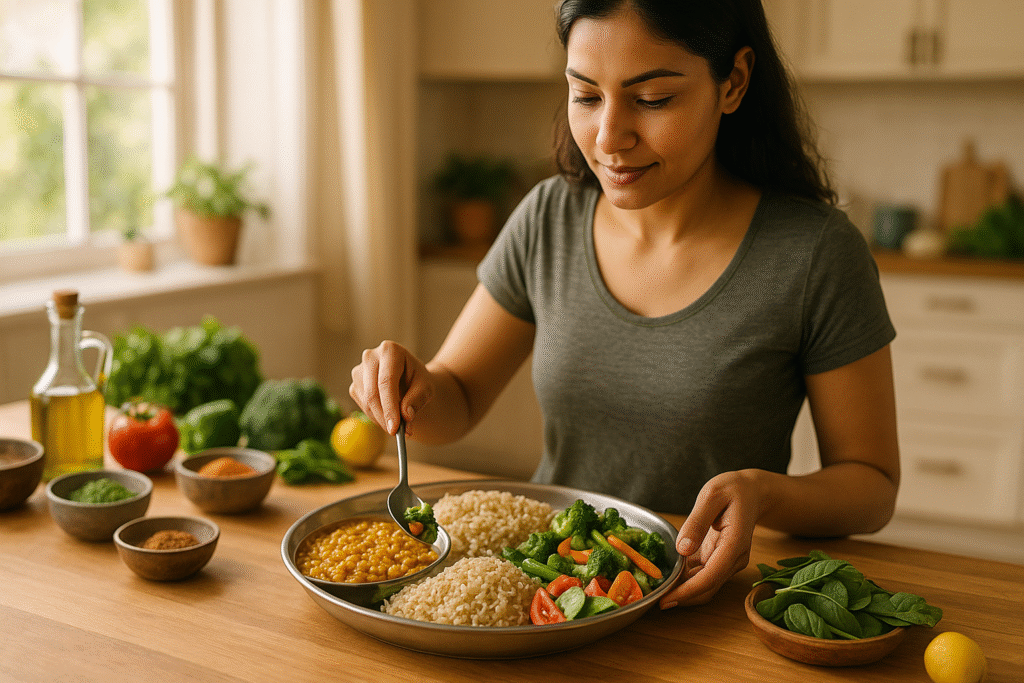
Polycystic Ovary Syndrome (PCOS) can make weight management feel like an uphill climb. Many women work out regularly and eat mindfully, yet the scale barely moves. It’s not lack of effort – it’s biology. PCOS affects hormones like insulin and androgens, which can slow metabolism and trigger sugar cravings. But the right PCOS weight loss diet can change that story.
A balanced, realistic diet can help manage these hormonal imbalances, improve energy, and support lasting fat loss. Forget drastic cleanses or low-carb extremes. Sustainable, nutrient-rich food choices are the foundation of success, especially for those juggling work, family, and health.
This article breaks down everything you need to know – from how PCOS affects metabolism to how to design a PCOS friendly weight loss diet plan that fits your lifestyle and culture (yes, Indian meals included).
Understanding How PCOS Affects Weight
PCOS is driven by hormonal imbalances, particularly excess insulin and androgens. Insulin resistance makes the body less responsive to insulin, so more of it circulates – causing fat storage, especially around the abdomen (NIH). The higher insulin levels also increase androgen production, leading to irregular cycles and acne.
Weight gain in PCOS isn’t simply about calories. It’s about how your body processes them. When insulin spikes after high-sugar meals, the body stores fat instead of burning it. That’s why managing blood sugar levels is crucial.
Researchers have found that even a modest weight loss of 5-10% improves ovulation, insulin sensitivity, and mood (CDC). So, small steps matter more than crash diets.
Building the Right Foundation: What to Eat
There’s no one-size-fits-all PCOS diet, but certain nutrients consistently help balance hormones and support better metabolism. Here’s what should anchor your diet plan:
1. High-Fiber Foods
Fiber slows down digestion and helps regulate blood sugar. It also keeps you full longer, reducing overeating. Include oats, barley, millet, beans, chickpeas, and leafy vegetables.
2. Lean Protein
Protein helps preserve muscle and stabilizes blood sugar. Choose eggs, tofu, paneer, grilled chicken, lentils, and Greek yogurt. Split your protein throughout the day – it curbs sugar cravings more effectively.
3. Healthy Fats
Omega-3-rich sources like flaxseed, walnuts, and fish can reduce inflammation and improve hormone balance (Harvard Health). Use olive or mustard oil in moderation.
4. Low-Glycemic Carbs
Avoid refined grains and sugar. Choose complex carbs like brown rice, quinoa, sweet potatoes, and whole wheat. They keep insulin levels steady.
5. Anti-Inflammatory Foods
Tomatoes, turmeric, berries, and green tea fight oxidative stress. Chronic inflammation worsens PCOS symptoms, so a colorful plate is your friend.
Common Pitfalls in PCOS Weight Loss
Many people unknowingly make choices that hinder progress. Understanding these helps you save effort and frustration.
- Skipping meals: It slows metabolism and triggers cravings. Regular meals help maintain stable glucose levels.
- Extreme low-carb diets: Cutting all carbs can cause fatigue and irritability. Focus on portion control and carb quality instead.
- Over-reliance on processed “diet” foods: Low-fat snacks often contain hidden sugars. Whole foods work better.
- Neglecting sleep: Poor sleep raises stress hormones, which can worsen weight gain.
I’ve seen this pattern when working with women who thought they were “doing everything right.” Once we adjusted their schedule and replaced processed foods with real meals, energy levels improved within two weeks.
Designing a PCOS Friendly Weight Loss Diet Plan
A good PCOS friendly weight loss diet plan focuses on blood sugar balance, portion awareness, and meal timing. Below is an approach you can easily follow.
Morning: Warm water with lemon + soaked chia seeds. Then, have a protein-rich breakfast like vegetable omelet or moong dal chilla.
Mid-morning: A handful of nuts or cucumber slices.
Lunch: Brown rice with dal, sabzi, and salad. Add a small portion of curd for gut health.
Evening snack: Roasted chickpeas or fruit with nut butter.
Dinner: Stir-fried tofu with vegetables or grilled fish with quinoa. Go lighter here than at lunch.
Weekly treat: A small portion of your comfort dish is fine. Balance is key.
At Good Weight, we often build Indian meal plans tailored to daily routines – from rotis and idlis to smoothies – so nothing feels foreign or hard to maintain. A structured yet flexible plan motivates consistency, which makes real results stick.
Lifestyle Habits That Complement the Diet
Food is only part of the puzzle. Hormonal health depends on several habits that either support or sabotage progress.
Strength Training and Cardio Mix
Muscle mass improves insulin sensitivity. Combine resistance workouts thrice a week with brisk walks or swimming. Aim for balance, not exhaustion.
Stress Management
Cortisol spikes worsen PCOS symptoms. Try yoga, journaling, or mindfulness exercises for 15 minutes daily. They also aid sleep.
Consistent Sleep
7-8 hours nightly helps regulate metabolic hormones like leptin and ghrelin. A fixed bedtime matters more than late-night scrolling.
Hydration
Water supports digestion and reduces bloating. Herbal teas or infused water add variety without sugar.
Indian Food Options for a PCOS Diet
Many assume Indian meals aren’t compatible with PCOS-friendly eating. But they can be – when planned right.
- Swap white rice with millets or brown rice.
- Use ghee sparingly; focus on mustard or groundnut oil.
- Include lentil-based dishes like dal, sambhar, or rasam for easy protein.
- Add colorful sabzis using minimal salt and spices.
- End meals with buttermilk instead of dessert.
A simple tweak in cooking methods – like steaming or grilling instead of deep frying – reduces glycemic load and keeps meals vibrant.
Affordable PCOS Weight Loss Options in India
For many, affordability affects consistency. Thankfully, effective PCOS diets don’t require imported supplements or fancy bowls. Basic Indian staples can meet nutrient needs affordably. Bulk-buy whole grains, seasonal vegetables, and legumes. Domestic brands provide clean pantry options without breaking the budget.
If you need structured help, nutrition services from platforms like Good Weight, cult.fit, and correctpcos.com provide guidance with meal tracking tools, remote consultations, and localized meal plans that respect cultural choices.
Long-Term Maintenance and Motivation
Weight maintenance after initial progress often feels tougher than starting out. But the goal isn’t perfection – it’s sustainability. Celebrate small wins like reduced cravings, better energy, or improved sleep. They signal hormonal recovery, not just cosmetic change.
Some clients follow a “90:10” rule – eating healthily 90% of the time while enjoying social meals guilt-free. That’s what balance looks like.
Frequently Asked Questions About PCOS Weight Loss Diet
How quickly can someone with PCOS lose weight?
With consistent effort, gradual loss of 0.5 to 1 kg per week is healthy. Any faster tends to cause rebound gain once the diet ends.
Can I follow intermittent fasting for PCOS?
Short fasting windows (12-14 hours overnight) may help, but longer fasts can elevate cortisol. Monitor your stress levels before committing.
Are dairy and gluten off-limits?
Not always. Some people feel better with reduced dairy or gluten, but others tolerate them fine. Track symptoms instead of eliminating food groups blindly.
What vitamins help with PCOS?
Vitamin D, magnesium, zinc, and omega-3s show promise in supporting metabolic and hormonal balance (PubMed).
Should I see a dietitian for PCOS?
Yes – especially if weight isn’t responding to effort. Personalized guidance helps align nutrition with medication, lifestyle, and everyday challenges.
Key Takeaway
A PCOS weight loss diet works best when it supports sustainable habits – steady blood sugar, enjoyable meals, active living, and emotional balance. You don’t need extremes; you need consistency and smart food choices.
To get personalized health strategies that fit your routine, visit Good Weight and explore programs designed to help you achieve your goals while feeling your best every day.