
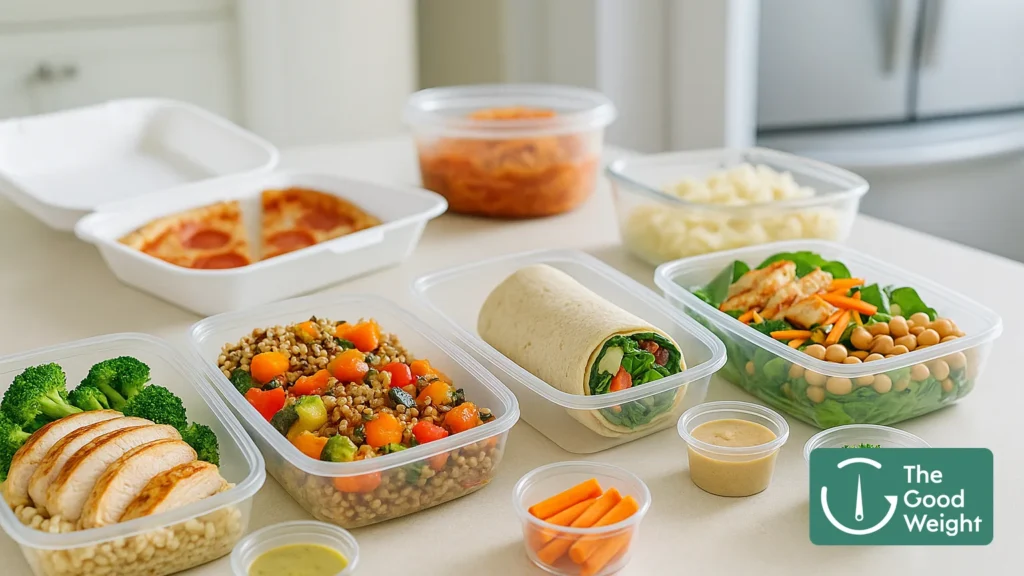
If you have ever searched for lunch prep for the week, you have probably seen advice that assumes everyone in your home is on the same page. In real life, that is often not true. You may be trying to stay consistent with a weight-loss plan while your partner brings home takeout, your kids want pasta, or leftovers from a family dinner keep calling your name from the fridge. That disconnect is not a lack of discipline. It is an environment problem, and it deserves a practical solution.
A better approach is to stop aiming for perfect meal prep and start building default lunches that are easier to follow than to skip. That matters because meal prep does more than save time. It can reduce the mental load of daily food choices, and having meals planned in advance can lower decision fatigue and support weekly productivity. When your home environment is full of mixed food habits, those defaults can be the difference between staying on track and improvising your way into a lunch you did not really want.
Start with an “anchor lunch” instead of five separate recipes
The most realistic way to do lunch prep for the week is to create one repeatable structure, not five completely different meals. Think of it as an anchor lunch: one protein, one high-volume vegetable, one controlled carb, and one flavor booster. This gives you a meal that is filling, flexible, and easier to portion without feeling overly restrictive.
Protein is the part that helps the lunch stay satisfying. Depending on your preferences, that could be chicken, tuna, tofu, beans, lentils, Greek yogurt dressing, boiled eggs, or cottage cheese-based fillings. The vegetable portion adds volume so the lunch looks generous, which can matter psychologically when the people around you are eating more indulgent foods. The controlled carb gives you energy and structure without turning the meal into an all-or-nothing “diet lunch.” The flavor booster, such as pesto, salsa, hummus, yogurt sauce, curry paste, lemon-tahini, or pickled onions, is what keeps the plan sustainable.
This system also makes shopping simpler. Instead of buying ingredients for five unique recipes, you buy a handful of components that can be recombined. That is one reason meal prep is often easier to maintain than daily cooking, especially for beginners, and starting with a few repeatable meals is one of the simplest ways to meal prep with less stress.
The 3-template method for five work lunches
To keep weekly meal prep realistic, prepare three lunch templates that use overlapping ingredients. That gives you enough variety for five days without requiring five full cooking sessions.
1. Grain bowl
Build this with a base of rice, quinoa, bulgur, or roasted potatoes, then add protein and vegetables. A useful portion guide is roughly one palm of protein, one to two fists of vegetables, and one cupped hand of carbs, adjusted for your appetite and goals. Grain bowls work especially well because you can keep sauces separate and change the flavor profile each day.
A grain bowl might look like chicken, roasted broccoli, peppers, brown rice, and yogurt sauce on Monday, then tofu, cucumbers, shredded carrots, quinoa, and peanut-lime dressing on Tuesday. Same structure, different experience. That is how lunch prep for the week becomes sustainable rather than boring.
2. Stuffed wrap or roll
Wraps are ideal if you need a portable office lunch. Use a whole-grain wrap, large lettuce leaves, or flatbread, then fill it with sliced protein, crunchy vegetables, and a moderate amount of spread or sauce. Because wraps feel familiar and convenient, they can be easier to choose over tempting leftovers or delivery.
This template is also cost-conscious. Reusing the same proteins and chopped vegetables across multiple formats helps reduce waste, and meal prep can lower food spending by simplifying ingredient use and reducing impulse meals. If money stress affects your food decisions, that matters just as much as calories.
3. Protein salad or curry box
Your third template should be something that can be eaten cold or reheated quickly. A protein salad box could be chickpeas, chopped eggs, tuna, or shredded chicken over greens with crunchy vegetables and a measured dressing. A curry box might be lentil curry, chicken curry, or tofu in sauce with a small serving of rice and extra vegetables.
This is the template that often saves Thursday and Friday. By midweek, motivation tends to drop, and your lunch needs to be especially easy. Ready-to-go meals can improve consistency by cutting down prep time during busy workdays, which is exactly when people are most likely to abandon the plan.
How to prep everything in one session
A practical prep session usually takes 60 to 90 minutes when you batch-cook. Start by choosing two proteins, two vegetables, one carb, and two flavor boosters. Roast one tray of vegetables, cook the carb, and prepare the proteins in parallel. While those cook, wash greens, chop raw vegetables, portion sauces, and label containers by day.
Keep assembly separate from cooking where possible. For example, store cooked chicken in one container, rice in another, chopped cucumbers and carrots in another, and sauces in small jars. This preserves texture and gives you flexibility. It also lets you share some ingredients with your household without losing your lunch plan.
If portioning is where you struggle, even a simple estimate can help. Tools that show how to adjust meal size around your chosen ingredients can make the process feel more manageable, and meal prep calculators are designed to simplify portion planning and batch quantities. You do not need precision perfection, but you do need a repeatable baseline.
How to stay consistent in an unsupportive household
This is where many lunch plans fail. Not because the food is wrong, but because the environment keeps interrupting the decision.
First, store your prepped lunches where you can see them immediately. Put them at eye level in the fridge, ideally already labeled by day. If family leftovers are front and center while your lunch is hidden behind condiments, your environment is quietly making the decision for you.
Second, create one non-negotiable default: “My weekday lunch is already decided.” This removes the noon debate. You can still be flexible at dinner or on weekends, but lunch becomes the stable point in your day. That kind of structure helps when everyone around you is eating differently.
Third, use shared ingredients without matching portions. If the family is having rice, grilled chicken, and vegetables for dinner, you can use those same ingredients for lunch prep while plating your own portion intentionally. Shared food does not require identical eating.
Fourth, plan one flexible family meal each week. This reduces the feeling that your plan is isolating or fragile. It also makes your system more livable over time, which is essential for sustainable weight loss.
Worked example: vegetarian week
On prep day, cook a pot of lentils, roast cauliflower and zucchini, prepare quinoa, and mix two sauces: lemon-tahini and spiced yogurt. Wash spinach, shred carrots, and portion hummus.
For Monday and Tuesday, assemble quinoa bowls with lentils, roasted vegetables, spinach, and tahini. For Wednesday, use the same lentils and vegetables in a wrap with hummus and carrots. For Thursday and Friday, pack curry boxes by simmering part of the lentils with curry paste and serving them with a small scoop of quinoa and extra roasted vegetables.
To avoid the late-week drop-off, keep one “rescue option” ready, such as a freezer portion of soup or a backup chickpea wrap kit. This matters because the best meal plan is not the fanciest one. It is the one that still works when you are tired.
Worked example: non-vegetarian week
On prep day, bake chicken thighs, boil eggs, roast peppers and broccoli, cook brown rice, and make two sauces: salsa-yogurt and pesto yogurt. Chop cucumbers and lettuce for cold lunches.
For Monday and Tuesday, build grain bowls with chicken, brown rice, broccoli, peppers, and salsa-yogurt. For Wednesday, make a wrap with sliced chicken, lettuce, cucumber, and pesto yogurt. For Thursday, use boiled eggs and chopped vegetables in a protein salad box with a small side of rice cakes or fruit. For Friday, turn the remaining chicken into a quick curry box with frozen mixed vegetables and a measured portion of rice.
This kind of overlap is one reason meal prep can support both adherence and budget. Compared with frequent lunch purchases, bringing prepared meals from home can create meaningful weekly savings over eating out regularly. When your plan saves money, time, and stress, it becomes easier to protect.
FAQ
Does meal prep get boring?
It can if you prep five identical meals. That is why the three-template method works better. You repeat the components, not necessarily the exact meal. Changing sauces, textures, and meal formats usually creates enough variety to keep lunch interesting.
How many days can lunch prep safely last?
In most cases, three to four days in the fridge is a practical quality window for many cooked meals, especially proteins, grains, and roasted vegetables when stored properly. For a full five-day plan, prepare sturdier ingredients, freeze one or two portions, or keep one day as a fast-assembly lunch using prepped components rather than a fully assembled meal.
Can lunch alone help with fat loss?
Lunch alone will not determine your entire outcome, but it can remove one major point of inconsistency. If lunch is where you usually overeat, grab takeout, or eat whatever is easiest, improving that one meal can reduce friction and help you stay aligned with your broader calorie and nutrition goals.
What if family members keep offering extra food?
Have a prepared response before it happens. Try: “Thanks, I already brought my lunch,” or “That looks great, but I’m set for today.” If needed, save a small portion for another time rather than eating it in the moment. Consistency often improves when the response is decided in advance, just like the meal itself.
Lunch prep for the week works best when it respects real life. You do not need a perfect kitchen, a fully supportive household, or gourmet recipes. You need a reliable lunch system that lowers decision fatigue, fits your workweek, and protects your progress when home temptations show up. If you want more structure around food choices and health planning, Good Weight offers a starting point through resources like diagnostic and health support information, and you can explore more personalized guidance at Good Weight.