
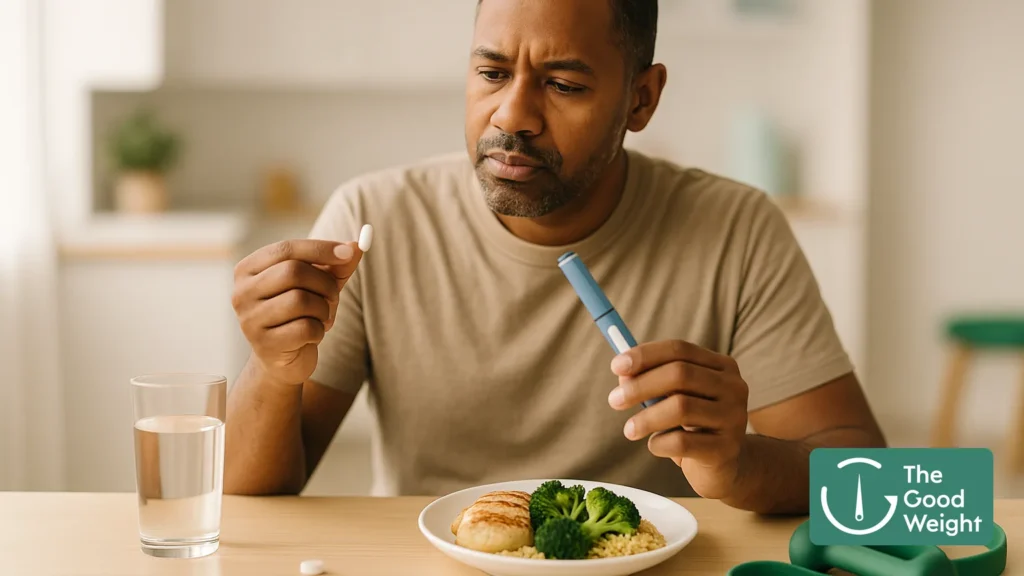
If you are curious about a glp 1 agonist but feel stuck on one practical issue – “Do I really have to inject it?” – you are not alone. Interest in oral GLP-1 options is rising because many adults see a pill as a more approachable starting point than a weekly shot. That reaction makes sense. A needle-free option can lower the emotional barrier to treatment, especially for people who are already overwhelmed by years of dieting, weight cycling, or fear of side effects.
But the more useful question is not whether a pill feels easier. It is whether oral GLP-1 treatment is actually different in the ways that matter: effectiveness, side effects, convenience, adherence, nutrition needs, and the level of medical follow-up required. That is where expectations often drift away from reality. Modern GLP-1 therapies can produce meaningful weight loss, yet recent clinical reviews describe them as part of a broader obesity-care strategy rather than a standalone fix. The route of delivery changes some logistics, but it does not erase the need for supervision, protein intake, movement, and realistic timelines.
This guide is designed to help you make a better decision before assuming oral GLP-1 is simply the easier version of injectable treatment. We will walk through how these medicines work, what really changes when you switch from injections to pills, why muscle preservation deserves more attention, and what to ask a clinic before you start.
Why interest in oral GLP-1 is rising now
The demand is easy to see. Good Weight’s team has seen active discussion around oral GLP-1 for weight loss on X, including a recent post that drew 68 likes and 3.4K views. That level of engagement reflects a real shift in consumer interest: people are not only asking whether GLP-1 medicines work, but whether they can access similar benefits without injections.
Part of that momentum comes from the broader success of GLP-1 medicines in obesity care. In recent years, these therapies have moved from niche metabolic treatments into mainstream discussion because newer incretin-based medicines have produced larger average weight-loss effects than older anti-obesity medications. As awareness grows, so does demand for formats that feel more convenient, less intimidating, and easier to fit into everyday life. For someone who has delayed treatment solely because of needles, an oral option can seem like the answer they were waiting for.
Still, “more approachable” should not be confused with “effortless.” A pill may reduce psychological friction, but it can introduce its own adherence challenges, especially when timing, fasting, and absorption rules matter. That is why the best next step is not self-comparing products from social media clips. It is understanding what a glp 1 agonist actually does in the body and how that translates into day-to-day expectations.
What GLP-1 medicines actually do
A glp 1 agonist works by mimicking or enhancing pathways related to the gut hormone GLP-1, which helps regulate appetite, glucose handling, and digestion. In plain English, these medicines often help people feel less hungry, get full sooner, and stay satisfied longer after meals. They also slow gastric emptying, meaning food leaves the stomach more gradually. That slower pace can reduce the drive to keep eating, but it can also help explain why nausea, bloating, or early fullness are common during dose escalation.
That mechanism is one reason these medications can be effective for weight loss, but it also explains why they do not replace behavior support. If your appetite drops sharply, you may eat less overall – but without guidance, you may also under-eat protein, skip balanced meals, or rely on small amounts of easy-to-tolerate processed foods. Major reviews of obesity pharmacotherapy emphasize that medication works best when combined with nutrition, physical activity, and long-term care. The medicine changes the biological environment; it does not automatically build the habits that protect energy, muscle, and sustainability.
This distinction matters because many people start treatment expecting the medication itself to do all the work. In reality, a GLP-1 pathway can create a powerful window of opportunity. Hunger may quiet down enough for you to follow a more structured eating pattern. Cravings may feel less urgent. Portion sizes may become easier to manage. But you still need a plan for meals, protein, hydration, resistance exercise, and follow-up. That is how a treatment becomes sustainable weight care instead of another cycle of short-term loss followed by frustration.
Oral versus injectable GLP-1: what changes and what does not
What changes: convenience, routine, and the emotional barrier
The biggest difference between oral and injectable GLP-1 medicines is obvious: one is swallowed and the other is injected. For many people, that alone is meaningful. If fear of needles has been the main reason you have not pursued treatment, an oral option can feel less medicalized and easier to start. That emotional accessibility should not be dismissed. In weight care, barriers that seem small from the outside can make the difference between taking action and postponing it for another year.
The daily routine, however, may be more demanding with an oral product than people expect. Some oral GLP-1 formulations have specific instructions around timing, fasting, and what you can consume afterward, because absorption is more fragile than with injections. That means the “easy” option may be easier emotionally but less forgiving practically. A weekly injectable can sometimes be simpler from an adherence standpoint because it does not require a daily morning ritual with precise timing.
What does not change: side effects, monitoring, and eligibility
A needle-free route does not mean a side-effect-free route. Because the medication pathway is still influencing appetite and digestion, many of the familiar issues – nausea, constipation, diarrhea, bloating, reflux, and reduced appetite – can still show up. Clinical overviews of incretin therapies note that gastrointestinal effects remain among the most common tolerability issues across this class. In other words, changing the route may change convenience, but it does not erase the need for dose titration and symptom management.
Monitoring also remains essential. You still need to know whether the medication is working, whether side effects are becoming disruptive, whether your food intake has become too low, and whether weight loss is coming at the expense of strength and lean mass. Research on GLP-1-based approaches continues to examine both benefits and safety tradeoffs across obesity treatment pathways. That is why “no needle” should never be interpreted as “no medical oversight.”
Which is better?
There is no universal winner. An oral option may be better for someone whose main barrier is injection anxiety and who can consistently follow a strict dosing routine. An injectable may be better for someone who prefers less frequent dosing and wants fewer absorption-related rules. The right choice depends less on online comparisons and more on your habits, schedule, gastrointestinal tolerance, and ability to follow through with nutrition and follow-up.
The muscle-loss question people are now asking
Interest in GLP-1 and muscle preservation is growing even faster than interest in oral formats. Good Weight’s team has seen X posts on muscle preservation with 92 likes and 22.3K views and another with 77 likes and 2.7K views, which signals a real change in what readers care about. People are no longer asking only, “How much weight can I lose?” They are asking a better question: “What kind of weight am I losing?”
That concern is valid. Weight loss does not come exclusively from body fat. Some loss can come from lean mass, especially when total intake drops sharply, protein is low, and resistance training is absent. Emerging evidence has pushed this issue into the spotlight, with recent analyses focusing specifically on lean mass changes during incretin-based weight loss. The takeaway is not that GLP-1 medicines “cause muscle loss” in a simplistic sense. It is that reduced appetite can make it easier to underfuel, and underfueling without a muscle-preservation strategy increases risk.
This is where day-one planning matters. If you start a glp 1 agonist and simply “eat whatever sounds tolerable,” you may end up taking in too little protein for weeks. You may also become less active because fatigue, nausea, or low calorie intake reduces training motivation. Over time, that combination can work against body composition, strength, and long-term maintenance. Mechanistic and translational work on next-generation obesity therapies is increasingly examining body-composition outcomes, not just scale weight. That is an important shift, because the number on the scale does not tell you whether you are protecting the tissue that helps support metabolic health and daily function.
A better plan is simple, even if it is not always easy: set a protein target with your clinician or dietitian, distribute protein across meals, and include resistance training from the beginning. You do not need a perfect gym routine to benefit. Two to four consistent strength sessions per week, plus enough daily movement, can make a meaningful difference. If your appetite falls so low that hitting basic protein needs becomes difficult, that is not a sign to “push through.” It is a sign to adjust the plan.
Who should ask more questions before starting
Some people should slow down and have a more detailed conversation before starting any glp 1 agonist – oral or injectable.
People with significant GI sensitivity
If you already struggle with reflux, chronic nausea, constipation, IBS-type symptoms, or very slow digestion, ask more detailed questions about how dose escalation will be handled. Since these medicines affect gastric emptying and appetite, preexisting GI issues can shape tolerability. That does not mean you are automatically a poor candidate, but it does mean your starting plan should be more individualized.
People with a history of restrictive dieting
If your weight history includes repeated crash diets, compulsive under-eating, or all-or-nothing food rules, treatment deserves extra care. Appetite suppression can sometimes feel rewarding at first, especially for people who have spent years chasing lower intake. But sustainable weight loss is not the same as eating as little as possible. Support around meal structure, body image, and long-term well-being matters here.
People with low protein intake or low strength-training readiness
If you already skip meals, rarely eat protein-rich foods, or are not doing any form of resistance exercise, you need a plan before starting. This is especially important because appetite often falls before nutrition habits improve. Reviews of obesity treatment strategies increasingly stress preserving function and lean tissue during weight reduction. Starting without that foundation can make treatment harder to tolerate and less supportive of long-term results.
People expecting rapid, effortless loss
GLP-1 medicines can be effective, but unrealistic expectations still create disappointment. Current evidence shows meaningful average weight loss is possible, yet response varies across individuals and products. If you expect dramatic change with no side effects, no plateaus, no nutrition planning, and no behavior work, you are setting yourself up for frustration. The most successful patients usually approach treatment as one part of a broader support system.
Smart questions to ask a clinic before choosing oral or injectable treatment
A good consultation should leave you with more clarity than excitement. If a clinic cannot answer practical questions, that is a problem. Before starting, ask:
1. What is the dosing schedule, and how strict is the routine?
If the option is oral, ask exactly when it should be taken, whether fasting is required, and what could interfere with absorption. If it is injectable, ask about titration speed and what happens if you miss a dose. Convenience is not just about needles; it is about whether the plan fits your real life.
2. How will side effects be monitored and managed?
Ask what symptoms are common, when to report them, and whether dose escalation can be slowed if needed. Recent real-world and clinical evaluations continue to monitor tolerability patterns with GLP-1 therapies. A thoughtful program should give you more than a prescription – it should give you a response plan.
3. What protein target should I aim for?
This is one of the most important questions and one of the most commonly skipped. If your appetite drops, “eat healthier” is too vague. Ask for a specific daily protein goal, examples of protein-forward meals, and guidance on what to do if eating becomes difficult.
4. What strength-training guidance do you provide?
You do not need bodybuilding programming, but you do need a strategy. Ask whether the clinic offers resistance-training basics, referrals, or practical guidance for beginners. If they discuss only the medication and never mention muscle preservation, that is a red flag.
5. What should I expect to pay each month?
Cost affects adherence. Ask about medication cost, follow-up visits, lab work, coaching, and whether pricing changes over time. Newer obesity treatments have generated enormous attention partly because experimental next-generation drugs are being discussed in the context of very large weight-loss effects, but hype does not pay for a sustainable treatment plan. Your budget matters.
6. How often will I have follow-up?
A prescription without follow-up is not a full care plan. Ask how often weight, symptoms, food intake, hydration, energy, and training capacity will be reviewed. If you want additional context around health-related products and evaluation categories, Good Weight’s diagnostic and health product resource hub can help you think more broadly about how medical support fits into long-term care.
7. What happens if the first plan is not working?
Ask how success will be measured beyond scale weight. Will the clinic reassess side effects, adherence, nutrition quality, strength, and expectations? The best programs adapt. They do not assume a single medication format will solve every obstacle. If you want to stay connected to ongoing discussions in the broader Good Weight ecosystem, you can also explore the site’s discussion forums for a sense of how active health topics evolve over time.
The bottom line: oral GLP-1 may feel simpler, but it is not automatically easier
An oral glp 1 agonist can be a meaningful option for people who are hesitant about injections. That matters, and it may open the door to treatment for readers who would otherwise delay care. But a pill does not turn GLP-1 therapy into a casual or hands-off process. The same fundamentals still matter: eligibility, dose titration, side-effect management, adequate protein, resistance training, and realistic expectations.
If you are weighing oral versus injectable treatment, the best next step is not comparing products in isolation. It is discussing your goals, habits, medical history, and barriers with a supervised clinic that can help you decide whether a GLP-1 pathway fits – or whether you need medication, nutrition restructuring, or both. If you want support grounded in sustainable habits and long-term well-being, visit Good Weight to take the next step toward a more personalized plan.