
Why This Guide Matters Now
You’re seeing posts about PCOS chin hair, irregular cycles, or overnight weight gain on social media – and it’s normal to feel anxious. As of April 27, 2026, online conversations have shifted from basic diet tips toward _interpretation of symptoms_, _anxiety_, and _misinformation._ This guide takes a different path – with a clinician-led, evidence-based focus anchored in real data and designed for busy working women in India seeking clarity, not hype.
Understanding Common PCOS Symptoms (and Why They Aren’t Diagnosis Alone)
PCOS is a complex syndrome – not just a single symptom. It involves multiple domains:
- Irregular periods: cycles longer than 35 days, very heavy or very light bleeding, or missing periods altogether are common signs pointing toward ovulation issues.
- Chin or facial hair (hirsutism), acne, or oily skin: signs of androgen excess, not unique to PCOS alone, but commonly raise suspicion.
- Weight gain or central fat accumulation can be part of PCOS – but also a result of many other factors, like stress or changes in activity).
Each of these symptoms is real and distressing, but none on its own confirms PCOS. That’s important – seeing them doesn’t mean you’re necessarily diagnosed. These issues warrant medical evaluation, not self-labeling.
The Role of Insulin Resistance in PCOS-Related Weight Gain
Insulin resistance (IR) is at the heart of many PCOS-related metabolic challenges:
- Around 50-90% of women with PCOS show insulin resistance, regardless of body weight.
- Being overweight or obese significantly raises your likelihood of IR – one study found overweight PCOS women had IR in 91.7% of cases versus just 8.3% of lean PCOS women (study findings).
- Excess weight and IR form a vicious cycle: weight gain worsens IR, which promotes further fat storage, especially around the midsection.
- Notably, even in the absence of weight gain, hyperandrogenism can drive IR) and metabolic issues – seen in controlled animal studies.
This means your body might be resistant to typical weight-loss strategies – not because you’re not trying, but due to hormonal and metabolic roadblocks.
Symptom vs. Syndrome: Why Diagnosis Needs Professional Guidance
Social media posts can simplify or stigmatize PCOS – phrases like “PCOS is _just_ a symptom” or “you must have PCOS if you have acne” are misleading and anxiety-inducing (online discussions).
This misinformation can lead to:
- Overuse of unproven supplements or tests promoted by influencers.
- Self-diagnosis that amplifies anxiety and misinterprets symptoms.
- Delayed or incorrect care, especially when medical professionals are hard to access or lack PCOS training.
Self-diagnosis may feel empowering – but PCOS diagnosis depends on a combination of symptoms, lab tests, and imaging evaluated by a clinician.
When and How to Seek Medical Evaluation
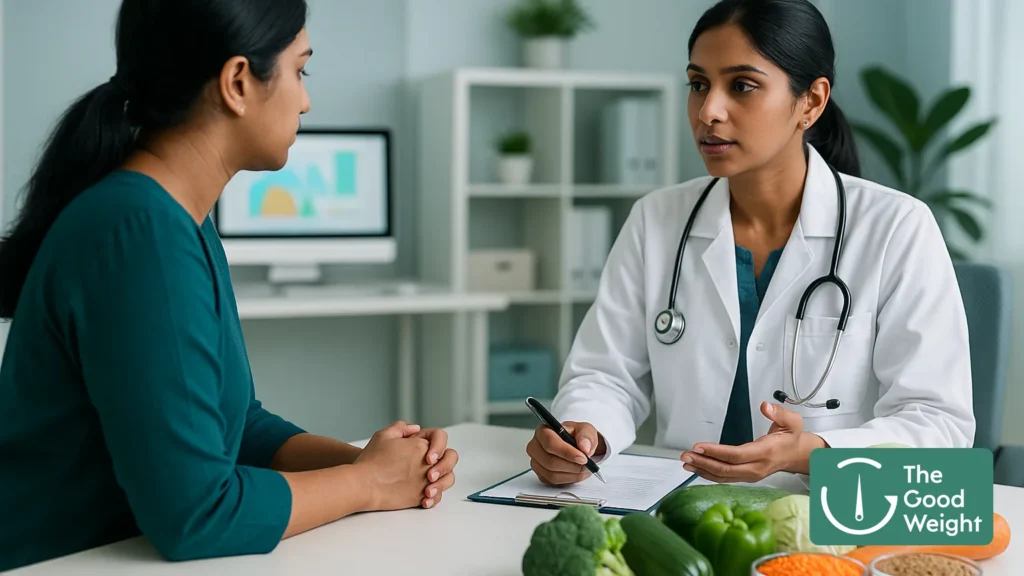
If you’re recognizing one or more of the symptoms above, consider seeing a healthcare provider. Here’s what to expect:
- Clinical discussion: A trusted doctor (ideally an endocrinologist or gynecologist) will ask about your menstrual cycle, lifestyle, stress, and other conditions.
- Physical examination: To assess signs like hirsutism, acne, or body composition.
- Blood tests:
- Hormones: LH, FSH, testosterone, SHBG, prolactin, TSH.
- Metabolic markers: fasting insulin, glucose, and HOMA‑IR for insulin resistance.
- Ultrasound or AMH testing: To assess ovarian morphology, used alongside symptoms and labs – not as a standalone test.
If these steps point toward PCOS, your provider may initiate a management plan targeting health goals – not stigma.
Building a PCOS Weight‑Supportive Strategy
This isn’t “another quick-fix diet.” A clinically grounded, sustainable approach means:
1\. Improve Insulin Sensitivity
- Dietary shifts such as higher protein intake (40%+ of calories) vs. low-protein (15%) have shown ~4.4 kg greater weight loss and improved blood-sugar control – independent of weight change.
- Lifestyle changes like regular movement remain foundational; even modest weight loss (5-10%) can improve metabolic and reproductive function.
2\. Medication When Needed
- Metformin is widely used to support insulin sensitivity if lifestyle changes plateau or glucose tolerance is impaired).
- GLP-1 receptor agonists (e.g., semaglutide) and newer drugs like tirzepatide show strong weight-loss effects in PCOS when lifestyle changes alone aren’t enough.
- Other options, such as pioglitazone), exist but may lead to weight gain, making them less ideal.
3\. Mind‑Body Support
- Monitor sleep quality and stress, which can worsen IR and weight resistance.
- Address emotional well-being – you deserve support, not shame.
Internal Resource Connections at The Good Weight
If you’re curious about the relationship between weight and well-being, explore:
- Our comprehensive [female weight-loss diet guide](/female-weight-loss-diet) for sustainable approaches beyond fad fixes.
- The broader approach to [diet-based weight loss](/diet-based-weight-loss) that considers hormones, metabolism, and lifestyle.
- When medical guidance is needed, our [weight loss doctor consultation](/weight-loss-doctor-consultation) page suggests how to access expert care.
FAQs
Q: Can I have PCOS without being overweight?
Yes. Lean women with PCOS may still experience insulin resistance and metabolic symptoms, even if they don’t gain weight (study reference).
Q: Is chin hair alone enough for diagnosis?
No. Hirsutism may be concerning but must be evaluated with other symptoms and lab tests) – never used in isolation.
Q: Should I rely on social media symptom checkers?
Social platforms can be helpful for community – but not for diagnosis. Self-diagnosis) often falls prey to confirmation bias and misleads without medical context.
Q: When should I consider medical evaluation?
If you’re experiencing irregular cycles, unwanted hair growth, persistent acne, or unexplained weight changes – especially if it’s causing professional or personal anxiety – an evaluation is a wise next step.
Conclusion
If you’ve been feeling anxious after scrolling through PCOS content on social media – this is your pause button. Symptoms like chin hair, irregular periods, or stubborn weight aren’t anything you should ignore – or self-diagnose without support.
The Good Weight team encourages you to take the next step: seek a medically grounded evaluation that respects your experience and empowers your path forward. When you’re ready, our [consultation resource](/weight-loss-doctor-consultation) can help you connect with expert guidance. More than diets – it’s about clear, symptom-aware support and a sustainable, confident you.
Remember: PCOS is a journey, not a label – and you don’t have to walk it alone. Explore more at The Good Weight.