A friend recently inquired why they’re seeing so many weight loss options in Chennai – but few backed by real medical supervision and attention to safety. You’re not wrong to be cautious. Chennai is bustling with weight clinics, but when it comes to GLP‑1-based programs – especially semaglutide – what matters most is careful monitoring and the expertise of the team guiding you.
Here’s how to separate hype from help, based on data, expert insights, and what’s actually happening on the ground. You’ll get clarity on:
- Where Chennai really stands in medical weight loss
- How semaglutide and other GLP‑1 options work – and what can go wrong
- What safe, doctor‑supervised options feel and look like
- How to peek behind the curtain of monitoring and dosage decisions
Let’s jump straight into the details.
—
Why Chennai Matters for Medical Weight Loss
Chennai draws about 40% of India’s medical tourists, making it one of the country’s key healthcare hubs according to data on healthcare in Chennai.
So, programs in this city aren’t fringe – it’s often specialized services housed alongside top hospitals. If a provider is serious about monitoring semaglutide or GLP‑1 injections, there’s a good chance the follow‑up systems exist. The trick is finding them smartly.
—
How GLP-1 (Semaglutide) Works – and Why Safety Isn’t Optional
Semaglutide is a glucagon‑like peptide‑1 receptor agonist (GLP‑1 RA), used for diabetes but also weight loss. It slows digestion, helps you feel full, and can lower blood sugar, as outlined in a 2021 Frontiers in Endocrinology review.
That helps explain its appeal – but there are real side effects that deserve serious care.
Common issues include:
- Nausea, vomiting, constipation, diarrhea, or abdominal discomfort – experienced by up to 20% of people on semaglutide, according to clinical guidance from NCBI.
- Appetite suppression and delayed gastric emptying, which helps weight loss but can make anesthesia risky if you’re heading into surgery, as reported by Le Monde Science.
Less common but more serious risks:
- Pancreatitis. Some reports show low rates – around 0.3 per 100 patient‑years versus 0.2 in controls, noted by DrOracle research on semaglutide safety). Other studies found up to a 9‑fold higher risk compared to older medications, like bupropion‑naltrexone, as explored by Time Health.
- Gallbladder problems – gallstones and cholecystitis – seem slightly more common in GLP‑1 users, also observed in semaglutide safety analyses).
- Diabetic retinopathy progression – especially if your sugar levels crash too fast. In SUSTAIN‑6, those with existing eye issues saw complications in 8.2% vs. 5.2% in placebo, based on DrOracle’s clinical summary).
- Rare but serious: allergic reactions, kidney injury (mostly tied to dehydration from vomiting), thyroid C‑cell risks seen in animal studies, and anesthetic concerns noted in PubMed reviews.
Bottom line: those side effects may be rare, but skipping medical monitoring can make them worse – fast.
—
Doctor‑Supervised Weight‑Loss Injections: What Good Practice Looks Like
The question: who’s doing this right in Chennai?
A safe, responsible program includes:
- A thorough medical history – glucose levels, gallstone history, previous pancreatitis, eye health, kidney function, thyroid markers, as outlined by Fella Health’s clinical guide).
- Regular check‑ins – at least monthly early on – for vital signs, kidney labs, and troubleshooting side effects.
- Clear criteria on when to pause or stop treatment – severe nausea, abdominal pain, vision changes, dehydration symptoms – reviewed by GLP‑1 Authority’s risk framework).
- Slow dose titration rather than jumping in high. That way you ease into tolerability, reflected in Le Monde’s 2024 feature on safe use of Ozempic).
I’ve looked around, and clinics offering doctor‑supervised GLP‑1 injection programs – basic questions ring up names like endocrinologists in T‑Nagar or Besant Nagar, but clarity is still patchy. Some Reddit community discussions) report quick prescriptions via pharmacy‑linked doctors – sometimes an MD, sometimes MBBS only.
That worries me. There’s really no room for casual prescribing here. Cost and buzz can cloud judgment – but you’re dealing with a hormone system, not a quick fix.
—
What You Should Demand – and Expect – from a Chennai Program
Here’s what I’d check before starting semaglutide or any GLP‑1 pathway:
- Consult with an endocrinologist or internist trained in diabetes/metabolic care – not someone hired by a pharmacy app. Ask if they monitor for gallbladder, retinopathy, and kidney changes, as discussed in Fitness India subreddit testimonies).
- Ask about plan for dose titration. A cardiologist metrically guided by trial data, not anecdotal “more is better,” as underscored in Le Monde’s deep dive).
- Make sure lab and imaging reports are part of your follow‑up – not just “how’s your appetite?” Check plan for eyes, pancreas, gallbladder if symptoms appear.
- Require a protocol for stopping the drug – if pain, dehydration or vision issues arise, how are you evaluated next? See GLP‑1 Authority’s serious risk criteria).
If you’re browsing provider websites, a red flag is “cheap weight‑loss injection with no lab monitoring.” That’s a direct signal to keep scrolling.
—
How Good Weight Supports You in Medical Weight Loss Chennai
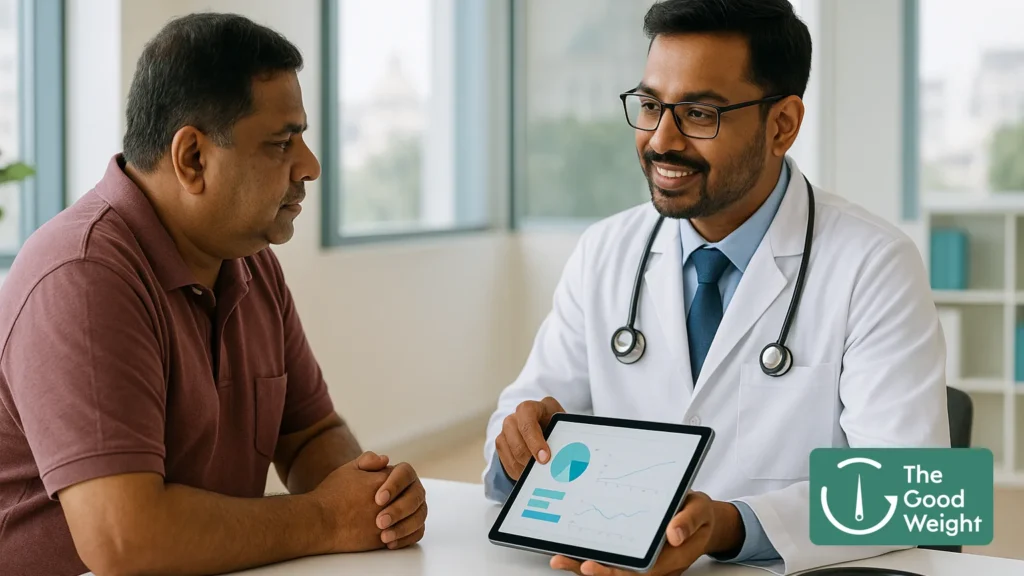
At Good Weight, we’ve built our model around this kind of supervision. We partner with certified weight‑loss doctors in Chennai – usually endocrinologists – who follow a structured program:
- Start with metabolic assessment and retinal screening
- Set realistic weight goals – expect 5-15% reduction over 3-6 months with GLP‑1+nutrition, not overnight miracles
- Titrate slowly from low dose and spot “flare‑ups” early
- Meet every 4 weeks until stable, then every 8-12 weeks
- Encourage reporting even mild symptoms – early warning helps us adjust safely
That’s why we suggest scheduling through our medical weight loss Chennai page or booking a weight loss doctor consultation if you’re curious whether semaglutide is right for you.
Our process might not sound sexy – but it treats your health as a system, not a one‑size shot.
—
Quick Summary Table
| Feature | Good Practice in Chennai | Red Flag to Watch For |
|---|---|---|
| Doctor Involvement | Endocrinologist or trained internist supervised | Prescribed by pharmacy app only |
| Initial Assessment | Full labs, eye check, gallbladder risk review | No labs or risk discussion |
| Dosing Approach | Slow titration based on tolerance | Jumping to high doses immediately |
| Safety Monitoring | Regular check-ins, plan for pausing if needed | “Just come if you feel bad” |
| Decision Criteria Review | Stop if serious signs appear | No clear stopping criteria |
—
Frequently Asked Questions
Do GLP‑1 drugs like semaglutide increase cancer risk?
Animal studies found thyroid C‑cell tumors, but human data shows no confirmed causal link. The FDA and EMA haven’t confirmed risks in humans, as reported by Frontiers in Endocrinology). Please share any family history of thyroid cancer before starting.
Is pancreatitis risk high for me?
Numbers vary, but the rate is low – around 0.3 per 100 patient‑years – but some weight‑loss users saw up to 9x higher risk than with older meds, according to DrOracle data on safety outcomes). If you’ve had gallstones or high triglycerides, extra caution and monitoring matter.
How common are side effects like nausea or vomiting?
Pretty common – up to 20% experience nausea, and over a third may vomit, based on clinical summaries from NCBI). It’s manageable with dose adjustments and support.
Can I take it without a doctor?
I’d strongly advise against it. Variability in how it’s sold is high, and without monitoring, risks can escalate. Stories of hospitalizations exist – even from misused diabetic prescriptions, as reported in Le Monde).
What follow‑up should I expect?
Expect labs and symptom checks every 4 weeks initially. Longer-term, 8-12 week reviews work once you’re steady. Eyes, pancreas symptoms, kidneys – don’t skip check-ins.
—
Your Next Steps
- If you’re in Chennai and exploring semaglutide or any GLP‑1 solution, prioritize programs that include lab monitoring, doctor‑led dose plans, and symptom tracking.
- Visit our medical weight loss Chennai page or book a weight loss doctor consultation with Good Weight. We’ll walk you through exactly how we handle safety, side effects, and long‑term progress.
- Keep asking questions – treatment should feel mathematical and cautious, not rushed or routine.
You’re making a health investment. The goal isn’t just weight loss – it’s that you slow, steady, and supported. Ultimately, few things beat peace of mind in a medical plan.
At the end of the day, reaching your ideal weight matters – but doing it the right way matters even more.
To learn more about how Good Weight approaches medical supervision and long-term support, check out our medical weight loss hub or schedule a doctor consultation today.