
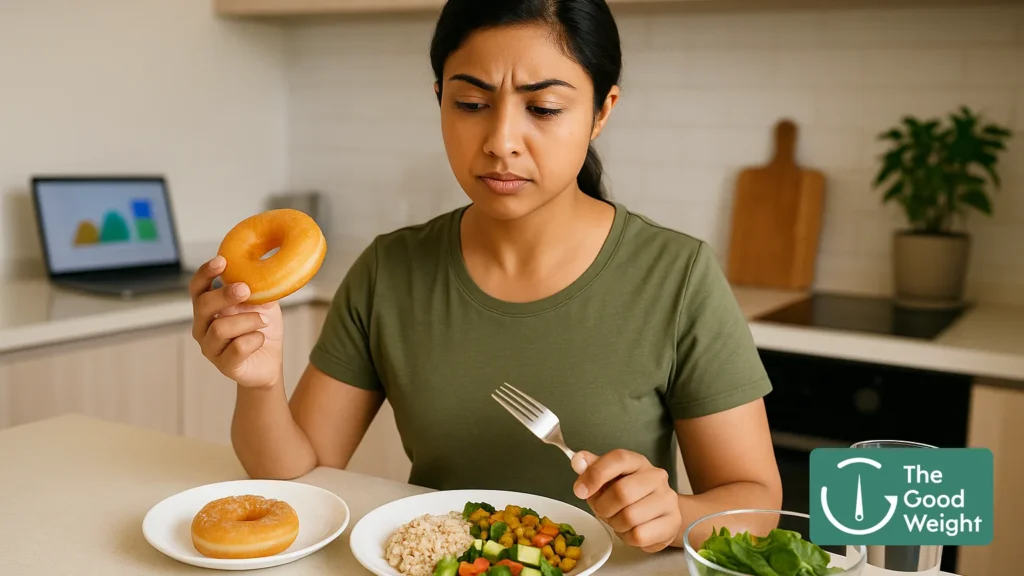
If you’re holding onto the belief that “ghar ka khaana” is automatically healthy, you’re not alone. Currently, India is waking up to a critical realization: familiar home meals can often be high in refined carbohydrates and low in protein – stalling weight loss, compromising metabolism, and increasing disease risk. This guide will help you build a supportive, realistic, and personalized “ghar ka khaana” that preserves cultural comfort without sacrificing progress.
Why “Ghar Ka Khaana” Can Stall Weight Loss
Despite the wholesome reputation of home-cooked food, studies show a persistent imbalance in Indian meals:
- In many households, nearly 50% of protein intake comes from cereals – like rice and wheat – whose amino acid profile is poor and doesn’t meet Nutrition Institute of India guidelines of a maximum 32% cereal-sourced protein. This reliance results in full plates but inadequate nourishment (as reported in a CEEW dietary trends study).
- A landmark ICMR-India Diabetes study found that 60-65% of the typical Indian meal is carbohydrates, with only about 9-11% being protein – creating a metabolic environment ripe for insulin resistance, diabetes, and weight gain (as detailed by Mint Lounge).
- The Indian Council of Medical Research (ICMR) reports that even small shifts – replacing 5% of carbohydrate calories with protein – can meaningfully lower diabetes risk at the population level (according to NDTV Health).
Scrollable takeaway: Indian home meals often “look” healthy, but are uneven – rich in starch, low in quality protein, and offering minimal satiety or metabolic benefit.
Introducing the “Protein-First Indian Plate” Strategy
To break through weight loss plateaus while embracing your home food culture, let’s adopt a protein-first framework:
- Protein-focused loading
Start each meal with 20-30 grams of protein – from options like eggs, paneer, chicken, fish, tofu, or chickpeas. This aligns with expert recommendations for GLP-1 users to maintain muscle and satiety (as explained by India Today Health).
- Balance carbs, protein, healthy fats
Reallocate your plate to roughly 40% protein (by calorie), 30% complex carbs, and 30% fiber/fat-rich vegetables or healthy fats like nuts or avocado.
- Emphasize protein quality
Replace some cereal-based protein with pulses, dairy, eggs, or lean meats. Quality matters as much as quantity (as NDTV Health reports).
- Use fiber and fats for glycemic control
Pair protein-rich items with legumes, vegetables, healthy oils, and resistant starch (like cooled brown rice or millets) to enhance satiety and support GLP-1 hormone response (explains ReverseAll Nutrition Guide).
Protein Upgrades for Common Indian Meals
Whether you’re vegetarian or non-vegetarian, here are simple swaps that elevate protein without sacrificing comfort:
Breakfast
- Swap dosa/poha with moong dal chilla, ragi malt porridge with nuts, or egg-stuffed paratha – aim for ~20g protein. A 30-day high-protein breakfast trial showed a 4.5 kg loss and reduced cravings without changing other meals (as described by NDTV Food).
Lunch and Dinner
- Add an extra sabzi with paneer, tofu, or chicken → boosts satiety and protein.
- Combine cereals with pulses (like rice + rajma) to improve protein quality discreetly (as NDTV Health confirms).
Snacks/Tea Time
- Replace namkeen or sweets with curd with flax seeds, roasted chana, or a sprout salad – protein-rich, familiar, and satisfying.
Drinks and Sides
- Prefer tea with a splash of milk, yogurt smoothies, or spirulina-infused drinks instead of sugary chai or drinks.
Structuring a Personalized Indian Diet Plan That Supports Weight Loss
Not all goals are the same. Here’s how personalization plays out for different needs:
GLP‑1 Nutrition Support
For those on GLP‑1 medications (like semaglutide), structured protein intake is non-negotiable for muscle preservation. Aim for 1-1.5 g protein per kg body weight and start meals with protein (notes India Today Health).
Gastrointestinal side effects – like nausea or constipation – are common. Mitigate them through smaller meals that combine fiber (vegetables, oats) and hydration, and avoid high-fat or fried snacks (advises India Today Health).
PCOS and Diabetes Risk
Women with PCOS often struggle with insulin and cravings. A protein-first plate stabilizes blood sugar and supports hormonal balance. Prioritize dairy, legumes, eggs, and lean meats (according to NDTV Health).
Weight Loss or Slow Metabolism
Preserving lean mass through protein and gentle strength training improves fat loss and metabolic flexibility (per India Today Health).
Sample Day on a Protein-First Indian Plate
MealProtein Source (20-30g)Carbs (Balanced)Veggies / Good FatsBreakfastMoong dal chilla + egg bhurjiQuinoa/porridgeSpinach/cucumber + chia seedsMid-morningCurd with flax + walnuts–LunchChicken curry / paneer tikkaBrown rice or milletMixed veg sabzi, salad with olive oilEvening SnackSprout chaat or roasted chana-Tomato, onion, lemonDinnerFish/tofu stir-fry + dalRoti (whole wheat)Greens with ghee or avocado sliceOptional NightWarm milk or high-protein, low-sugar shake–
FAQs
Q: How can I fit more protein affordably?
Budget-friendly sources include eggs, legumes, paneer, and tofu. A CEEW report shows that although average home protein intake is around 55.6 g/day, most comes from low-quality cereals. Adding affordable pulses or eggs significantly improves nutrient quality (according to a CEEW dietary study).
Q: Will high-protein meals help with hunger?
Yes – multiple trials show that high-protein diets reduce hunger, calorie intake, and abdominal fat compared to standard diets (as reported in CGSI Keemat Journal).
Q: Do these changes support GLP‑1 therapy?
Absolutely. Structured nutrition enhances weight loss, preserves muscle, and lowers side effects, making treatment sustainable (described by India Today Health).
Q: Is this sustainable with family meals?
Yes – small swaps (like adding protein sides or making chillas instead of idli) preserve taste and cultural appeal while nudging better nutrition.
In Summary
By embracing a protein-first home meal strategy – with thoughtful swaps, stable structure, and personal goals – you can transform “ghar ka khaana” into a sustainable engine of weight loss, metabolic health, and deeper nourishment.
If you’d like tailored help, our [personalized weight loss diet](/diet-based-weight-loss) or [weight loss food kit](/product/weight-loss-food-kit) can make those changes even easier. At Good Weight, we celebrate tradition while guiding you to meet your goals with lasting health.
Let your next plate be familiar, satisfying – and smartly designed for your ideal weight and well-being.