
If weight loss has become harder than it used to be, it is understandable to wonder whether your metabolism is “broken.” You may notice that the routine that once worked now produces little change, particularly during midlife, after several dieting attempts, or during a period of poor sleep and high stress.
But a metabolism booster is rarely the missing piece. While metabolism can adapt to changes in body weight, food intake, activity, age, and health, it does not usually slow so dramatically that weight loss becomes biologically impossible. More often, slower progress reflects several small changes happening at once: less daily movement, reduced muscle mass, disrupted sleep, increased hunger, under-eating followed by overeating, or a plan that is difficult to sustain.
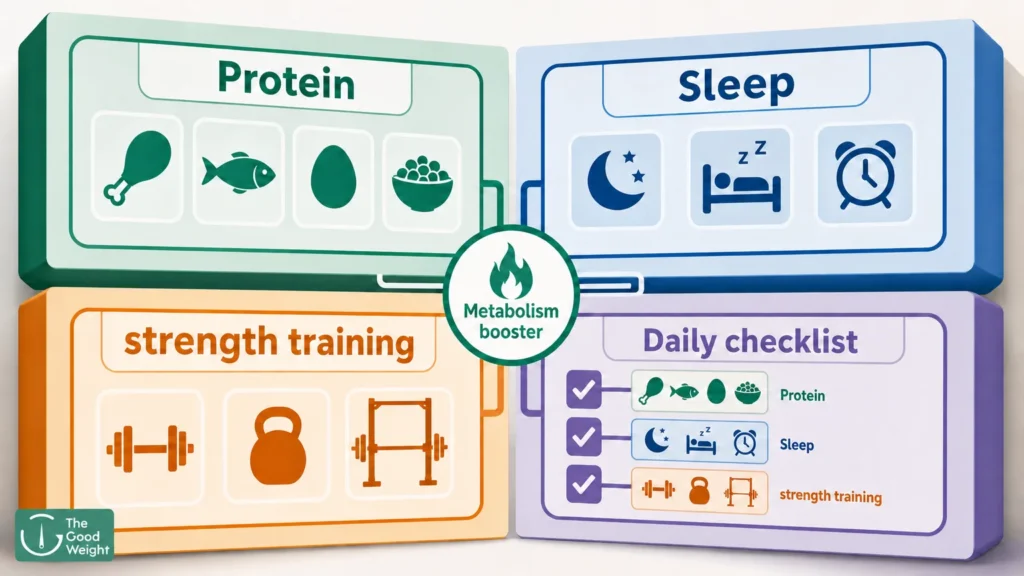
The more useful question is not, “What can speed up my metabolism overnight?” It is, “What helps my body use energy, manage hunger, preserve muscle, and support a consistent routine?” For most people, the strongest answers are protein, strength work, walking and other daily movement, adequate sleep, and – when needed – doctor-led medical support.
Why It Can Feel Like Your Metabolism Has Stopped Working
Metabolism refers to the processes your body uses to turn food and stored energy into fuel. Your total daily energy expenditure includes energy used for basic functions such as breathing and circulation, the energy required to digest food, purposeful exercise, and everyday movement such as standing, walking, cleaning, and fidgeting. Energy balance is regulated through an interconnected system of metabolism, appetite, hormones, and activity, which is why body-weight changes are rarely explained by one factor alone.
Myth: Age alone ruins your metabolism
Age can affect body composition and lifestyle. Many adults become less active over time, and muscle mass may decline if resistance training is not part of the routine. Menopause can also affect sleep, appetite, and fat distribution. Still, age does not mean your metabolism has failed; it means the habits that once maintained your weight may need to be adjusted to match your current body and schedule.
Myth: Eating very little is the fastest way to restart weight loss
A large calorie deficit may create quick scale changes at first, but it can be difficult to maintain and may leave you tired, hungry, and less active without realizing it. During weight loss, the body also uses less energy simply because it is moving and maintaining a smaller body. This does not mean you should give up; it means a sustainable intake, adequate protein, and muscle-preserving activity are more productive than repeatedly swinging between restriction and overeating.
Myth: A supplement can overcome a difficult routine
Many products are marketed as metabolism boosters, including capsules, teas, powders, detox drinks, and “fat-burning” blends. Yet the evidence for most weight-loss dietary supplements is limited, inconsistent, or insufficient. Even when an ingredient has a small short-term effect on energy expenditure or appetite, it is unlikely to offset poor sleep, long periods of sitting, low protein intake, or an eating pattern that does not meet your needs.
What Counts as a Metabolism Booster?
The phrase metabolism booster is broad enough to describe both a morning coffee and a prescription medication, which creates confusion. Some options may produce a modest temporary effect, while others improve the habits that matter most for body composition and long-term weight management.
| Common “metabolism booster” | What it may do | Practical value for weight loss | Important limitation |
|---|---|---|---|
| Caffeine or coffee | Can temporarily increase alertness and may slightly raise energy expenditure | May help some people exercise or walk more consistently | Tolerance, anxiety, palpitations, and disrupted sleep can outweigh benefits |
| Green tea or spicy foods | May have small, variable effects on energy use | Fine to enjoy as part of a balanced diet | Not a meaningful stand-alone fat-loss strategy |
| Protein-rich meals | Improve fullness and require more energy to digest than carbohydrate or fat | High practical value when used consistently | Needs to fit overall calorie, medical, and dietary needs |
| More daily steps | Raises activity-related energy use without requiring a formal workout | High practical value and accessible for many people | Progress depends on consistency, mobility, and starting point |
| Resistance training | Helps preserve or build muscle and improves physical function | High value for body composition and healthy aging | Does not need to be extreme, but does require regular practice |
| Better sleep | Supports appetite regulation, energy, recovery, and exercise adherence | High value, especially when sleep debt is present | Sleep problems may need medical assessment |
| Fat-burning supplements | Often combine stimulants or poorly studied ingredients | Usually low value and potentially risky | Some products contain undisclosed or unsafe ingredients |
The distinction is important: a food or habit does not need to “rev” metabolism dramatically to be useful. A protein-rich breakfast that reduces late-afternoon hunger, a ten-minute walk after lunch, or two strength sessions a week may each create a small advantage. Repeated over weeks and months, those advantages can be much more meaningful than a supplement with a dramatic label.
Be especially cautious with products that promise rapid fat loss, effortless results, or dramatic changes without dietary or activity changes. The FDA continues to identify weight-loss products with hidden drug ingredients or other dangerous undeclared substances. “Natural” is a marketing description, not a guarantee that a product is safe, effective, or appropriate alongside your medications.
The Priorities That Make the Biggest Practical Difference
Rather than trying to find the best metabolism booster, start with the changes that improve energy balance without making your life revolve around dieting.
1. Build protein into each meal
Protein supports fullness, helps protect lean mass during weight loss, and has a higher thermic effect of food than carbohydrate or fat. Research reviews describe protein’s role in satiety, energy expenditure, and preservation of fat-free mass during weight loss. The goal is not to chase a perfect number from social media; it is to include a meaningful protein source at meals and adjust the amount for your body size, preferences, kidney health, activity, and medical history.
A practical starting point is to ask, “Where is the protein in this meal?” Eggs, Greek yogurt, cottage cheese, fish, chicken, tofu, tempeh, beans, lentils, edamame, and lean meats can all work. Pair protein with fiber-rich foods such as vegetables, fruit, beans, or whole grains to make meals more satisfying. If you have kidney disease, are pregnant, or follow a medically prescribed diet, discuss protein targets with a clinician or dietitian first.
2. Do strength work to protect muscle
Muscle tissue is metabolically active, but strength training is valuable for much more than trying to raise resting calorie burn. It helps maintain or build strength, supports mobility, improves confidence with daily tasks, and can improve body composition even when the scale changes slowly. For women in midlife, preserving muscle becomes particularly important as hormonal shifts and lower activity levels can make muscle loss easier over time.
You do not need long gym sessions to begin. Two short full-body sessions each week can include movements such as chair squats, wall or counter push-ups, resistance-band rows, hip hinges, and loaded carries. The Physical Activity Guidelines recommend muscle-strengthening activity on at least two days a week, alongside regular aerobic activity. Start at a level you can repeat, then gradually increase resistance, repetitions, or difficulty.
3. Reduce all-day sitting with regular movement
Formal exercise matters, but daily movement often has a larger role than people expect. A person can complete a workout and still spend most of the day sitting, especially when working at a desk, commuting, or caring for family members. Short walking breaks, standing during calls, parking farther away, and a walk after dinner can make movement feel more integrated rather than another item on a demanding to-do list.
For general health, adults are encouraged to aim for 150 to 300 minutes of moderate-intensity activity weekly. That range is a guide, not a pass-or-fail test. If you are currently inactive, ten minutes at a time is a meaningful starting point, particularly if it helps you establish a routine that can grow.
4. Recover from the under-eating and overeating cycle
If you have spent years cycling through restrictive plans, it may be tempting to respond to a plateau by cutting food even further. Yet overly rigid rules can intensify hunger, reduce enjoyment of eating, and make evening or weekend overeating more likely. A more sustainable approach usually includes regular meals, enough protein and fiber, and room for foods you enjoy.
This is where personalized nutrition can be more useful than generic calorie targets. People with diabetes, PCOS, digestive concerns, a history of bariatric procedures, or medications that affect appetite may need a different plan. The Good Weight’s diet and weight-loss support can help connect food choices to your health needs rather than relying on restrictive rules.
5. Treat sleep as part of your weight-management plan
Sleep is not passive time that can be traded away without consequence. When sleep is short or interrupted, hunger may feel stronger, cravings may be harder to manage, and exercise can feel less appealing. Poor sleep also makes caffeine and convenience foods more tempting, creating a cycle that can look like a motivation problem when it is actually a recovery problem.
Start with the most workable change: maintain a consistent wake time, limit late-day caffeine if it affects you, create a wind-down routine, and discuss persistent snoring, insomnia, hot flashes, or daytime fatigue with a clinician. Improving sleep will not make body fat disappear overnight, but it can make the nutrition and movement habits that support weight loss easier to maintain.
Menopause, Metabolism, and Midlife Weight Changes
Menopause is often blamed for every pound gained in midlife, but the reality is more nuanced. Hormonal changes can affect sleep, temperature regulation, mood, appetite, and where the body tends to store fat. At the same time, aging, lower activity, caregiving demands, work stress, changing eating patterns, and loss of muscle may all contribute to a different body composition.
That does not mean weight change is inevitable or that you need a special menopause metabolism booster. It means your plan may need to prioritize recovery and muscle more deliberately than it did earlier in life. Strength training, protein at regular meals, walking, and sleep support are foundational. If hot flashes, night sweats, mood changes, irregular periods, or persistent fatigue are interfering with your ability to care for yourself, medical evaluation can help clarify whether menopause, thyroid concerns, medication effects, sleep disorders, or another condition needs attention.
A doctor-led assessment is particularly useful when weight changes come with symptoms that feel new or disproportionate. At The Good Weight, medical weight-loss care can combine clinical evaluation, personalized nutrition, and, where appropriate, medically supervised treatment options. The goal is not to blame hormones or promise a shortcut, but to identify the barriers that are actually affecting your progress.
A Realistic Two-Week Metabolism-Support Reset
This two-week reset is not a detox or a challenge designed to produce a dramatic scale change. It is a short period to re-establish the behaviors that tend to support appetite, energy, muscle, and consistency. If you miss a day, simply resume at the next meal or next walk; the point is repetition, not perfection.
Daily checklist
- Include a protein source at breakfast, lunch, and dinner. For example, try yogurt and fruit at breakfast, a chicken or bean-based salad at lunch, and tofu, fish, or lean meat with vegetables and a carbohydrate source at dinner.
- Add at least one high-fiber food to two meals each day, such as berries, beans, vegetables, oats, lentils, or whole grains.
- Take a 10- to 15-minute walk after one meal. If that is not realistic, break it into two five-minute movement breaks.
- Keep a water bottle accessible and eat meals sitting down when possible, rather than grazing while working or driving.
- Choose a realistic sleep target and begin a wind-down routine 30 minutes before bed.
Twice each week: a short strength session
Set aside 15 to 20 minutes for a beginner-friendly full-body routine. Try two sets of 8 to 12 repetitions of chair squats, wall push-ups, band rows, glute bridges, and a gentle core exercise such as a dead bug or supported plank. Rest as needed, focus on controlled form, and stop if you have pain, dizziness, or concerning shortness of breath.
During week two, repeat the same plan before adding complexity. You might add a few repetitions, use a slightly stronger band, or walk five minutes longer. This gradual progression gives you useful feedback: Are you less hungry in the afternoon? Sleeping better? Feeling stronger? Those outcomes often matter before the scale catches up.
Frequently Asked Questions About Metabolism Boosters
Do green tea, coffee, or apple cider vinegar boost metabolism?
Coffee and green tea may have modest, temporary effects for some people because of caffeine, but they are not reliable weight-loss tools. Apple cider vinegar is not a proven metabolism booster, and it can irritate the digestive tract or interact with certain medications when used excessively. Enjoy these items if they fit your preferences, but do not rely on them to compensate for insufficient sleep, low activity, or an unsustainable eating pattern.
Do fat burners work?
Most fat burners do not have strong evidence for meaningful, lasting weight loss, and some contain stimulant combinations that can raise safety concerns. The NIH review of weight-loss supplement ingredients notes that many products lack adequate evidence for effectiveness and may interact with medications. Avoid products that make extreme promises, conceal their full ingredient amounts in proprietary blends, or encourage you to ignore nutrition and medical guidance.
Can eating too few calories slow metabolism?
A prolonged calorie deficit can lead to lower energy expenditure as body weight decreases and the body adapts. It can also reduce energy for spontaneous movement and make hunger harder to manage. The answer is not to abandon a calorie deficit altogether, but to use an approach that is adequate, protein-aware, and sustainable enough to preserve muscle and maintain day-to-day activity.
When should I seek doctor-led help for weight loss?
Consider professional support if you have tried consistent nutrition, movement, and sleep changes without progress; have PCOS, diabetes, thyroid symptoms, menopause-related sleep disruption, or emotional eating concerns; or have a history of repeated restrictive dieting. Medical support is also appropriate if medications, mobility limitations, or significant hunger are making self-directed efforts difficult. A clinician can help assess contributing factors and discuss options that fit your health history.
The Bottom Line
The most effective metabolism booster is usually not a pill, tea, or powder. It is the combination of adequate protein, strength work, frequent daily movement, restorative sleep, and an eating pattern you can sustain without constant restriction.
If you feel stuck despite working on the basics – especially if midlife changes, sleep disruption, health conditions, or repeated dieting are involved – consider booking a doctor-led weight assessment with The Good Weight. Evidence-based, personalized care can help you move beyond metabolism myths and build a plan designed for sustainable results.