
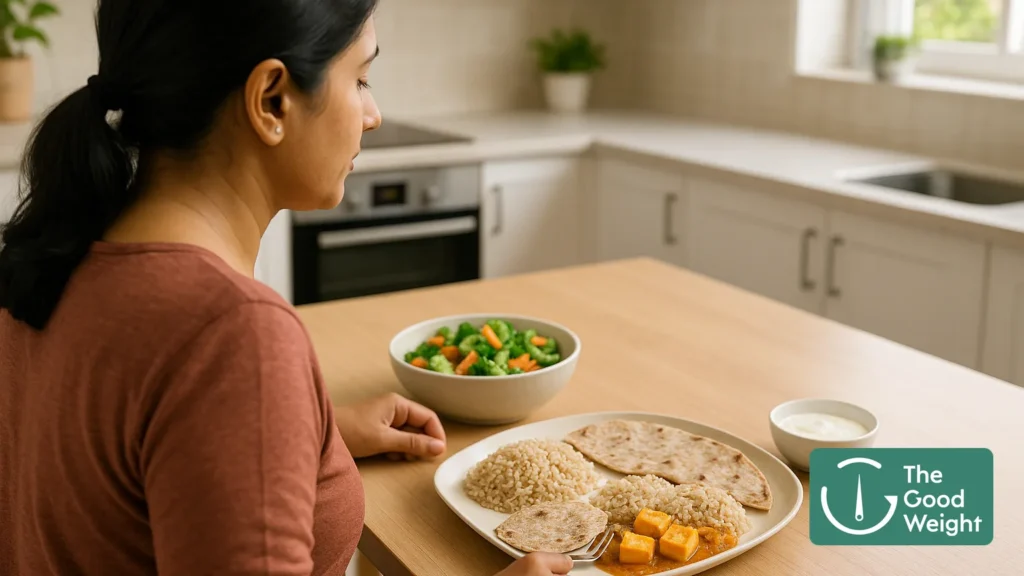
If you have PCOS and feel like regular weight-loss advice stops working the moment you try it, you are not imagining it. Many women with PCOS deal with stronger cravings, more erratic hunger, energy dips, poor sleep, and the discouraging experience of “doing everything right” without seeing quick changes on the scale. That frustration is real, and it often pushes people toward stricter diets than they can realistically sustain.
A practical pcos nutrition plan should start from that reality, not ignore it. PCOS is commonly linked with insulin resistance, higher metabolic risk, and changes in appetite regulation, which is one reason weight management can feel more complicated than simply “eat less and move more.” Research shows that PCOS is associated with increased insulin resistance and cardiometabolic risk, and broader reviews also describe higher long-term metabolic and reproductive health burden in PCOS. The good news is that an effective plan usually does not require cutting out entire food groups or following a crash diet. It works better when meals are built to control hunger, improve consistency, and make Indian home food easier to use well.
Why PCOS Weight Loss Feels Different
One of the hardest parts of PCOS is that the symptoms themselves can interfere with routine. When hunger feels unpredictable, periods are irregular, and energy swings hit in the afternoon, it becomes much easier to miss meals, over-snack later, or rely on comforting high-carb foods because they feel convenient. That pattern is not a lack of willpower. It is often a sign that the eating structure is not supporting appetite control well enough.
For many women, insulin resistance is a big piece of this puzzle. When meals are heavily tilted toward refined carbs and low in protein or fiber, they may leave you full for only a short time, which can increase cravings later in the day. Evidence-based reviews on nutrition and PCOS continue to support lifestyle and dietary strategies that improve insulin sensitivity and body composition, which is why the goal is not starvation but steadier meals that reduce the urge to rebound-eat.
It also helps to set expectations correctly. Weight loss with PCOS can be slower than people expect, especially after years of repeated dieting. Some emerging research even suggests that PCOS phenotypes may differ in appetite, metabolism, and treatment response, which reinforces why generic internet diet charts often fail. A better starting point is not perfection. It is repetition.
The 4-Part Meal Structure That Makes a PCOS Nutrition Plan More Sustainable
A simple Indian pcos nutrition plan becomes easier to follow when each main meal includes four parts: a protein anchor, a fiber-rich carb, vegetables, and a controlled fat source. This structure helps keep you fuller for longer, slows the speed at which the meal is digested, and reduces the “I was fine at lunch but now I want chai and biscuits and then something sweet” cycle.
1. Start with a protein anchor
Protein should be the first thing you decide in a meal, not the last. In an Indian context, this can be dal, chana, rajma, paneer, curd, Greek yogurt, tofu, sprouts, eggs, chicken, or fish depending on your food preferences. Protein matters because it supports fullness, helps preserve lean mass during fat loss, and makes a meal more satisfying than a plate built mostly around rice, roti, poha, or bread alone.
A useful question to ask is: “Where is the real protein in this meal?” If breakfast is only toast, fruit, or poha, hunger may return quickly. If breakfast includes besan chilla with curd, paneer bhurji with roti, or eggs with vegetable upma, the same meal timing often feels far more stable.
2. Add a fiber-rich carb instead of removing carbs completely
A common mistake is assuming PCOS means you must stop eating rice, roti, or fruit. In reality, most women do better with smarter carb choices and better portions rather than complete elimination. Rotis, hand-pounded rice, brown rice, millets, oats, dalia, beans, and fruit can all fit into a structured plan when paired properly with protein and vegetables.
This is also where meal quality matters more than labels. Two rotis with paneer, sabzi, and salad will work very differently in the body than two rotis with potato sabzi and little else. Recent nutrition research continues to explore how dietary patterns and targeted nutrition strategies can support PCOS symptom management, but the practical takeaway for daily life is straightforward: keep the carb, improve the context.
3. Make vegetables non-negotiable
Vegetables add fiber, volume, and micronutrients without making the meal overly calorie-dense. They also make it easier to feel satisfied on a moderate portion of rice or roti instead of automatically needing more. Cooked sabzi, kachumber, cucumber, carrots, lauki, bhindi, beans, cabbage, spinach, methi, and mixed vegetables all work.
This does not need to be fancy. One bowl of sabzi at lunch and dinner already changes the structure of the meal. If your lunchbox tends to be roti and dry sabzi only, adding curd or dal can improve satiety; if it tends to be rice and dal only, adding a larger vegetable side can help balance the plate.
4. Include fat, but in measured amounts
Fat supports taste and fullness, but it is easy for it to become “invisible calories.” Nuts, seeds, ghee, peanut butter, cheese, and oil are not bad for PCOS, but they still need portions. A small handful of nuts, one to two teaspoons of ghee or oil in cooking, or a measured amount of seeds is usually more useful than free-pouring healthy fats and then wondering why the scale is stuck.
A Full Day Indian PCOS Meal Plan: Office Day vs Work-From-Home Day
A strong pcos nutrition plan has to match your schedule, not just your diagnosis. The same person may need one structure for office days and another for work-from-home days because access, routine, and temptations differ.
Office day example
Breakfast should be portable, filling, and predictable. A practical option is two moong dal chillas with paneer filling and a side of curd, or two eggs with vegetable oats chilla and fruit. This works better than only tea and biscuits because it gives you protein, fiber, and slower-digesting carbs before the workday starts.
Lunch should be built to avoid the 4 p.m. crash. A good tiffin could include two rotis, one cup dal or chole, one bowl sabzi, and cucumber salad. If rice is easier, choose one cup rice with rajma or sambar, plus a vegetable side and curd. The point is not whether rice or roti is “better,” but whether the meal has all four parts.
Evening cravings need a plan before hunger hits. If you leave this meal to chance, chai often becomes chai plus namkeen plus something sweet. Better options include roasted chana with tea, a fruit plus peanuts, buttermilk with sprouts chaat, or curd with seeds. These are not diet foods. They are appetite-control tools.
Dinner should be simple enough to repeat. One example is paneer bhurji with one to two rotis and sautéed vegetables. Another is grilled fish or egg curry with rice and sabzi. A third is khichdi made with extra dal and vegetables, paired with curd. Repetition is helpful here because decision fatigue is one of the biggest reasons good intentions fall apart at night.
Work-from-home day example
Breakfast at home often gets delayed, which can backfire later. A realistic work-from-home breakfast could be vegetable besan chilla with curd, or Greek yogurt/curd with nuts and fruit plus one egg or a sprouts side. It should happen within a consistent morning window rather than drifting toward noon.
Lunch can be slightly fresher and larger in vegetable volume because home access makes that easier. For example: one cup rice, one cup rajma, one large bowl salad, and stir-fried bhindi. Or two jowar rotis with tofu bhurji, lauki sabzi, and curd. These combinations support fullness without relying on restriction.
The danger zone at home is constant grazing. Instead of opening and closing the kitchen every hour, set one planned evening meal such as makhana roasted with peanuts, a boiled chana bowl, or fruit with hung curd. That single habit often reduces total calorie drift more than changing breakfast.
Dinner can be lighter in volume but should still include protein. Soup alone is usually not enough. A better option is dal with sautéed vegetables and one roti, or paneer tikka with stir-fried vegetables and a small millet serving. You want to end the day satisfied, not “being good” for two hours and then raiding the kitchen.
What Not To Do If You Have PCOS
The first common mistake is skipping breakfast after a late night and then eating randomly all day. If you slept late and are not very hungry early, you do not need a heavy breakfast, but you do need a structured first meal. Otherwise the day often turns into coffee, long gaps, and overeating later.
The second mistake is turning every meal into carbs-only comfort food. Poha, idli, toast, plain upma, biscuits, instant noodles, or rice alone are not “bad,” but if most meals are built that way, fullness drops quickly and cravings rise. A pcos nutrition plan should improve the composition of these meals, not just judge them.
The third mistake is jumping between extreme methods. Keto, long fasting windows, juice cleanses, and detox plans may create short bursts of motivation, but they are hard to sustain and often disconnect you from normal hunger cues. Reviews of PCOS management continue to emphasize sustainable lifestyle treatment as a core long-term strategy, not repeated cycles of aggressive dieting.
When Weight Is Not Moving: A Troubleshooting Checklist
If your weight has plateaued, do not immediately assume your body is “not responding.” First, check for hidden calories. These often come from frequent chai add-ons, nuts eaten by the handful, weekend takeout, large “healthy” smoothies, or extra oil and ghee. None of these foods are forbidden, but they count.
Next, look at sleep. Poor sleep can worsen hunger, cravings, and routine adherence, which makes fat loss harder. There is also growing evidence that sleep and circadian disruption can influence metabolic health and appetite regulation, making consistent sleep timing especially important if you already struggle with PCOS-related fatigue.
Then review movement. You do not need punishing exercise, but very low daily movement can slow progress. A baseline target such as regular walks, strength training two to three times per week, and fewer long sitting stretches is often more realistic than intense cardio bursts you cannot maintain.
Also check protein. Many women think they are eating “healthy” but are still under-eating protein across the day. If most meals are cereal-based or snack-based, hunger may stay high even if calories look controlled. Finally, check expectations. In PCOS, progress may show up first in inches, reduced bloating, better cycle regularity, fewer cravings, and more stable energy before dramatic scale changes. Research on PCOS interventions increasingly supports multi-factor treatment approaches tailored to symptoms and metabolic status, which is why one-size-fits-all timelines are rarely useful.
A More Realistic Timeline for PCOS Weight Loss
The first changes often appear in appetite and routine, not body weight. Within the first few weeks of a consistent plan, many women notice they feel fuller at meals, snack less impulsively, and have fewer dramatic afternoon energy crashes. Those are meaningful wins because they suggest the plan is starting to work with your biology instead of against it.
After that, digestion, bloating, and menstrual regularity may improve for some women, though this varies widely depending on stress, sleep, insulin resistance, and medical treatment. Body measurements may shift before the scale moves much, especially if you are also doing strength training. This matters because a scale-only mindset makes people abandon effective plans too early.
Longer-term success comes from staying consistent enough to collect results over months, not days. Newer evidence continues to evaluate how nutrition therapy and broader treatment strategies affect metabolic outcomes in PCOS, but the practical message remains clear: steady structure beats dramatic restriction.
FAQs About a PCOS Nutrition Plan
Is fruit allowed in PCOS?
Yes. Fruit does not need to be removed in most PCOS diets. Whole fruit is generally better than juice because it contains fiber and is more filling. Pairing fruit with curd, nuts, or another protein source can also help with satiety.
Do I need to cut dairy?
Not necessarily. Unless you have lactose intolerance, allergy, or a specific reason from your clinician, dairy is not automatically a problem. Curd, paneer, and Greek yogurt can be very useful protein options in an Indian meal plan.
Is gluten the problem for everyone with PCOS?
No. There is no good reason for every woman with PCOS to avoid gluten automatically. If you have celiac disease, diagnosed sensitivity, or individual intolerance, that is different. Otherwise, the bigger issue is usually overall meal balance, total calories, fiber, and protein.
Can I lose weight with PCOS without keto?
Yes. Many women lose weight with PCOS without keto by focusing on structured meals, protein, fiber, sleep, and consistent activity. A sustainable pcos nutrition plan is usually easier to maintain than a highly restrictive one, which is exactly why it can work better over time.
The Bottom Line
A practical Indian pcos nutrition plan for weight loss does not need to look extreme to be effective. It needs to help you eat enough protein, include fiber-rich carbs, use vegetables generously, keep fats controlled, and follow a repeatable routine that fits your real life. That is how hunger becomes more manageable, cravings become less chaotic, and progress becomes more sustainable.
If you want a plan that goes beyond generic charts and takes your symptoms, labs, schedule, and goals into account, consider starting with a medically informed consultation at Good Weight. If you are also exploring testing as part of a more personalized support system, you can review diagnostic test options to discuss what may be relevant with a professional.