
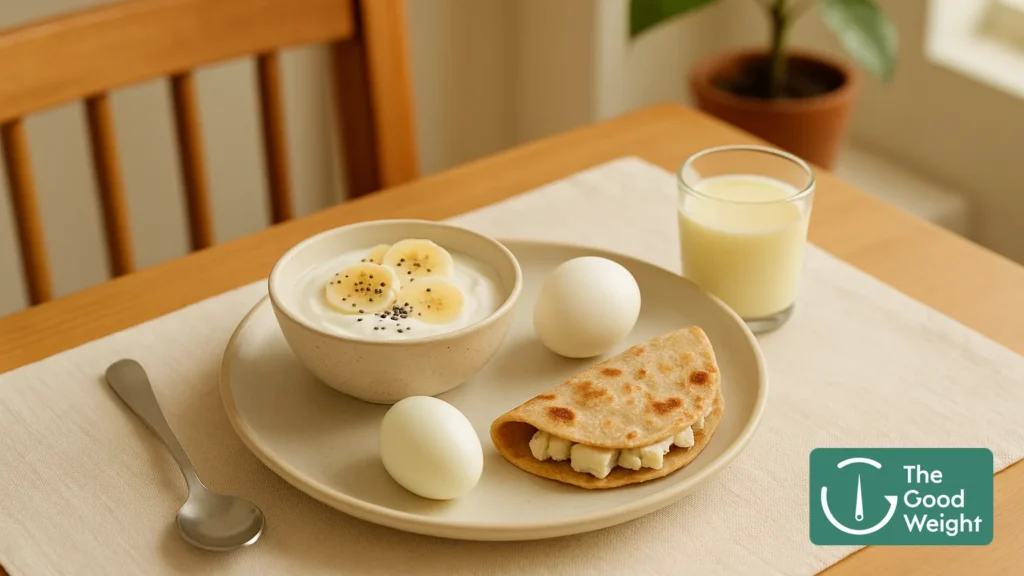
If breakfast suddenly feels unappealing after starting a GLP-1 medication, you are not imagining it, and you are not failing. At Good Weight, we are seeing strong reader interest around GLP-1 appetite shifts, taste changes, and the practical question that follows: what do you actually eat when food feels less rewarding and your usual breakfast now seems too heavy? That question matters because breakfast is often the first meal people skip when appetite drops, yet breakfast intake is associated with achieving recommended nutrient intakes, which becomes especially important when your total food intake is already shrinking.
This is where “nutritious breakfast ideas” need a different definition. On paper, many breakfasts look healthy. In real life, when you feel full after a few bites, notice more nausea in the morning, or lose interest in rich foods, the best breakfast is not the most impressive one. It is the one you can tolerate consistently, one that gives you a meaningful protein start, some easy energy, and enough structure to reduce the risk of under-eating.
The encouraging news is that breakfast does not need to be large to be useful. Small meals can still support weight goals, hydration, and muscle preservation if they are built intentionally. Below, we will break down why food can seem “off” on GLP-1, how to build a better small breakfast, and which Indian-friendly breakfast combinations tend to work well when appetite is low.
What People Usually Mean When They Say Food Tastes Different on GLP-1
When people say food tastes different on GLP-1, they are often describing a cluster of experiences rather than a literal loss of taste. GLP-1 medicines can slow gastric emptying and reduce appetite, which is part of why they help with weight management; the clinical overview of these medications notes delayed gastric emptying, reduced food intake, and common gastrointestinal effects such as nausea and vomiting. In daily life, that can feel like early fullness, less excitement around meals, stronger reactions to oily foods, and a lower tolerance for large portions.
Another part of the experience is sensory. Foods you once enjoyed may feel too sweet, too greasy, too spicy, or simply “too much” first thing in the morning. That does not necessarily mean the medication has damaged your sense of taste. More often, it means your hunger cues and satiety signals have changed enough that foods with strong flavors or heavy textures no longer feel easy to eat. Breakfast becomes the first casualty because it arrives before appetite has fully “woken up,” and because morning nausea can make decision-making around food harder.
A simple myth-versus-reality framing can help here. Myth: if breakfast feels unappealing, it is better to skip it and just eat later when hunger comes back. Reality: when intake stays low for too long, it becomes easier to miss protein, fluids, and micronutrients. Research consistently shows breakfast can meaningfully contribute to diet quality; for example, analyses have found breakfast contributes importantly to daily nutrient intake quality, and breakfast eaters often have better overall nutrient adequacy than breakfast skippers. On GLP-1, the goal is not forcing a full meal. It is finding a small, manageable first intake that keeps the rest of the day from starting at a nutritional deficit.
How to Build a Better Small Breakfast
If your portions are smaller now, a repeatable structure matters more than variety. Instead of trying to invent a perfect meal every morning, use a four-part formula: one protein anchor, one easy carbohydrate, one fluid element, and one optional fruit or fiber add-on. This makes nutritious breakfast ideas simpler, faster, and more realistic on low-appetite days.
1. Start with one protein anchor
Protein should be the first decision, not the last. If you begin with toast, fruit, or tea and leave protein for later, later may never come. For many adults trying to lose weight without losing too much lean mass, breakfast is one of the easiest places to protect protein intake through practical foods rather than large portions.
Good protein anchors for a small breakfast include Greek yogurt or thick curd, eggs, paneer, milk, protein-fortified overnight oats, or a dal-based side if tolerated. The ideal anchor is soft, familiar, and not overly greasy. You do not need a restaurant-sized serving. Even a modest portion can help make breakfast more sustaining and less likely to end in a mid-morning crash.
2. Add one easy carbohydrate
When appetite is low, carbohydrate is not the enemy. It often makes breakfast easier to start because it is familiar, gentle, and quick to tolerate. Think one idli, half a roti rolled around paneer, a few spoonfuls of oats, a small banana, poha in a light portion, or plain toast if that is the only thing that sounds manageable.
This matters because breakfast is not just about protein targets; it is also about making the meal physically possible to eat. Practical breakfast guidance often emphasizes simple, balanced combinations over perfection, including easy healthy breakfast ideas built from familiar staples such as yogurt, fruit, eggs, and whole grains. A small amount of easy carbohydrate can help carry protein without making the meal feel dense.
3. Include one fluid element
Fluid is often overlooked, especially if nausea and early fullness are present. But when intake drops, dehydration can sneak up quickly. A fluid element could be plain water, jeera water if tolerated, milk, thin buttermilk, unsweetened lassi, or a light smoothie. The purpose is not to wash down a meal mechanically. It is to support hydration and make breakfast more comfortable.
In some people, sipping fluid before or alongside breakfast improves tolerance. In others, too much fluid at once increases fullness. This is why experimentation matters. Try small amounts rather than a large glass, and notice whether cool, room-temperature, or warm fluids feel easier.
4. Add fruit or fiber only if it helps, not if it overwhelms
Fruit and fiber are helpful, but they are optional add-ons, not the core of the meal. If a few papaya cubes, half a banana, berries, chia seeds, or soaked oats make breakfast feel fresh and lighter, use them. If they make the meal bulkier than you can manage, leave them for later.
That distinction matters because many “healthy breakfast ideas” become unrealistic on GLP-1 when they prioritize volume over tolerance. Your best breakfast is the one that fits your current appetite while still moving you toward nutrient adequacy. A smaller meal you can repeat is more useful than a beautiful bowl you cannot finish.
9 Nutritious Breakfast Ideas for Low-Appetite Mornings on GLP-1
Below are realistic, Indian-friendly options that support weight loss without turning breakfast into diet punishment.
1. Thick curd bowl with chia, soft fruit, and crushed nuts
This suits people who want something cold, mild, and spoonable. Thick curd or Greek yogurt is often easier to tolerate than a hot, oily breakfast, especially if morning nausea is present. Adding a few chia seeds and soft fruit like banana or papaya gives texture without making the portion huge.
To raise protein without heaviness, use a thicker strained curd, add a spoonful of milk powder if appropriate for your plan, or keep the fruit portion smaller so the bowl stays protein-forward. This option works well for people who cannot manage strong savory flavors first thing in the morning.
2. Two eggs with one toast or half a small paratha
Egg-based breakfasts are useful when you need efficient protein in a compact portion. Soft-boiled eggs, an omelette with minimal oil, or scrambled eggs can feel more manageable than heavily spiced preparations. Pairing them with one toast or a small carb side makes the meal easier to start.
This suits people who feel full quickly but still want a conventional breakfast plate. To increase protein, add one extra egg white, pair eggs with a few spoonfuls of curd, or use milk in the scramble. Keep seasoning gentle if smells feel intense.
3. Paneer wrap in half a roti
A small paneer wrap is ideal for someone who wants a portable breakfast but cannot face a full sandwich or stuffed paratha. Use soft paneer, light seasoning, and a thin roti. The small size helps psychologically too: it feels achievable rather than overwhelming.
To boost protein, use a more generous paneer filling and less roti, or combine paneer with a spoonful of hung curd spread. This is especially helpful for people who dislike sweet breakfasts and want something familiar but lighter than fried options.
4. Soft idli with sambar and a curd side
Idli is often one of the easiest savory foods to tolerate because it is soft, mild, and not greasy when prepared traditionally. On its own, it may be too low in protein for a breakfast that needs to carry you through the morning. Pairing one or two idlis with sambar and a small bowl of curd improves balance without making the meal too rich.
This suits people who need soft textures and gentle flavors. To increase protein further, make the curd portion slightly larger or add a side of egg if tolerated. The goal is not a large South Indian breakfast spread. It is a smaller, more strategic plate.
5. Greek yogurt with oats and cinnamon
This is a good choice when sweet foods still appeal, but only in a toned-down way. Greek yogurt offers a concentrated protein base, while a small amount of oats adds substance. Cinnamon can make the meal feel interesting without the sugar hit that some people find cloying on GLP-1.
To keep it light, soak the oats well or use overnight oats in a small serving. If sweetness tastes too intense, skip honey and use just fruit or spice. This combination suits people who want easy healthy breakfast recipes with minimal preparation.
6. Overnight oats with milk and protein support
Overnight oats can work well if they are not made too bulky. A modest portion of oats soaked in milk, mixed with curd or Greek yogurt, and topped lightly can create a soft, cool breakfast that requires very little morning effort. That can matter a lot on days when nausea and decision fatigue are strongest.
To increase protein without heaviness, use more yogurt than oats, stir in extra milk powder if suitable, or keep toppings minimal so the base stays easy to finish. This suits people who want a make-ahead option because mornings feel unpredictable.
7. Mini poha bowl with peanuts and curd
Poha can be a good middle ground if you want savory comfort food without the heaviness of fried breakfast items. A small bowl with light oil, soft texture, and moderate seasoning is usually easier than richer foods. On its own, though, poha can be too low in protein.
The fix is simple: keep the poha portion modest and pair it with curd. You can also add peanuts, but if greasy textures are off-putting, use fewer and rely more on curd for protein. This suits people who want familiar Indian flavors but need a lighter touch.
8. Small smoothie breakfast for liquid-tolerance mornings
If chewing feels impossible, a small smoothie may be your best first step. A blend of milk or curd with banana and a mild protein-supporting ingredient can help you start the day without forcing solids too early. The key word is small. A giant smoothie can feel as difficult as a full meal when gastric emptying is slower.
This suits people who can only handle liquids at first or whose nausea settles later in the morning. To avoid making it too sweet, keep fruit moderate and skip sugary add-ins. Sip slowly rather than drinking it fast.
9. Very small breakfast plate: half banana, curd, and one egg
Some mornings, the best breakfast is simply a “tiny but complete” plate. If you can only manage a few bites, pairing half a banana, a few spoonfuls of curd, and one egg may be more realistic than a proper recipe. It covers protein, easy carbohydrate, and a soft texture without demanding much appetite.
This suits very low-appetite mornings and helps prevent the all-or-nothing trap. You can build up from here later with a second mini-meal. For many people, that is a more sustainable strategy than waiting until lunch and realizing they have consumed almost nothing all day.
Troubleshooting: What to Do When Breakfast Still Feels Hard
Even the best nutritious breakfast ideas need adjustment when symptoms vary from day to day. Use this checklist to troubleshoot, not to judge yourself.
If sweet foods taste too intense
Dial back sweetness rather than abandoning breakfast altogether. Choose plain curd over flavored yogurt, use cinnamon instead of honey, and prefer fruit in small amounts rather than juices. Some evidence suggests breakfast patterns rich in whole foods support better diet quality overall, but that does not mean sweetness must be forced. A plainer breakfast is still a good breakfast if you can finish it.
If savory foods feel greasy
Reduce oil, strong tempering, and fried textures. Switch from paratha to roti, from fried eggs to boiled eggs, or from heavily sautéed paneer to lightly seasoned paneer. Research on breakfast and nutrient adequacy supports the value of the meal itself; it does not require richness to count. Soft, lower-fat versions are often easier when GLP-1 side effects are active.
If nausea is worst in the morning
Start with a few sips of fluid and wait a little before solid food. Cold or room-temperature foods may feel better than hot foods with strong aromas. You might tolerate a small curd bowl, smoothie, or half-portion breakfast first, then a second mini-meal 60 to 90 minutes later. Nausea is a recognized side effect of GLP-1 medicines, and gastrointestinal symptoms are among the most common adverse effects reported with these drugs, so the solution is often meal adjustment, not self-blame.
If you can only handle liquids
Use liquids strategically, not as a long-term excuse to miss protein. Milk, thin lassi, curd-based drinks, or a modest smoothie can help bridge rough mornings. If you repeatedly tolerate only liquids, tell your clinician, especially if total intake is falling and weakness is increasing.
FAQ: How do I avoid muscle-loss mistakes while losing weight?
The most common mistake is assuming eating less is always better. If GLP-1 helps you eat less but also pushes protein too low, you may lose weight without supporting strength and recovery well. Aim to make each breakfast count, even if it is small. Protein-forward meals, regular hydration, and not skipping intake for long stretches are practical safeguards.
If you want to review how your nutrition plan fits into a broader doctor-led program, Good Weight’s resources on diagnostic tests and products can help you think more systematically about monitoring, symptoms, and support. The goal is sustainable weight loss, not silent under-fueling.
When “Normal Adjustment” Becomes a Reason to Message Your Clinic
Reduced appetite can be expected when starting or increasing GLP-1 medication, but there is a line where routine adjustment turns into a safety issue. Contact your clinic promptly if you have persistent vomiting, cannot keep fluids down well enough to meet hydration needs, feel dizzy or faint, or notice rapidly worsening weakness. These signs suggest the problem is no longer just breakfast preference; it may be affecting hydration, medication tolerance, and overall stability.
It is also worth reaching out if you are regularly skipping breakfast, barely eating until late afternoon, or feeling anxious that you are eating too little to lose weight safely. Clinical support can help distinguish a manageable appetite shift from a pattern that needs dose review, symptom treatment, or a more personalized eating plan.
Breakfast on GLP-1 does not need to be big, beautiful, or perfectly balanced every single day. It needs to be doable. A protein anchor, an easy carbohydrate, a fluid element, and a realistic portion are often enough to turn a skipped meal into a useful one. Over time, that consistency supports sustainable habits, better tolerance, and long-term well-being.
If breakfast has become difficult, or you are worried you may be eating too little to support safe progress, consider booking a doctor-supervised review through Good Weight. A personalized review of your medication, symptoms, and eating routine can help you protect both your results and your health.