
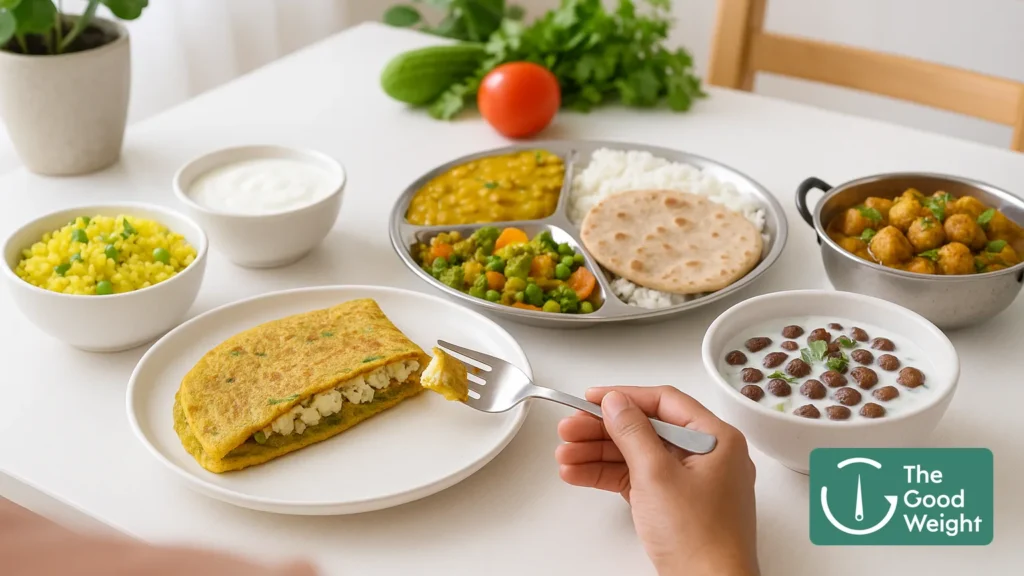
If you have spent any time online lately, you have probably seen the backlash: people are tired of joyless “protein hacks,” expensive snack bars, and the idea that weight loss requires eating dry, repetitive food forever. That frustration is real. Even mainstream coverage has noted the pushback against ultra-processed, protein-marketed foods and the cultural fatigue around turning every meal into a nutrition math exercise, especially when many people simply want food that is satisfying, normal, and affordable in a family kitchen as consumers question the surge of protein-fortified products.
For Indian vegetarians, the problem feels even sharper. A lot of mainstream advice around high protein foods vegetarian eating is built around chicken breast, deli meat, giant salads, and imported products that do not resemble regular home food. That can make protein sound difficult, costly, and emotionally unsatisfying. In reality, a high-protein vegetarian pattern for weight loss does not have to be extreme. It works best when you keep your familiar meals, then upgrade them with better protein anchors, smarter portions, and combinations that improve fullness.
This guide will show you what that looks like in practice: how much protein to aim for without obsessing over macros, how to build Indian meals around vegetarian protein sources, which options give the best value for money, and how to avoid the common mistakes that leave “healthy” meals strangely unsatisfying.
Why high-protein diets feel miserable for so many people
The problem is not protein itself. The problem is how protein advice often gets translated into real life. Many people hear “eat more protein” and assume that means expensive powders, packaged snacks, huge portions of paneer, or a complete rejection of the foods they actually enjoy. That version is hard to sustain because it turns eating into a rigid project rather than a daily habit that can fit around work, family meals, and budget.
There is also a misunderstanding about what protein is supposed to do during fat loss. A better protein intake can help you feel fuller, protect lean mass, and improve meal satisfaction, but it does not mean every meal has to look like a bodybuilder’s plate. Research and nutrition guidance consistently support the value of protein for satiety and muscle maintenance, and vegetarian diets can absolutely meet protein needs when built thoughtfully around legumes, soy foods, dairy if included, and other plant-based staples using a wide range of vegetarian protein sources. In other words, the sustainable version of high-protein eating is not glamorous. It is normal food, used more strategically.
That matters for adherence. The best weight-loss pattern is not the one that looks ideal on social media for five days. It is the one you can repeat for months without feeling deprived, socially isolated, or financially drained. For many vegetarian adults, that means familiar Indian meals with a stronger protein center, not a total food identity change.
What a realistic high-protein vegetarian day actually looks like
A practical target is not “eat as much protein as possible.” It is to stop under-eating protein, especially at breakfast and lunch, and to spread it across the day. Many adults do better when meals contain a visible protein source rather than relying on trace protein from grains alone. That usually means each main meal includes one substantial protein anchor such as dal, curd, paneer, tofu, soy chunks, sprouts, chana, rajma, or sattu.
For most people trying to lose weight, “more protein” simply means upgrading a meal from mostly starch to a more balanced plate. Poha alone is light and easy to overeat later. Poha with soy granules, peanuts, and curd is a different experience. Two rotis with aloo sabzi may feel healthy, but two rotis with a bowl of dal, a curd side, and a non-starchy sabzi tend to keep you full much longer.
Protein quality also matters, but it is often discussed in an overly technical way. The practical point is that vegetarian eaters do not need perfection at every meal. Across the day, combining varied protein sources such as dairy, lentils, beans, soy, and grains usually covers essential amino acid needs well, especially when total intake is adequate as mixed vegetarian diets can provide complete protein over the course of the day. That means your focus should be consistency, not chasing a perfect macro score.
A realistic high-protein day also still includes carbs. For weight loss, the goal is not to fear rice or roti. It is to stop letting starch dominate the plate while protein becomes an afterthought. When protein and vegetables go up, portion control usually becomes easier because hunger is easier to manage.
A simple Indian plate formula for high-protein vegetarian weight loss
The easiest way to apply high protein foods vegetarian principles is to stop thinking in nutrition slogans and start thinking in plate structure.
1. Start with one clear protein anchor
Pick one main protein source for each meal. Examples include:
- 1 to 1.5 cups dal
- 200 g curd or Greek-style hung curd
- 75 to 100 g paneer
- 100 to 150 g tofu
- 25 to 30 g dry soy chunks, cooked
- 1 cup chana or rajma
- 1 to 1.5 cups sprouts
- 2 to 4 tablespoons sattu, depending on the meal
Protein content varies by food and preparation, but food composition databases consistently show that soy foods, dairy, pulses, and legumes are among the most useful vegetarian protein contributors with nutrient values available in food composition data.
2. Add plenty of vegetables
Vegetables increase meal volume and help weight-loss meals feel substantial rather than restrictive. Use cooked sabzi, salad, kachumber, sautéed spinach, bhindi, gobi, lauki, tinda, beans, mushroom, or mixed vegetables. This is what makes a protein-forward meal feel like proper food instead of just “diet food.”
3. Control, not eliminate, your starch
Keep rice, roti, poha, idli, dosa, upma, or bread in sensible portions rather than making them the whole meal. For many people, one to two rotis or a moderate serving of rice works far better than trying to cut carbs completely and then overeating later. The key shift is that starch becomes one part of the meal, not the foundation of the entire plate.
4. Use smart pairings
Dal becomes more filling when paired with curd and sabzi. Poha improves when paired with sprouts or yogurt. Chilla becomes stronger with paneer stuffing. A carb-heavy breakfast becomes much more satisfying when it includes a side of curd, milk, tofu, or sprouts. These combinations are how ordinary meals become better weight-loss meals.
10 high-protein vegetarian meal ideas that still feel like real Indian food
Below are worked examples you can rotate through the week. The exact protein number will vary by portion and recipe, but each one is built to be more filling and more protein-forward than the usual version.
1. Protein-upgraded poha breakfast
Make poha with extra peas, roasted peanuts, and either soy granules mixed into the tempering or a side bowl of curd. Standard poha is often too light on protein, so this upgrade turns it into a more complete breakfast without changing the taste profile too much. It is a good example of how familiar breakfasts can be improved instead of replaced.
2. Moong chilla with paneer stuffing
Two moong chillas stuffed with paneer and vegetables can work especially well for weight loss because they combine pulse-based batter with a dairy protein source. Add mint chutney and a cucumber side rather than more bread or processed spreads. This meal is usually far more satisfying than toast or biscuits.
3. Tofu bhurji with roti
Tofu bhurji with onion, tomato, capsicum, and spices gives you a savory breakfast or light dinner that feels close to a standard Indian home meal. Pair it with one or two rotis depending on hunger and goals. Tofu is especially useful for people who want a lower-cost alternative to paneer in some meals.
4. Curd-chana bowl for lunch or snack
Combine thick curd, boiled black chana, chopped cucumber, onion, tomato, coriander, chaat masala, and roasted jeera. This is fast, budget-friendly, and far more filling than fruit alone or a packaged “healthy” snack. It also works well in hot weather when heavy cooking feels unappealing.
5. Paneer and vegetable wrap
Stuff a whole-wheat roti with paneer bhurji or grilled paneer plus sautéed vegetables and green chutney. This is one of the easiest lunchbox-style meals for people who are tired of salads and need something portable. The wrap format also makes portion control easier than eating paneer as a separate rich curry with multiple rotis.
6. Sattu drink plus egg-free savory side alternative
A salted sattu drink with onion, jeera, lemon, and coriander can be a genuinely useful small meal, especially in low-appetite mornings. To make it more complete, pair it with a small bowl of curd, sprouts, or roasted chana rather than treating it as a stand-alone beverage. Sattu is not magic, but it is a culturally familiar, affordable way to add more protein.
7. Dal plus curd plus sabzi plate
One of the most underrated fat-loss meals is also one of the most ordinary: a bowl of dal, a bowl of curd, a generous sabzi, and a controlled rice or roti portion. This combination works because dal alone may not always be enough protein, but dal plus curd creates a much stronger anchor while still feeling like a regular lunch. It is an ideal default family meal structure.
8. Rajma or chana with salad and smaller rice portion
Instead of a large rice-heavy rajma meal, try flipping the ratio: more rajma, a substantial salad, and a moderate rice serving. This keeps the comfort and familiarity of the dish while improving satiety and reducing the “sleepy lunch” effect some people feel after starch-heavy meals. Beans are well-recognized as useful plant-protein foods in vegetarian patterns including legumes and pulses as core protein sources.
9. Sprouts bhel with curd
Use steamed or lightly cooked moong sprouts as the base, then add onion, tomato, coriander, chutney, spices, and some sev only if you want the taste. A side of curd turns it into a better-balanced snack or light meal. This is much easier to sustain than pretending snack hunger does not exist.
10. Soy chunk curry with vegetables
Soy chunks are one of the most protein-dense vegetarian options available and can be used in curry, pulao, or dry sabzi formats. When cooked well with spices, onion, tomato, and vegetables, they become much more appealing than their reputation suggests. They are also one of the best examples of a high-protein food that is useful precisely because it is not expensive or trendy.
Is vegetarian protein too expensive? Usually, no
Cost is one of the biggest reasons people give up on higher-protein eating. But the truth is that protein only becomes very expensive when you rely on heavily marketed products. Many traditional vegetarian staples offer a much better return per serving.
| Food | Typical benefit | Budget value | Best use |
|---|---|---|---|
| Dal | Familiar, versatile | High | Daily lunch/dinner base |
| Chana/rajma | Filling, fiber-rich | High | Lunch bowls, salads, curries |
| Curd | Convenient, cooling, easy to pair | High | Breakfast side, snack, lunch |
| Sattu | Portable and simple | High | Quick meal or snack |
| Tofu | Lean and versatile | Moderate to high | Bhurji, stir-fries, curries |
| Paneer | High satiety, family-friendly | Moderate | Wraps, bhurji, curries |
| Soy chunks | Very protein-dense | Very high | Curry, pulao, dry sabzi |
| Protein powders | Convenient, concentrated | Variable | Backup option, not mandatory |
Food composition references and vegetarian nutrition guidance consistently place soy foods, legumes, dairy, and pulses among the strongest vegetarian protein options for protein density across common foods. In practice, soy chunks, dal, chana, curd, and sattu are often much more affordable than protein bars, fancy cereals, or “fitness” snacks.
Protein powders can help, but they are optional. They make sense if you have very high needs, a poor appetite, a packed schedule, or limited kitchen access. They are not a requirement for successful fat loss. A normal-food approach is often easier to sustain and easier to share with family.
Three common mistakes that make “healthy” meals fail
1. Relying only on calories
A low-calorie meal is not automatically a satisfying meal. If a plate is mostly starch and very little protein, you may hit your calorie target for the meal and still feel hungry soon after. Weight loss becomes easier when meals are not just lighter, but also more filling.
2. Eating too little at breakfast
Many people start the day with tea and biscuits, fruit, toast, or a small serving of poha, then wonder why cravings explode later. A stronger breakfast with curd, sprouts, chilla, paneer, tofu, or sattu often improves energy and appetite control across the rest of the day. Newer research continues to explore how meal timing and protein distribution can affect satiety and body composition outcomes in studies examining protein intake patterns and weight-related health.
3. Choosing “healthy” meals that are mostly carbs
Vegetable sandwiches, plain upma, fruit bowls, oats made mostly with water, and roti-sabzi meals with almost no dal or curd can all be healthy in a general sense. But for weight loss, they may not keep you full enough. The fix is usually simple: add a real protein source, not just more vegetables.
FAQ: beginner questions about high-protein vegetarian eating
Do I need to make separate meals from my family?
Usually not. It is often enough to slightly modify the family meal: add more dal, include curd, increase paneer or tofu, add sprouts, or reduce the rice-to-protein ratio on your own plate. Sustainable weight loss works better when your food still fits normal household routines.
How much protein do vegetarians need for weight loss?
It depends on body size, activity, age, and medical conditions. But many people trying to lose fat do well with a more intentional intake than they are currently getting, especially when that protein is spread across meals. General nutrition references note that vegetarian diets can support adequate protein intake when they include varied sources and enough total food within balanced vegetarian nutrition patterns.
Does every meal need protein?
Not perfectly, but most main meals should have a clear protein source. That one habit often improves fullness more than extreme calorie cutting does. Think of it as meal structure, not food policing.
What if my appetite is low in the morning?
Start small but protein-aware. A sattu drink, curd with roasted chana, a small moong chilla, or curd alongside poha is a much better first step than skipping protein entirely. The goal is progress, not perfection.
If you want help turning these ideas into a weekly routine, Good Weight can help you build a personalized Indian weight-loss meal structure that matches your routine, budget, and medical needs. If you are also reviewing health markers that may affect appetite, energy, or metabolic progress, it can be useful to explore diagnostic test support options as part of a broader plan. The real win is not finding the most extreme diet. It is building a pattern you can repeat with confidence, enjoyment, and long-term consistency.