
Food is one of the most powerful day-to-day tools you have for managing diabetes. While medicines, activity, sleep, and stress all matter, your meals directly affect how quickly glucose enters the bloodstream and how steadily your energy holds up through the day. That is why the relationship between diet and diabetes is not just a medical concept. It is something that shows up at breakfast, at office lunches, during travel, and in the choices you make at dinner.
The reassuring part is that a diabetes-friendly way of eating does not have to mean fear, starvation, or cutting out every carbohydrate. Current diabetes care guidance continues to emphasize individualized nutrition therapy as a core part of diabetes management. In practical terms, that means building meals that are balanced, sensible, and consistent enough to support steadier blood sugar over time. If you understand how food affects your glucose and learn a few simple meal-planning habits, you can make better decisions without turning every meal into a struggle.
How food affects blood sugar
Most of the rise in blood sugar after a meal comes from carbohydrates. These include obvious sweets, but also rice, roti, bread, fruit, potatoes, biscuits, breakfast cereals, and many snack foods. Your body breaks most carbohydrates down into glucose, which then enters the blood. This is why diabetes management is not only about avoiding table sugar. It is about the type, amount, and timing of all carbohydrate-containing foods, along with the rest of the meal.
Meal composition matters just as much as the carb source itself. Fiber slows digestion, while protein and fat can make a meal more filling and may help glucose enter the bloodstream more gradually. That is one reason diabetes nutrition guidance has long focused on monitoring carbohydrate intake and improving overall eating patterns rather than eliminating one single food. A plate of white rice eaten alone is likely to affect blood sugar differently than the same rice eaten in a smaller portion with dal, sabzi, curd, and salad.
Refined carbs and sugary drinks often cause faster spikes because they are digested quickly and usually contain little fiber or protein. Sweetened tea, soft drinks, packaged juices, bakery items, and highly processed snacks can raise glucose rapidly without keeping you full for long. By contrast, balanced meals tend to slow things down. Even the idea of “high” or “low” glycemic impact is more useful when viewed in the context of the whole meal, because focusing only on glycemic index can be less helpful than looking at portions, meal balance, and overall carbohydrate quality.
What a diabetes-friendly plate should look like
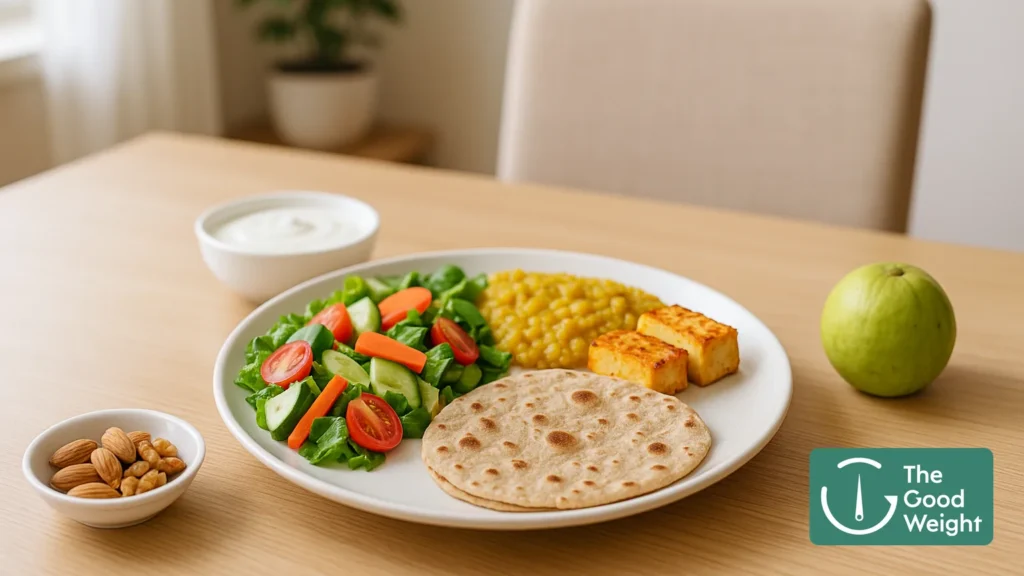
A simple plate method can make meal planning easier. Fill about half your plate with non-starchy vegetables such as lauki, tinda, bhindi, cabbage, beans, cauliflower, cucumber, tomato, spinach, or mixed salad. Reserve one quarter for a carbohydrate source such as roti, brown rice, hand-pounded rice, millet, oats, poha, or a small portion of potato. Use the remaining quarter for protein, such as dal, chana, rajma, sprouts, paneer, eggs, fish, or chicken.
This structure helps because it naturally controls portions without demanding exact calculations at every meal. A plate built this way slows eating, improves fullness, and reduces the chance that carbs dominate the meal. Guidance on diabetes nutrition has consistently supported eating patterns that emphasize vegetables, legumes, whole foods, and portion awareness. It is a practical model for home cooking and family meals, especially when you do not want to prepare separate food for one person.
Here are a few examples you can picture easily. Breakfast could be vegetable besan chilla with curd, or oats upma with peanuts and a boiled egg. Lunch might be two small rotis, mixed sabzi, dal, and salad. Dinner could be grilled fish or paneer with sautéed vegetables and a modest serving of rice. The pattern stays the same even when the foods change: vegetables first, moderate carbs, enough protein, and a little healthy fat.
Best food choices for better sugar control
The best food choices for people with diabetes are usually the least dramatic ones: foods that are familiar, minimally processed, and easy to eat consistently. Non-starchy vegetables are especially useful because they add volume and fiber without a large glucose load. Legumes such as moong, masoor, chana, and rajma are also strong choices because they provide both carbohydrate and protein, making them one of the more dependable foods that support sugar control in Indian meals.
Whole grains can work well too, but portion size still matters. A small serving of brown rice, hand-pounded rice, rolled oats, dalia, or millet can fit into a diabetes-friendly diet better than a large mound of polished rice or multiple oversized rotis. It is important not to treat “whole grain” as unlimited. Research and clinical guidance support individualized eating plans that improve diet quality and portion control rather than relying on one universal diet formula. In everyday terms, quality helps, but quantity still counts.
Protein-rich foods help with fullness and can improve meal balance. Curd or plain yogurt, paneer, tofu, eggs, fish, chicken, dals, soy, and sprouts can all be useful depending on your preferences and health needs. Nuts and seeds, such as almonds, walnuts, peanuts, flaxseeds, and pumpkin seeds, can also support better meal quality in small portions. They are not magic foods, but they can make snacks more satisfying and reduce the urge to reach for high-sugar options later.
Fruit can also have a place in food choices for people with diabetes. The key is portion and context. Whole fruit is usually a better option than juice because it contains fiber and is slower to consume. A guava, apple, orange, pear, or small serving of papaya is often a better fit than sweetened fruit drinks or large fruit shakes. Pairing fruit with nuts or curd may help it feel more balanced and filling.
Foods to limit or handle carefully
You do not need a list of “forbidden” foods, but some foods are worth handling more carefully because they are easy to overeat and often raise blood sugar quickly. Refined grains such as maida-based breads, bakery items, white bread, and many packaged snacks digest faster than higher-fiber options. Sugary beverages are another major concern because liquid sugar is absorbed quickly and does not provide much fullness. General diabetes education resources consistently note that meal planning, carbohydrate awareness, and limiting high-sugar foods are central to diabetes management.
Deep-fried foods and highly processed snacks deserve attention too, though not only because of sugar. They are often calorie-dense, easy to eat mindlessly, and commonly paired with refined carbs. Samosas, namkeen, chips, biscuits, and sweets can fit occasionally, but frequent intake can make both blood sugar and weight management harder. If you are also working on weight, a more sustainable eating pattern matters more than a short burst of strict dieting, which is why resources on diet and weight loss can be useful when paired with diabetes guidance.
Swaps are often more realistic than bans. Instead of juice, choose water, chaas, or unsweetened tea. Instead of white bread toast and jam, try vegetable omelette with one slice of whole-grain toast. Instead of a large bowl of white rice, reduce the portion and add dal, sabzi, and salad. Instead of evening biscuits every day, try roasted chana, peanuts, or curd. These are small shifts, but repeated daily, they matter.
Meal planning tips for people with diabetes
Regular timing can make a bigger difference than many people expect. Skipping meals often leads to extreme hunger later, which can make portion control harder and may contribute to larger blood sugar swings. If you take diabetes medication, irregular eating may also increase the risk of lows or unstable readings. A practical diet for people with diabetes usually works best when meals are spaced in a way that is predictable enough to support appetite, medication, and routine.
For breakfast, aim to include protein and fiber rather than relying only on refined carbs. Idli alone may leave some people hungry quickly, but idli with sambar and a side of protein works better. Poha can be improved with vegetables and peanuts. Paratha is more manageable when portioned sensibly and paired with curd rather than eaten in excess. Similar thinking applies at lunch and dinner: do not build the meal around starch alone.
For office days or travel, plan ahead just enough to avoid emergency choices. Carry roasted chana, nuts, unsweetened yogurt, fruit, or a homemade sandwich with protein. If you are eating out, look for grilled, tandoori, or dal-based options and balance them with vegetables instead of doubling up on refined breads. For readers also working toward broader lifestyle goals, Good Weight’s approach to diet and weight loss aligns well with the idea that steady habits beat extreme restriction.
A simple daily food chart structure
A sample food chart for a diabetic patient should be flexible, not rigid. Think of it as a daily structure rather than a prescription. One day might look like this: breakfast of vegetable besan chilla with curd; mid-morning fruit such as guava; lunch of two small rotis, dal, sabzi, and salad; evening snack of roasted chana and tea without sugar; dinner of paneer bhurji, sautéed vegetables, and a small serving of rice; and, if needed, a light bedtime option based on your clinician’s advice.
Another day could include oats porridge made without added sugar and topped with seeds, a lunch of brown rice with rajma and cucumber salad, buttermilk in the afternoon, and grilled chicken or tofu with vegetables at night. This kind of diabetes meal structure chart is useful because it shows rhythm and balance. It is not about eating the same foods every day. It is about repeating the same basic pattern in ways you can sustain.
If you need more personalization, especially around calorie intake or body composition goals, a structured but realistic plan such as a female weight loss diet may offer useful ideas for meal balance, though diabetes-specific advice should still be tailored to your health needs and medicines.
Common mistakes people make when changing their diet
One common mistake is becoming too restrictive too quickly. People often remove rice, fruit, roti, and even dal all at once, only to feel deprived and return to old habits within days. That cycle is discouraging and unnecessary. The stronger strategy is to keep familiar foods, improve portions, and add more protein and vegetables around them.
Another mistake is skipping meals in the hope that eating less automatically means better sugar control. In reality, long gaps can lead to overeating later or unstable glucose patterns. Some people also rely too heavily on packaged products labeled “diabetic” or “sugar-free,” even though these foods may still be processed, expensive, or easy to overconsume. As broader overviews of type 2 diabetes management emphasize, no single food causes or cures the condition by itself; long-term patterns matter most.
Finally, many people focus only on one number or one concept. They may obsess over glycemic index, or assume jaggery and honey are automatically safe because they seem natural. But glycemic load depends on both carbohydrate quality and amount, and your full meal pattern matters more than any one “superfood.” Consistency, not perfection, is what usually leads to steadier results.
Build a sustainable routine, not a perfect one
The most useful way to think about diet and diabetes is this: your goal is not to eat perfectly, but to eat predictably, thoughtfully, and in a way you can maintain. Better blood sugar support usually comes from balanced plates, sensible portions, fewer sugary drinks, regular meal timing, and repeatable habits. Those changes may sound simple, but they are exactly the kind that add up over months and years.
If you live with diabetes or prediabetes, start by reviewing your current meals honestly. Where are the large portions, the long gaps, the low-protein meals, or the liquid sugars? Pick one or two changes you can sustain this week. And if you take medication, have kidney disease, or have other health concerns, speak with your doctor or a registered dietitian before making major changes. For more support around building healthier food habits that last, explore Good Weight.