
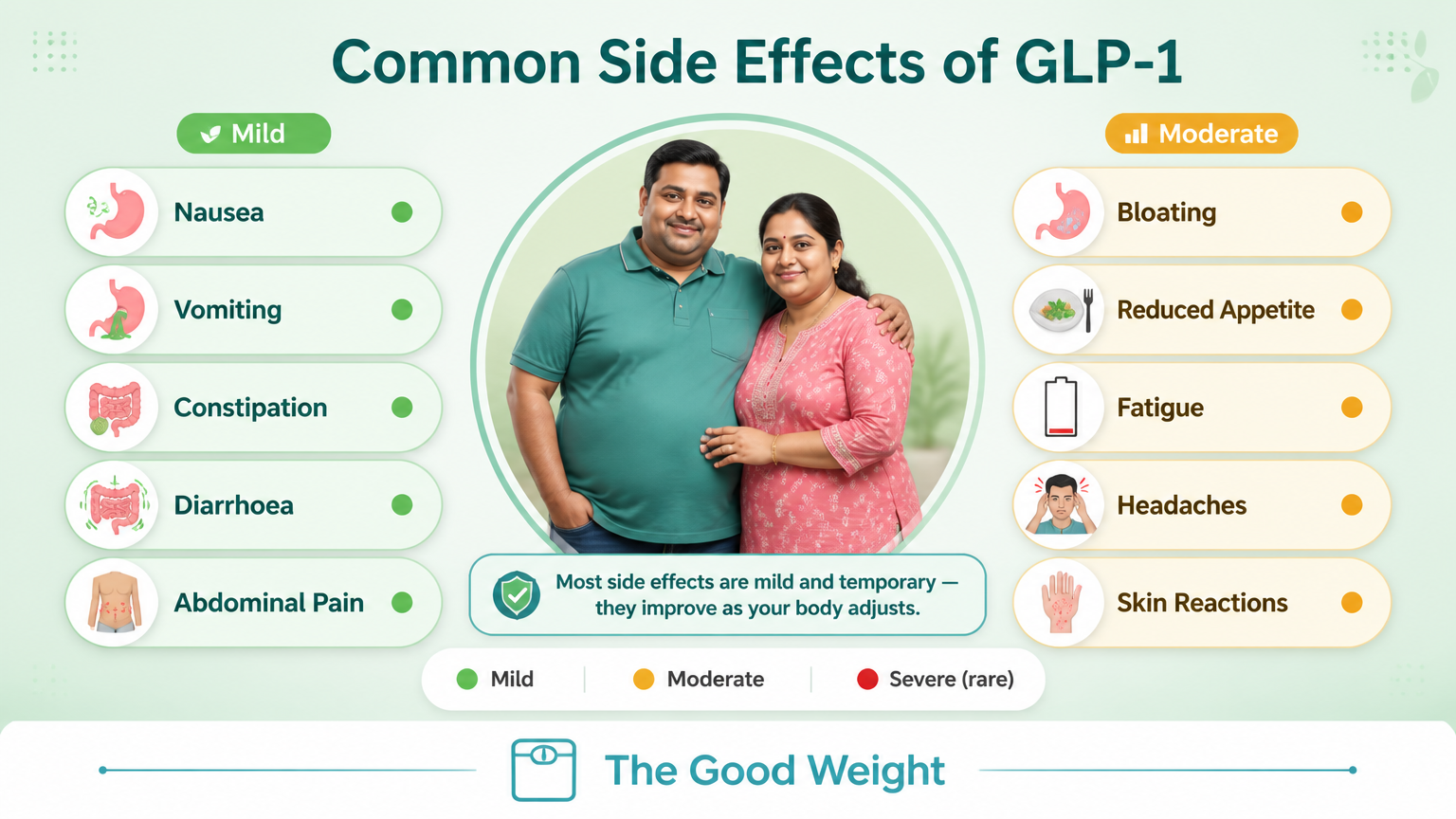
GLP-1 Side Effects, Week by Week: What's Normal, What Needs a Doctor, and How to Manage Each One
By Dr. Neha Shah, Bariatric & Metabolic Surgeon, Co-Founder & Clinical Lead, The Good Weight
Key Takeaways
- GI side effects affect 40–70% of people starting GLP-1 therapy; nausea alone is reported in 40–58% of patients, mostly in the first 1–8 weeks.
- Nausea typically peaks in week 1 and eases as the body adapts; constipation tends to appear in weeks 2–4 and lingers longer.
- Each dose increase (usually around week 4–5) can temporarily bring symptoms back for 3–7 days.
- Up to 25–45% of weight lost on GLP-1 therapy can be lean muscle mass if protein intake and resistance training aren't actively managed.[2]
- Serious but rare risks — pancreatitis, gastroparesis, gallbladder complications — need immediate medical attention, unlike routine GI adjustment symptoms.[3]
- GI side effects are the leading cause of GLP-1 discontinuation in real-world data, most often when dose escalation outpaces tolerance.[4]
Almost every side effect conversation I have with a new Member follows the same arc: excitement about starting, a rough first fortnight, a moment of "is this normal?", and then — for the vast majority — things settling into a manageable rhythm. GLP-1 medications are genuinely effective tools, but they are not side-effect-free, and going in with an accurate map of what to expect makes the difference between someone who sails through titration and someone who quits in week three over something entirely manageable.
This is that map — organised by when symptoms actually appear, what's expected physiology versus what's a red flag, and exactly what to do about each one.
Why GLP-1 Medications Cause Side Effects in the First Place
GLP-1 receptor agonists work partly by slowing gastric emptying — the rate at which food leaves your stomach and moves into your intestine. This is precisely why they curb appetite so effectively, and it's also precisely why the earliest, most common side effects are gastrointestinal. A 2025 review in Mayo Clinic Proceedings found that 40–70% of patients experience gastrointestinal adverse effects on GLP-1 and GLP-1/GIP therapies, with nausea, vomiting, diarrhoea, constipation, and reflux the most frequent (Mayo Clinic Proceedings, 2025)[1] — but the overwhelming majority are mild-to-moderate and temporary, easing as the body adapts to each dose.
The GLP-1 Side Effect Timeline
Days 1–3: The First Wave
Most people notice their first symptoms within 24–72 hours of the first injection — mild nausea, reduced appetite, occasional headache or light-headedness. This is your gut registering the change in gastric emptying speed; it is expected and, for most Members, mild.
What helps: Small, bland, low-fat meals (think dal-rice, khichdi, plain dosa rather than fried or rich food); eating slowly and stopping at first fullness; staying upright for 30–60 minutes after eating rather than lying down.
Week 1: Nausea Peaks
Nausea is typically most intense in the first week, especially on injection day and the day after. For most patients it begins to noticeably ease by the end of week one as the body starts adapting.
What helps: Ginger tea or ginger candies (genuinely evidence-backed for nausea relief); five to six small meals instead of three large ones; plain, easy-to-digest foods — curd rice, khichdi, soups, bananas, boiled eggs.
Weeks 2–4: Constipation or Loose Stools Emerge
As nausea starts easing, a second wave often appears — constipation in some people, loose stools in others, depending on individual gut response and which molecule you're on. Constipation is reported in roughly 12–25% of GLP-1 users depending on the drug, and unlike nausea, it tends to linger longer, often persisting through weeks two to four before substantially improving.
What helps: Build fibre up gradually rather than all at once (a sudden high-fibre load can worsen bloating); 2.5–3 litres of water daily; a 20–30 minute daily walk, which genuinely helps gut motility; if constipation persists, ask your doctor about a stepwise approach starting with an osmotic option rather than jumping straight to stimulant laxatives.
Weeks 4–6: The Dose-Increase Flare
Every GLP-1 protocol increases the dose in steps, typically around week four or five for the first escalation. Each increase can temporarily bring back nausea or GI symptoms for roughly 3–7 days before the body adapts again. This is one of the most important things I tell Members: if side effects from your current dose haven't settled, don't escalate yet. The titration schedule is a guide, not a race — your doctor can hold you at a dose longer if you need it.
Months 2–3: Fatigue and "Food Noise" Changes
As calorie intake drops meaningfully, some Members notice fatigue, mild dizziness on standing, or a change in mood as appetite and "food noise" quiet down. This is usually a sign of simply eating too little, not a drug side effect requiring dose changes.
What helps: Deliberately structured, protein-forward meals even when you don't feel hungry; adequate salt and fluid intake, especially in Chennai and Bengaluru's heat; a check on your blood pressure medication doses if you're on them, since appetite and weight changes can mean your existing dosages need revisiting.
Months 3–6+: The Muscle Loss Window
This is the side effect that gets the least airtime and matters the most long-term. A 2024 review in Circulation found that lean mass can account for up to 25–45% of total weight lost on semaglutide and tirzepatide in registration trials, depending on the medication and body composition method used (Neeland et al., Circulation, 2024)[2] — particularly when protein intake and resistance training aren't actively managed.
What helps: Protein intake above 1.2 g per kg of body weight daily, spread evenly across meals; two to three resistance training sessions a week (even bodyweight or band-based training counts); periodic body composition (BCA) scans to track fat loss versus muscle loss, not just the number on the scale.
The Complete Symptom & Action Grid
| Symptom | Typical Timing | Action |
|---|---|---|
| Mild nausea, reduced appetite | Days 1–7, each dose increase | Manage at home — small meals, ginger, low-fat food |
| Constipation | Weeks 2–6 | Fibre, fluids, movement; escalate to doctor if >1 week unresolved |
| Fatigue, mild dizziness | Weeks 2–8 | Check intake is adequate; hydration and electrolytes |
| Heartburn / reflux | Any point | Smaller meals, avoid lying down post-meal; ask about acid suppression if persistent |
| Persistent vomiting | Any point, especially post dose-increase | Call your doctor — risk of dehydration and dose reassessment needed |
| Severe abdominal pain radiating to back | Any point | Seek emergency care — rule out pancreatitis |
| Upper-right abdominal pain, fever, jaundice | Any point, more common with rapid weight loss | Seek urgent care — possible gallbladder complication |
| Prolonged fullness, bloating unrelated to meals | Later in treatment | Discuss with doctor — possible gastroparesis, needs evaluation |
| Rapid strength loss despite normal weight loss | Months 2 onward | Increase protein, add resistance training, get a BCA scan |
When to Call Your Doctor Immediately
Most GLP-1 side effects are inconvenient, not dangerous, and settle with time and simple adjustments. But a small number of symptoms warrant an urgent call rather than a wait-and-watch approach. The FDA updated GLP-1 medication labelling in 2023 to highlight the risk of ileus and intestinal obstruction, and real-world cohort data has shown a statistically higher risk of pancreatitis, bowel obstruction, and gastroparesis among GLP-1 users compared to non-users (American College of Gastroenterology, summarising Sodhi et al., JAMA, 2023)[3]:
- Severe, persistent abdominal pain, especially radiating to the back
- Vomiting that won't stop, or signs of dehydration (dizziness, very dark urine, dry mouth)
- Yellowing of the skin or eyes, fever with abdominal pain
- Visible swelling, rash, or difficulty breathing (signs of an allergic reaction)
- Any symptom you genuinely can't tell is "normal adjustment" versus "something's wrong" — that uncertainty itself is reason enough to call
A Doctor's Honest Note
The single biggest factor I've seen determine whether someone tolerates a GLP-1 medication well isn't the brand or even the dose — it's whether they have a doctor actively managing their titration versus self-adjusting based on what they read online. Real-world data from a large cohort study found gastrointestinal adverse events led to medication discontinuation in a meaningful share of patients (ScienceDirect, 2024)[4], and in my clinical experience, a significant proportion of those cases are people who were escalated too fast, weren't eating enough protein, or didn't have anyone to call when something felt off.
Your side effect experience is genuinely individual — your gut, your gallbladder history, your baseline eating pattern all shape how you'll respond. That's precisely why titration should be a conversation with your doctor, not a fixed calendar you follow regardless of how you're feeling.
Frequently Asked Questions About GLP-1 Side Effects
How long do GLP-1 side effects last?
For most people, gastrointestinal side effects are most pronounced in the first two to eight weeks of treatment and improve substantially as the body adapts. Each dose increase can temporarily bring symptoms back for 3–7 days before easing again.
What is the most common side effect of GLP-1 medications?
Nausea is the most common side effect, reported by roughly 40–58% of people in clinical trials, typically peaking in the first week and after each dose increase. Constipation is the second most common, affecting roughly 12–25% of users depending on the specific medication.
Does GLP-1 therapy cause muscle loss?
Yes, a meaningful portion of weight lost on GLP-1 therapy can be lean muscle mass rather than fat, particularly without adequate protein intake and resistance training. Clinical guidance recommends over 1.2g of protein per kg of body weight daily, spread across meals, combined with 2–3 resistance training sessions a week to preserve muscle.
When should I call a doctor about GLP-1 side effects?
Call immediately for severe abdominal pain radiating to the back, vomiting that won't stop, yellowing of the skin or eyes with fever, or signs of an allergic reaction. These can indicate pancreatitis, gastroparesis, or gallbladder complications, which need urgent evaluation rather than home management.
Do GLP-1 side effects mean the medication isn't working?
No. Side effects like nausea and reduced appetite are a direct result of the medication's intended mechanism — slowed gastric emptying and appetite suppression — and are not an indicator of how much weight you will lose. Tolerability and efficacy are managed separately by your doctor through dose titration.
Starting GLP-1 therapy, or struggling with side effects on your current dose?
Book a consultation with Dr. Neha Shah and The Good Weight's clinical team. We'll review your symptoms, adjust your titration plan, and build the nutrition and protein strategy that keeps you comfortable — and keeps your muscle mass intact — through the entire journey.
This article is for informational purposes and does not replace individualised medical advice. If you are experiencing severe or concerning symptoms on GLP-1 therapy, contact your prescribing doctor or seek emergency care immediately rather than relying on general guidance.
References
- Mayo Clinic Proceedings. "GLP1 and GIP Receptor Agonists: Effects on the Gastrointestinal Tract and Management Strategies for Primary Care Physicians." 2025. mayoclinicproceedings.org
- Neeland IJ, et al. "Changes in Lean Body Mass With Glucagon-like Peptide-1-Based Therapies and Mitigation Strategies." Circulation, 2024. ahajournals.org
- American College of Gastroenterology. "GI Adverse Events with GLP-1 Agonists for Weight Loss: Understanding the Risks," summarising Sodhi M, et al. JAMA, 2023. gi.org
- "Glucagon-like Receptor-1 Agonists for Obesity: Weight Loss Outcomes, Tolerability, Side Effects, and Risks." ScienceDirect, 2024. sciencedirect.com
- Aldhaleei WA, Abegaz TM, Bhagavathula AS. "Glucagon-like Peptide-1 Receptor Agonists Associated Gastrointestinal Adverse Events: A Cross-Sectional Analysis of the NIH All of Us Cohort." Pharmaceuticals, 2024. PMC, NIH
- U.S. Food and Drug Administration. Ozempic (semaglutide) prescribing information update on ileus and intestinal obstruction risk, September 2023.
This article was medically reviewed by Dr. Neha Shah based on current peer-reviewed literature as of August 2026. It does not constitute individualised medical advice.
About the Author: Dr. Neha Shah is a bariatric and metabolic surgeon and Co-Founder & Clinical Lead of The Good Weight, a doctor-led metabolic health and weight loss programme with centres in Chennai and Bengaluru.