
You may be eating thoughtfully, staying active, and making progress with your health goals – yet still feel bothered by one localised area, such as fullness under the chin, the abdomen, flanks, or thighs. This is a common reason people explore cryolipolysis. The important question is not simply whether a treatment is available, but whether it matches your goal, your health history, and the characteristics of the area you would like to address.
Cryolipolysis is a non-surgical body-contouring procedure that uses controlled cooling to reduce the appearance of selected pockets of visible fat. It is often called “fat freezing,” and CoolSculpting is one brand associated with cryolipolysis technology. However, this is not a treatment for obesity, a replacement for sustainable weight-management care, or a way to treat metabolic health concerns. A careful clinical assessment helps separate a potentially suitable contouring goal from a goal that may be better served by doctor-led weight care, nutrition support, medication, or a procedure with a different purpose.
What cryolipolysis is designed to address
Cryolipolysis treatments use an applicator to deliver controlled cooling to a small treatment area. The goal is to alter the visible contour of a localised fat bulge over time, rather than to produce a meaningful change in overall body weight. The U.S. Food and Drug Administration describes non-invasive body-contouring technologies as procedures intended to improve the appearance of specific areas, not as treatments for weight loss or obesity.
For example, you may have maintained a stable weight and improved your daily habits but still notice a small, pinchable area around the lower abdomen or flanks. In that situation, you might ask whether cryolipolysis could help refine the area’s shape. A clinician should first establish whether the concern is mainly localised subcutaneous fat – the fat just beneath the skin – or whether factors such as loose skin, abdominal muscle separation, broader weight changes, or another health issue are contributing to the appearance.
The distinction matters. Cryolipolysis may be considered by adults seeking a modest, non-surgical change in a specific contour, particularly when their weight has been relatively stable. It does not treat the medical drivers of weight gain, reduce visceral fat around internal organs, or replace a personalised plan for long-term metabolic health.
How body contouring differs from weight-management treatment
Body contouring and medical weight management can both be valuable, but they have different aims. Cryolipolysis focuses on the external appearance of a selected area. Doctor-led weight care focuses on health, including weight trajectory, nutrition, physical activity, sleep, medical conditions, medication effects, and where appropriate, evidence-based treatment options.
If your main concern is ongoing weight gain, blood sugar risk, high blood pressure, fatty liver risk, or difficulty managing hunger, body contouring alone is unlikely to address the underlying issue. In that case, a structured medical weight-loss assessment may offer a more appropriate starting point. This can include diagnostics, nutrition support, lifestyle guidance, medication when clinically appropriate, and regular follow-up.
| Approach | Primary purpose | What it may address | What it does not replace |
|---|---|---|---|
| Cryolipolysis | Localised body contouring | A visible, selected pocket of subcutaneous fat | Medical treatment for obesity or metabolic disease |
| Nutrition and activity support | Sustainable health habits | Eating patterns, strength, energy balance, wellbeing | A procedure for a specific contour concern |
| Doctor-led weight management | Health-focused weight care | Weight-related risks, appetite regulation, medical contributors and long-term progress | Individual assessment for loose skin or localised contouring |
| Medication, when appropriate | Support for selected medical needs | Appetite, weight management and metabolic risk under supervision | Nutrition, activity, and continuing clinical review |
| Surgery or endoscopic procedures | More substantial intervention for selected patients | Specific medical and anatomical needs | A non-invasive, low-commitment alternative |
Surgical and endoscopic procedures also have distinct roles. For people who meet clinical criteria, options such as endoscopic weight-loss procedures or bariatric surgery may be discussed as part of comprehensive obesity care. These treatments involve different eligibility criteria, expected outcomes, recovery needs, and follow-up requirements than cryolipolysis. They should never be presented as interchangeable choices based only on price or appearance.
What a clinical assessment should review
A responsible cryolipolysis consultation should be individual, unhurried, and clinically led. A promotional image may show a possible result, but it cannot determine whether the device, treatment area, and your health circumstances make sense together. The assessment should also give you space to discuss what you hope will change and what would count as a worthwhile outcome for you.
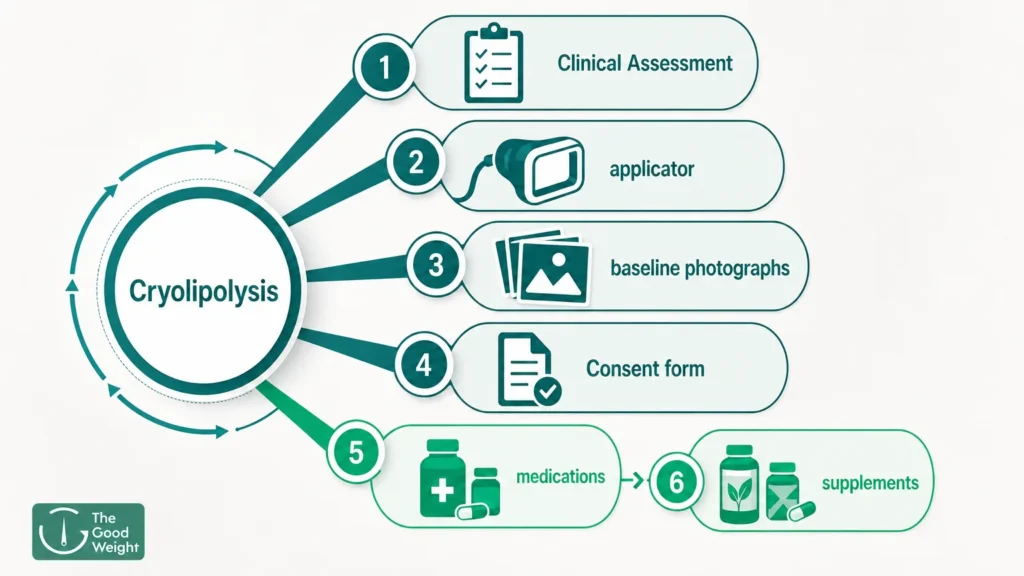
A clinician should review the following areas:
-
Your medical history and current health. This includes past procedures, chronic conditions, skin concerns, circulation issues, nerve-related symptoms, and any history of cold-related disorders. Certain conditions may make cooling-based treatment inappropriate or require further medical advice before proceeding.
-
Medications and supplements. Be open about prescription medicines, over-the-counter products, and supplements. Some medications can affect bruising, healing, sensitivity, inflammation, or your broader weight-management plan. Full disclosure is important even when a treatment is marketed as non-invasive.
-
Weight history and current goals. A clinician should ask whether your weight has recently changed, whether it is still changing, and whether your concern is primarily cosmetic, medical, or both. If the central goal is sustainable weight loss or improved metabolic health, body contouring may not be the first or only step.
-
The area itself. The clinician should assess the location, amount, and distribution of tissue, as well as whether the tissue can be safely positioned in an applicator. They should also consider skin quality, skin laxity, scars, asymmetry, and whether the concern may be more related to loose skin than fat.
-
Expectations and alternatives. A useful consultation includes a plain-language discussion of what treatment may and may not achieve. It should cover alternatives such as no procedure, continued lifestyle support, medical weight management, another non-surgical modality, or a surgical opinion where appropriate.
This review is essential because outcomes vary by person and treatment area. The American Academy of Dermatology notes that non-invasive fat-reduction procedures can require more than one treatment and that results are not immediate. A clinician should therefore avoid presenting a fixed result, a guaranteed timeline, or a particular number of sessions as though it applies to everyone.
What the treatment journey may involve
The journey should begin with a consultation rather than a transaction. After reviewing your goals and health information, the clinician may decide that cryolipolysis is reasonable to consider, recommend a different approach, or advise that treatment is not suitable at this time. A good assessment can include taking baseline photographs for clinical comparison, discussing the proposed treatment area, and explaining the expected practical steps.
If you proceed, treatment planning should be specific. This includes deciding which area or areas may be treated, how the applicator would be placed, what sensations may occur, and how the appearance of the area will be reviewed later. During treatment, people may feel pulling, pressure, cold, tingling, or temporary discomfort as the area is positioned and cooled. The experience and after-effects can vary.
Consent should be more than signing a form. You should understand the intended benefit, known limitations, possible side effects, aftercare guidance, expected costs, and what follow-up will involve. FDA-cleared cryolipolysis devices carry warnings and precautions, which is one reason a clinical discussion should be more detailed than a social-media promotion.
Aftercare commonly involves advice on what sensations to expect and when to contact the clinic. Temporary redness, swelling, bruising, tenderness, numbness, or altered sensation can occur. A follow-up appointment gives the clinician an opportunity to review the area, discuss your experience, and decide whether any further action is appropriate rather than assuming that every person needs the same treatment plan.
Questions to ask before proceeding
What benefits can I realistically expect?
Cryolipolysis may reduce the appearance of a selected localised fat bulge, but it is best approached as a contouring treatment, not a transformation of body size. Ask the clinician how the proposed change relates to your own anatomy and whether your goal is realistic for a non-surgical procedure.
What are the limitations?
It does not treat obesity, improve metabolic health on its own, or reliably tighten significant loose skin. It also cannot guarantee symmetry or replicate someone else’s before-and-after image. If broader health or weight concerns are present, a comprehensive plan may be more useful than focusing only on one area.
What are the risks and recovery considerations?
Non-invasive does not mean risk-free. In addition to temporary effects such as swelling, bruising, tenderness, and numbness, rare complications can occur, including paradoxical adipose hyperplasia, where the treated area enlarges rather than reduces. A 2020 systematic review identified this as an uncommon but recognised adverse event, and it may require further medical or surgical management.
Ask what symptoms are expected, what symptoms require prompt clinical advice, and who you should contact outside normal appointment hours. Sudden severe pain, worsening skin changes, persistent concerns, or anything that feels unusual for you should be assessed rather than dismissed.
Who will assess and treat me?
Ask about the clinician’s training with the specific technology, their experience assessing suitability, and whether they can explain complications as clearly as benefits. You should also know who is responsible for follow-up and whether a doctor is available if a medical concern arises.
What alternatives should I consider?
The answer depends on your goal. Alternatives may include monitoring the area, nutrition and activity support, a medical weight-management pathway, another contouring option, or referral for a surgical opinion. If you are considering a more significant intervention, understanding bariatric surgery options can help clarify how health-focused procedures differ from cosmetic body contouring.
How should I think about cryolipolysis cost?
Cryolipolysis cost should be explained transparently, including consultation fees, treatment areas, follow-up, and any potential additional sessions. A low advertised starting price may not reflect the total plan. Cost is relevant, but it should not outweigh device safety, clinician oversight, suitability, and access to follow-up care.
How to assess body-contouring claims responsibly
Before-and-after photographs can be useful conversation starters, but they are not personalised evidence of what will happen for you. Images may differ in lighting, posture, camera angle, timing, body composition, and the number of treatments received. The most reliable next step is a clinician who can assess your anatomy, medical history, and goals in person – and explain when treatment is not the right choice.
Be cautious with broad promises, countdown discounts, or language suggesting that fat freezing is an effortless route to weight loss. A responsible provider will discuss both benefits and limitations, provide clear consent information, and help you compare cryolipolysis with alternatives based on your health priorities. Your decision should feel informed, not rushed.
At The Good Weight, we believe body concerns deserve the same respectful, evidence-based discussion as any other health goal. Schedule an assessment with The Good Weight to discuss whether cryolipolysis, another procedure, or a doctor-led medical weight-management pathway is the most appropriate fit for your goals.