
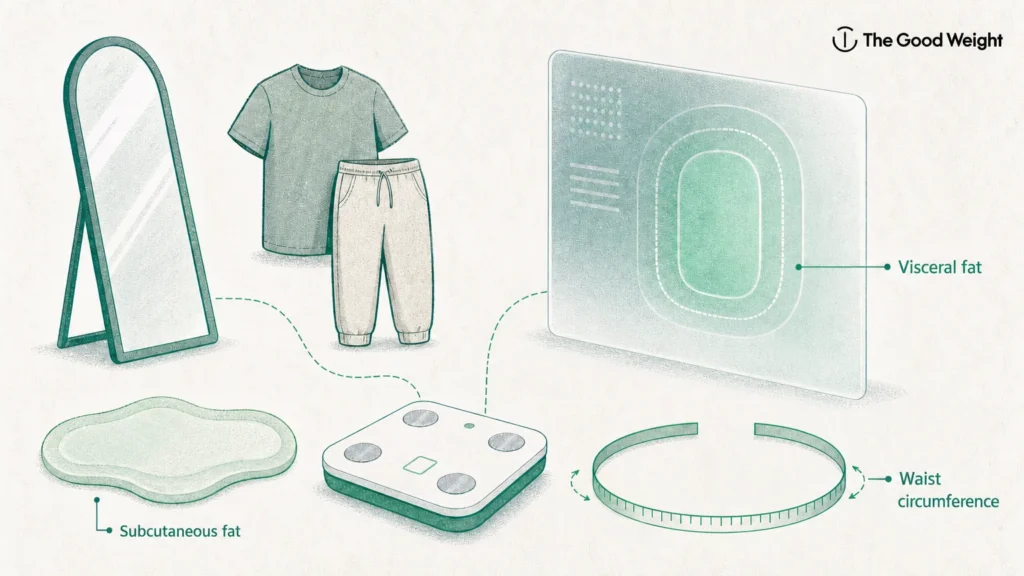
A tighter waistband can raise an understandable question: is this simply a change in body shape, or a sign of a health concern? The answer cannot come from a mirror, a photograph or clothing size alone. “Belly fat” describes an area of the body, but it does not distinguish fat under the skin from deeper fat around internal organs.
For adults in Chennai concerned about abdominal weight, diabetes risk or metabolic health, that distinction matters – but it is only the starting point. A doctor-led assessment considers body measurements alongside medical history, blood pressure and appropriate tests. This guide explains what visceral fat is, what home checks cannot tell you, and how an individualised evaluation can help identify a suitable next step.
What is the difference between visceral fat and the fat directly under the skin?
Subcutaneous fat sits beneath the skin, while visceral fat lies deeper inside the abdomen, around internal organs. Both are normal components of the body; having either is not, by itself, a diagnosis. The important questions concern their distribution and how that fits with your wider health picture.
“Belly fat” is therefore an imprecise everyday term rather than a specific medical finding. An abdomen may contain both subcutaneous and visceral fat, and its appearance also reflects skin, muscle, posture and other factors. A clinician cannot reliably separate these influences by looking at your waist alone.
| Feature | Subcutaneous abdominal fat | Visceral fat |
|---|---|---|
| Location | Beneath the abdominal skin | Deeper within the abdomen, around organs |
| What a pinch tells you | Includes some tissue beneath the skin | Does not directly assess this deeper compartment |
| What appearance reveals | May contribute to visible contours | Cannot be reliably quantified from appearance |
| Role in assessment | Considered within overall body composition and health | Considered alongside metabolic risk factors, not in isolation |
The distinction has clinical relevance because the two compartments do not have identical relationships with metabolic health. In a Framingham Heart Study analysis involving 3,001 participants, visceral fat showed stronger associations with metabolic risk factors than subcutaneous fat. These were associations across a study population, not a method for diagnosing an individual from their body shape. Neither a larger abdomen nor a flatter one can independently establish whether someone has diabetes, abnormal cholesterol or another metabolic condition.
Can I tell how much visceral fat I have by pinching my stomach or checking my clothing size?
A pinch does not measure deeper abdominal fat
Pinching your abdomen mainly gathers skin and some underlying subcutaneous tissue. It cannot reach the visceral fat inside the abdominal cavity. A substantial pinch therefore does not prove that visceral fat is high, while a small pinch does not rule it out.
The same limitation applies to descriptions such as a “soft” or “hard” belly. Muscle tension, bloating and other abdominal changes can affect how the area feels, so firmness is not a dependable visceral-fat test. A new, painful or persistent abdominal change deserves medical review rather than self-classification as fat.
Clothing size and waist measurements answer different questions
Clothing size can help you notice a change, but sizing varies between brands, cuts and fabrics. It does not provide a standardised measurement, much less a measure of internal fat. Repeatedly checking whether clothes feel tighter may also create worry without clarifying the cause.
Waist circumference is more useful when measured consistently, but it remains an indirect indicator. Clinical guidance uses waist circumference alongside BMI and other risk factors, rather than treating one number as a complete assessment. Our explanation of waist size, abdominal fat and scale weight explores why these measurements provide different information.
A device score is not a diagnosis
Some home body-composition devices display a “visceral fat” rating. That rating is an estimate generated by the device, not a direct view of the fat around your organs. Its meaning depends on the equipment and method, so avoid treating a change in the score as proof of a medical improvement or deterioration.
If you already use a device, bring its reports to your appointment rather than purchasing another test independently. A clinician can decide whether the information adds anything useful. It should not replace assessment of blood pressure, glucose, cholesterol or relevant symptoms.
What information helps put abdominal weight into a meaningful health context?
A useful assessment asks more than “How much fat is there?” It considers whether there are current health concerns, which risks deserve investigation and what support would be practical. Not everyone needs the same tests, and measuring visceral fat directly is not necessarily required to make helpful treatment decisions.
Medical history and changes over time
Your doctor may ask when your weight or waist size changed and whether the change was gradual or sudden. Previous diabetes-related findings, blood-pressure problems, pregnancy-related diabetes, liver concerns and earlier weight treatments may help guide the discussion. Symptoms such as increased thirst, frequent urination, unusual fatigue or disrupted sleep are also worth mentioning, although none independently identifies visceral fat.
Family history adds context, particularly when close relatives have diabetes or cardiovascular disease. Your work schedule, eating patterns, alcohol intake, sleep and opportunities for movement help explain what a realistic plan might involve. These questions are not a judgement of effort; they help prevent advice that ignores your circumstances.
Measurements and blood-pressure context
An assessment may include height, weight, BMI and waist circumference, sometimes with a waist-to-height calculation. These measurements describe different aspects of body size and fat distribution. They are interpreted together, with attention to factors such as age, ancestry, muscle mass and medical history.
Blood pressure adds information that a waist measurement cannot provide. An unexpected reading may need repeating or reviewing through home measurements, depending on the circumstances. The goal is to establish a reliable picture rather than label your health from one appointment or one number.
Medication review and selected tests
Bring details of prescribed medicines, over-the-counter products and supplements. Medication review can help identify treatments that may influence weight, appetite or glucose regulation, while also identifying safety considerations for future care. Do not stop a medicine because you suspect it contributes to abdominal weight; discuss the concern with the prescriber.
Depending on your history, a clinician may consider HbA1c or fasting glucose, a lipid profile, and other tests where indicated. Liver, kidney or hormonal investigations should answer a relevant clinical question rather than form an automatic “belly-fat panel.” The clinical evaluation framework includes medical history, examination and assessment of associated risk factors, supporting a targeted approach rather than indiscriminate testing.
Whether imaging would change care
Imaging can be used to assess abdominal fat compartments, but that does not mean everyone concerned about their waist needs a scan. The relevant question is whether the result would change management enough to justify the cost and any associated exposure or inconvenience. A doctor should explain what a proposed investigation can – and cannot – resolve.
Research has examined the relationship between internal fat distribution and later health outcomes. For example, an observational study linked CT-measured visceral adiposity with subsequent cardiovascular disease. That supports looking beyond appearance, but it does not establish routine scanning as necessary for every person seeking metabolic care.
When is an appearance-focused approach insufficient for a health concern?
It is reasonable to have cosmetic goals, health goals or both. The difficulty arises when a treatment intended to change an external contour is expected to diagnose or manage an internal health concern. Assessment helps separate these goals before you commit time or money to a particular approach.
| Your main concern | What an appearance-focused approach misses | A more appropriate starting point |
|---|---|---|
| “I dislike a localised abdominal contour.” | Whether the concern involves fat, loose skin, muscle or another cause | A consultation to clarify anatomy, expectations and whether cosmetic treatment is appropriate |
| “I want to improve my eating and activity habits.” | Medical conditions, medication effects or physical limitations that could affect the plan | A health review with practical nutrition and activity support |
| “My waist has increased and diabetes runs in my family.” | Glucose status, blood pressure, cholesterol and the significance of family history | A doctor-led metabolic assessment with selected tests |
| “My abdomen has changed and I have symptoms or abnormal results.” | Whether a medical condition needs evaluation beyond weight management | Timely clinical review rather than self-treatment or a cosmetic package |
The categories can overlap, and a cosmetic concern does not automatically mean a medical problem is present. Equally, wanting a smaller waist should not prevent you from discussing blood-test abnormalities or family history. The assessment determines which pathway is appropriate – not the wording of an advertisement.
Before buying products promoted as visceral fat reduction solutions, consider what evidence supports the promised outcome. Our belly-fat supplement myth-versus-fact checklist can help you prepare questions about claims and safety. Products should not delay evaluation of symptoms, abnormal test results or an unexplained abdominal change.
What should I track before a metabolic-health appointment?
You do not need a perfect diary, a fitness tracker or new laboratory tests before attending. Existing information and a clear account of your concerns are often more useful than extensive self-monitoring. Use this checklist to prepare without making the appointment another source of pressure.
- Symptoms and their timing. Note changes such as unusual thirst, frequent urination, fatigue, snoring or daytime sleepiness. Record when they began and whether they are persistent. Symptoms are clues for discussion, not proof of a particular diagnosis.
- Previous results and diagnoses. Bring available glucose, HbA1c, cholesterol and other relevant reports, including their dates. Include earlier blood-pressure records or scan reports if you have them. Older results may help your clinician understand the direction of change.
- Medicines and supplements. Make a list of product names, doses and how often you take them. Include injections, non-prescription products and anything marketed for weight loss. Mention recent changes, side effects or difficulty taking treatment consistently.
- Sleep, meals and daily routines. Briefly describe usual sleep times, shift work, meal patterns and alcohol intake. A few representative days are enough to begin the conversation. The purpose is to understand your routine, not to demonstrate a “good” week.
- Activity and limitations. Note what movement you currently manage and what makes it difficult. Joint pain, breathlessness, previous surgery and caregiving responsibilities may all affect recommendations. Include activities you enjoy so the plan can build on them.
- Family history and personal priorities. Record diabetes or cardiovascular disease in close relatives, including age at diagnosis if known. Write down your main questions and what you most want help with. You can also request a respectful discussion about weighing or waist measurement if these cause distress.
FAQ: What can a personalised care plan address after the assessment?
Can nutrition support help without an extreme diet?
Nutrition support can focus on a sustainable eating pattern that fits your medical needs, preferences and budget. For someone in Chennai, that might mean adapting familiar meals, planning around office hours or finding workable portions rather than abandoning local foods. Recommendations should also account for diabetes treatment, food access and any history of disordered eating.
The plan should explain what is being changed and how progress will be assessed. Weight and waist trends may be relevant, but so may glucose results, blood pressure, meal regularity and quality of life. Visceral fat reduction should not be presented as a guaranteed outcome from one food or supplement.
Is there a specific visceral fat exercise?
There is no single abdominal movement that selectively removes fat around internal organs. A personalised activity plan instead considers overall movement, aerobic fitness, strength and any medical or physical limitations. Sit-ups should not be treated as a substitute for broader metabolic care.
A suitable starting point might involve manageable walking, supported resistance exercises or shorter activity periods. Someone with joint pain or marked deconditioning may need adaptations or referral before progressing. Follow-up allows the plan to change as confidence, symptoms and capacity improve.
When might medication or specialist referral be discussed?
Medication may be considered when an individual meets relevant clinical criteria and the expected benefits justify the risks. The discussion should cover medical history, contraindications, side effects, costs and follow-up – not just anticipated weight change. Treatment decisions should also address any diabetes, blood-pressure or lipid concerns identified during assessment.
Some people may benefit from specialist input for sleep, nutrition, hormonal concerns or other conditions. Others may need discussion of endoscopic or bariatric treatment options. A referral is a way to access appropriate expertise, not a judgement that previous efforts have failed.
Is visceral fat surgery the same as liposuction?
No: liposuction targets subcutaneous fat rather than fat around internal organs. It should not be presented as treatment for diabetes risk or as a replacement for metabolic assessment. A change in external contour does not demonstrate that an internal health concern has been resolved.
Bariatric or metabolic surgery is a different treatment pathway, considered for selected patients after comprehensive evaluation. It does not simply remove visceral fat as an isolated procedure. Suitability depends on clinical criteria, potential benefits and risks, and readiness for long-term follow-up.
How will I know whether the plan is helping?
Progress should be judged against the health concerns and priorities identified at the start. That may involve reviewing blood pressure, laboratory results, symptoms, physical function or weight-related measurements. Not every useful improvement is visible in the mirror, and results may change at different rates.
Abdominal appearance alone cannot define metabolic risk. If you are concerned about abdominal weight or diabetes risk, arrange a doctor-led evaluation with The Good Weight. Bring recent laboratory reports and your medication list so the discussion can move beyond appearance towards personalised weight care and an informed plan.