
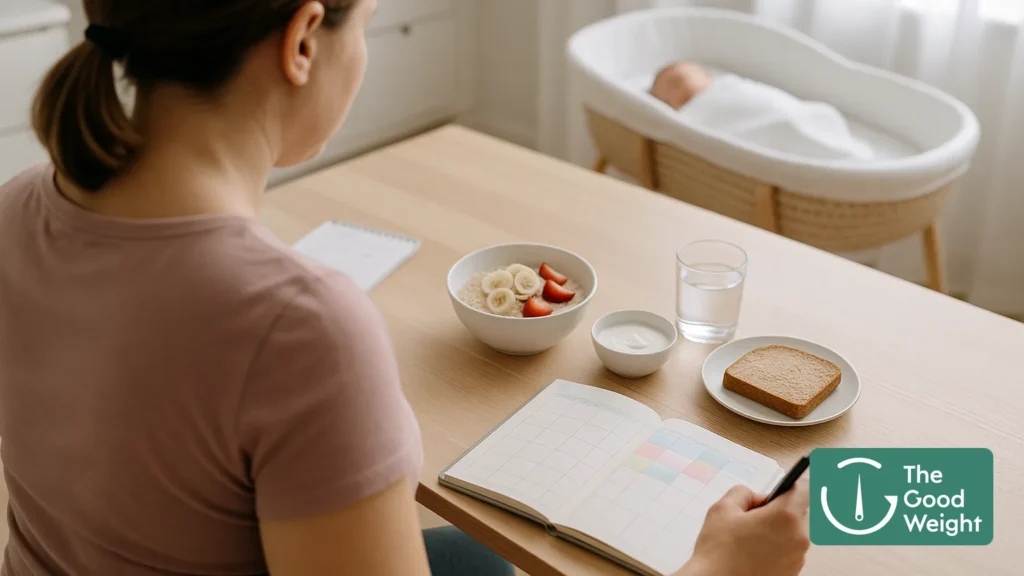
The pressure to “bounce back” after childbirth is loud, constant, and often deeply unrealistic. Social posts can make it seem as if weight loss should begin immediately, but a clinician’s view is different: your body is recovering from pregnancy, delivery, blood loss, sleep disruption, and, for many women, the energy demands of feeding a newborn. In the early postpartum period, a diet planner for weight loss should not look like a strict fat-loss program. It should first function as a recovery-support plan.
That distinction matters because the first three months after birth are not a normal dieting season. During this phase, women are managing wound healing, hormonal shifts, uterine involution, changing appetite, and sometimes breastfeeding-related calorie needs. Clinical guidance on postpartum nutrition consistently emphasizes that recovery, hydration, nutrient repletion, and steady energy come before aggressive calorie restriction, especially in the first weeks after delivery. A postpartum diet should prioritize healing, nutrient density, and adequate calories rather than rapid restriction.
There is also a cultural reason this topic feels urgent. Postpartum body-change content continues to draw massive engagement online, with trend tracking by many content teams showing millions of views around “before and after” narratives. But high engagement does not equal good guidance. A more useful question is not “How fast can I lose the baby weight?” but “When is it safe and realistic to begin a healthy eating plan that also supports gradual postpartum weight loss?”
This guide answers that question with a week-by-week roadmap for the first 12 weeks after delivery. It is designed for postpartum women and partners helping with food planning, and it focuses on sustainable weight loss, not rushed outcomes. If you are looking for a more general foundation, Good Weight also offers guidance on diet and weight loss strategies grounded in long-term habit change. Here, the lens is narrower: what makes sense after childbirth, and what should wait.
Myth vs. Reality: What “starting a diet” should mean after childbirth
The myth is that discipline alone determines how quickly the body changes after birth. The reality is that early postpartum weight shifts are influenced by fluid changes, blood volume normalization, uterine recovery, sleep loss, stress, feeding patterns, and delivery type. Even the number on the scale can move unpredictably in the first weeks because swelling and inflammation may still be settling long after delivery.
Medical reviews of postpartum care describe this stage as a period of major physiologic adjustment, not a simple return to baseline. The postpartum phase includes healing of the reproductive tract, musculoskeletal recovery, and ongoing metabolic adaptation, while many women also face fatigue, mood changes, and feeding demands. In other words, your body has active jobs to do before it is ready for an intentional calorie deficit. A clinical overview of postpartum care describes recovery as a complex transition involving multiple body systems, with ongoing needs beyond the delivery itself.
There is also strong reason to be cautious with “all-or-nothing” dieting behavior after pregnancy. Research on maternal nutrition and postpartum health shows that restrictive eating patterns can undermine recovery, energy, and diet quality at a time when iron, protein, fluids, and overall nourishment matter greatly. A review of postpartum nutritional needs highlights the importance of adequate macro- and micronutrient intake for maternal recovery and ongoing health.
So yes, a diet planner for weight loss can help after delivery. But in the first 12 weeks, the best version is a structured, flexible healthy eating plan that supports healing first and gradual fat loss second.
A week-by-week postpartum roadmap
Weeks 0-2: Recovery is the goal, not weight loss
In the first two weeks, your body is prioritizing acute recovery. The uterus is shrinking back down, vaginal or surgical tissues are healing, blood and fluid volume are shifting, and sleep is usually fragmented. If you are breastfeeding, milk production is also being established. This is not the time for a low-calorie meal plan for healthy eating and weight loss.
A sensible structure in this phase is simple and repetitive: three meals if possible, plus two to three easy snacks depending on appetite, feeding schedule, and energy needs. Focus on foods that are easy to assemble and easy to digest: eggs, yogurt, dal, chicken, fish, tofu, oats, rice, fruit, cooked vegetables, soups, nut butter, milk, and iron-rich foods like beans, leafy greens, or lean red meat if you eat it. The practical goal is to avoid long stretches without food, because under-eating in this window often worsens fatigue, dizziness, irritability, and nighttime overeating.
Hydration also matters more than many women expect. Postpartum fluid needs can feel especially noticeable if you are sweating more, bleeding, or breastfeeding. Guidance on postpartum nutrition notes that adequate fluid intake supports recovery and helps meet the increased hydration demands many mothers experience after delivery.
If you want to “start” a planner now, start by tracking rhythm, not calories. Ask: Did I eat protein at breakfast? Did I have a midday snack ready? Did I drink water regularly? Did I go more than five hours without eating? These are meaningful wins in week one. Weight-loss goals should stay secondary unless a physician has specifically advised otherwise.
What this phase can realistically look like
A useful plan in the first two weeks often includes anchor meals rather than exact macros. Breakfast might be oats with milk, nuts, and fruit. Lunch could be rice, dal, vegetables, and curd. Dinner may be a simple protein, starch, and cooked vegetable plate. Snacks might be yogurt, fruit, cheese, roasted chana, or toast with peanut butter. The more exhausted you are, the more your plan should favor convenience over perfection.
Weeks 3-6: Gentle structure begins
By weeks three to six, some women begin to feel more physically stable, though this varies widely by delivery type, tearing, cesarean recovery, sleep quality, and mental health. This is usually the earliest phase when a healthy eating plan can become more intentional. That still does not mean aggressive dieting. It means using meal structure to reduce chaos.
A strong plan here is protein-forward and routine-based. Aim for a source of protein at each meal, a produce source at least two to three times per day, and one to two planned snacks that prevent energy crashes. Protein is especially helpful because it supports tissue repair and can improve fullness, which is useful when appetite feels erratic. Research on weight-management strategies continues to show that higher-protein dietary patterns can improve satiety and support body-composition goals when compared with less structured approaches.
This is also the stage when some women wonder whether they should start cutting portions. The answer is: maybe slightly, but only if recovery is steady and you are not seeing red flags such as dizziness, intense hunger, worsening fatigue, or concerns about milk supply. For breastfeeding mothers, energy demands remain meaningful. Reviews of postpartum metabolism note that lactation is associated with increased maternal energy expenditure and can affect appropriate calorie planning.
A better target than “eat much less” is “eat more predictably.” Build your plate around protein, fiber, and steady carbohydrates. For example, instead of skipping lunch and overeating later, have a rice bowl with chicken or paneer, vegetables, and beans. Instead of grazing randomly at night, pre-plan a snack with protein and carbs. This is how postpartum weight loss becomes sustainable.
Weeks 7-12: A true diet planner for weight loss may become appropriate
Weeks seven to twelve are often when structured fat-loss goals become more realistic, especially once you have had postpartum follow-up, bleeding has reduced appropriately, and feeding routines are more established. This is still not the season for extremes, but it can be the right time to introduce a modest calorie deficit if your doctor agrees and your symptoms are stable.
The emphasis in this phase should be consistency. Evidence from behavioral nutrition research suggests that simpler self-monitoring approaches may improve adherence for some people compared with highly detailed tracking. In one intervention study, simplified calorie self-monitoring was explored as a practical strategy to support weight-loss adherence in mobile programs. For a sleep-deprived new mother, this matters. A plan you can repeat is better than a perfect plan you abandon after four days.
At this stage, you can begin asking more direct weight-loss questions: Are my meals balanced? Am I snacking from hunger or from exhaustion? Do I need more support with meal prep? Is my portion size drifting because I am skipping earlier meals? This is where a personalized framework can help, especially because postpartum needs vary so much by breastfeeding status, recovery stage, and prior metabolic health. Women looking for more tailored support may benefit from a female-focused weight loss diet approach that accounts for hormonal and life-stage factors.
What a postpartum-friendly eating plan includes
A practical postpartum meal plan for healthy eating should feel nourishing, not punishing. Use this checklist as the core of your planner.
Protein at each meal
Protein supports healing, muscle preservation, fullness, and steadier energy. Try to include eggs, Greek yogurt, milk, tofu, paneer, dal, beans, fish, chicken, or lean meat at each main meal. If breakfast is mostly carbohydrates, hunger can rebound fast, especially after a poor night of sleep.
Hydration you can actually maintain
Keep water visible in the spaces where you feed, rest, or pump. Pair drinking with routines you already have: after each feed, with each meal, and before naps. If plain water is difficult, use buttermilk, milk, soups, or unsweetened electrolyte options when appropriate.
Iron-rich foods
Blood loss during delivery can leave some women depleted, and low iron may worsen fatigue. Include iron-rich foods such as lentils, beans, spinach, meat, or fortified foods, and discuss supplementation with your clinician if needed. Postpartum nutrition reviews note that attention to iron status is important after childbirth, particularly when blood loss or fatigue is significant.
Fiber for bowel regularity and fullness
Constipation is common after birth, especially after pain medication, reduced movement, or pelvic floor discomfort. Fiber from fruit, vegetables, oats, legumes, and whole grains can help support bowel function while also improving satiety. A balanced dietary pattern with fiber-rich minimally processed foods is associated with better overall diet quality and appetite regulation.
Sleep-aware snack planning
When nights are broken, hunger cues can become intense and irregular. Keep one or two planned snacks ready for the hours when you are most vulnerable to impulsive eating: late afternoon and late evening for many mothers. Good examples include yogurt with fruit, apple and peanut butter, a boiled egg with toast, or hummus with crackers.
Realistic portions, not tiny portions
In the postpartum period, portion control should mean balanced plates, not deprivation. A simple method is half the plate vegetables when tolerated, one quarter protein, and one quarter starch, plus fats as needed for satisfaction. If you are breastfeeding or constantly hungry, you may need larger portions and an added snack. If you want a more individualized starting point, Good Weight’s diet-based weight loss guidance can help frame sustainable changes without resorting to restrictive dieting plans.
Sample one-day plans: breastfeeding vs. non-breastfeeding
These examples are not prescriptions, but they show how meal timing and energy needs may differ.
Sample day for a breastfeeding mother
Breakfast: vegetable omelet, two slices of toast, fruit, and milk.
Mid-morning snack: Greek yogurt with berries and seeds.
Lunch: rice, grilled chicken or paneer, dal, cooked vegetables, and curd.
Afternoon snack: banana with peanut butter and water.
Dinner: salmon or tofu, potatoes or quinoa, sautéed vegetables, and salad.
Evening snack if hungry: oatmeal or toast with cottage cheese.
For a breastfeeding mother, this structure works because it spreads energy across the day and reduces the chance of getting overly hungry by evening. Lactation can raise appetite significantly, and trying to force a steep deficit may backfire through cravings, fatigue, and difficulty sustaining the plan. Some studies also suggest that maternal diet quality and energy intake can influence postpartum well-being and feeding experience.
Sample day for a non-breastfeeding mother
Breakfast: overnight oats with protein-rich yogurt, nuts, and fruit.
Mid-morning: coffee or tea and a boiled egg.
Lunch: whole-grain wrap with chicken, hummus, and salad.
Afternoon snack: roasted chana or cheese with fruit.
Dinner: dal or fish, vegetables, and a moderate serving of rice.
Optional evening snack: if genuinely hungry, a small protein-based snack.
A non-breastfeeding mother may find it easier to reduce overall intake slightly once recovery is stable, but the same rules still apply: regular meals, enough protein, enough hydration, and no dramatic restriction in the early recovery window.
Red flags: when to stop self-planning and seek medical help
What if I feel severely fatigued even when I am eating regularly?
Persistent severe fatigue can reflect more than sleep loss. It may relate to anemia, infection, thyroid issues, mood disorders, or inadequate intake. A clinical postpartum care review emphasizes the need to evaluate ongoing physical symptoms rather than assuming they are a normal part of new motherhood.
What if I feel dizzy or shaky when trying to eat less?
That is a sign to stop tightening your intake. Dizziness, shakiness, headaches, and feeling faint may mean your calorie intake is too low, your meals are poorly spaced, or your hydration is inadequate. Your plan should be adjusted before weight-loss goals continue.
What if I worry my milk supply is dropping?
Do not continue self-directed restriction while this is unresolved. Milk supply concerns deserve prompt evaluation, especially if you have also cut calories, skipped meals, or reduced fluids. A postpartum nutrition guide notes that adequate nourishment and hydration are important considerations during breastfeeding.
What if I still have heavy bleeding or worsening pain?
Heavy bleeding, increasing pain, fever, foul-smelling discharge, or a sense that recovery is moving backward are medical issues, not dieting issues. Seek care first. Your body may not be ready for a structured weight-loss phase.
When is professional support the better option?
If you had a cesarean, significant blood loss, gestational diabetes, thyroid problems, a complicated feeding journey, or a history of disordered eating, individualized support is especially valuable. This is where a doctor-led weight loss doctor consultation or a specialized post-pregnancy weight loss plan can offer safer, more personalized guidance than generic internet charts.
What progress should actually look like
Real postpartum progress is usually quieter than viral transformation stories. It may look like less swelling, fewer energy crashes, better bowel regularity, more predictable hunger, and gradually better meal consistency. On the scale, progress may be uneven because fluid shifts, menstrual changes, sleep disruption, and breastfeeding status can all affect short-term weight trends.
The healthiest expectation is not a rapid drop every week. It is a gradual move toward stability: better nourishment, better recovery, and a routine you can sustain long enough for body composition to change. Research on postpartum behavior and nutrition repeatedly supports the value of consistency over intensity, especially when long-term outcomes matter more than short bursts of restriction. Earlier work in maternal weight management also found that behavioral and dietary strategies work best when they are realistic enough to maintain during the demands of new motherhood.
If you are ready for a personalized postpartum diet planner for weight loss, the best next step is not copying a celebrity meal chart. It is building a plan around your delivery type, breastfeeding status, sleep routine, and current recovery stage. Good Weight offers doctor-led support to help you create a safe, practical nutrition plan for sustainable weight loss after childbirth. You can explore more or book support through Good Weight.