
Calorie deficit diet adjustments that help you test meal structure, understand hunger, and recognise when you need medical support.
It’s 5 p.m., dinner is still hours away, and the lunch you carefully portioned now feels like a distant memory. You’re rereading the same email while thinking about food, wondering whether another snack would “ruin” the day. When that happens repeatedly, eating less can start to feel like a second job.
A calorie deficit diet means consuming less energy than your body uses over time. But the arithmetic doesn’t explain how to make your meals satisfying, or what to do when your concentration starts slipping. A target can look sensible on an app and still feel unmanageable during an ordinary workday.
Definition: A calorie deficit is the gap between your energy intake and energy expenditure when intake is lower. It describes an energy balance, not a requirement to skip meals or tolerate constant hunger.
Some appetite before meals is expected. Persistent hunger that dominates your attention deserves a different response, particularly when it arrives alongside exhaustion or repeated episodes of overeating. Hunger is information, not a character assessment. What would change if you treated it as feedback about the plan instead of evidence that you lack discipline?
For adults attempting fat loss, the useful next step is often a small experiment: change the composition of breakfast, make lunch less sparse, or stop leaving dinner to chance. You don’t need to test everything at once. Over several ordinary days, notice whether one adjustment changes afternoon hunger or evening eating, without turning observation into another demanding tracking task.
The aim is a plan you can live with. Sometimes that means better meal structure; sometimes it means eating more or seeking medical advice.
1. Is your calorie deficit diet causing manageable appetite or warning signs?
From a clinical perspective, the distinction starts with how hunger affects daily life. Manageable appetite might build before lunch and settle after a satisfying meal. Hunger that persists after eating, interrupts sleep, or makes work difficult needs closer attention.
Persistent fatigue, dizziness, and food preoccupation shouldn’t become the accepted price of weight loss. A repeated pattern of restriction followed by loss-of-control eating also deserves review. Those experiences don’t prove that your deficit is too large, but they are reasons to reassess it rather than tighten the rules.
The ICMR-National Institute of Nutrition describes gradual weight loss of about 0.5 kg per week as safe. Treat that as guidance, not a weekly quota: short-term scale changes also reflect fluid shifts. Even a slower rate doesn’t make a plan suitable if you feel consistently unwell.
I’d start with function, not the scale alone. Can you concentrate between meals, sleep reasonably well, and complete your usual activities? If the answer keeps being no, arrange a review instead of assuming you need more resolve.
2. Could spreading protein across meals improve fullness?
A breakfast of tea and toast, followed by a small rice lunch, can leave most of the day’s protein waiting until dinner. One practical experiment is to move some of that protein earlier, while keeping overall food intake broadly similar. No protein powder required.
For an Indian calorie deficit diet plan, breakfast might pair dosa with a generous serving of sambar and curd, or include eggs alongside your usual meal. Lunch could combine rice or chapati with dal and tofu, paneer, fish, or chicken, depending on your preferences. These are meal-pattern examples, not fixed portions or interchangeable protein amounts.
A systematic review of 10 studies involving 1,079 people found that six studies reported greater fullness or satiety with higher protein intake. The authors judged the overall evidence low because of differences between studies and risk of bias. That supports a cautious experiment, not a promise, and it doesn’t establish that spreading protein evenly will work for everyone.
For more food-based ideas, read The Good Weight’s guide to building a balanced high-protein diet without crash dieting. If you have kidney disease or a prescribed protein limit, ask your clinician before increasing intake. More isn’t automatically better.
3. What role can higher-volume meals play?
A small takeaway portion and a home-cooked plate can contain similar energy yet feel very different to eat. For example, a meal centred on fried snacks may leave little room for vegetables or pulses. A plate with vegetable poriyal, dal, a portion of rice, and a suitable protein food has a different structure.
Try rebuilding one meal instead of shrinking every component:
- Start with vegetables: Add cooked vegetables or a salad you enjoy. Keep enough of the rest of the meal to avoid turning lunch into a bowl of leaves.
- Include pulses: Dal, chana, or rajma can contribute both protein and fibre. Preparation and portion size still matter.
- Keep a grain component: Rice, chapati, or a whole-grain option can remain part of the meal. You don’t have to ban familiar staples.
- Check the protein portion: Depending on the meal, pulses may need company from curd, tofu, eggs, or another protein food.
Look, a larger-looking plate isn’t a guarantee of lasting fullness. Cooking oil and rich sauces can change its energy content, while individual appetite responses differ. Test whether a less sparse meal helps, rather than expecting one vegetable to silence hunger.
4. Should fibre be treated as a guaranteed appetite fix?
Myth: More fibre will automatically stop hunger. It’s an appealing idea when you’re tired of thinking about food. But piling bran onto breakfast or adding a supplement doesn’t guarantee a satisfying day.
Fact: Fibre can improve meal quality, while appetite effects vary. A 2026 systematic review found conflicting evidence on cereal fibre and satiety and called for more research into fibre properties and population differences. The finding concerns cereal fibre specifically, not every fibre-containing food. It’s a useful reminder that “high fibre” isn’t a universal appetite prescription.
Try one tolerable change, such as replacing some refined cereal with oats or adding pulses to a meal. Increase gradually, drink adequately, and pay attention to digestive comfort. Bloating isn’t proof that the experiment is working.
What happens if your lunch contains plenty of fibre but barely any protein or energy? You may still feel hungry. Judge the whole meal, and seek individual advice if you have a gastrointestinal condition.
5. Can meal timing and planned snacks make workdays easier?
Lunch at 1 p.m. and dinner after a long Chennai commute can leave a difficult gap. By the time you reach home, cooking may feel impossible and eating may feel urgent. The scheduling problem deserves attention before you blame the snack.
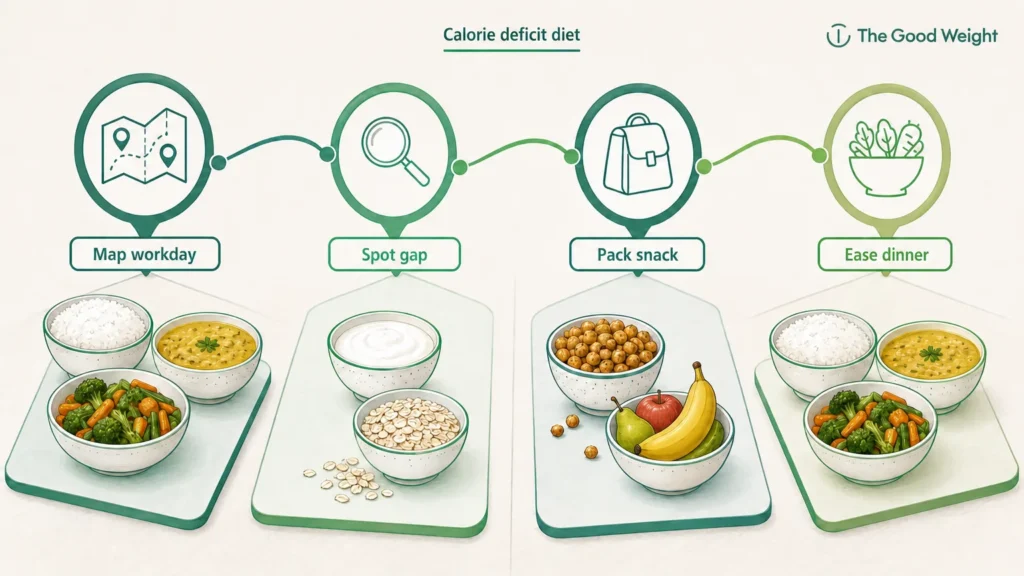
Use this simple planning process:
- Map an ordinary workday. Write down when you can realistically eat, including meetings and travel. Build around your actual timetable, not an ideal one.
- Spot the difficult gap. Notice when hunger becomes distracting or you start grazing without feeling satisfied. Plan food before that point instead of waiting until you’re ravenous.
- Pack a practical bridge snack. Fruit with curd, roasted chana, or an egg with fruit are possible options. Choose something you enjoy and can store safely, especially in hot weather.
- Make late dinner easier. Keep a straightforward option available, such as dal with rice and vegetables. A planned snack should help you reach dinner comfortably, not trigger a decision to skip it.
Meal frequency doesn’t need to follow a universal rule. Some people prefer fewer, larger meals; others manage better with a planned snack. Compare similar workdays and notice which pattern reduces urgency without adding stress.
6. When is reducing the deficit better than adding more rules?
If meals are already balanced and reasonably timed, constant hunger may call for more food. Adding another restriction can make an already difficult plan harder to sustain. Not ideal.
Before changing your calorie deficit diet plan, review:
- Weight trend: Is weight falling faster than intended across several weeks? Avoid judging the plan from one weigh-in.
- Energy: Are ordinary activities harder, or are you repeatedly exhausted?
- Sleep: Does hunger wake you, or do evening eating episodes interfere with rest?
- Adherence: Are you repeatedly restricting after overeating, then overeating again?
Also ask whether hunger occupies much of the day despite satisfying meals. A smaller deficit may be more workable, while ongoing symptoms need clinical assessment. Don’t use meal experiments to postpone help when you feel unwell.
A calorie deficit diet calculator supplies an estimate, not a personalised safety assessment. The NIDDK Body Weight Planner uses a model of changing energy needs to estimate weight trajectories, but a model can’t assess dizziness or eating distress. The Good Weight’s explanation of how calorie needs differ between people adds context without turning a calculated number into a command.
7. When should hunger be discussed with a doctor?
Could medication be affecting appetite?
Some medicines affect appetite or weight, so bring your medication list to an appointment. Don’t stop or alter treatment yourself. If you take GLP-1 medication and struggle to eat enough, discuss that with the prescribing clinician too.
What if I have diabetes or diabetes risk?
Ask for an individual plan, particularly if you take insulin or medicines that can cause low blood glucose. Hunger with shaking, sweating, or confusion needs prompt attention and your prescribed hypoglycaemia response. Persistent hunger with increased thirst, frequent urination, or unexplained weight loss also warrants medical assessment.
Is a calorie deficit appropriate during pregnancy?
Don’t start a weight-loss deficit during pregnancy without guidance from your obstetric team. Pregnancy changes nutritional needs, and routine online calorie targets aren’t a suitable substitute for care. If you’re breastfeeding, discuss your needs before restricting intake.
What if I have an eating-disorder history?
Seek support before intensifying restriction, especially if tracking makes food preoccupation worse. Binge-restrict patterns, compensatory exercise, or fear of eating deserve care, not stricter targets. A clinician can help you decide whether intentional weight loss is appropriate now.
Which symptoms need urgent help?
Fainting, chest pain, or severe weakness require urgent medical attention. Confusion or inability to keep fluids down also needs urgent assessment. Recurrent dizziness and ongoing fatigue deserve a timely appointment even when they don’t feel like an emergency.
Make the plan livable before making it stricter
Choose one meal-pattern experiment if you feel well enough to do so, then notice its effect on daily life. Better concentration and less evening urgency matter alongside weight trends. Persistent hunger isn’t simply a willpower problem, and a sustainable deficit may require different expectations or medical support.
If your plan still feels unlivable, or a health condition affects your appetite and weight, seek a personalised doctor-led assessment at The Good Weight. For adults in Chennai, that can bring nutrition support and medical review into the same conversation. You deserve weight care that takes how you feel seriously.