
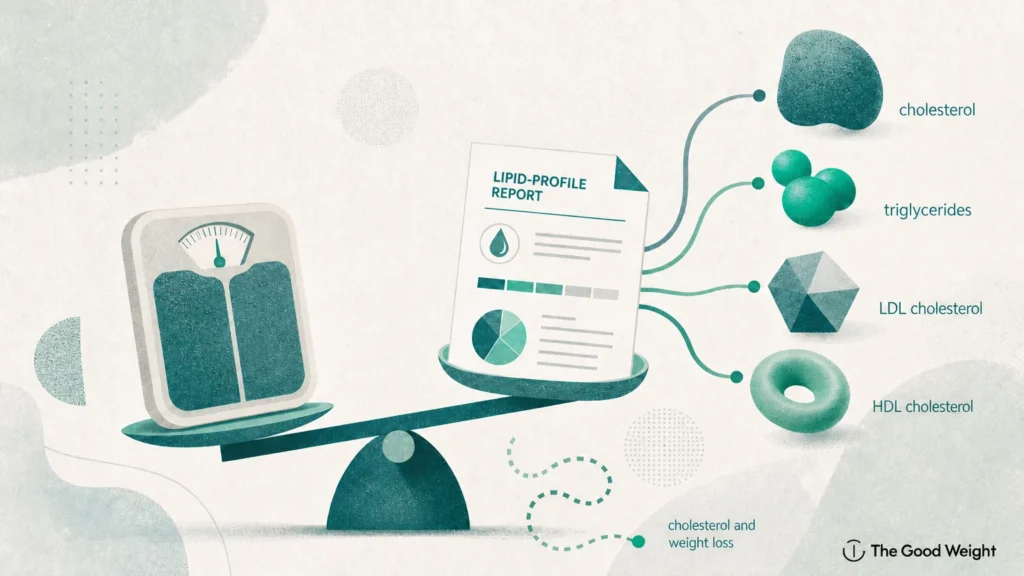
Cholesterol and weight loss: how to read your lipid profile as part of a personal care plan.
Two people can weigh the same, have a similar body mass index (BMI), and leave a medical appointment with different recommendations. One may need closer attention to blood pressure and glucose levels. The other may need a discussion about inherited cholesterol risk, even after years of regular exercise.
The scale hasn’t malfunctioned. It measures weight, not how your body handles fats or responds to insulin. A 2026 paper describes differences in insulin sensitivity, lipid metabolism, inflammatory status and long-term outcomes among people with similar BMI. That distinction helps explain why a weight-care consultation needs more than a weigh-in.
If you’ve recently opened a lipid-profile report and noticed a flagged result, it’s understandable to wonder what needs to change. Should you stop eating rice? Lose weight faster? Ask about medication? A laboratory flag can feel like an instruction, but it isn’t a treatment plan.
The connection between cholesterol and weight loss deserves a more careful conversation. Your results can help a clinician assess cardiovascular risk and decide what to investigate next. They can also guide nutrition support without turning meals into a list of forbidden foods.
A cholesterol result is useful context, not a verdict on your health or your effort. Its meaning depends on your medical history and the rest of your assessment. The useful question is what the result changes for you, not what an online chart says everyone should do.
Why cholesterol and weight loss need a wider conversation
A person whose weight has stayed steady for years may still develop an unfavourable lipid pattern. Someone else may lose weight while their LDL cholesterol remains elevated. Neither situation automatically means they’ve done something wrong.
Body weight and blood lipids overlap, but they aren’t interchangeable measurements. Genetics can affect cholesterol levels, while diabetes and some medicines can alter lipid patterns. BMI also cannot distinguish muscle from fat or show where fat accumulates.
Research helps put expectations in perspective. In a Look AHEAD analysis involving adults with overweight or obesity and type 2 diabetes, losing 5-10% of body weight was associated with improvements in triglycerides, HDL cholesterol and glucose-related measures, but not a consistent LDL cholesterol improvement. Those findings concern a particular study population, not a promise about your next blood test.
So, can weight loss help cholesterol? Often, yes, but the response differs across measurements and individuals. A doctor-led plan should track the relevant markers instead of assuming that a lower weight settles every question.
What do the measurements on a lipid profile show?
A report might list total cholesterol first, with several unfamiliar abbreviations underneath. Reading only the first line misses much of the information. The components of a cholesterol test measure different aspects of cholesterol and other blood fats, which clinicians interpret together.
Lipid profile: A blood test that measures cholesterol carried in different particles, along with triglycerides. It helps clinicians assess cardiovascular risk, but it does not measure every aspect of metabolic health.
Here’s an annotated report layout, not a patient example or a set of target values:
| Report entry | What it helps your clinician understand |
|---|---|
| Total cholesterol | An overall measurement that needs the other results for context. The total alone cannot explain which particles account for it. |
| LDL cholesterol | Cholesterol carried in low-density lipoproteins. Elevated levels contribute to plaque buildup in arteries, so LDL often receives particular attention. |
| HDL cholesterol | Cholesterol carried in high-density lipoproteins. It adds context to risk assessment, but a higher HDL result does not cancel an elevated LDL result. |
| Triglycerides | A different type of blood fat. Levels can reflect glucose regulation, alcohol intake and other influences, including whether you recently ate. |
| Non-HDL cholesterol | Total cholesterol minus HDL cholesterol. It captures cholesterol carried in several particle types associated with artery disease. |
Some laboratories also list VLDL cholesterol or a cholesterol ratio. Don’t panic over an unfamiliar abbreviation. Ask which measurements matter most for your situation and why the laboratory’s reference interval may differ from your personal treatment goal.
What information should you bring to the discussion?
A report showing higher triglycerides after a recent illness may prompt different questions from a repeatedly elevated LDL result alongside a family history of early heart disease. The printed number is only the starting point. Your clinician needs the circumstances around it.
Use this checklist to add that missing context:
- Weight history: Note recent changes and previous treatments, including any surgery. Mention weight regain without apologising; it helps your clinician understand what support you need.
- Family history: Bring details of heart attacks or strokes in close relatives, especially at younger ages. Include known inherited cholesterol conditions and relatives’ ages at diagnosis where possible.
- Blood pressure and glucose: Take recent readings and any HbA1c or blood-glucose reports. Mention previous gestational diabetes, since the history may affect the wider risk discussion.
- Medicines and supplements: Record names and doses, including non-prescription products. Don’t stop a prescribed treatment because you suspect it affected the result.
- Everyday patterns: Describe usual meals and alcohol intake, along with activity and smoking. Include practical barriers, such as shift work or knee pain, so recommendations fit your life.
- Testing circumstances: Explain whether you fasted and whether you were recently unwell. Earlier lipid reports help your clinician distinguish a persistent pattern from a change needing follow-up.
You don’t need a perfect food diary. An honest account of an ordinary week is more useful than a carefully edited version of your healthiest day.
Unexpected result? Avoid the panic response
Seeing a flagged value can create an urge to do something immediately. That reaction makes sense, but drastic changes may distract from the actual problem. I’d put getting the result interpreted ahead of buying a supplement or starting a restrictive diet.
Myth: “I need a crash diet before my next test”
Fact: A short burst of severe restriction is not a sound long-term care plan. Your clinician needs to understand your usual health pattern, not just what happens after an unusually restrictive fortnight. Sustainable changes also need enough nourishment to support daily life and preserve muscle during weight loss.
Myth: “A natural supplement is the safer first step”
Fact: “Natural” doesn’t establish safety or effectiveness. Supplements can interact with medicines, and product contents may vary. Bring the label to your clinician or pharmacist before taking something marketed for cholesterol control.
Myth: “Once I lose weight, I won’t need cholesterol treatment”
Fact: Weight loss cannot reliably correct every lipid abnormality. Inherited risk may still need treatment, even when nutrition and activity habits improve. Medication is not evidence that your efforts failed.
Don’t ignore a report marked urgent or wait months while trying a diet experiment. Ask the ordering clinician how soon it needs review. If the laboratory contacts you about a potentially dangerous result, follow its instructions promptly.
How might a doctor adapt your weight-care plan?
An elevated LDL result doesn’t automatically point to a GLP-1 prescription or a procedure. Nor does a triglyceride result identify one correct diet. Treatment decisions need an assessment of your health, alongside your preferences and previous experience.
A care pathway may look like this:
Lipid report + health and weight history
                  ↓
Clinical review and cardiovascular risk assessment
                  ↓
Repeat testing or investigation when indicated
                  ↓
Personalised nutrition support and treatment discussion
                  ↓
Follow-up of lipids, weight and other relevant markers
In practice, the process has four parts:
- Clarify the pattern. Your doctor reviews previous reports and testing circumstances. Depending on the findings, they may investigate contributing conditions or request another measurement.
- Agree on workable nutrition changes. Support may include replacing some saturated fats with unsaturated fats and increasing fibre-rich foods. For someone eating familiar Chennai meals, that can involve adjusting portions and ingredients without banning an entire cuisine.
- Separate treatment decisions. Cholesterol medication and weight-management medication address related but different needs. The Good Weight’s guidance on evaluating doctor-supervised GLP-1 care explains questions about screening and ongoing monitoring.
- Review what changed. Follow-up should assess relevant blood results and treatment tolerability, not just kilograms lost. After surgery or an endoscopic intervention, post-procedure weight support can help connect nutrition needs with continuing medical review.
Progress may appear in one marker before another. A useful plan leaves room to adjust without treating every disappointing result as a personal failure.
Make your next consultation more useful
You don’t need to become your own lipid specialist before the appointment. A short written note can keep the discussion focused, especially if the report has left you anxious. Copy this template and fill in what you know.
My appointment notes
- Recent reports: Lipid profile with test date and fasting status; earlier lipid results; available glucose and blood-pressure records.
- Medicines: Current prescriptions with doses; supplements; recent changes or missed doses.
- Health history: Weight changes and previous treatment; relevant diagnoses; family history of early cardiovascular disease.
- Daily reality: Usual food pattern and activity; sleep difficulties; cost or scheduling barriers that could affect treatment.
Three questions to ask
- Which result matters most for me, and why? Ask how your history changes the interpretation.
- Do I need further testing or treatment now? Clarify whether a repeat test is needed and when.
- What should we review at follow-up? Agree on a realistic plan and the measurements that will guide the next decision.
Before leaving, check that you understand the timing. “Review later” is less useful than knowing when to arrange the next appointment and whom to contact with concerns.
Frequently asked questions
Can I have high cholesterol at a lower body weight?
Yes. Body weight alone cannot rule out an unfavourable lipid profile, particularly when inherited factors are involved. Your clinician should interpret the result using your history and overall risk assessment.
Does a normal cholesterol report mean my metabolic health is fine?
It’s reassuring information, but it doesn’t assess everything. Blood pressure and glucose regulation still deserve attention when indicated. A normal lipid profile shouldn’t end a necessary weight-care conversation.
Should everyone follow the same cholesterol target?
No. Treatment goals depend on factors such as established cardiovascular disease and other risk conditions. A generic online target cannot replace that individual assessment.
If your results are concerning, changing or unexplained, bring the complete report to a qualified clinician for interpretation. Ask what it changes about your care before changing everything about your life. To discuss doctor-led weight care in Chennai, learn more about The Good Weight.