
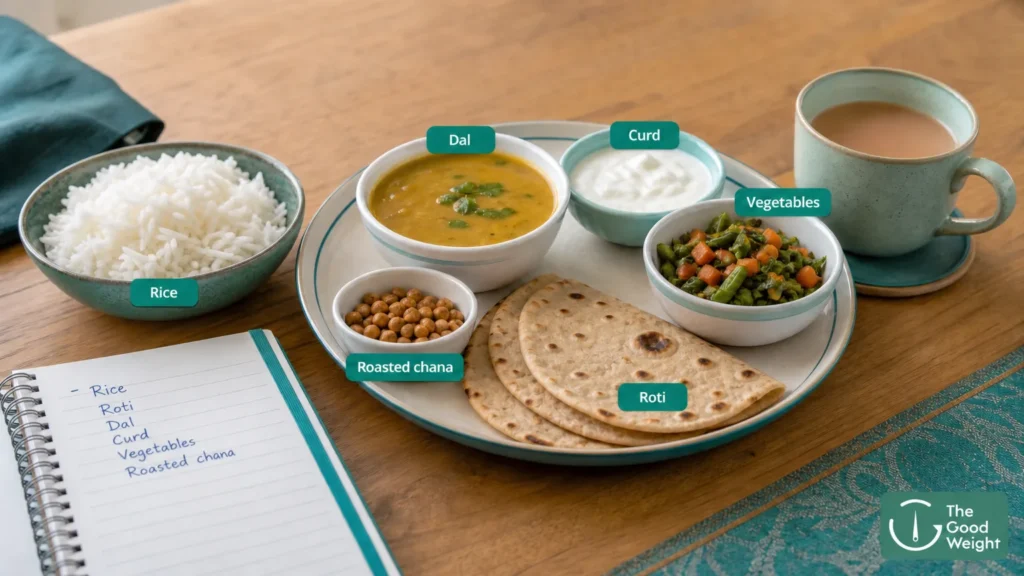
Trying to lose weight while managing diabetes can make everyday Indian food feel unnecessarily confusing. You may hear that rice is “bad,” fruit is off-limits, breakfast must be eggs, and dinner should contain almost no carbohydrates. In reality, a sustainable approach to blood sugar weight loss does not require bland meals or cutting out every familiar staple.
The goal is to reduce empty carbs – foods that deliver plenty of rapidly digested carbohydrate but little protein, fibre, or lasting fullness – while building meals that work with your culture, budget, schedule, medications, and preferences. This matters because diabetes care and weight management are closely connected: even a relatively modest, sustained weight reduction can improve health markers for many people with type 2 diabetes, and current diabetes guidance treats weight management as an important part of care rather than an optional extra.
The most effective diet is usually not one strict “diabetic menu.” It is a repeatable pattern: sensible portions of carbohydrate, enough protein, plenty of vegetables and other fibre-rich foods, and fewer refined snacks and sugary drinks.
Important: If you take insulin or medicines that can cause low blood sugar, including sulfonylureas, do not sharply reduce food intake or carbohydrates without speaking with your diabetes clinician. Your meal plan and medication doses may need to change together.
Why empty carbs make blood sugar weight loss harder
Carbohydrates are not automatically the problem. Your body needs glucose for energy, and Indian staples such as roti, rice, millets, dal, beans, fruit, and dairy can all fit into a diabetes-friendly eating plan. The challenge is the form, portion, and meal context of the carbohydrate.
A plate built mainly around white rice, refined flour, sugary drinks, or fried snacks is often low in fibre and protein. It may digest quickly, raise blood glucose more sharply, and leave you hungry again soon after. When this pattern repeats through the day, it becomes harder to maintain a calorie deficit without feeling deprived.
By contrast, a balanced meal slows the pace of eating and digestion. Protein supports fullness, vegetables and pulses add fibre and volume, and a measured serving of carbohydrate provides energy without taking over the plate. This is why effective blood sugar weight loss is less about “never eat rice” and more about avoiding meals that are essentially refined starch with very little else.
| Mostly empty-carb eating | Balanced Indian meal building |
|---|---|
| Tea with several biscuits | Tea with roasted chana, nuts, or a protein-rich breakfast |
| Large rice serving with thin rasam | Measured rice with sambar or dal, vegetables, curd, and salad |
| Poha, bread, or upma without a protein source | Poha or upma with vegetables plus sprouts, curd, egg, or paneer |
| Fruit juice | Whole fruit eaten with or after a balanced meal |
| Pakoda or chips as an evening snack | Chana chaat, boiled eggs, buttermilk, or roasted makhana |
Weight change still depends on overall energy intake, but meal quality makes a practical difference. The CDC notes that healthy eating, physical activity, sleep, and stress management work together to support a healthy weight. In other words, no single food determines success; your routine does.
What an Indian diabetic eating plan should include
A useful plan should be familiar enough to follow at home, at work, and during family occasions. Rather than buying expensive “diabetic” products, begin with ordinary foods that make meals more filling and nutritionally complete.
Breakfast checklist
Breakfast should contain a meaningful protein source, especially if you tend to feel hungry by mid-morning. Common high-carbohydrate breakfasts are not forbidden, but they need balance. For example, vegetable poha can be paired with curd or sprouts; idli can be eaten with a generous bowl of sambar; and dosa can be served with sambar and a side of egg, paneer, or unsweetened curd rather than relying on coconut chutney alone.
Other practical choices include moong dal chilla with curd, besan chilla with vegetables, egg bhurji with one or two rotis, or vegetable oats with paneer. Choose the option you can repeat consistently instead of forcing yourself into a breakfast you dislike.
Lunch and dinner checklist
For lunch and dinner, aim to make vegetables the largest part of the plate. Include one palm-sized serving of protein, such as dal, chana, rajma, curd, paneer, tofu, eggs, fish, or chicken. Then add a measured portion of rice, roti, millet, or another staple based on your hunger, activity level, glucose response, and medical advice.
A typical home meal might be two smaller rotis, palak dal, bhindi or beans poriyal, cucumber salad, and curd. Another could be one small katori of rice with sambar, a vegetable side, salad, and fish or paneer. If rice is important to your household, keeping it in the plan in an appropriate portion is often more sustainable than trying to ban it completely.
Snack checklist
Snacking is not compulsory. If you are genuinely hungry between meals, however, a planned snack can prevent a larger, less balanced meal later. The best choices combine protein, fibre, or both: roasted chana, peanuts in a measured portion, boiled eggs, sprouts chaat, unsweetened buttermilk, plain curd, paneer cubes, roasted makhana, or a whole fruit with a few nuts.
The key distinction is between a snack that settles hunger and one that simply restarts it. A packet of biscuits, sweetened coffee, bakery item, or fried mixture may feel convenient, but it rarely provides the fullness needed for sustainable weight loss.
Build a plate for steadier glucose and fat loss
You do not need to weigh every ingredient forever. A plate framework can help you make quicker decisions while still accounting for portion size.
Step 1: start with non-starchy vegetables
Make roughly half your plate vegetables whenever possible. Choose options such as beans, cabbage, cauliflower, gourds, brinjal, okra, spinach, carrot, cucumber, tomato, mushrooms, or mixed vegetable sabzi. Vegetables add bulk and fibre with relatively few calories, which helps meals feel satisfying during weight loss.
Potato, sweet potato, corn, and colocasia can still be eaten, but treat them more like the carbohydrate portion of the meal than as unlimited vegetables. A potato curry plus a large rice serving is simply a higher-carbohydrate meal, not a “vegetable-heavy” plate.
Step 2: add a reliable protein anchor
For most meals, build around a protein source before deciding the starch portion. Vegetarians can rotate dals, legumes, soy, tofu, paneer, Greek-style curd, and milk; non-vegetarians can also use eggs, fish, chicken, and lean meat. Dal is valuable, but a small watery serving may not provide enough protein on its own, so consider pairing it with curd, paneer, tofu, eggs, or a larger serving of legumes.
Protein needs vary with body size, kidney health, age, activity, appetite, and medical conditions. It is particularly important to individualise targets when someone has kidney disease, is older, or is using weight-loss medication. The aim is not an extreme high-protein diet; it is enough protein to support fullness and preserve lean tissue while losing fat.
Step 3: choose one main starch and portion it
Use one primary carbohydrate source per meal: rice, roti, millet, dosa, idli, bread, or another grain-based option. Combining a large bowl of rice with several rotis, potato curry, and dessert can push carbohydrate intake higher than intended, even if each item seems ordinary on its own.
For many adults, a useful starting point is one small katori of cooked rice or one to two rotis, adjusted with a clinician or dietitian based on glucose readings, body size, activity, and hunger. Brown rice, hand-pounded rice, millets, and whole-wheat rotis may offer more fibre or variety, but they are not “free foods.” Portion and the rest of the plate still matter.
Feasible example for your everyday meals
A roti-based plate could be two small phulkas, a bowl of chana masala or egg curry, a large serving of lauki sabzi, and salad. If you usually eat four rotis, reducing to two or three while increasing vegetables and protein is often more manageable than removing roti entirely.
A rice-based plate could include one small katori of cooked rice, thick sambar with extra vegetables, beans poriyal, curd, and grilled fish or paneer. Avoid making the rice bowl the meal; make it one component of the meal.
For an office lunch, pack a compartmentalised box: vegetable sabzi or salad, protein such as dal plus curd or egg/paneer/chicken, and a measured rice or roti portion. This prevents the common pattern of buying a carb-heavy lunch because there is no filling alternative available.
For a vegetarian meal, try moong dal chilla with paneer filling and salad, or rajma with a small rice portion, cucumber raita, and a large vegetable side. Vegetarian eating can support diabetes management very well, but it requires conscious planning so meals do not become mostly rice, roti, potatoes, and snacks.
Empty-carb traps: myth versus everyday practice
Myth: tea biscuits are a light snack
In practice: biscuits are often refined flour, added sugar, and fat in a small package that is easy to overeat. Two biscuits may not seem significant, but repeated tea-and-biscuit breaks can add calories without controlling appetite. Replace them with roasted chana, a small handful of nuts, boiled eggs, or curd, and keep tea unsweetened or gradually reduce added sugar.
Myth: fruit juice is healthier than a sweet drink
In practice: juice removes much of the chewing and fibre that makes whole fruit satisfying. It also makes it easy to consume more fruit than you would normally eat at one time. Choose a whole orange, guava, apple, pear, papaya, or berries where available, and avoid adding sugar, honey, or syrups.
Myth: switching to brown rice means portions no longer matter
In practice: brown rice can be a useful option, but a very large serving can still raise glucose and make weight loss difficult. The better strategy is a modest serving of whichever rice you can maintain, combined with dal or another protein source and plenty of vegetables. Monitor how your body responds rather than assuming a label guarantees a better outcome.
Myth: fried snacks are acceptable because they are savoury, not sweet
In practice: samosas, pakodas, chips, mixture, murukku, and fried namkeen can be energy-dense and easy to eat quickly. They can fit occasionally, but they are not ideal default snacks for someone trying to improve blood sugar control and lose weight. Keep them for planned portions, not daily hunger management.
Myth: a low-protein breakfast is enough if it is “healthy”
In practice: even nutritious foods such as plain upma, poha, or idli may leave you hungry if the meal is mostly starch. Add vegetables and protein rather than eliminating the dish. This small adjustment can make the rest of the day easier to manage.
A flexible one-day structure
This is not a rigid meal chart. It is an example of how balanced Indian meals can fit into a working day, with portions tailored to the individual.
Start the morning with vegetable besan chilla and curd, or two idlis with a large bowl of sambar and an egg or paneer side. If you drink tea or coffee, reduce added sugar gradually and avoid automatically pairing it with biscuits.
At lunch, choose a plate with a measured rice or roti portion, dal or another protein, two vegetable components when possible, and curd or salad. If you need an evening snack, have buttermilk with roasted chana, sprouts chaat, or fruit with a few nuts rather than waiting until you are extremely hungry.
For dinner, repeat the same plate principle rather than trying to “eat nothing” after a heavy day. A lighter but complete dinner could be vegetable soup with paneer and one roti, fish curry with vegetables and a small rice portion, or dal with mixed vegetables and curd. A short walk after meals may also be a useful habit if it is safe and realistic for you.
Make the plan work on difficult days
Hunger that feels constant is not a personal failure; it is useful information. Review whether meals contain enough protein and vegetables, whether breakfast is too small, whether sleep is poor, or whether long gaps between meals are leading to overeating later. If you are still hungry after a balanced meal, add vegetables, dal, curd, or another protein source before automatically increasing rice, roti, or snacks.
Medication deserves special attention. Insulin and some diabetes tablets can cause hypoglycaemia, particularly if you skip meals, exercise more than usual, or cut carbohydrates aggressively. The American Diabetes Association’s weight-management guidance for type 2 diabetes emphasises person-centred care, because nutrition, medication, weight, and health conditions need to be considered together.
When eating out, use the same framework: order a protein dish, a vegetable preparation, and one carbohydrate choice. Tandoori fish or chicken, paneer tikka, grilled options, dal, vegetable curries, and salads can help create a balanced meal; share fried starters and desserts if you want them. At buffets, walk around first, fill half your plate with salad and vegetables, and avoid treating every available dish as a required taste.
For people with obesity, long-standing diabetes, fatty liver, PCOS, sleep apnoea, or repeated difficulty losing weight despite consistent effort, nutrition is still essential – but it may not be the only tool required. Explore doctor-led medical weight-loss care when you need a fuller assessment of metabolic health, medication options, eating patterns, and sustainable support.
Frequently asked questions
Do diabetics need to stop eating rice completely?
No. Many people can include rice in a diabetes-friendly plan. The important considerations are serving size, the type and quantity of foods eaten with it, your overall calorie intake, and your personal glucose response. Pair rice with protein, pulses, vegetables, and curd rather than eating a large bowl with little else.
Is fruit allowed for people with diabetes?
Yes, whole fruit can usually be part of a balanced eating pattern. Choose whole fruit rather than juice, keep portions reasonable, and consider having it with a meal or alongside nuts or curd if that helps your hunger and glucose management. Your clinician may offer more specific guidance if you use insulin or have persistently high readings.
How much protein should I eat for weight loss?
There is no single amount that suits everyone. A practical starting point is to include a protein source at each meal and most planned snacks, then adjust with a clinician or dietitian. Kidney disease, age, activity level, vegetarian eating, and certain medical treatments all affect what is appropriate.
When should I seek medical supervision before changing my diet?
Seek guidance before major dietary changes if you use insulin or sulfonylureas, have frequent low blood sugar, kidney disease, pregnancy, a history of an eating disorder, or unexplained weight loss. You should also speak with a clinician if glucose levels remain high despite your efforts or if weight gain is rapid and unexplained.
A sustainable next step
The best diabetes-friendly weight-loss diet in India is usually the one that replaces empty carbs with balanced, satisfying meals – not the one that bans every food you enjoy. Build meals around vegetables and protein, use rice or roti in intentional portions, and make your snacks work harder for your hunger and blood sugar.
At The Good Weight, our approach to nutrition support for sustainable weight loss considers Indian meals, medical history, daily routine, medications, and long-term metabolic health. Book a consultation with The Good Weight for a personalised, doctor-led plan that supports both weight management and steadier blood sugar.