
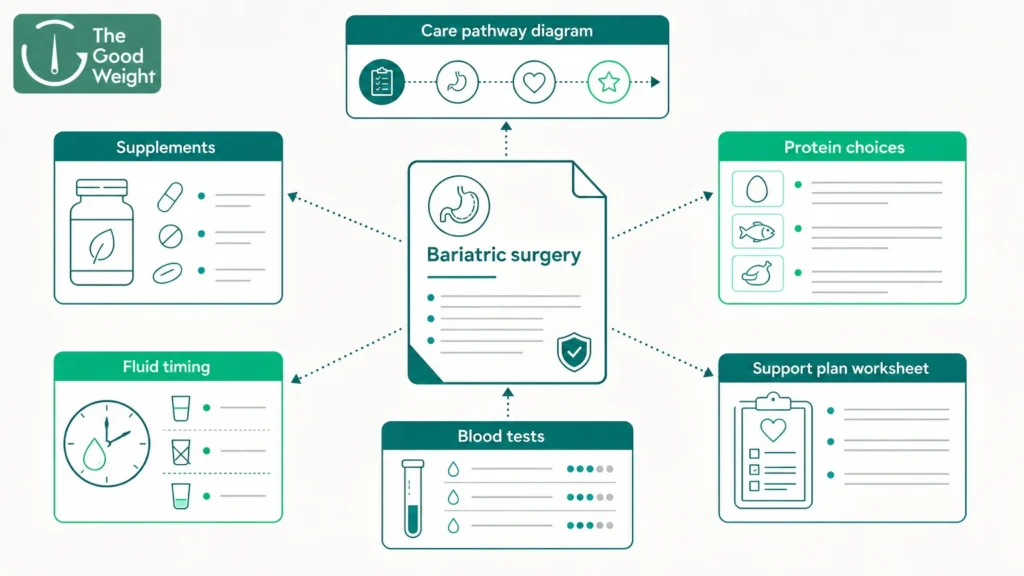
Bariatric surgery can be a powerful step toward improved metabolic health, mobility, and quality of life. Yet even when wound healing, weight change, and nutrition are progressing as expected, some people are surprised by how different daily life feels emotionally. A changed relationship with food, a rapidly changing body, and new reactions from others can all require adjustment.
This is not a sign that the procedure has “failed” or that someone is not coping well enough. Bariatric surgery changes the digestive system and requires lasting changes to eating patterns, activity, supplementation, and medical follow-up; emotional adjustment is part of living with those changes. Long-term follow-up and nutrition support are integral to bariatric care.
Whether you are considering surgery, recovering after it, or supporting a loved one, the goal is not to expect one particular emotional experience. It is to recognise that recovery can involve practical, physical, social, and psychological changes – and that asking for structured support is a healthy, proactive part of care.
Recovery is more than wound healing and weight change
In the early weeks after bariatric surgery, recovery often centres on pain control, hydration, wound care, gradually advancing food textures, and attending follow-up appointments. Those needs matter. But as the routine of recovery becomes more familiar, the emotional side of the experience may become more noticeable.
For some people, increased energy or physical comfort brings relief and renewed confidence. For others, it can bring uncertainty: “Who am I now that my routines are changing?” “How will people treat me?” or “Why do I still feel low when I expected to feel transformed?” These questions deserve the same respect as questions about protein intake or vitamin supplements.
A person’s experience of bariatric surgery is also shaped by what came before it. Years of dieting, weight stigma, health concerns, difficult experiences with food, or frustration with previous treatments may not disappear immediately after an operation. Surgery can create new health opportunities, but it does not erase personal history, stress, grief, or relationship patterns overnight.
Why can life feel different even when physical recovery is on track?
Food may have served many roles beyond nutrition: comfort after a hard day, a focus of family connection, a way to celebrate, or a familiar way to manage boredom. After surgery, portion sizes, meal timing, and tolerance for particular foods change. This can feel freeing for some people and unexpectedly emotional for others.
Body changes can be similarly complex. You may welcome improved mobility, better-fitting clothes, or changes in health markers while still feeling unfamiliar in your body. Your mental image of yourself can take longer to adjust than your appearance, particularly when weight changes occur quickly.
The practical commitment is substantial, too. A post-operative routine may include prescribed supplements, protein-focused meals, hydration targets, blood tests, and ongoing review. Bariatric procedures require lifelong attention to nutrition and medical monitoring, so it is understandable if managing the routine sometimes feels demanding rather than automatically empowering.
Common adjustment experiences are possible, not inevitable
There is no single “normal” emotional pathway after bariatric surgery. Many people report positive changes in confidence, wellbeing, and everyday functioning. Others have periods of mixed feelings, and some need additional support for low mood, anxiety, eating concerns, or substance use. Experiencing one of these challenges does not predict that you will experience all of them.
Research on psychosocial outcomes after bariatric surgery shows why individualised follow-up matters: emotional health can improve for many patients, but some difficulties may persist, return, or emerge after surgery. Psychological and social outcomes vary across patients and over time, rather than following a simple before-and-after story.
Use this checklist as a prompt for reflection, not a diagnosis:
-
Grief around former food habits: You may miss spontaneous restaurant meals, large family portions, or foods that once felt comforting. Missing them does not mean you made the wrong decision; it may mean you are finding other ways to meet emotional and social needs.
-
Body-image changes: You may feel proud, exposed, uncertain, or all three. Loose skin, changing clothing sizes, and attention from other people can affect body confidence differently from the way you expected.
-
Uncertainty about progress: Weight loss commonly has phases and plateaus. Comparing your journey with someone else’s can create unnecessary pressure, especially because surgery type, medical conditions, starting weight, and adherence needs differ.
-
Altered social routines: Eating out, sharing meals, alcohol-centred events, and celebrations may require more planning. The need to plan does not mean you must withdraw from social life.
-
Pressure to meet expectations: Friends, relatives, colleagues, and social media may present surgery as an instant transformation. Your recovery does not need to look like anyone else’s story to be meaningful.
These experiences are common enough to discuss openly, but none is inevitable. It is equally valid to feel relieved, energised, emotionally steady, or simply focused on day-to-day healing. The most helpful approach is curiosity: notice what is changing, name what is hard, and bring it to the care team early.
Follow-up care supports nutrition and coping
Bariatric surgery is not a one-day intervention; it is a doctor-led treatment pathway. The procedure is one element of comprehensive wellness, alongside nutrition support, monitoring for medical changes, and help adapting routines. A strong follow-up plan makes it easier to address concerns before they become overwhelming.
A practical care-pathway diagram
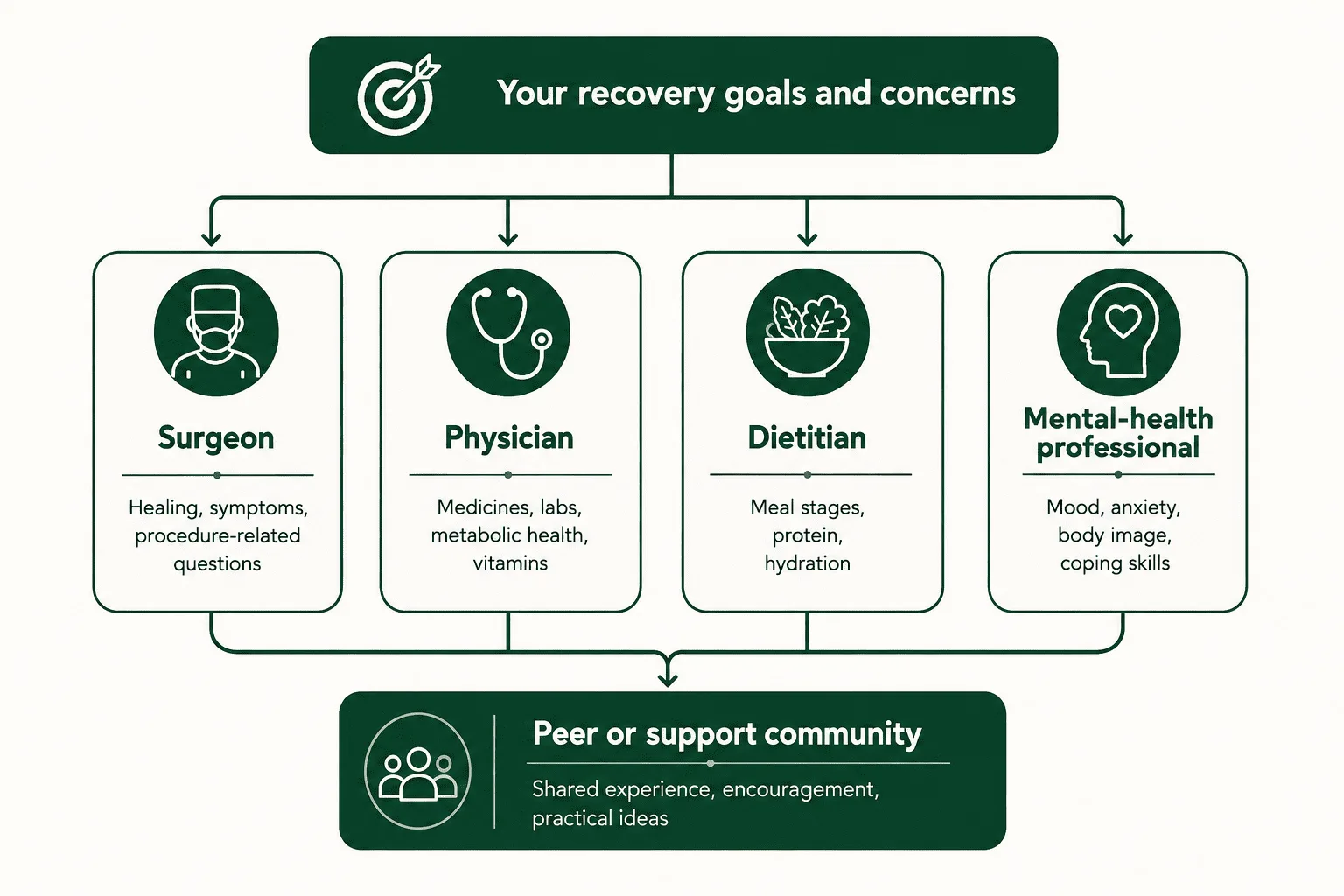
Your surgeon is the right person to contact for new or worsening physical symptoms, questions about healing, or procedure-specific concerns. Your physician may help monitor conditions such as diabetes, blood pressure, sleep concerns, medication needs, and laboratory results as your health changes. Bariatric surgery is used to help treat obesity and may improve obesity-related conditions.
A dietitian helps translate clinical guidance into real meals. This can include texture progression after surgery, protein choices, fluid timing, supplement routines, and adapting a bariatric surgery meal plan to work, travel, budget, culture, and family life. If eating feels stressful, rigid, chaotic, or emotionally loaded, a dietitian can coordinate with the wider team rather than treating food as a matter of willpower.
A psychologist, psychiatrist, counsellor, or other qualified mental-health professional can help with coping strategies, adjustment, depression, anxiety, body image, trauma history, or disordered eating. Mental-health support is not reserved for crisis. Psychological assessment and support are recognised components of multidisciplinary bariatric care.
Peer support groups can also reduce isolation. They are best used as a complement to – not a replacement for – individual medical advice, because another patient’s diet stage, medication needs, and recovery experience may be different from yours.
Navigating meals, celebrations, and other people’s expectations
Social situations often become easier when you plan ahead and use a simple, calm script. You do not owe anyone detailed information about your surgery, weight, or food choices. A short response can protect your privacy while helping people understand how to support you.
Worked examples for everyday situations
At a family meal: You might say, “I’m following my post-surgery eating plan, so I’ll take a small portion and eat slowly. Please don’t worry if I stop early.” If a relative urges you to have more, repeat the same line without debating it. Asking for food to be served in smaller portions or packed for later can make gatherings feel more manageable.
At a celebration: Before attending, review the timing of your meals, carry an approved option if needed, and decide whether you want to drink only water or another non-alcoholic beverage. You could tell the host, “I’m excited to celebrate with you. My food needs are different right now, but I’d love to join in.” The purpose of the event is connection, not proving that you can eat like everyone else.
When someone comments on your appearance: A boundary can be kind and direct: “Thank you for caring. I’m focusing on my health and would prefer not to discuss my body.” If the comment feels welcome, you can choose a different response – but the choice should remain yours. Weight-focused attention can be uncomfortable even when it is intended as praise.
When you need practical help at home: Try a specific request: “Could you help keep my recommended foods available this week?” or “Could we plan one activity together that isn’t centred on eating?” Clear requests give loved ones a useful role and reduce the chance that support becomes policing, pressure, or unsolicited advice.
Planning may also include financial conversations. When comparing bariatric surgery cost, ask what is included in the programme: surgeon review, hospital charges, dietitian appointments, laboratory monitoring, supplements, and post-operative follow-up can all affect the overall commitment. Emotional support and structured reviews should be considered part of safe, sustainable care – not optional extras to add only if a problem develops.
When to contact your team or seek more support
A difficult day, occasional doubt, or sadness about changing routines does not necessarily mean something is seriously wrong. However, persistent symptoms deserve attention. It is safer to speak with your clinical team early than to wait until eating, mood, or daily functioning becomes harder to manage.
Use this escalation checklist
Contact your bariatric team, physician, or a mental-health professional soon if you notice any of the following:
-
Low mood, hopelessness, tearfulness, or loss of interest that persists for more than two weeks or affects daily life.
-
Anxiety, panic, obsessive food thoughts, or fear around eating that makes it difficult to follow your prescribed plan.
-
Regret that feels intense, persistent, or accompanied by a sense that you cannot cope.
-
Recurrent binge eating, vomiting not explained by a medical issue, intentional restriction beyond the prescribed plan, or other disordered eating behaviours.
-
Increasing reliance on alcohol, medicines not taken as prescribed, or other substances to manage stress or emotions.
-
Withdrawing from relationships, missing follow-up appointments, or feeling ashamed to tell the team what is happening.
Alcohol deserves special attention after surgery. Changes in alcohol absorption and alcohol-related risk have been documented after certain bariatric procedures, so it is important to discuss personal risk factors and the timing of alcohol use with your clinical team. Alcohol-use concerns can increase after bariatric surgery, particularly after Roux-en-Y gastric bypass.
If you are having thoughts of harming yourself, feel unable to stay safe, or are in immediate danger, seek urgent local emergency help now and tell someone you trust. Do not wait for a routine follow-up appointment.
Build your personal support plan before and after surgery
The best support plan is personal. It should reflect who you live with, how you work, what food means in your family, what medical conditions you manage, and what helps you feel safe. Completing this worksheet before surgery can make the post-operative period feel less isolating; revisiting it afterward helps keep support aligned with your real needs.
Your support-plan worksheet
-
Name two trusted people. Write down who can listen without judgement and who can help practically. Tell them what is useful – for example, a check-in call, transport to an appointment, help preparing appropriate meals, or simply companionship.
-
List your scheduled follow-up contacts. Keep your surgeon’s office, physician, dietitian, and hospital contact details in one place. If you are researching options in Chennai, understand what a bariatric surgery care pathway at The Good Weight includes before committing to treatment.
-
Plan food support for demanding days. Identify protein options, fluids, supplements, and simple meals that suit your prescribed stage. A realistic bariatric surgery meal plan should work during illness, travel, long workdays, and family obligations – not only on ideal days.
-
Choose a community option. This may be a clinician-recommended support group, a moderated peer community, or a small group of friends who understand your goals. Decide in advance which conversations are supportive and which comparisons leave you feeling worse.
-
Write your early warning signs. These might include skipping meals, avoiding calls, crying frequently, missing appointments, using alcohol to cope, or becoming preoccupied with the scale. Share the list with your care team and decide exactly whom you will contact.
-
Discuss future body concerns without rushing decisions. Some people consider bariatric surgery plastic surgery, often called body-contouring surgery, after substantial weight change. If this is relevant to you, discuss timing, health status, nutritional readiness, risks, and your goals with qualified clinicians rather than treating another procedure as a required part of recovery.
Common questions about emotional recovery
Is regret after bariatric surgery normal?
Some people have temporary doubts, especially during the demanding early recovery period or when they encounter food restrictions, fatigue, social pressure, or an unexpected plateau. Regret is a feeling, not a verdict on whether surgery was right for you. If it is intense, persistent, or interfering with your ability to care for yourself, tell your surgical team and consider mental-health support.
Does counselling mean that something is wrong with me?
No. Counselling can be a practical space to process change, strengthen coping skills, improve communication, and address patterns that existed long before surgery. Just as dietitian follow-up supports nutrition, counselling can support emotional wellbeing. Seeking it early may prevent a manageable concern from becoming more disruptive.
How long does emotional adjustment take?
There is no universal timeline. Physical healing may be measured in weeks, while adapting to changing routines, relationships, and body image can take months or longer. Your needs may also change at different stages of weight loss, so support should remain available beyond the immediate post-operative period.
What if my emotional recovery does not match the transformation I expected?
Try to separate your expectations from your worth or progress. A meaningful health outcome does not require constant happiness, perfect confidence, or an effortless relationship with food. Bring the gap between expectation and reality to your clinician, dietitian, or counsellor; it is useful clinical information, not something to hide.
Make emotional support part of the plan
Bariatric surgery can support sustainable weight loss and better metabolic health, but lasting recovery is broader than a number on the scale. It includes learning new eating patterns, rebuilding routines, responding to body changes, and making room for a full range of emotions. Support is not evidence of weakness or failure – it is part of responsible, patient-centred care.
Before surgery, ask how the programme will support your nutrition, follow-up, and emotional readiness. After surgery, contact your existing clinical team promptly if mood, food, alcohol use, or coping begins to feel difficult. To discuss a personalised, doctor-led approach to bariatric surgery in Chennai, book a consultation with The Good Weight.