
If you are looking for a PCOS weight loss diet tailored to Indian meals, it is understandable to feel overwhelmed by conflicting advice. You may have been told to stop eating rice, avoid fruit, skip breakfast, follow a 1,200-calorie Indian diet, or copy a “cutting” meal plan from social media. These rules can seem simple, but they often ignore the reasons eating feels difficult in the first place: unpredictable hunger, irregular periods, long workdays, poor sleep, medication effects, family meals, budget, and personal food preferences.
PCOS is a complex hormonal and metabolic condition, and weight management is only one part of care. A helpful Indian diet for PCOS should support steady energy, adequate nutrition, satisfaction after meals, and a routine you can repeat – not make food stressful or unnecessarily restrictive. The evidence-based PCOS guideline emphasises that lifestyle support should be individualised and that no single dietary composition has been shown to be superior for every person with PCOS. Healthy lifestyle approaches can improve metabolic health and wellbeing even when weight loss is not immediate.
This guide explains how to build a realistic, PCOS-aware approach around familiar Indian foods while accounting for your symptoms, medical history, goals, and daily life.
Start with your health picture, not a food-ban list
Before making major dietary changes, it helps to understand what your body and routine need. PCOS can look different from one person to another. Some people experience irregular or absent periods, acne, excess facial hair, scalp hair thinning, mood changes, difficulty with weight management, or signs of insulin resistance. Others may have normal-weight PCOS, so a weight-loss plan may not be appropriate at all.
Weight change can also be influenced by thyroid conditions, sleep disruption, stress, depression, medications, pregnancy plans, and changes in activity. A plan that only counts calories can miss these important contributors. Rather than self-prescribing a strict weight loss Indian diet, begin with a clinical and practical assessment.
Questions to consider before changing your meals
A useful assessment should cover more than what you eat in a typical day. Consider writing down the following information before meeting a doctor or dietitian:
- Your symptoms and cycle history: Note cycle length, missed periods, heavy bleeding, acne, hair changes, and any recent shifts in symptoms. This context helps your clinician decide whether further evaluation is needed.
- Your medical history and medicines: Share whether you use metformin, hormonal contraception, fertility treatment, diabetes medicines, blood-pressure medicines, supplements, or any medication that affects appetite or blood sugar.
- Blood-sugar and metabolic health: Ask whether testing for blood glucose, HbA1c, cholesterol, blood pressure, or other metabolic risks is appropriate for you. PCOS is associated with a higher likelihood of impaired glucose tolerance and type 2 diabetes, which makes personalised screening important rather than optional. The international guideline recommends glycaemic assessment for all adults and adolescents with PCOS at diagnosis.
- Sleep, stress, and movement: Notice sleep duration, snoring, daytime fatigue, workload, and the type of movement you currently enjoy or can access. These factors can affect appetite, energy, insulin sensitivity, and the ability to maintain meal routines.
- Food culture, preferences, and budget: Your plan should work with vegetarian, non-vegetarian, Jain, regional, religious, and family eating patterns. It should also be built around groceries you can buy regularly, not expensive “PCOS foods” or imported products.
A clinician or registered dietitian can be especially helpful if you have diabetes or prediabetes, significant weight change, eating-disorder symptoms, fertility concerns, gastrointestinal symptoms, or multiple medications. The Good Weight’s doctor-led weight-loss consultations are designed to look at metabolic health, medical history, nutrition support, and realistic treatment options together.
Build balanced Indian meals without turning every food into a rule
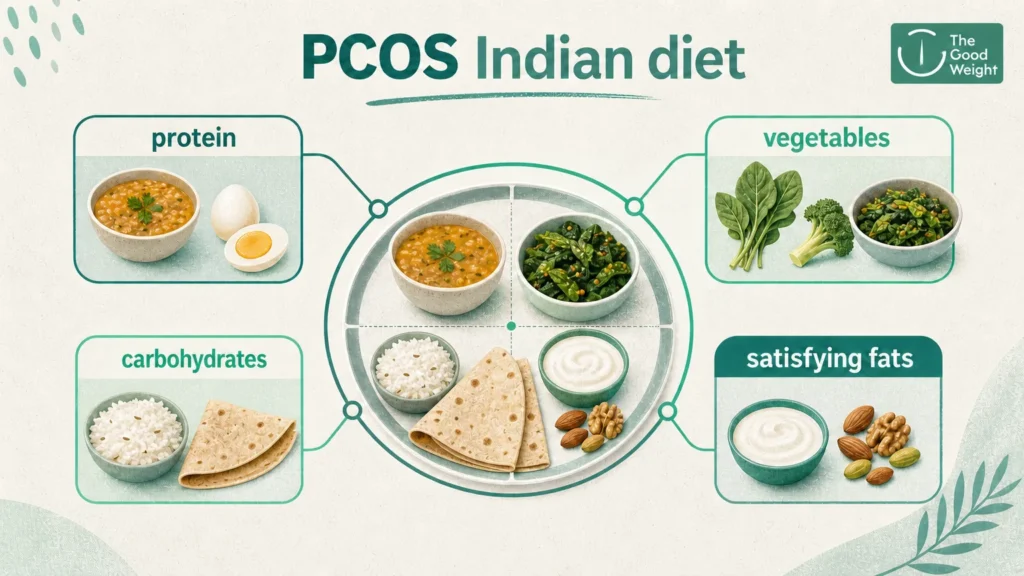
Balanced meals do not need to look identical every day. They simply need enough structure to help you stay nourished, manage hunger, and meet your needs. A practical starting point is to include a protein source, fibre-rich vegetables or pulses, a carbohydrate food, and a source of fat at most meals.
This approach is consistent with India’s dietary guidance, which encourages dietary diversity through cereals and millets, pulses, milk or curd where suitable, vegetables, fruits, nuts, seeds, and appropriate fats. The Indian Council of Medical Research-National Institute of Nutrition dietary guidelines emphasise diverse foods from multiple food groups. The exact portion of each component is personal: it may change with body size, hunger, activity, medicines, blood-sugar results, and whether your goal is weight loss, weight maintenance, or fertility support.
Use a four-part meal framework
1. Start with protein. Protein can make meals more filling and supports muscle maintenance, particularly when you are losing weight or beginning strength training. Indian options include dal, chana, rajma, lobia, soy chunks, tofu, paneer, curd, milk, eggs, fish, chicken, or lean meat. The best choice is the one you tolerate, enjoy, and can prepare regularly.
2. Add vegetables or pulses for fibre and volume. Sabzi, sambar vegetables, leafy greens, cucumber, carrot, beans, gourds, cauliflower, cabbage, brinjal, mushrooms, sprouts, and legumes can all contribute. Fibre-rich foods can help meals feel more substantial without requiring you to eliminate staples. The World Health Organization recommends basing diets on minimally processed foods and including vegetables, fruits, pulses, and whole grains where possible. A healthy diet includes a variety of fruits, vegetables, legumes, nuts and whole grains.
3. Keep carbohydrates in the meal. Rice, roti, dosa, idli, poha, upma, oats, millet, potatoes, corn, and fruit are not automatically “bad” for PCOS. Carbohydrates provide energy, and their effect on fullness and blood glucose depends partly on the amount, food form, cooking method, meal composition, and your individual response. Pairing them with protein, vegetables, and fat is often more sustainable than eating them alone or avoiding them altogether.
4. Include satisfying fats in sensible amounts. Groundnuts, sesame, coconut, seeds, nuts, ghee, oils, avocado, egg yolks, and fatty fish can make food enjoyable and help a meal feel complete. The goal is not to fear fats, but to use them thoughtfully because they are energy-dense. A dietitian can help adjust amounts without making meals bland or overly measured.
What this can look like in everyday Indian meals
For breakfast, try a structure such as vegetable besan chilla with curd; two idlis with vegetable sambar and an egg; vegetable poha with peanuts plus curd; or a dosa with sambar and a side of paneer or egg bhurji. If you prefer a sweeter breakfast, oats or daliya cooked with milk or soy milk, nuts, seeds, and fruit can work better than having fruit alone when you need a more filling meal.
Lunch or dinner might be rice with sambar or dal, a generous serving of sabzi, salad or curd, and fish, egg, chicken, paneer, tofu, or an extra portion of dal depending on your needs. A roti-based meal could include two rotis, chana masala, bhindi or mixed vegetables, and curd. For a lighter evening meal, vegetable khichdi with curd and salad, or a bowl of rasam with rice, vegetables, and a protein side can be both comforting and balanced.
Snacks are most useful when they bridge a genuine gap between meals, rather than being another rule to follow. Roasted chana with fruit, curd with nuts, buttermilk with a small handful of peanuts, boiled eggs, sprouts chaat, or a leftover roti roll with paneer or chicken are more sustaining than tea and biscuits alone. If a snack does not suit your appetite or schedule, you do not need to force it.
Make your meal routine work on busy days
Many people with PCOS do not need a “perfect” diet; they need a plan that still works during traffic, meetings, commuting, caregiving, shift work, or fatigue. Skipping meals may leave you overly hungry later, which can make evening eating feel chaotic. Regular meals are not a moral obligation, but a practical way to reduce the chance that you go many hours without enough fuel.
Start by identifying your most difficult eating window. For some people, it is breakfast before a Chennai commute; for others, it is the late afternoon between lunch and dinner. Solve that one problem first rather than redesigning every meal at once.
A realistic day of eating: one flexible example
A person who starts work at 9 a.m. might have breakfast between 7:30 and 8:30 a.m., such as idli, sambar, and an egg or curd. They could pack lunch the night before: rice or rotis, dal or a protein curry, vegetables, and curd. If meetings run late, a planned 4 p.m. snack – such as fruit with roasted chana or curd – can prevent arriving home excessively hungry.
Dinner may be at 8 or 9 p.m. and can use the same four-part structure rather than becoming a “diet meal”: a smaller or larger serving of rice or roti according to appetite, vegetables, and a protein source. If hunger is low after a sedentary day, the carbohydrate portion may naturally be smaller; if you exercised, walked more than usual, or are genuinely hungry, you may need more. The important skill is noticing your body’s patterns without responding with guilt or drastic compensation.
Meal preparation can reduce decision fatigue. Cook one or two staples ahead, such as dal, chana, boiled eggs, chopped vegetables, grilled chicken, paneer, or curd-based raita. Keep quick options at home and work, including roasted chana, nuts, fruit, unsweetened curd, and ready-to-heat vegetable or protein leftovers. This is often more effective than relying on motivation after a demanding day.
Be cautious with rigid plans that prescribe the same intake every day. A 1,200-calorie Indian diet may be medically appropriate for a limited number of people under supervision, but it is not a universal PCOS prescription. Calorie needs vary substantially, and overly low intake can make it harder to meet protein, fibre, iron, calcium, and other nutrient needs. Portion needs vary by age, sex, body size and activity level, which is why a personalised plan is safer than copying a number from the internet.
Measure progress beyond the weighing scale
The scale can be one useful data point, but it is not the only sign that an approach is helping. Weight naturally fluctuates with menstrual cycles, water retention, sodium intake, constipation, travel, and changes in exercise. With PCOS, periods may be irregular, making these patterns more difficult to interpret from week to week.
Instead, track a few indicators for four to eight weeks and discuss them at follow-up. This gives you and your care team more meaningful information than daily scale changes alone.
Signs your approach may be supporting your health
Look for steadier energy between meals, fewer intense cravings, improved fullness after eating, less urge to skip meals and overeat later, or more confidence preparing food. You may also notice improved strength or stamina if you are building regular movement into your week. These changes matter because sustainable weight loss depends on habits that can continue during normal life, not just during a short period of strict control.
Where clinically appropriate, your clinician may monitor waist circumference, blood pressure, glucose markers, cholesterol, menstrual patterns, acne, or other symptoms. The PCOS guideline recommends shared decision-making and ongoing attention to emotional wellbeing, as anxiety, depression, body-image concerns, and disordered eating can affect care. Mental health screening and support are part of comprehensive PCOS care.
If progress stalls, do not assume you have failed or need to cut more food. It may be time to review meal regularity, protein and fibre intake, sleep, stress, activity, medicines, and relevant blood tests. Personalised nutrition support can help you make one or two useful adjustments rather than restarting another restrictive cutting Indian diet plan.
Common questions about PCOS and Indian meals
Do I need to cut out rice or carbohydrates?
No. There is no universal requirement for people with PCOS to eliminate rice, rotis, fruit, or carbohydrates. What matters is your overall dietary pattern, meal balance, portions, glucose response where relevant, and what you can sustain. If rice is culturally important and satisfying for you, it can fit alongside dal, vegetables, curd, eggs, fish, paneer, or other proteins.
Some people may benefit from adjusting the quantity or frequency of certain refined carbohydrate foods, particularly if blood-sugar results suggest a need for it. That is different from banning all carbohydrates. A clinician or dietitian can help you test practical changes without turning a familiar food into a source of fear.
Can I follow the same plan as someone else with PCOS?
Not reliably. Two people with PCOS may have very different body sizes, goals, menstrual symptoms, activity levels, food access, medicines, insulin resistance, digestive tolerance, and pregnancy plans. A plan that helps a friend lose weight may leave you underfed, overly restricted, or unable to maintain it.
Use other people’s ideas only as inspiration for meals, not as a prescription. The most effective plan is usually one that respects your household meals, schedule, budget, and medical needs. For broader support with food routines, explore The Good Weight’s approach to personalised diet and weight-loss support.
When should I speak with a doctor before changing my meals?
Speak with a doctor or registered dietitian before making major changes if you have diabetes, prediabetes, hypertension, kidney disease, gastrointestinal conditions, a history of disordered eating, unexplained weight loss, or very irregular or absent periods. You should also seek guidance if you are trying to conceive, pregnant, breastfeeding, or beginning fertility treatment.
Medication safety matters: if you take insulin, sulfonylureas, metformin, GLP-1 medicines, or other glucose-lowering treatment, do not sharply reduce food intake, skip meals, or begin fasting without medical advice. Changes in intake may affect blood glucose and medication needs. Diabetes care plans should be adjusted with health professionals when lifestyle changes are made.
Take the next step with personalised support
A supportive PCOS Indian diet is not a list of forbidden foods or a fixed calorie target. It is a pattern of regular, satisfying meals that includes protein, fibre-rich foods, carbohydrates, and fats in amounts that suit your health, hunger, culture, and goals. It also leaves room to adapt when symptoms, routines, activity, or treatment needs change.
If you would like help connecting PCOS symptoms, medical history, food preferences, and sustainable weight goals, book an assessment with The Good Weight. Our doctor-led team can help you build a personalised support plan based on evidence, metabolic health, and the meals you actually want to eat.