
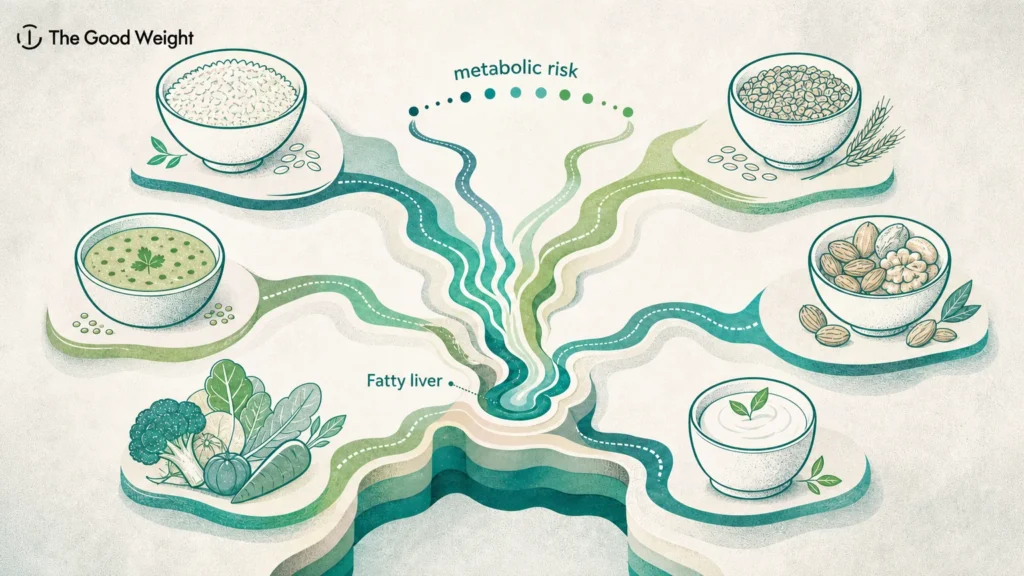
Why there is no single fatty-liver food plan
Myth: Everyone with fatty liver needs the same diet chart and weight-loss target. Fact: Two people with similar ultrasound reports can need different care because their diabetes status, alcohol intake, muscle mass and liver-scarring risk differ. Effective fatty liver weight management starts with understanding those differences – not banning rice or buying a “liver detox.”
Metabolic dysfunction-associated steatotic liver disease, or MASLD, means fat accumulation in the liver alongside metabolic risk factors. Older research often uses NAFLD, meaning nonalcoholic fatty liver disease, so you may encounter both terms. Abnormal liver blood tests alone do not establish the diagnosis, and other causes may need investigation. The current European guidelines explain the updated terminology and the importance of assessing metabolic risks and alcohol exposure.
General food advice describes a healthier eating pattern; individualized clinical care establishes what is safe and appropriate for you. Diabetes medicines may need review when food intake changes, while alcohol can change both the diagnosis and management plan. Body weight is only part of the assessment: someone without overweight may still have abdominal fat or low muscle mass. Fibrosis – liver scarring – also matters because fibrosis severity is closely associated with liver-related outcomes.
The food pattern with the strongest guideline direction
The EASL-EASD-EASO guidelines strongly recommend improving diet quality, including a Mediterranean-style pattern, limiting ultra-processed foods high in sugars and saturated fat, and avoiding sugar-sweetened beverages. This is guidance about the overall pattern, not a requirement to eat European food. Vegetables, pulses, whole grains, nuts and suitable protein sources can form the foundation of familiar Indian meals. The aim is a sustainable routine, not a list of supposedly medicinal ingredients.
A Mediterranean-style approach can therefore include dal, chana, vegetable poriyal, fish, unsweetened curd and whole-grain staples. Oils, nuts and other energy-dense foods still need portions that fit the person’s needs. Vegetarian and non-vegetarian versions are both possible. Cost, cooking facilities, preferences and family meals should shape the plan.
| Meal feature | Less helpful routine | Direction to build toward |
|---|---|---|
| Vegetables and fibre | Small vegetable portions; refined staples dominate | More vegetables, pulses and suitable whole-grain options |
| Protein | Meals consist mainly of starch | Include dal, beans, tofu, eggs, fish or other suitable protein |
| Fats and packaged foods | Frequent fried snacks, pastries and fatty processed meats | More minimally processed foods; measured unsaturated oils |
| Drinks | Soft drinks, sweetened tea and packaged sweet drinks | Water and unsweetened beverages |
| Meal structure | Restriction followed by large, hungry meals | A workable routine matched to appetite, medicines and energy needs |
Improving diet quality does not mean that every packaged food is unsuitable or every traditional food is automatically beneficial. Unsweetened curd and frozen vegetables can be convenient choices, while large portions of homemade sweets still contribute substantial sugar and energy. Glycaemic index can inform carbohydrate choices, but portion size and the rest of the meal also matter. The Good Weight’s guide to low-GI foods in weight management offers supporting ideas rather than a liver-specific prescription.
Indian meal swaps that improve diet quality without a detox
Breakfast: improve balance rather than banning staples
If breakfast is usually several dosas with little accompaniment and sweetened coffee, consider a portion matched to your needs, more vegetable-rich sambar, and an appropriate protein addition. Depending on preferences, that might be an egg, unsweetened curd or a pulse-based option. Idli and dosa do not need to disappear; the opportunity is to improve the balance of the meal. Reducing sugar in tea or coffee is another change that does not require separate cooking.
Lunch: adjust the rice-centred plate
A rice-based lunch can remain part of the plan, with the rice portion individualized rather than automatically eliminated. Add vegetables and a meaningful serving of dal, beans, fish, chicken or tofu instead of relying mainly on rice and gravy. Brown or parboiled rice may suit some households, but a different rice variety cannot compensate for an unsuitable overall portion. Start with a change the family can maintain, such as preparing an additional vegetable dish or serving pulses more regularly.
Dinner: avoid the restriction-and-rebound cycle
Skipping dinner to “rest the liver” can leave some people hungry later and make the routine difficult to sustain. A planned meal might combine chapati with mixed vegetables and dal, or rice with vegetables and a suitable protein source. People using insulin or medicines that can cause low blood glucose should discuss major reductions in carbohydrate intake with their prescriber. Diabetes guidance within MASLD care emphasizes individualized treatment and management of associated metabolic conditions.
Snacks and drinks: replace, rather than simply add
If biscuits, mixture or sweet drinks are everyday habits, possible alternatives include whole fruit, roasted chana, unsweetened curd or a measured portion of nuts. These work best as replacements, not automatic additions to an unchanged intake. Fruit juice and sweetened “health drinks” are not liver treatments, and replacing meals with juice can displace protein and other nutrients. There is no need to buy a cleanse: unproven supplements and herbal remedies can sometimes harm the liver.
Why lean MASLD needs a different weight-loss conversation
Fatty liver can occur in people who do not have overweight, sometimes called lean MASLD. A normal BMI does not describe abdominal fat distribution, muscle mass or metabolic health completely. However, that does not mean every lean person should lose weight. The plan should consider waist measurements, strength, nutritional status, diabetes risk and whether weight has already been falling unintentionally.
The American Gastroenterological Association’s lifestyle guidance recommends a hypocaloric diet – an intake below energy needs – for lean NAFLD, with a lower weight-loss target of 3%-5%. This older NAFLD recommendation is a discussion point for clinician-led planning, not a universal self-prescribed target. Someone with low muscle mass, frailty or inadequate intake may need a different approach. Preserving nutrition and muscle is more important than applying a percentage without context.
For adults with MASLD and overweight, European guidance describes sustained weight reductions of at least 5% to reduce liver fat, 7%-10% to improve inflammation, and at least 10% to improve fibrosis. These are treatment goals associated with different outcomes, not guarantees for an individual. They should not become a reason for rapid or extreme dieting. Follow-up should assess metabolic and liver health alongside weight change.
| Clinical situation | Weight-management discussion | Important safeguard |
|---|---|---|
| MASLD with overweight or obesity | Agree a sustainable reduction linked to health goals | Review medicines, muscle preservation and progress |
| Lean MASLD | Consider whether modest loss is appropriate; discuss the 3%-5% guidance | Avoid assuming further loss is always beneficial |
| Low muscle mass or unintentional weight loss | Prioritize assessment and adequate nutrition | Do not begin unsupervised calorie restriction |
| Advanced fibrosis or cirrhosis | Coordinate nutrition with liver-specialist care | Avoid generic fasting or restrictive diet plans |
Physical activity belongs alongside nutrition, including resistance exercise where appropriate. The guidelines recommend exercise because benefits can occur even without substantial weight loss. For lean adults especially, improved fitness and body composition may be more useful goals than pursuing a lower scale reading.
The review checklist before changing your diet
Bring existing information rather than arranging tests independently just to complete a checklist. A clinician can identify what is missing and whether another cause of abnormal results needs consideration. A short, honest food diary is more useful than a “perfect” record prepared for the appointment.
- Liver blood tests: Current and previous results, including dates and trends.
- Metabolic results: HbA1c or glucose, cholesterol and triglycerides, where available.
- Alcohol intake: Drink types, quantities, frequency and heavier drinking occasions.
- Medicines and supplements: Prescriptions, non-prescription products, herbal preparations and weight-loss supplements.
- Weight history: Recent changes, previous dieting, appetite changes and unintentional loss.
- Food routine: Meals, drinks, snacks, work shifts, eating out, budget and dietary preferences.
- Imaging and specialist advice: Ultrasound reports, liver-stiffness measurements and previous recommendations.
Ask specifically whether fibrosis assessment is needed. Clinicians may use a blood-based score such as FIB-4, followed by elastography or another assessment when indicated. Guidelines support this stepwise approach to identifying people at risk of advanced fibrosis, rather than relying on liver enzymes or ultrasound alone.
Signals that food advice alone is not enough
What if my liver tests remain abnormal?
Persistent abnormalities deserve medical interpretation, even if you have improved your diet. Fatty liver is not the only possible explanation, and changing diet charts repeatedly can delay appropriate investigation. Arrange follow-up rather than assuming the result simply means you need stricter restriction.
What if I have diabetes or questions about medication?
Ask for a coordinated review of glucose control, liver risk and treatment. Significant dietary changes can alter medication needs, especially with insulin or medicines that can cause hypoglycaemia. Do not stop prescribed treatment or start weight-loss medication without discussing suitability and monitoring.
What if alcohol may be contributing?
Describe intake openly so advice reflects the actual exposure rather than an assumed “safe” amount. European guidance recommends complete and permanent abstinence for people with advanced fibrosis or cirrhosis. If dependence or withdrawal is possible, seek medical support rather than attempting an unsupported withdrawal.
What if nobody has explained my fibrosis risk?
Ask whether your existing results are enough to assess risk and whether further testing or specialist review is appropriate. Feeling well does not answer that question. Seek urgent medical care for new jaundice, vomiting blood, black stools or confusion rather than trying dietary changes.
Better diet quality is a foundation, but the right weight target depends on your liver risk, metabolic health and body composition. Arrange a metabolic and nutrition review with your test history and a short food diary. The Good Weight’s doctor-led weight and metabolic care in Chennai can help match practical food changes to an individualized plan, rather than a generic fatty-liver diet chart.