
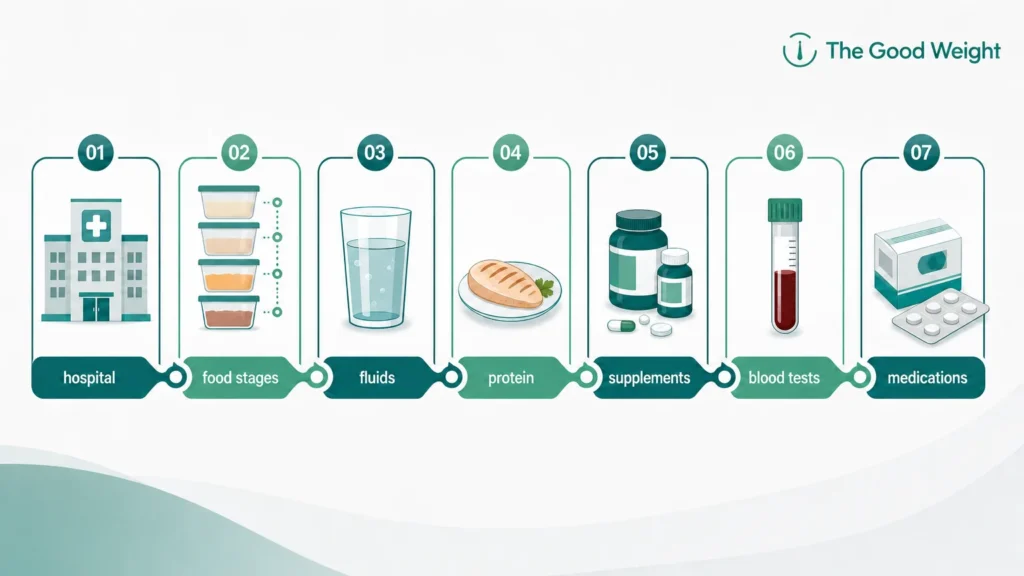
Bariatric surgery recovery is not a single event that ends when you leave the hospital. The first 90 days involve physical healing, changing food textures, learning new eating behaviours, monitoring hydration and nutrition, and adjusting to changes in energy, appetite and mood.
It is natural to look for a fixed timetable, especially when planning work, family responsibilities and travel in Chennai. However, a safe recovery plan should be based on your procedure, medical history, medications, healing progress and your treating team’s advice. This guide explains the usual milestones to discuss with your bariatric team – not a substitute for their individual instructions.
Why recovery timelines differ from person to person
Procedures such as sleeve gastrectomy, Roux-en-Y gastric bypass and duodenal switch affect the stomach and digestive tract differently. They can therefore involve different nutritional needs, symptom patterns and follow-up schedules. Your starting health also matters: diabetes, sleep apnoea, high blood pressure, anaemia, reflux, mobility limitations and prior abdominal surgery may all affect the pace of recovery.
Most people stay in hospital for a short period and gradually return to normal daily activity over the following weeks. The NHS notes that returning to work can take roughly two to five weeks, depending on the operation, the nature of the work and the individual’s recovery. That range is useful for planning, but it is not a deadline.
Weight changes can also vary substantially in the first three months. Early weight loss may be rapid for some people, but hydration, protein intake, medication changes, sleep and recovery from surgery deserve more attention than comparing the scale with someone else’s progress. A multidisciplinary plan helps keep the focus on metabolic health and safe, sustainable habits.
A practical timeline for the first 90 days
Days 0 to 7: hospital recovery and the first days at home
Immediately after surgery, your clinical team will focus on pain control, breathing exercises, circulation, early walking, fluid intake and checking for signs of complications. Short, frequent walks are usually encouraged because they support circulation and help you rebuild confidence with basic movement. You may feel tired, sore and emotionally overwhelmed; this is a period for rest, not for pushing through a fitness routine.
Your first follow-up may cover wound healing, medication instructions, fluid intake, bowel habits, nausea, blood sugar readings where relevant and the next food stage. Keep a written record of what you drink, symptoms you notice and any medicines you take. It gives your clinician more useful information than trying to recall everything during an appointment.
Contact your surgical team promptly rather than waiting for the next visit if you have worsening abdominal or chest pain, fever, persistent vomiting, difficulty keeping fluids down, shortness of breath, a rapid heartbeat, wound redness or drainage, black stools, or sudden weakness. Some complications after weight-loss surgery require urgent assessment, and persistent vomiting, dehydration and blood clots are among the risks that need clinical attention.
Weeks 2 to 4: building a tolerable routine
The aim in this phase is consistency: regular fluids, prescribed supplements and medications, planned meals at the approved texture, and gentle walking. Your team may review whether pain medicine, diabetes medication or blood-pressure medication needs adjustment as intake and weight change. Do not stop or restart medication without medical advice.
Many people can manage light household tasks during this period, but fatigue is still common. Avoid heavy lifting and strenuous abdominal activity until your surgeon clears it. If you are considering returning to work, discuss your commute, job demands, access to fluids and meal breaks, and whether you need a phased return.
For a more detailed overview of changing hunger cues, food stages and recovery questions, review this bariatric surgery recovery timeline alongside the advice from your own treating team.
Weeks 5 to 12: progressing from healing to habit-building
By this stage, many patients are becoming more independent with daily life and may be cleared for more structured activity. This is also when challenges can become less visible: eating too quickly, skipping supplements, drinking too little, reacting to certain foods or feeling uncertain about changing relationships with food.
Follow-up visits are not simply weigh-ins. They are an opportunity to assess incision healing, food tolerance, bowel symptoms, reflux, hydration, protein intake, mood, sleep and metabolic markers. Bring questions early. Addressing a pattern when it first appears is usually easier than trying to correct it months later.
Food stages: a clinician-directed progression
Food progression after bariatric surgery protects the surgical site while helping you meet fluid and protein needs. Although many programmes move from clear liquids to fuller liquids, puréed foods, soft foods and then regular textured foods, the timing and permitted foods differ by procedure and surgeon. A generic menu from social media may not account for your surgery, cultural food preferences, diabetes medicines or tolerance.
Prioritise hydration first
Small, frequent sips are often easier than trying to drink a large volume at once. Your team will set a fluid target appropriate to you and explain whether to avoid carbonation, caffeine or certain sweetened drinks in early recovery. Signs such as dark urine, dizziness, headache, dry mouth or reduced urination may indicate that you need to contact your care team about hydration.
Avoid drinking with meals if your clinician has advised separating fluids and food. This can help you practise slower eating and reduce discomfort, but the exact routine should be individualised.
Add protein within the approved food stage
Protein supports healing and helps preserve lean body mass while weight is changing. The American Society for Metabolic and Bariatric Surgery guidelines identify a minimum of 60 grams of protein daily for many postoperative patients, though some people need more or need a different approach based on their procedure, kidney health, tolerance and dietitian’s assessment.
At first, protein may come from prescribed supplements or smooth, approved options. As textures advance, your dietitian may help you build protein into familiar meals using options that fit your dietary pattern. Eat slowly, take small bites, chew thoroughly and stop at the first feeling of fullness. Pain, repeated vomiting or an inability to tolerate the prescribed stage should be reported – not managed by forcing food or advancing texture on your own.
Supplements are part of treatment, not an optional extra
Bariatric procedures can affect food intake and nutrient absorption. Lifelong vitamin and mineral supplementation and periodic laboratory monitoring are therefore central to care, particularly after procedures with a malabsorptive component. Deficiencies in iron, vitamin B12, folate, calcium and vitamin D can occur after bariatric surgery, which is why your clinician may recommend blood tests and tailor supplements over time.
Resuming movement, exercise and work safely
Walking after surgery and beginning an exercise programme are not the same thing. Early walking is basic recovery activity: brief, comfortable movement that supports circulation, lung function and confidence. Structured exercise – such as resistance training, swimming, cycling or gym sessions – should begin only when your surgeon has cleared you for it.
A practical approach is to increase activity in small steps. Start with several short walks spread through the day, then extend duration or pace as fatigue, pain and wound healing allow. Once cleared, a programme that combines aerobic movement with strength work can support function and help preserve muscle during weight loss.
Plan work around real demands rather than a calendar date. Desk-based work may be manageable earlier than jobs involving lifting, long standing, driving or irregular meal breaks. Ask your team for documentation if you need modified duties, and plan how you will carry fluids, supplements and appropriate meals during the workday.
Follow-up after day 90: the longer care pathway
The first three months establish routines, but bariatric care continues well beyond that point. Long-term appointments can include weight and symptom review, nutrition counselling, laboratory monitoring, medication review and support for conditions such as diabetes, hypertension or sleep apnoea. Sustained follow-up is especially important because nutritional needs and medication requirements can change as your body changes.
Emotional adjustment also deserves attention. Changes in body image, social eating, family expectations and stress can affect recovery even when physical healing is progressing well. Seeking emotional support after bariatric surgery is a constructive part of comprehensive wellness, not a sign that you are struggling alone.
Your care team may include a bariatric surgeon, physician, dietitian, psychologist or counsellor, nurse and exercise professional. This doctor-led, multidisciplinary approach recognises that surgery is one tool within long-term metabolic health care.
Printable questions for every follow-up appointment
Bring this list to your appointment, and invite a family member to add questions or take notes if that would help.
- Healing and symptoms: Are my wounds healing as expected? Which symptoms should lead me to call the clinic urgently or seek emergency care?
- Food and fluids: Am I ready to progress to the next food stage? What are my fluid and protein goals before the next appointment?
- Tolerance: Are nausea, reflux, constipation, diarrhoea, pain or food intolerance expected at this stage? What changes should I make?
- Supplements and tests: Which vitamins and minerals should I take, and when will I need blood tests to check for deficiencies?
- Medicines: Do any diabetes, blood-pressure or other medicines need review as my intake and weight change?
- Activity and work: What lifting limits remain? When can I drive, exercise, travel or return to my usual work duties?
- Mental wellbeing: What emotional changes are common, and where can I find appropriate support if food, mood or body image feels difficult?
- Next steps: When is my next review, and who should I contact between appointments?
Plan recovery around your own clinical needs
A successful bariatric surgery recovery is not about following another patient’s timeline or eating plan. It is about steady healing, safe food progression, appropriate movement, nutritional monitoring and continued contact with a team that understands your procedure and health needs.
If you are considering surgery or need structured post-operative support in Chennai, arrange a personalised bariatric consultation with The Good Weight. A clinician can help you understand procedure suitability, realistic recovery expectations and the long-term follow-up needed to support sustainable weight loss and metabolic health.