
Bariatric surgery can be a powerful tool for weight management and metabolic health, but it is not a one-time intervention that removes the need for lifelong follow-up. Some people notice weight regain years after surgery. Others experience a return of hunger, changes in eating patterns, rising blood sugar levels, or a health goal that feels harder to manage than it once did.
These changes can be frustrating, but they do not automatically mean that your surgery has “failed” or that GLP-1 drugs are the next answer. GLP-1 treatment may be considered for some people after bariatric surgery, especially when weight regain or metabolic disease is affecting health. However, a safe decision depends on understanding your procedure history, nutrition, symptoms, medication list, and current follow-up needs.
This guide explains what a bariatric specialist should review before discussing GLP-1 treatment after surgery – and why individualized, doctor-led treatment matters.
Why weight, hunger and health goals can change after bariatric surgery
Weight loss after bariatric surgery is rarely a perfectly straight line. Most people lose weight quickly in the earlier stages, then reach a more stable phase as the body adapts. Over time, some weight regain can occur, and the amount, timing, and possible causes vary widely between individuals and procedure types.
Changes in appetite and weight can reflect more than food choices or motivation. Metabolic adaptation, reduced activity after an injury or life change, sleep disruption, stress, menopause, new medications, alcohol intake, diabetes recurrence, or changes in meal tolerance may all play a role. In some cases, the anatomy of the procedure or a gastrointestinal concern needs assessment before medication is considered.
It is also important to separate a number on the scale from the broader picture of health. A person may be concerned about a smaller degree of weight regain but have stable blood sugar, blood pressure, nutrition markers, and quality of life. Another person may have less visible weight change but face recurring type 2 diabetes, worsening fatty liver disease, or difficulty maintaining adequate nutrition. The right next step is based on health goals and clinical findings, not on comparison with another patient’s results.
GLP-1 drugs are medicines that can affect appetite, fullness, blood glucose regulation, and gastric emptying. In people with obesity who have not had bariatric surgery, clinical trials have shown that these treatments can support substantial average weight loss when used alongside ongoing lifestyle care. For example, a 68-week trial found that participants receiving once-weekly semaglutide achieved mean weight loss of 14.9% compared with 2.4% with placebo. A separate trial of tirzepatide reported mean weight reduction of 20.9% at the highest studied dose over 72 weeks.
Those figures do not predict what will happen after bariatric surgery. Postoperative patients have different anatomy, nutrition risks, symptom patterns, and medication considerations. The question is not simply, “Will a GLP-1 medicine help me lose weight?” It is, “Is this medicine appropriate for my current clinical situation, and what support would make its use safer?”
What to bring to a post-bariatric medication review
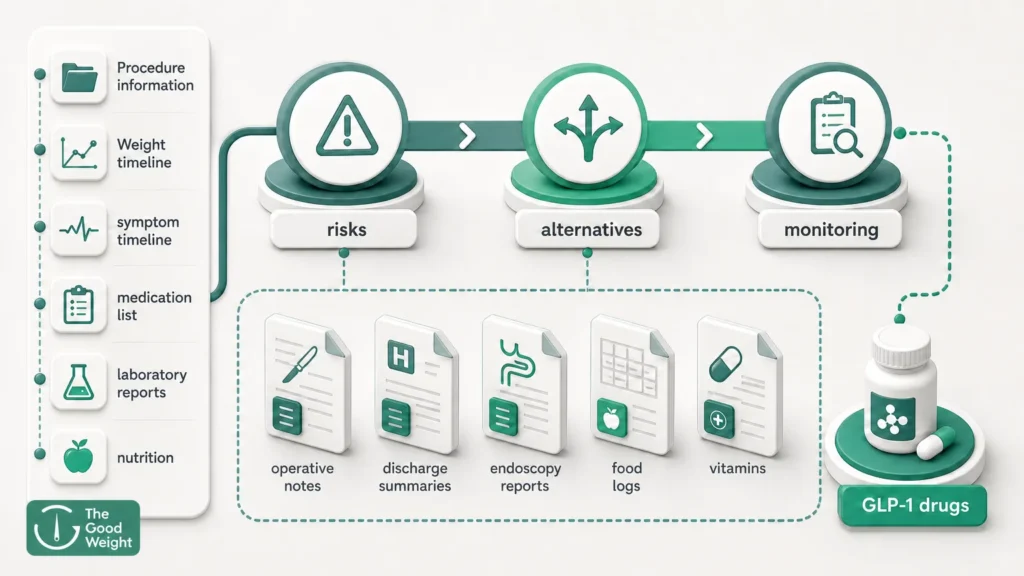
A useful specialist appointment is not limited to a current weight or body mass index. Your clinician needs a clear timeline of your surgery and your health since then. Bringing records where possible can make the discussion more accurate and prevent unnecessary assumptions.
Procedure details and surgical timeline
Bring the name of your procedure, the date it was performed, and any available operative notes or discharge summaries. A sleeve gastrectomy, Roux-en-Y gastric bypass, adjustable gastric band, biliopancreatic diversion with duodenal switch, and revisional procedures have different effects on food intake, absorption, reflux risk, and long-term nutrition monitoring.
The time since surgery also matters. Early postoperative appetite changes and weight fluctuations need to be interpreted differently from weight regain occurring several years later. Your specialist may ask about complications, revisions, endoscopies, hospital admissions, or previous concerns about strictures, ulcers, gallstones, or bowel symptoms. If you no longer have records, share the name of the hospital and surgeon if you can.
For patients who need a refresher on how procedures differ, The Good Weight’s overview of bariatric surgery options and care considerations can help frame questions for a consultation. It is still important that a clinician reviews your own operative history rather than relying on general descriptions.
Weight pattern, appetite and health goals
A weight history is more informative than a single measurement. Note your approximate weight before surgery, lowest weight after surgery, when regain began, and whether the change was gradual or rapid. If you have kept clinic records, food logs, diabetes readings, or previous body-composition reports, bring them along.
Also describe what has changed in day-to-day life. Are you feeling hungry more often, able to eat larger portions, grazing through the day, waking because of reflux, or avoiding certain foods because they cause discomfort? Your care team will consider these observations alongside your metabolic goals, such as improving glucose control, reducing cardiovascular risk, supporting mobility, or preventing progression of fatty liver disease.
This context is especially important because GLP-1-based treatment is part of long-term medical care rather than a short-term reset. In a large cardiovascular-outcomes trial involving people with overweight or obesity and established cardiovascular disease, semaglutide was associated with a 20% reduction in major adverse cardiovascular events. Whether that type of benefit applies to an individual depends on their diagnoses, treatment plan, and risks – not on weight alone.
Current medicines, diabetes history and follow-up reports
Bring an up-to-date list of everything you take, including prescription medicines, insulin or other diabetes therapies, vitamins, minerals, over-the-counter products, and supplements. Medication review matters because some medicines can affect weight, appetite, blood glucose, blood pressure, hydration, or gastrointestinal symptoms. Diabetes treatments may need particularly careful adjustment if appetite or food intake changes.
Your specialist will also want to know whether you had type 2 diabetes before surgery, whether it improved or returned, and whether you have a history of low blood sugar. Recent reports from your primary doctor, endocrinologist, surgeon, or dietitian can help establish a baseline. These may include glucose measures, kidney and liver function, blood count, iron studies, vitamin levels, and other tests selected for your procedure and symptoms.
A practical pre-appointment checklist includes:
- Procedure information: surgery type, date, hospital, surgeon, revision history, and any operative or endoscopy reports. This helps the team understand the anatomy and likely nutrition considerations behind your current concerns.
- Weight and symptom timeline: approximate weights at key points, changes in hunger or meal tolerance, and when reflux, vomiting, abdominal pain, or bowel changes began. Patterns over time can be more clinically meaningful than a single recent change.
- Recent laboratory and clinic reports: especially bariatric follow-up results, diabetes-related testing, and records of nutritional deficiencies or treatment. These results help determine whether a medicine discussion should proceed or whether another issue should be addressed first.
- Complete medication and supplement list: include doses and how often you take each product. Do not assume a vitamin, herbal product, or injectable obtained outside your usual clinic is irrelevant to the review.
Why nutrition and eating tolerance remain central after surgery
After bariatric surgery, nutrition is a medical priority – not simply a matter of “eating less.” The operation can change portion size, food tolerance, absorption, and the way symptoms appear. A medicine that reduces appetite or contributes to nausea may require extra consideration if a person is already struggling to meet nutrition or hydration needs.
Before discussing GLP-1 drugs, a bariatric specialist may assess overall intake, protein adequacy, hydration, meal pattern, vitamin and mineral monitoring, and the ability to tolerate a normal postoperative eating plan. They may also review whether you have persistent vomiting, reflux, difficulty swallowing, abdominal pain, dumping symptoms, or frequent loose stools. These symptoms do not automatically rule out a medication, but they can point to issues that need evaluation first.
Clinician caution: symptoms can change the order of care
Ongoing vomiting, inability to keep fluids down, severe or worsening abdominal pain, black stools, fainting, or symptoms of dehydration need prompt medical assessment rather than a routine medication change. These can have many causes, including postoperative complications or unrelated illness, and should not be managed through online advice.
Less urgent symptoms still matter. For example, persistent reflux after sleeve surgery, recurring nausea, or a marked change in tolerance for protein-rich foods may influence medication selection, timing, monitoring, or the decision to investigate another cause first. An evidence review of medication options after bariatric surgery emphasizes that management should account for weight-regain timing, comorbidities, contraindications, and patient-specific factors rather than treating all postoperative patients the same way.
Frequently asked questions about nutrition and symptoms
Why does protein intake matter in a medication conversation?
Adequate protein supports lean tissue, function, recovery, and sustainable weight management after surgery. If appetite is already low or eating is difficult, further appetite suppression may make it harder to maintain a suitable intake. A bariatric dietitian and physician can assess the broader pattern without asking you to self-prescribe targets or make abrupt changes before your review.
Does reflux mean I cannot use a GLP-1 medicine?
Not necessarily. Reflux is common and has multiple possible causes, including the original procedure, meal timing, food tolerance, weight changes, and other gastrointestinal conditions. Your clinician needs to understand its severity, frequency, and relationship to eating before deciding whether medication is appropriate and how closely symptoms should be followed.
Why are laboratory tests relevant if I feel well?
Nutrient deficiencies can develop gradually and may not always cause obvious symptoms at first. Blood tests and bariatric follow-up records help clinicians identify concerns that could affect energy, anemia risk, bone health, nerve function, or medication tolerance. Testing should be tailored to your procedure, symptoms, and medical history rather than ordered as a generic checklist.
What a safe, supervised decision process looks like
A thoughtful decision about GLP-1 treatment after surgery usually happens in stages. This may feel slower than obtaining medication through a social-media recommendation or online seller, but it helps make treatment more appropriate, safer, and easier to sustain.
Step 1: clarify the medical reason for treatment
Your specialist begins by identifying the main clinical goal. It may be meaningful weight regain, recurrent diabetes, elevated cardiometabolic risk, appetite changes that are affecting dietary patterns, or a combination of concerns. Together, you should discuss what improvement would look like in measurable, realistic terms – such as a health marker, mobility, symptom burden, or weight trend – rather than pursuing an arbitrary target weight.
The team may first identify factors that deserve attention before adding another medicine. These can include untreated reflux, a possible anatomical issue, insufficient nutrition follow-up, a medication that contributes to weight gain, or a gap in diabetes care. Addressing these factors is not a dismissal of your concern; it is often the clearest route to safer long-term progress.
Step 2: review suitability, risks and alternatives
If GLP-1 treatment is being considered, the clinician should review relevant medical history, current medicines, diabetes risk, gastrointestinal symptoms, and potential contraindications. Side effects can include nausea, vomiting, constipation, diarrhoea, abdominal discomfort, and reduced appetite. For a postoperative patient, the practical impact of these symptoms matters as much as the label itself.
The conversation should also cover alternatives. Depending on the findings, the most appropriate next step may be renewed bariatric nutrition support, investigation of symptoms, adjustment of an existing medicine, diabetes-focused treatment, behavioural support, endoscopic evaluation, or referral back to the surgical team. The Good Weight’s diagnostic testing and metabolic assessment options can be part of a structured evaluation when a clinician believes testing will help guide care.
Step 3: agree on monitoring before treatment begins
If a medicine is appropriate, establish how follow-up will work before the first dose. This includes when weight, appetite, food tolerance, hydration, glucose measures where relevant, symptoms, and laboratory findings will be reviewed. It should also be clear who to contact if side effects become difficult or if you cannot maintain fluids or nutrition.
Treatment plans should be adjusted based on your response, not treated as fixed. GLP-1 medicines often require gradual dose changes, and postoperative patients may need individualized pacing. Ongoing monitoring is also important because stopping these medicines can be followed by weight regain; in a semaglutide extension study, participants regained approximately two-thirds of their prior weight loss within a year after treatment stopped. This supports planning for sustained medical, nutrition, and lifestyle follow-up from the outset.
Myths to avoid after bariatric surgery
Myth: “Weight regain means my surgery did not work.”
Fact: Weight changes after surgery are common and medically complex. Surgery can still have delivered meaningful benefits even if your weight, appetite, or metabolic health has changed over time. A specialist review can identify the factors involved without blame and help define the next appropriate step.
Myth: “I can start GLP-1 drugs based on someone else’s postoperative experience.”
Fact: Online stories cannot account for your procedure, symptoms, medical history, nutrition status, or current medicines. Even when someone else has had a positive result, their experience is not a treatment plan for you. Use peer stories for support if helpful, but use a qualified clinical team for decisions.
Myth: “Compounded or unapproved injections are interchangeable with prescribed treatment.”
Fact: Product source and dose accuracy matter. The FDA has warned about dosing errors with compounded injectable GLP-1 products and has raised concerns about unapproved GLP-1 products marketed for weight loss. This is particularly important after bariatric surgery, when vomiting, poor intake, or dehydration may require careful assessment.
Myth: “Once surgery is over, long-term bariatric follow-up is optional.”
Fact: Bariatric surgery changes health needs for the long term. Follow-up supports nutrition monitoring, symptom review, metabolic care, and timely evaluation of weight or appetite changes. A medication discussion should strengthen that care pathway, not replace it.
The next step: arrange an individual review
GLP-1 treatment after bariatric surgery may be appropriate for some people, but it is not an automatic response to weight regain or changing appetite. The safest decision starts with a bariatric-aware review of your procedure history, weight pattern, nutrition, symptoms, laboratory monitoring, medicines, and longer-term health goals.
At The Good Weight, doctor-led weight care brings together metabolic assessment, personalized nutrition support, and evidence-based treatment planning. To begin an individual discussion, arrange a specialist review with The Good Weight and bring your procedure details, recent laboratory reports, and complete medication list.