
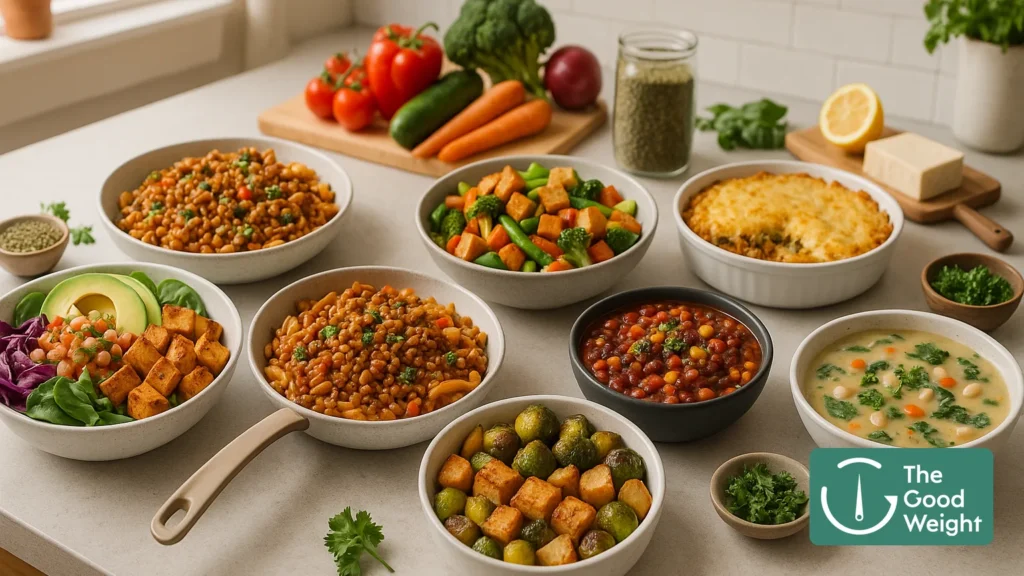
A lot of vegan weight-loss meals fail in a very predictable way. They look clean. They photograph well. They check the “lots of vegetables” box. Then dinner ends, your stomach feels oddly unfinished, and suddenly you’re eating toast, handfuls of nuts, or spoonfuls of hummus at 9:30 p.m. If that sounds familiar, you’re not doing anything wrong. You’re just eating meals that are light on the one thing most likely to steady hunger: protein.
Protein matters for fullness, and not in a vague wellness-blog way. Your body uses protein to build and repair tissue, and it also tends to be more satisfying than meals built mostly from refined carbs or fat-heavy sauces, as explained in Nutrition.gov’s overview of protein foods and MedlinePlus guidance on protein in the diet. On a vegan pattern, getting enough protein is very doable. But it usually takes planning. Dinner can’t just be “vegetables plus rice” with the meat removed and hope for the best.
The way I see it, the most useful shift is simple: stop starting with what you’re avoiding, and start with the protein anchor. Once that piece is set, the rest of the meal gets easier. The vegetables make more sense. The carb portion gets easier to judge. Even your sauces stop turning dinner into a sneaky calorie bomb.
Below, you’ll find a practical formula for filling vegan dinners, seven high protein dishes worth repeating, easy swaps if you don’t want specialty ingredients, and a short checklist for nights when “healthy” still feels weirdly unsatisfying.
Why vegan weight-loss meals so often miss the mark
The problem usually isn’t that vegan food can’t fill you up. It can. The problem is that many weight-loss meals labeled “healthy” are built around volume alone. A giant bowl of roasted vegetables, a modest scoop of quinoa, maybe half an avocado, and a tahini drizzle can look balanced while still landing low on protein and higher on calories than expected.
And then there’s the snack-plate trap. Crackers, hummus, fruit, nuts, maybe some roasted chickpeas. It feels lighter than dinner. But it often turns into grazing with no real stopping point. You get lots of bites, not much staying power, and your brain never quite registers, “Meal completed.”
Sauces make the math even trickier. A tablespoon or two of nut butter, tahini, coconut milk, or oil can change the calorie load fast. That’s not a moral issue. It’s just useful to know. For weight loss, you want meals that are satisfying enough to reduce rebound eating later, not meals that seem tiny and “disciplined” at 6 p.m. but trigger cravings all evening.
Honestly, I think this is why so many people assume vegan dinners and fullness don’t go together. The issue isn’t plant-based eating itself. It’s meal design.
Definition: A protein anchor is the main ingredient that supplies a meaningful share of the meal’s protein, such as tofu, tempeh, edamame, lentils, beans, soy mince, or a higher-protein pasta made from legumes.
The formula for filling high protein dishes at dinner
If you want high protein dishes that help with fat loss, use a repeatable framework instead of chasing random recipes. I prefer a four-part build.
- Pick a protein anchor first. Aim for a base that gets dinner into a useful protein range before toppings and sides. Tofu, tempeh, lentils, black beans, edamame, or soy crumbles work well. Many adults need regular protein intake across the day, and MedlinePlus notes that protein needs vary by age, sex, and activity, so dinner shouldn’t carry the entire burden, but it shouldn’t be an afterthought either.
- Add high-fiber produce. Use non-starchy vegetables to add bulk and chewing time. Big portions of broccoli, cabbage, mushrooms, green beans, cauliflower, peppers, zucchini, or leafy greens help the meal feel physically larger without pushing calories too high. That matters a lot when you’re trying to feel satisfied on less energy.
- Keep the carb portion smart, not absent. You don’t need to fear rice, potatoes, or pasta. You just need the portion to match the rest of the plate. If your meal already has beans and lentils, you may need less grain. If you’re active, training hard, or walking a lot, you’ll probably want more.
- Use flavor with intent. Acids, spices, herbs, garlic, chili paste, mustard, salsa, miso, and broth carry a lot of flavor without making every meal heavy. Creamy sauces still fit, but measure them. A rich sauce should be a decision, not a pouring habit.
Point being, a filling vegan dinner usually looks less like “carb plus vegetables” and more like “protein plus vegetables with a controlled carb side.” That’s a very different meal, even if the ingredients sound familiar.
Seven high-protein vegan dinners that work in real life
1) Smoky tofu taco bowl
Start with extra-firm tofu crumbled or cubed and cooked with smoked paprika, cumin, garlic, and salsa. Add shredded lettuce, roasted peppers and onions, cauliflower rice or a small scoop of regular rice, black beans, and a spoon of plain soy yogurt mixed with lime and cilantro if you want a creamy finish.
What makes it protein-rich? You’re stacking tofu and beans instead of relying on rice as the main event. Soy foods are especially useful here because they pack a lot of protein into a moderate calorie budget.
Why does it keep you full? You get protein, fiber, and a lot of chewing volume from the vegetables. The bowl also feels like a real dinner, not a side salad pretending to be one. Big difference.
For lower calories, use cauliflower rice for part or all of the grain and keep avocado to a few slices. For higher activity days, add more rice or corn and an extra half cup of beans.
2) Red lentil and spinach pasta skillet
Cook red lentil pasta and toss it with a quick tomato sauce, mushrooms, onion, zucchini, spinach, and chili flakes. Fold in white beans or shelled edamame if you want the protein even higher. Finish with nutritional yeast and black pepper.
The trick here is that the pasta itself carries protein, which changes the whole structure of the meal. You’re not eating standard pasta with vegetables on top. You’re eating a protein-forward base with vegetables built in.
For lower calories, use a broth-thinned tomato sauce and pile in extra mushrooms and spinach. For higher activity days, keep the full pasta portion and add a side of fruit or a slice of whole-grain bread.
3) Tempeh stir-fry with broccoli and snap peas
Tempeh has a firmer bite than tofu, and that’s part of why many people find it satisfying. Brown slices or cubes in a nonstick pan, then stir-fry with broccoli, snap peas, mushrooms, and cabbage. Use a sauce made from soy sauce, rice vinegar, ginger, garlic, and a small amount of peanut butter.
I’m not 100% sure everyone will love tempeh on the first try, because it has an earthy flavor. But once you steam it briefly before cooking and season it properly, it gets a lot more appealing.
For lower calories, go heavy on the vegetables and lighter on the peanut sauce. For higher activity days, serve it over brown rice or noodles. Also, if tempeh feels too pricey, swap in tofu and keep the rest exactly the same.
4) Chili built around beans and soy mince
This is one of the best repeat meals for busy weeks. Sauté onion, garlic, and peppers, then simmer crushed tomatoes with black beans, kidney beans, soy mince or textured vegetable protein, mushrooms, chili powder, cumin, and oregano. Serve with cabbage slaw or steamed greens instead of a big pile of chips.
A meal like this works because it combines two protein sources with a lot of fiber. Research on satiety has long suggested that protein can help curb hunger better than lower-protein meal patterns, including classic work on satiety and macronutrients indexed on PubMed.
For lower calories, skip the oil, use extra mushrooms for volume, and top with chopped onion, cilantro, or jalapeño instead of vegan cheese. For higher activity days, add a baked potato or a modest serving of rice.
5) Baked tofu, Brussels sprouts, and potato tray
Sheet-pan dinners don’t have to be low-protein. Roast tofu cubes with Brussels sprouts, red onion, and a measured portion of baby potatoes. Toss everything in mustard, garlic, smoked paprika, and a teaspoon or two of olive oil rather than a free-pour.
The nice thing about this dinner is simplicity. You don’t need a complicated recipe to get high protein dishes onto your weekly plan. You need a tray, an oven, and enough tofu to matter.
For lower calories, use more sprouts and less potato. For higher activity days, keep the potatoes generous and add a side of edamame or a bean-based dip.
6) Creamy white bean and kale soup with seitan or tofu
Soup gets dismissed as “too light” all the time, but that depends on what goes in the pot. Blend part of a white bean soup base for thickness, then add kale, celery, onion, carrots, herbs, and either cubed tofu or seitan if you eat it. A thick soup with a real protein base feels very different from broth with a few floating vegetables.
Beans bring both protein and fiber, and higher-fiber eating patterns are linked with better fullness and weight management in the nutrition literature, including discussion in a review on dietary fiber and satiety. Add enough protein, and soup stops being an appetizer.
For lower calories, skip coconut milk and use blended beans for creaminess. For higher activity days, pair the soup with whole-grain toast or a grain side.
7) Lentil shepherd’s pie with cauliflower-potato topping
Cook a thick filling of green or brown lentils, mushrooms, onion, carrots, celery, tomato paste, and peas. Top it with a mash made from part potato, part cauliflower, then bake until browned. If you want more protein, stir soy crumbles into the lentil layer.
This one feels like comfort food, which matters more than diet culture likes to admit. Meals that feel emotionally satisfying can make adherence easier. Not magic. Just real life.
For lower calories, use more cauliflower in the topping and keep the lentil layer thick with vegetables. For higher activity days, use a fuller potato topping or serve with a side salad and bread.
Easy swaps if you don’t want specialty ingredients
A lot of readers get stuck because recipes assume you keep tempeh, soy chunks, or expensive dairy-free products on hand. Most people don’t. That’s okay.
If you don’t want tofu, use lentils, beans, or edamame. If you don’t want soy mince, use extra beans plus chopped mushrooms for texture. If tempeh isn’t your thing, skip it and double the tofu or use seitan if it fits your diet. No drama.
For creamy elements, plain unsweetened soy yogurt often works better than store-bought vegan “cheese” products, which can be lower in protein than people expect. If you need a ricotta-style filling, mashed tofu with lemon, garlic, and herbs gets you pretty close. For casseroles or bowls, a spoonful of hummus can stand in for a heavier sauce.
And if beans bother your digestion, start smaller and change the type. Red lentils usually cook softer and feel easier for some people. Canned lentils and beans, rinsed well, can be gentler too. Digestive complaints after high-fiber foods often improve when intake climbs more gradually rather than all at once.
If you’re working through food tolerances or weight-loss plateaus, some people also like having a more medical view of the process. You can browse diagnostic testing and products if you want extra support around the bigger picture.
How to avoid the “healthy but hungry” evening crash
Sometimes the best fix is a quick audit. Before dinner, ask a few blunt questions.
A short checklist that catches most problems
- Did I include a real protein anchor? A sprinkle of seeds doesn’t count. Neither does a tablespoon of peanut sauce doing all the work.
- Does the meal have enough volume from vegetables? Tiny portions push people toward dessert, snacking, or second helpings.
- Is the carb portion crowding out the protein? A giant bowl of pasta with a few chickpeas is still mostly pasta.
- Did the sauce quietly take over the calorie budget? Easy to do with oils, tahini, cashew cream, and coconut milk.
- Would I bet that this keeps me full for three hours? If the answer is no, the meal probably needs work.
Protein quality comes up a lot here. Plant proteins can absolutely fit a healthy pattern, and MedlinePlus explains that many foods from plants contain protein. Some plant proteins have different amino acid profiles, which is why eating a mix of legumes, soy foods, grains, nuts, and seeds across the day makes sense. You don’t need perfect food combining at every meal. Older evidence on complementary proteins got overcomplicated, and broader intake across the day does the job for most people, a point discussed in USDA research on protein complementation.
Anyway, if dinner routinely leaves you raiding the pantry, don’t assume you’re lacking discipline. Assume your plate needs editing.
Frequently asked questions
Can vegan dinners support muscle retention during weight loss?
Yes, if total protein intake stays adequate and you include resistance training. During weight loss, preserving lean mass matters, and protein helps with that. Protein nutrition references from MedlinePlus and background material on protein in human nutrition both make the basic point that protein supports tissue maintenance and repair. For practical eating, that means dinner should contribute a solid amount, not just token grams.
Are lentils alone enough for a high-protein dinner?
Sometimes, but not always. A lentil-based meal can work well, especially if the portion is generous and paired with vegetables. Still, many people feel fuller when lentils are paired with tofu, edamame, bean pasta, or another protein source. If you keep finishing lentil soup and still wanting snacks, your answer is right there.
Do I need soy to make high protein dishes work?
No. Soy just makes it easier because tofu, tempeh, edamame, and soy mince pack a lot of protein for the calories. If you avoid soy, lean on lentils, beans, seitan, pea-protein pasta, and higher-protein grain-legume combinations. You may need bigger portions or more deliberate planning.
What if breakfast is weak too?
Then dinner isn’t the whole problem. A lot of people under-eat protein at breakfast, coast on toast or fruit, and arrive at dinner ravenous. Try a tofu scramble, soy yogurt with chia and berries, protein oats made with soy milk, or a savory bean breakfast bowl. The result? Evening hunger often calms down because you’re not trying to catch up all at once.
Does protein quality matter on a vegan diet?
It matters, but less dramatically than social media makes it sound. Different proteins vary in digestibility and amino acid profile, and concepts like biological value try to describe part of that picture. In real life, a varied diet with legumes, soy foods, grains, nuts, and seeds usually covers the bases for most healthy adults.
A good test beats another saved recipe. Pick one protein anchor this week. Repeat two dinners instead of inventing seven. Then pay attention to what happens around 9 p.m. Do cravings drop when protein stops being an afterthought?
I write about evidence-based weight loss and women’s health at The Good weight.