
Your weight is falling, but meals have become smaller and climbing the stairs feels harder. Perhaps a GLP-1 medication has reduced your appetite, or an intensive dietary change has made eating enough more difficult. The scale may show progress while leaving an important question unanswered: are you also maintaining the nutrition and strength you need?
Understanding protein needs during weight loss means looking beyond a number copied from social media. Body size, age, kidney function, food tolerance, activity and the pace of weight loss all shape an appropriate plan. This article explains what the evidence suggests, why protein targets need personalisation, and which monitoring questions can help you and your care team protect health during active weight loss.
Why the scale is only part of the picture
Weight loss does not consist entirely of lost body fat. Changes can also involve water and lean tissue, which includes skeletal muscle but also organs and other non-fat components. Consequently, a reported fall in “lean mass” is not automatically equivalent to the same amount of muscle loss. Hydration and the measurement method can also influence body-composition readings.
Muscle matters because it supports everyday function, from getting out of a chair to carrying groceries. Monitoring should therefore consider strength and daily activity alongside weight, rather than treating the lowest possible scale reading as the only goal. New difficulty with familiar tasks deserves attention, although weakness can have several causes and does not prove muscle loss.
Reduced appetite can create a practical nutritional challenge during medical treatment or intensive dietary change. Someone who previously ate regular meals may now skip breakfast, leave most of lunch unfinished and feel full after a few bites at dinner. When intake falls this way, protein is not the only concern: overall energy, fluids and other nutrients also need review. The answer is a more manageable nutrition plan, not pressure to force down large meals.
What research says about protein during weight loss
A 2024 systematic review and meta-analysis in Clinical Nutrition ESPEN examined 47 studies involving 3,218 adults with overweight or obesity. Higher protein intake significantly attenuated muscle-mass decline during weight loss. Intake above 1.3 grams per kilogram per day was associated with increased muscle mass, while intake below 1.0 gram per kilogram per day was associated with greater risk of muscle-mass decline.
These findings support paying attention to protein, but they do not establish a universal prescription. They describe results across studies, not a guarantee that crossing one threshold will preserve or increase muscle for every person. Differences in participants, dietary approaches, exercise and measurement methods matter. The appropriate clinical question is how the evidence applies to your health and treatment circumstances.
For comparison, the European Food Safety Authority sets a population reference intake of 0.83 grams of protein per kilogram of body weight per day for adults. That general reference is not specifically a muscle-preservation target for someone losing weight rapidly. Equally, higher-protein research should not be interpreted as permission to increase intake indefinitely. Adequate energy, appropriate resistance activity and a workable eating pattern remain part of the plan.
Why the same protein target does not suit everyone
Myth: multiplying current weight by a popular number gives the right answer
Fact: the calculation requires clinical judgement before the arithmetic begins. A grams-per-kilogram recommendation does not fully explain which body weight should be used, particularly when someone has a larger body size. Depending on the clinical approach, a professional may use current weight, reference weight or an adjusted calculation. Ask which method your care team is using and why, rather than assuming that an online calculator has personalised the result.
Myth: age and exercise do not change the conversation
Fact: age, baseline strength and activity help determine what the plan needs to address. An older adult who struggles to rise from a chair has different concerns from a younger adult who already trains regularly. Both may need nutrition support, but their activity plans and monitoring priorities may differ. Protein planning should account for what someone can safely do, not just what they weigh.
Myth: more protein is always safer
Fact: kidney function and other medical conditions can change nutrition advice. If you have kidney disease, do not adopt a high-protein target without guidance from the clinician managing it; requirements can differ by disease stage and treatment. Diabetes management, recent bariatric surgery and persistent digestive symptoms may also require specific adjustments. A target that is appropriate for one person may be unsuitable for another.
Myth: the best target is the highest one you can tolerate
Fact: a useful target must be achievable without crowding out the rest of your nutritional needs. Appetite, vegetarian preferences, allergies, budget and food tolerance all affect how it can be met. The pace of loss also matters: unexpectedly rapid loss alongside poor intake warrants review, rather than simply adding a shake. Ask your clinician or dietitian to translate the target into daily grams, practical meals and a follow-up plan.
What to ask your care team to monitor
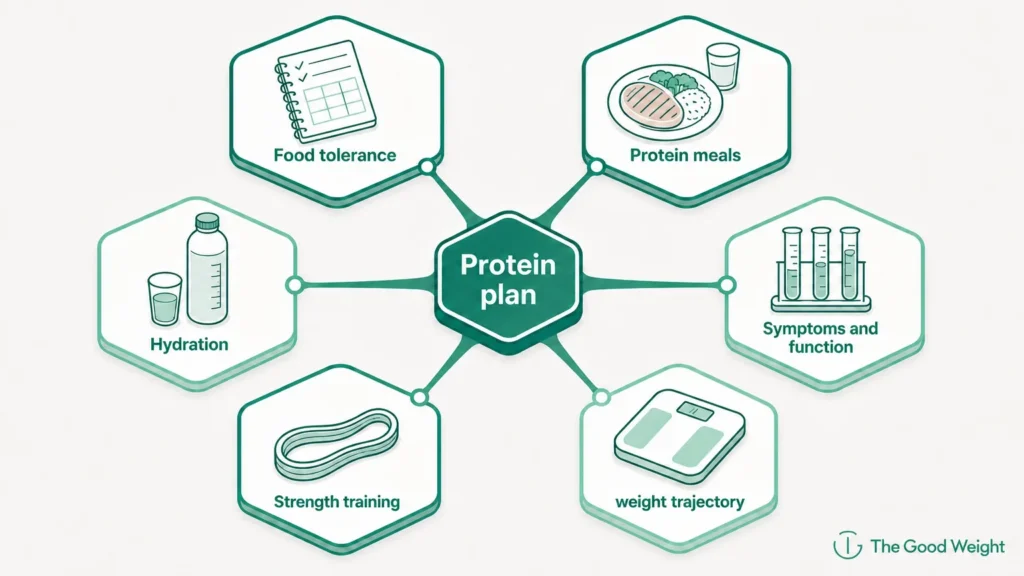
A useful review connects eating patterns with symptoms, activity and the weight trajectory. Bring a brief food record, recent weights and notes about changes in everyday strength if you can. You do not need perfect tracking; the aim is to identify barriers and decide whether your plan needs adjustment.
-
Food tolerance: “Which foods can I comfortably eat, and what stops me?” Describe early fullness, nausea, reflux, vomiting or changes in bowel habits. Note whether symptoms follow particular meals or treatment changes so your clinician can assess the pattern.
-
Protein-containing meals: “Where is protein appearing across my day?” List the foods you actually manage, rather than an ideal menu. Ask for realistic portions and alternatives if you regularly miss meals or tolerate only small amounts.
-
Hydration: “Am I drinking enough for my circumstances?” Discuss reduced drinking, thirst, dizziness or changes in urination. Fluid advice may need individualisation if you have kidney or heart disease, so avoid assuming a generic water target is appropriate.
-
Symptoms and function: “Has my energy or ability to do familiar tasks changed?” Mention weakness, unusual fatigue, falls or increasing difficulty with stairs and chair rises. These changes may justify assessment for causes beyond inadequate protein.
-
Strength-training capacity: “What muscle-strengthening activity is safe and realistic now?” Explain any pain, balance concerns, breathlessness or recovery restrictions. Ask whether you need a supervised starting plan or help from a physiotherapist.
-
Weight trajectory and further assessment: “Is this pace of loss appropriate, and when should we review it?” Ask whether food intake, treatment or exercise needs adjustment. Your clinician can decide whether blood tests, a functional assessment or body-composition testing would answer a specific concern.
Why muscle-strengthening activity belongs alongside protein
Protein provides nutritional support, while resistance activity gives muscles a reason to remain active and adapt. The American Diabetes Association’s obesity standards recommend counselling people using obesity medications on adequate protein intake and muscle-strengthening activity to minimise muscle loss during weight reduction. The emphasis is on pairing nutrition with activity, rather than expecting either to do all the work.
Appropriate activity might include supported chair rises, wall push-ups, resistance-band exercises or supervised weight training. The starting point should reflect your current strength, mobility, medical conditions and treatment recovery. A short, manageable routine can be a more realistic beginning than an ambitious programme you cannot sustain. Progression should be planned around tolerance and safe technique.
Walking remains useful, but it is not the same activity as progressively challenging muscles against resistance. Ask your care team how both can fit into your week without leaving you exhausted. If you are dizzy, significantly weak, poorly hydrated or unable to eat adequately, seek advice before increasing exercise. Symptoms should prompt review, not an instruction to push harder.
A protein-aware day of Indian meals
Food-first planning starts with familiar meals and a clear protein source, not a rigid menu. The example below shows possible combinations, rather than prescribing portions or a daily protein total. Quantities need personalisation because a small serving of thin dal, for example, is not nutritionally interchangeable with a substantial serving of paneer, fish or tofu.
Breakfast: Idli or dosa could be paired with sambar and an additional protein food such as eggs or curd, according to preference. Another option is moong dal chilla with curd. If morning appetite is limited, discuss whether a smaller breakfast and a later snack would be easier than one large meal.
Lunch: A familiar rice or chapati meal can include vegetables and a planned protein component such as dal, rajma, chana, tofu, paneer, fish or chicken. The aim is not to remove every carbohydrate but to avoid a meal in which protein is barely present. The Good Weight’s guide to a healthy high-protein diet using balanced Indian meals offers further food-planning context.
Snack: Depending on tolerance, options include curd, milk, a boiled egg or sundal. Choose a snack that fills a gap in your day rather than adding one automatically. If you have diabetes, discuss how snacks fit with your medicines and overall diabetes-friendly Indian eating plan.
Dinner: A smaller meal might combine chapati with tofu or paneer, or rice with fish, chicken or pulses and cooked vegetables. If early fullness makes dinner difficult, your dietitian can help redistribute food earlier in the day. Supplements may be considered when food alone is insufficient, but their type and quantity should fit your clinical plan.
Build a plan around health, not just kilograms
Protein and muscle-strengthening activity matter during active weight loss, but neither replaces individual assessment. The most useful target accounts for your body size, kidney function, age, appetite, medical conditions and actual eating pattern. It should also come with a plan to review strength, symptoms and the pace of loss.
If you are losing weight rapidly, eating poorly, feeling weaker or experiencing persistent gastrointestinal symptoms, arrange a review with The Good Weight’s doctor-led care team for an individual nutrition and monitoring plan. Seek prompt medical attention if you cannot keep fluids down, faint or develop severe abdominal pain. Personalised weight care should support metabolic health and everyday function – not only a smaller number on the scale.