
A small patch on the skin can feel like a welcome alternative to meal plans, gym schedules, or another diet app that sends notifications at 7 a.m. Slimming patches promise a quieter route: stick one on, go about your day, and let the patch work in the background. That appeal makes sense. Wanting help with weight is human, and wanting that help to fit into a busy life is sensible.
The problem begins when a product’s advertising asks you to believe more than its label can prove. Before-and-after images, words such as “natural,” and claims about a flatter stomach can create the impression that an adhesive patch has a direct line to stored body fat. It doesn’t work that way.
A slimming patch is an adhesive product marketed for weight-related effects, often through herbal extracts, vitamins, or other compounds claimed to pass through the skin. A patch can only be properly assessed when its ingredients, dose, formulation, evidence, and safety details are visible.
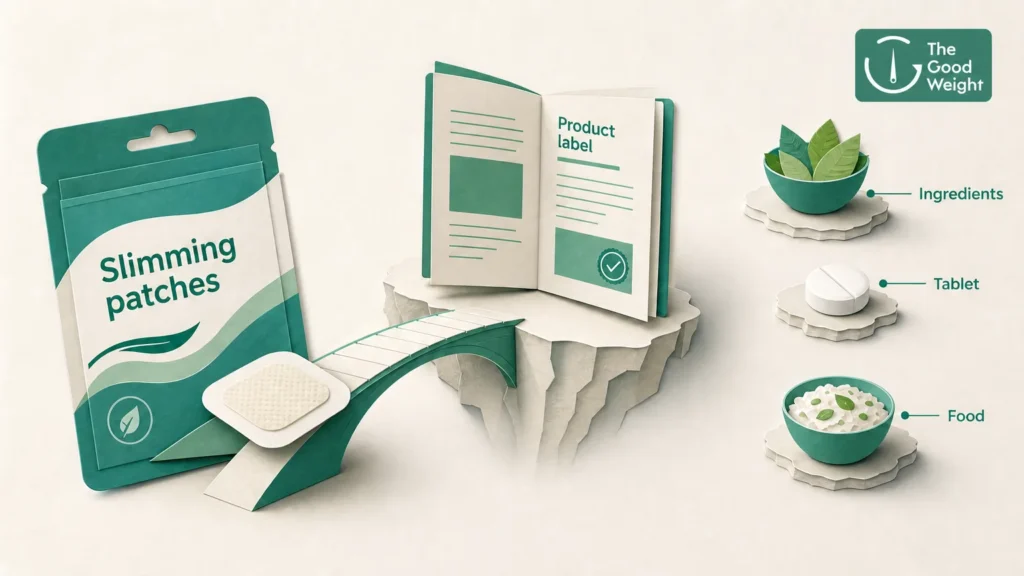
So, do slimming patches work? Some may contain ingredients that have been studied in other forms, such as tablets or foods. But evidence for an ingredient taken orally does not automatically apply to a patch on the skin. The delivery method matters. A lot.
Why do slimming patches sound convincing?
Marketing for these products tends to rely on three ideas: convenience, “natural” ingredients, and body-area promises. Each idea contains a grain of emotional truth. Weight management can be tiring, many people prefer to avoid swallowing pills, and it’s normal to feel frustrated by fat stored around the waist. Yet none of those feelings can establish that a specific product works.
Patches also borrow credibility from genuine medical treatments. Some medicines use transdermal delivery, where a carefully formulated drug crosses the skin at a tested dose. But a patch is not medically proven merely because it sticks to the skin. The active compound must cross the skin barrier in a useful amount, remain stable, and produce a measurable effect at that dose. That takes product-specific research, not just a list of familiar herbs.
“Natural” can be a particularly sticky word. Plants can contain biologically active substances, which is exactly why they may cause side effects or interact with medicines. Natural is a description of origin, not proof of safety or effectiveness. A label that uses the word repeatedly while avoiding exact quantities deserves a closer look.
Localised claims add another layer. A picture of a patch placed on the abdomen can quietly suggest it melts belly fat. Advertising regulators have challenged unsupported claims of this kind. The UK Advertising Standards Authority has warned patch sellers that health and body-shaping claims need suitable evidence, especially where ads imply a dermal patch can alter body fat or produce measurable health effects. Its guidance on advertising dermal patches is refreshingly plain: marketers must hold evidence for the claims they make.
What should you look for on the label of slimming patches?
Start with what the pack tells you, not what a social-media video implies. A product label won’t answer every question, but missing information tells you plenty. If you can’t identify what is in the patch or how much is meant to reach your body, you cannot judge the claim fairly.
Here is a practical label check before spending money:
-
Named ingredients and amounts. Look for every active ingredient and the amount per patch or per day. “Proprietary blend” language may hide the dose, which makes it hard to compare the product with research. A study of 500 mg of an oral ingredient cannot validate a patch that names the ingredient but gives no quantity.
-
A clear route and wear-time. The pack should explain where to place the patch, how long to wear it, how often to replace it, and what to do if it comes loose. Skin absorption is finicky. Vague instructions such as “apply as needed” don’t inspire confidence for a product making health-related claims.
-
Manufacturer details. Check for a business name, contact address, batch number, and expiry date. Those details matter if you need to report a reaction or ask a question about the formula. No identifiable manufacturer? Put the product down.
-
Warnings and contraindications. Look for advice about pregnancy, breastfeeding, allergies, medicines, medical conditions, and broken skin. A warning section is not proof that a product works, but its absence can make safe decision-making harder.
-
Measurable claims with evidence. “Supports metabolism” is vague enough to mean almost anything. “Causes 5 kg weight loss in 30 days” is measurable, so ask for the trial behind it: who took part, how long did it run, what patch was used, and what happened to the comparison group?
One useful real-world check comes from retail listings. A product sold through a familiar shop is still a product to assess, not a clinical endorsement. The Boots listing for Kind Patches Berberine Patches, for example, gives shoppers a chance to inspect the stated use and ingredients. But searching for slimming patches Boots carries the same responsibility as shopping anywhere else: read the pack, then ask whether the claims match the evidence.
Can a patch target belly fat or other specific areas?
No convincing mechanism supports the idea that placing a patch on the stomach makes fat disappear from the stomach alone. Your body does not treat the skin beneath a patch as a shortcut into the fat cells below it. If a substance enters the bloodstream through skin, it circulates through the body. If it does not enter the bloodstream in an effective amount, the promised systemic effect becomes even less plausible.
Fat loss also does not happen like paint being stripped from one section of a wall. Energy intake, activity, sleep, stress, hormones, medicines, genetics, and health conditions can all affect body weight and body composition. Where your body loses fat first or last varies from person to person. The waist can change over time, but a patch location cannot direct that change.
Advertising claims have sometimes blurred this distinction. In one ASA ruling, the regulator found that claims for patches linked to weight loss and fat reduction lacked adequate substantiation, and it required the advertiser not to repeat them in that form. Read the Easylife Group ruling on slimming-patch claims and you’ll notice the core issue is evidence, not whether the promises sound appealing.
The way I see it, body-area language is often a distraction. A useful weight-management plan may track waist circumference alongside weight, blood sugar markers, eating patterns, or mobility. Those are health conversations. A photo of a patch on a belly is a sales device.
Who should pause and seek medical advice first?
Some people should not trial a slimming patch without speaking to a doctor or pharmacist. Skin contact does not make an active ingredient harmless. And if a patch contains poorly disclosed substances, the uncertainty itself becomes part of the risk.
Pause before using one if any of these apply:
-
You take prescription medication. Medicines for blood pressure, blood sugar, blood clotting, thyroid conditions, mood, or pain can interact with supplements. Even where the likelihood is unknown, guessing is not a good care plan.
-
You live with diabetes or another metabolic condition. Changes to appetite, food intake, or blood glucose can affect existing treatment. A patch won’t replace monitoring or a plan agreed with the clinician who knows your medical history.
-
Your skin is sensitive or already irritated. Adhesives, fragrances, and plant extracts can cause itching, redness, or contact dermatitis. Remove the patch if you develop a reaction, wash the area gently, and seek advice if symptoms are severe, spreading, or persistent.
-
You are combining several products. A fat-burner tea, a supplement capsule, and a patch may have overlapping ingredients. That makes doses difficult to track. It also makes it harder to identify the cause if you feel unwell.
The US National Institutes of Health cautions that many weight-loss supplements have not been adequately studied for safety or effectiveness. That doesn’t mean every product will harm every user. It does mean marketing should never substitute for a medication review, especially if your health is already being managed.
What can you do instead if you want tailored support?
A low-effort option is tempting because weight care can feel like a lot. The answer does not have to be punishing food rules or hours in a gym. Better care starts with finding out what is affecting your weight and choosing steps that fit your health, budget, culture, schedule, and preferences.
| Support option | What it looks like in practice | When it may help |
|---|---|---|
| Personalised nutrition support | A food plan built around your routine, hunger patterns, dietary preferences, and health needs rather than a generic restriction list. | When meals feel chaotic, cravings are intense, or you need structure that still works with family life. |
| Activity planning | A realistic movement plan that may begin with walking, strength work, or more daily movement. The aim is consistency, not punishment. | When you want to improve fitness, mobility, mood, or long-term weight maintenance. |
| Diagnostic assessment | Checking relevant metabolic markers and reviewing sleep, medicines, past weight changes, and medical history. | When weight has changed unexpectedly, diabetes risk is a concern, or previous attempts have repeatedly stalled. |
| Doctor-led treatment | A clinician discusses evidence-based medication, procedures, or referral options where appropriate, then follows progress and side effects. | When obesity or metabolic disease needs more than lifestyle support alone. |
At The Good Weight’s diagnostic assessment service, the starting point is your metabolic health, not a one-size-fits-all promise. That may lead to nutrition support and activity planning. It may also lead to a conversation about medical weight-loss care when a doctor feels it suits your health needs.
No one needs to “earn” medical help by failing at a patch first. Honestly, spending time on an unproven product can be more draining than taking an informed first step with a clinician.
Frequently asked questions
Do slimming patches work for weight loss?
There is no reason to assume a slimming patch works simply because it contains a familiar ingredient or has positive reviews. You would need evidence for the exact patch, exact dose, and claimed outcome. Until a seller can show that evidence, treat the claim as unverified.
Are slimming patches from Boots medically approved?
Being stocked by a retailer does not equal medical approval or prove a product causes weight loss. Check the ingredient list, dose, warnings, and claims just as you would with a product bought elsewhere. If you take medication or manage a health condition, ask a pharmacist or doctor before trying it.
Can I use a patch with a diet plan?
You can discuss it with the professional supporting your diet plan, but don’t assume the patch adds useful benefit. Keep a record of every supplement and product you use. Clear information makes medication reviews safer and more useful.
A patch may look small, simple, and harmless. The claim attached to it can be much bigger. Ask for the ingredients, dose, evidence, and safety information before you let marketing fill in the blanks.
If you want individual guidance rather than guesswork, speak with The Good Weight about a metabolic-health assessment and evidence-based options aligned with your goals. Learn more.