
A search for a meal plan for female weight loss often returns rigid menus, strict calorie limits, and promises that imply every woman should respond to food in the same way. In real life, weight management is rarely that simple. Work schedules, caregiving, sleep, stress, food availability, medical conditions, medicines, injuries, and changing life stages can all affect what is realistic and sustainable.
A useful plan is not the most restrictive one. It is the one that supports your health while fitting the meals you enjoy, the time you have, and the care you may need. The goal is sustainable weight loss and stronger metabolic health – not perfection at every meal or a single number on the scale.
Why women do not need one “perfect” weight-loss plan
Weight change is influenced by energy intake and expenditure, but those are shaped by far more than willpower. The foods available at home or work, the ability to cook, sleep quality, stress, pain, past dieting experiences, and health conditions can all influence eating patterns and activity. The CDC notes that healthy weight loss includes regular physical activity, adequate sleep, stress management, and eating patterns that can be maintained over time, rather than relying on a short-term diet alone.
Two women can follow a similar meal pattern and have different outcomes. One may be sleeping poorly because of shift work or caring for young children. Another may be less active because of knee pain, have a medication that affects appetite or weight, or be managing insulin resistance. Neither situation is a personal failure; it is a reason to adapt the plan.
Life stage can also change what deserves attention. For example, menstrual symptoms may affect appetite, energy, or iron intake for some women. Pregnancy, postpartum recovery, perimenopause, and menopause can bring changes in routine, body composition, sleep, and activity tolerance. These experiences do not mean that weight loss is impossible or that one hormone-focused diet is required. They mean the plan should be practical, responsive, and medically appropriate.
The most effective starting point is therefore not “What is the lowest calorie target I can manage?” Instead, ask: “What changes can I repeat most days without feeling deprived, unwell, or disconnected from my usual life?” A personalised approach can create a moderate energy deficit while still protecting meal satisfaction, nutrition quality, strength, and emotional wellbeing.
The health information that should shape a plan
Before making major changes to food intake or exercise, take stock of your health and routine. This assessment is especially valuable if you have spent years cycling between restrictive diets and regain, or if your weight has changed rapidly without an obvious reason.
Your starting-point checklist
Consider recording the following information before beginning a meal plan for female weight loss:
-
Weight and dieting history: Note when weight changes occurred, what you tried, how long it was sustainable, and what made it difficult. This helps distinguish a plan that was simply too restrictive from one that did not account for health needs or daily constraints.
-
Medical history and medications: Conditions such as diabetes, high blood pressure, thyroid disease, polycystic ovary syndrome, digestive disorders, depression, or chronic pain can affect the right approach. Some prescription medicines may influence appetite, weight, blood sugar, or exercise tolerance, so changes should be discussed with the clinician who prescribes them.
-
Blood-sugar and metabolic risk: A family history of diabetes, past gestational diabetes, elevated blood glucose, abnormal cholesterol, fatty liver disease, or increasing waist circumference may warrant clinical assessment. The National Institute of Diabetes and Digestive and Kidney Diseases explains that healthy eating and physical activity are central to managing overweight and obesity, but the right intensity and treatment plan should reflect your risk profile.
-
Menstrual, menopausal, and sleep symptoms: Track symptoms such as very heavy or irregular periods, hot flushes, disrupted sleep, marked fatigue, or significant mood changes. These do not automatically explain weight change, but they can influence routine and may need medical attention.
-
Injuries and movement limitations: Back pain, joint pain, pelvic-floor symptoms, recent surgery, or a history of injury should shape the activity plan. Starting safely is more valuable than forcing an exercise routine that worsens pain.
-
Eating patterns and goals: Notice when you are most hungry, where meals are commonly skipped, whether evening eating feels difficult to control, and which foods leave you satisfied. Also define goals beyond body weight: better stamina, improved blood markers, more confidence cooking, or fewer energy crashes can all be meaningful outcomes.
A clinician or dietitian can use this information to set realistic priorities. At The Good Weight, a female weight-loss diet plan can be built around medical history, food preferences, culture, work demands, and metabolic health rather than a generic template.
How to build satisfying meals without rigid rules
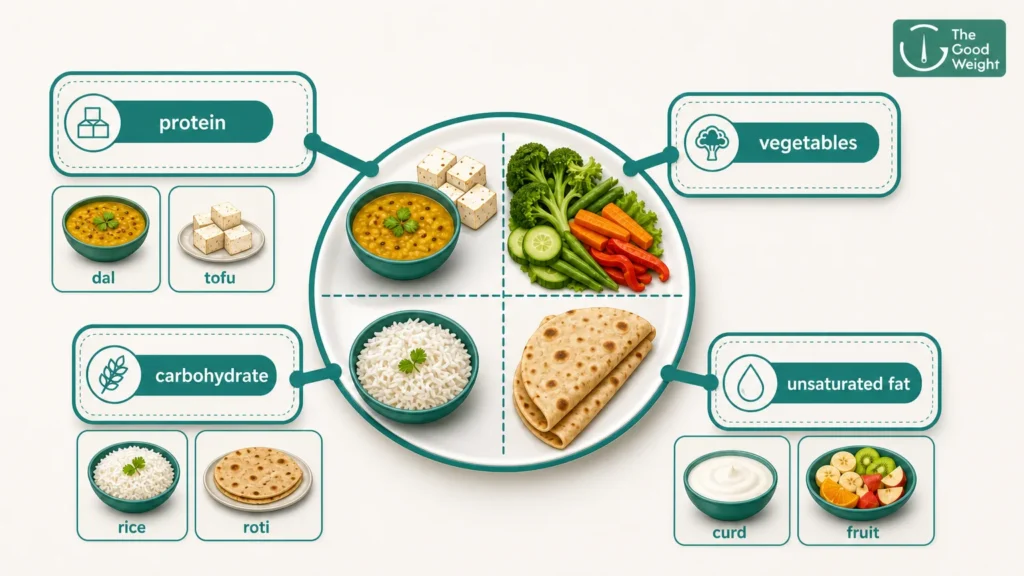
A balanced meal does not require special “diet” foods. A practical approach is to include a source of protein, vegetables or other fibre-rich foods, a carbohydrate source, and an unsaturated fat where appropriate. This combination can improve fullness and make meals more nutritionally complete without eliminating familiar staples such as rice, roti, idli, dosa, millet, or fruit.
The exact portions depend on your energy needs, medical history, activity level, and goals. Government meal-planning tools illustrate that balanced eating patterns can include vegetables, fruits, grains, protein foods, and dairy or fortified alternatives. Use that structure as a flexible guide – not as a prescription to eat an identical number of calories every day.
Start with a protein anchor
Protein-rich foods can make a meal more satisfying and help support muscle maintenance while losing weight, particularly when paired with resistance exercise. Vegetarian choices include dal, chana, rajma, soy chunks, tofu, tempeh, paneer, curd, Greek yogurt, and milk. Non-vegetarian options include eggs, fish, chicken, and leaner cuts of meat.
For breakfast, a vegetarian example could be two moong-dal chillas with paneer or curd, a bowl of vegetables, and a piece of fruit. A non-vegetarian alternative might be an egg bhurji wrap made with whole-wheat roti, vegetables, and a side of fruit. Both can be adapted for appetite and schedule: a rushed morning may call for prepared boiled eggs or yogurt with fruit and nuts, while a home breakfast may be more substantial.
Add colour, fibre, and familiar carbohydrates
Vegetables, fruit, pulses, and whole grains contribute fibre and micronutrients, while carbohydrate foods provide energy for daily life and exercise. Carbohydrates do not have to be removed for weight loss. The useful question is whether the amount and form of carbohydrate work for your hunger, blood-sugar needs, and activity level.
For lunch or dinner, try building a plate around one-half non-starchy vegetables where feasible, one-quarter protein, and one-quarter carbohydrate-rich food, then adjust according to hunger and clinical advice. Examples include:
-
Rajma with brown or white rice, cucumber-onion salad, mixed vegetables, and plain curd.
-
Grilled fish with vegetable poriyal, rasam, rice or millet, and a small spoon of sesame or groundnut chutney.
-
Chicken curry with two rotis, a generous cabbage or beans sabzi, and curd.
-
Tofu or paneer stir-fry with vegetables, quinoa or rice, and a small handful of peanuts or seeds.
The “best” option is not always the version with the fewest calories. It is the meal that is enjoyable, filling enough, and easy to repeat. Dietary guidance increasingly focuses on dietary patterns and food quality across the full day, rather than treating one food as the solution or the problem.
Plan for snacks and social meals
Some people do well with three meals; others find a planned snack prevents arriving at dinner extremely hungry. Evidence does not support one universally superior meal frequency: a review of research found insufficient evidence to determine whether meal and snack frequency independently changes energy intake. Choose the rhythm that reduces impulsive eating and works with your day.
Useful snack combinations include fruit with curd, roasted chana with tea, buttermilk and a small handful of nuts, or hummus with carrots and cucumber. At a family meal or restaurant, aim for a protein dish, vegetables where available, and a satisfying portion of the foods you genuinely want. Trying to “save” all calories for a celebration often creates the hunger and guilt that make overeating more likely.
How movement can match different starting points
Physical activity supports heart health, strength, mood, mobility, and weight management, but it should not be used as punishment for eating. The current U.S. guidelines recommend that adults work toward at least 150 minutes of moderate-intensity activity weekly and muscle-strengthening activity on two or more days. These are long-term targets, not a requirement to meet immediately.
If you are restarting after a break
Walking is often the most accessible starting point. Begin with ten minutes after one meal, a short commute walk, or a few five-minute breaks during the day. Add time gradually as confidence and comfort improve. A pace that makes you breathe a little harder but still allows conversation is a practical benchmark for many people.
If walking causes pain, lower-impact options such as cycling, swimming, chair-based movement, or guided physiotherapy may be more suitable. The right activity is one you can perform consistently and safely, not the one that looks most intense online.
If strength and body composition are priorities
Resistance training can be particularly helpful because weight loss can include loss of lean mass as well as fat mass. Simple exercises such as sit-to-stands, wall push-ups, resistance-band rows, step-ups, and carrying grocery bags can be a beginning. Progress might mean adding repetitions, improving form, using a slightly stronger band, or moving from one session to two sessions a week.
Structured classes or gym programmes can work well for women who enjoy routine and social support. However, they are not essential. Two short home sessions may be more sustainable for someone balancing work and family responsibilities. If you have a medical condition, pelvic-floor concerns, or a recent injury, seek individual advice before advancing intensity.
Include mobility and recovery
Mobility work does not replace aerobic or strengthening activity, but it can make movement feel more comfortable. Gentle stretching, yoga, balance drills, and joint-specific exercises may help create a routine that feels less intimidating. Sleep and recovery deserve the same respect: consistently training hard while sleeping poorly can make hunger, fatigue, and adherence more difficult.
How to measure progress without relying only on the scale
Body weight is one data point, but it naturally fluctuates with hydration, bowel habits, menstrual-cycle timing, sodium intake, and other short-term factors. Weighing can be useful if it feels neutral and helps identify a longer-term trend. If it creates anxiety or drives restrictive behaviour, less frequent weighing – or no self-weighing – may be the healthier choice.
Use a broader progress checklist:
-
Waist measurement: Taken consistently at the same site and time of day, waist circumference may provide information about changes in central body size alongside weight and clinical assessment.
-
Strength and mobility: Notice whether you can climb stairs more comfortably, carry bags with less effort, complete more repetitions, or walk farther without stopping.
-
Energy, sleep, and hunger: A plan that leaves you constantly exhausted, preoccupied with food, or unable to sleep is unlikely to be sustainable, even if the scale falls quickly.
-
Consistency: Count the meals you prepared, walks you completed, and routines you returned to after a difficult week. These behaviours predict whether changes can last.
-
Health markers: Where relevant, a clinician may monitor blood pressure, blood glucose, HbA1c, cholesterol, liver markers, or other tests. These can improve even when the scale changes slowly.
Review trends every few weeks rather than judging each day. Sustainable weight loss often involves adjustments: increasing protein at breakfast, planning a mid-afternoon snack, addressing sleep, changing exercise for an injury, or reassessing medication with a doctor.
When self-directed dieting needs medical support
Self-guided meal changes can be appropriate for many people, but medical support is important when symptoms, health risks, or repeated dieting cycles complicate the picture. Doctor-led care is not about removing personal choice; it is about ensuring that nutrition, activity, diagnostics, and treatment options are aligned with your health.
Should I speak to a doctor if weight is changing quickly?
Yes. Unintentional weight loss, rapid unexplained gain, new swelling, persistent fatigue, significant changes in periods, digestive symptoms, or changes in mood should be assessed. A clinician can consider possible medical causes and determine whether testing or referral is needed.
What if I take medication for diabetes or another chronic condition?
Speak with your prescribing clinician before making major dietary changes, fasting, or substantially increasing exercise. Medicines for diabetes, blood pressure, mental health, and other conditions may need monitoring or adjustment as eating patterns and body weight change. This is especially important if you experience dizziness, shakiness, repeated low blood sugar, or reduced appetite.
When are specialised treatments worth discussing?
If you have obesity-related health concerns, repeated regain after well-supported lifestyle efforts, or significant metabolic risk, a clinician can explain the full range of evidence-based options. This may include structured nutrition support, behavioural care, anti-obesity medication where suitable, or procedural options for eligible patients. Explore how medical weight-loss care can combine diagnostics, nutrition, lifestyle guidance, and treatment rather than assuming there is only one path forward.
Do repeated dieting cycles mean I have failed?
No. Repeated attempts often show that the previous approach was not sufficiently personalised or supported. Restriction can be difficult to sustain when it ignores hunger, culture, mental wellbeing, finances, social eating, or an underlying medical concern. A dietitian or weight-management clinician can help identify patterns without blame and develop a more durable plan.
Build the plan around your life, not against it
The right meal plan for female weight loss is flexible enough to include ordinary meals, demanding weeks, celebrations, changing energy levels, and gradual progress. It prioritises protein and fibre-rich foods, enjoyable carbohydrates, realistic movement, restorative sleep, and health monitoring when needed. Most importantly, it treats weight management as part of comprehensive wellness rather than a test of discipline.
If you are looking for personalised, doctor-led weight care in Chennai, arrange a consultation with The Good Weight. A tailored plan can reflect your health status, food preferences, daily responsibilities, and the sustainable routine you can genuinely maintain.