
If you have ever deleted a calorie app on Sunday night and redownloaded it on Monday morning, you are not alone. Many people start a healthy eating diet plan for weight loss with good intentions, only to find that logging every bite becomes its own source of stress. Public frustration with hyper-tracked wellness routines is not hard to spot, and the research helps explain why: in a recent review, engagement with weight-management apps varied widely and long-term use commonly declined over time. At the same time, effective weight loss still depends on consistent habits, not wishful thinking.
That tension matters because structure does help. The challenge is finding structure that feels sustainable instead of obsessive. A healthy eating diet plan for weight loss does not have to mean scanning barcodes, weighing lettuce, or treating dinner like data entry. For many people, a better approach is to use meal patterns, protein anchors, hunger awareness, and a small set of repeatable routines that reduce decision fatigue.
This guide explains how to do exactly that. You will see where calorie tracking can be useful, why it can backfire, and how to build a no-tracking plan that still creates the calorie deficit needed for weight loss. You will also get a realistic sample day of eating, a troubleshooting checklist for stalls, and answers to common questions from busy adults who want progress without app fatigue.
Why So Many People Want to Lose Weight Without Tracking
Calorie awareness is not the problem. For some people, daily logging improves accountability and helps them understand portions. But for others, the process becomes mentally expensive. Food stops feeling like nourishment and starts feeling like a score. That is one reason many people abandon otherwise reasonable plans after a few weeks.
Research on self-monitoring supports that mixed experience. A classic review found that self-monitoring was consistently associated with better weight-loss outcomes, which is why tracking remains a standard recommendation in many programs. But more recent evidence also shows that digital tools are not universally embraced, and that adherence often weakens over time, especially when the process feels burdensome rather than supportive. In other words, tracking can work, but only if a person can realistically continue doing it.
There is also a difference between useful awareness and constant surveillance. Public health guidance emphasizes sustainable behavior change over perfection. The CDC notes that healthy weight loss is typically gradual and driven by long-term changes in eating patterns and physical activity, not by a short burst of strictness. That matters for anyone who feels trapped in a cycle of “on plan” weekdays followed by unstructured weekends and a reset every Monday.
Is Calorie Counting Necessary for Weight Loss?
The short answer is no, but energy balance still matters. You can lose weight without formally counting calories if your habits naturally reduce intake and improve consistency. A healthy eating diet plan for weight loss works when it helps you eat enough to feel satisfied, enough protein to preserve lean mass, and portions that are appropriate for your goals.
When tracking helps
Tracking is often helpful early on for people who genuinely do not know where excess intake is coming from. It can reveal patterns such as oversized portions, frequent liquid calories, or habitual snacking that barely registers in memory. It can also be useful for short educational periods, like one or two weeks, to calibrate your sense of what a balanced day looks like.
For some people, numbers reduce ambiguity. If that feels calming rather than consuming, calorie tracking may be a practical tool. Clinical guidance on overweight and obesity care often includes self-monitoring because it can support behavior change when used appropriately and with the right level of support.
When tracking backfires
Tracking can become counterproductive when it creates all-or-nothing thinking. A meal out feels impossible to estimate, so the day gets written off. A small deviation from the target turns into overeating because “the numbers are already ruined.” That pattern is common in people who want structure but not constant measurement.
It can also backfire when it shifts attention away from food quality, satiety, and routine. Someone can technically stay within a calorie target while eating meals that leave them hungry two hours later. Over time, that usually leads to rebound eating, lower adherence, and frustration. Evidence reviews on dietary patterns suggest that greater adherence to healthy dietary guidance is associated with better weight-related outcomes, which reinforces an important point: the plan you can stick with matters more than the plan that looks perfect in an app.
A No-Tracking Healthy Eating Framework That Still Creates Structure
If you do not want to count calories, you still need a system. The goal is to make balanced choices easier by default so you do not rely on motivation at every meal. This framework gives you enough structure to support weight loss while staying grounded in normal life.
Start with plate structure
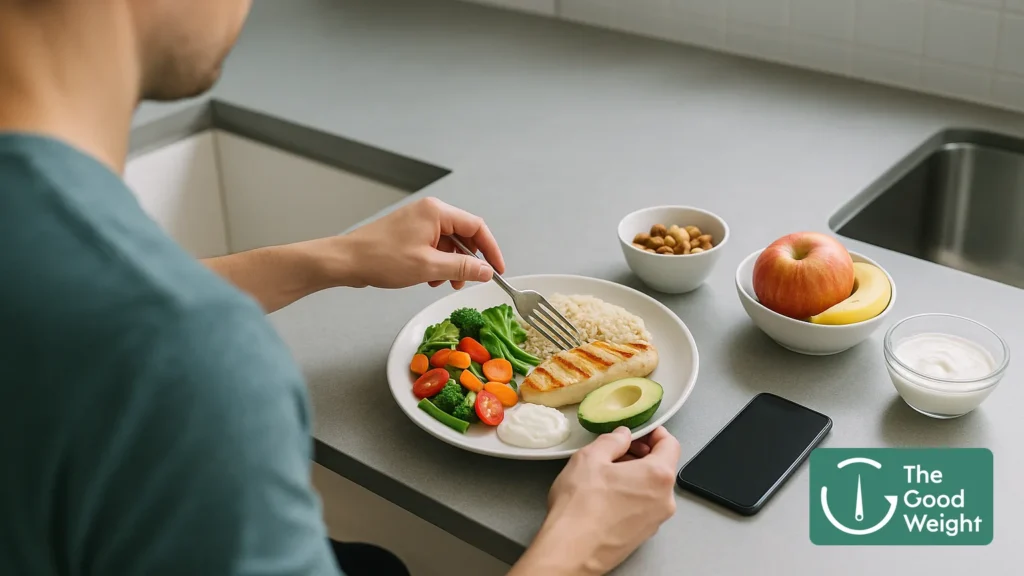
Use a simple visual template for lunch and dinner. Fill about half the plate with vegetables, one quarter with a protein-rich food, and one quarter with a starch or other carbohydrate source. Add a small amount of healthy fat for flavor and satisfaction, such as olive oil, nuts, seeds, avocado, or yogurt-based dressing.
This works because it quietly manages energy density. Vegetables add volume and fiber, protein improves fullness, and measured starch portions help prevent meals from turning into mostly refined carbohydrates. National guidance from NIDDK emphasizes building meals around vegetables, fruits, whole grains, and lean protein while limiting foods high in added sugars and saturated fat. You do not need to weigh every ingredient to follow that principle.
Anchor each meal with protein
Protein is one of the most important parts of a healthy eating diet plan for weight loss, especially when you are not tracking. It improves satiety, helps stabilize meals, and supports lean mass during weight loss. A practical rule is to include a clear protein source at every meal and most snacks.
In real-life terms, that might mean Greek yogurt or eggs at breakfast, chicken or dal at lunch, fish, tofu, paneer, or beans at dinner, and a protein-containing snack rather than just crackers or fruit alone. Emerging evidence continues to support the role of higher-protein approaches in weight management, and a recent review discusses protein intake as an important factor in appetite control, body composition, and long-term weight management. You do not need bodybuilder-level intake, but you do need enough protein to make meals satisfying.
Plan snacks instead of “being good”
Unplanned snacking often feels small in the moment but can erase the deficit created by otherwise balanced meals. The solution is not banning snacks. It is choosing whether they are needed and deciding in advance what they will be.
A planned snack usually contains protein, fiber, or both. Examples include fruit with yogurt, roasted chana, cottage cheese with cucumber, nuts with a piece of fruit, or hummus with vegetables. This turns snacks into part of the structure instead of a reaction to stress, boredom, or being overly hungry because lunch was too light.
Use eating windows to reduce grazing
Many people do well with a loose meal rhythm such as breakfast, lunch, dinner, and one planned snack. The point is not rigid fasting unless that suits you. The point is reducing all-day grazing, which makes it hard to notice hunger and fullness.
A simple eating window might mean most food happens across 10 to 12 hours of the day, with meals spaced enough to let hunger emerge naturally. This can create helpful boundaries without requiring mathematical tracking. If you have diabetes, PCOS, take medications, or have a history of disordered eating, it is worth using a more personalized plan under professional guidance.
Build a five-minute weekly review
If you are not tracking daily, review weekly. Once a week, ask: How many meals did I eat with a protein anchor? How often did I eat past comfortable fullness? What happened on weekends? Were restaurant meals, beverages, or mindless snacks showing up more than I realized?
This kind of reflection creates accountability without obsession. It helps you spot patterns before they become excuses about having a “slow metabolism.” At The Good weight, this is often where personalized coaching helps most: not by demanding perfect logs, but by identifying the one or two routines that will improve adherence in real life. If you want a broader starting point, their guidance on diet-based weight loss and female weight loss diet strategies can help you connect this framework to your own health needs.
What a Normal Day of Eating Can Look Like
A no-tracking plan works best when meals feel ordinary. Extreme plans create the illusion of control but rarely survive a busy week. The example below is not a fixed prescription. It is a pattern you can adapt.
Breakfast could be a vegetable omelet with one slice of whole-grain toast and a bowl of fruit, or Greek yogurt with berries, seeds, and a small portion of oats. The goal is a meal with protein, fiber, and enough substance to prevent a mid-morning crash. If breakfast is always coffee and hope, the rest of the day usually gets harder.
Lunch might be a grain bowl with grilled chicken, tofu, paneer, or dal, plenty of vegetables, a moderate scoop of rice or quinoa, and a yogurt-based sauce. Another option is chapati with sabzi and a protein-rich side like curd, eggs, fish, or legumes. The key is balance, not “clean eating” theater.
A planned afternoon snack could be an apple with peanut butter, unsweetened yogurt with nuts, or roasted chickpeas and tea. This is especially useful for people who tend to arrive at dinner overly hungry. A good snack prevents impulsive evening eating better than willpower does.
Dinner might be baked fish with vegetables and potatoes, a stir-fry with tofu and rice, or a simple home-style meal of dal, sabzi, salad, and one or two rotis depending on hunger and activity. Notice what is missing from this example: punishment foods, detox drinks, and oversized “cheat meal” logic. This is a healthy eating diet plan for weight loss built around repeatable meals, not extremes.
The Dietary Guidelines Advisory Committee report continues to support dietary patterns rich in vegetables, fruits, legumes, whole grains, and protein foods as part of overall health promotion. That kind of pattern is also much easier to maintain than a plan that depends on daily tracking and constant restraint.
Why Weight Loss Stalls Even When You Feel Like You’re Eating Healthy
Most stalls are not true plateaus caused by mysterious metabolic damage. They are usually the result of small inconsistencies that feel invisible because they are routine. Before assuming your body is broken, check the basics.
Hidden liquid calories
Coffee drinks, juices, weekend cocktails, sweetened tea, and even “healthy” smoothies can add up quickly. These calories are often less filling than solid food, which makes them easy to overlook. If fat loss has stalled, beverages are one of the first things to review.
Too little protein
If meals are mostly cereal, toast, salads, soups, or snacks, hunger tends to rebound. That can lead to evening overeating, second helpings, or constant nibbling that never feels like a lot. Under-eating protein is one of the most common reasons people believe they are “eating healthy” but still struggle with appetite control.
Weekend drift
A structured Monday through Friday routine can be undone by restaurant meals, takeout, alcohol, and grazing on weekends. This does not mean you need a joyless social life. It means weekends need some structure too. Keeping the same breakfast, using a plate method at meals out, and planning one indulgence instead of several can make a big difference.
Inconsistency mistaken for slow metabolism
Many people conclude they have a metabolic problem when the real issue is inconsistency across weeks. NICE guidance on overweight and obesity highlights the importance of multicomponent support, realistic expectations, and monitoring over time rather than reacting to short-term fluctuations. Weight naturally varies with hydration, sodium intake, menstrual cycle changes, and bowel habits. What matters is the trend across several weeks, not one disappointing weigh-in.
There are, however, cases where more tailored care makes sense. Women with PCOS, people with diabetes, those in perimenopause, or anyone with a history of repeated regain may benefit from a more individualized plan. Evidence also supports comprehensive lifestyle approaches delivered in clinical and community settings, especially when behavior change is paired with professional follow-up. If you need more than general advice, medical weight-loss support or a weight-loss doctor consultation may be a better next step than trying another self-directed tracker.
FAQ
Can this approach work for busy professionals?
Yes, and in some cases it works better than detailed tracking because it lowers daily friction. Busy people usually do best with repeatable breakfasts, two or three dependable lunches, a short grocery list, and a small set of go-to snacks. The less mental effort your plan requires, the more likely you are to follow it during meetings, commutes, or family obligations.
Do portions still matter if I am not counting calories?
Absolutely. You are not ignoring portions; you are estimating them with structure instead of precise math. Plate balance, protein anchors, moderate starch portions, and attention to hunger cues all help regulate intake. If progress stalls, portion creep is one of the first things to review, especially with calorie-dense foods like oils, nuts, desserts, restaurant meals, and alcohol.
How long should I try a no-tracking plan before changing course?
Give it at least two to four weeks of consistent effort before deciding it is not working. Consistency means using the framework most days, not following it loosely and hoping for results. If you are not seeing progress after several weeks, reassess protein, snacks, liquid calories, weekend habits, sleep, and activity before assuming the method failed.
When should I seek more personalized support?
Consider professional support if you have PCOS, diabetes, significant cravings, repeated weight cycling, emotional eating, or a history of feeling overwhelmed by dieting rules. Personalized nutrition and medical supervision can help when standard advice is too generic for your situation. That is especially true if you suspect medications, hormonal factors, or health conditions are affecting your progress.
The Bottom Line
A healthy eating diet plan for weight loss does not require you to track every calorie to be effective. What it does require is enough structure to make consistent choices easier: balanced plates, protein at meals, planned snacks, eating boundaries, and a brief weekly review. That combination can create a calorie deficit without forcing you into an exhausting relationship with numbers.
If you want help building a plan that fits real life instead of another rigid tracker, explore the evidence-based support available through The Good Weight. A personalized approach can help you turn healthy eating into a sustainable routine, especially if you want accountability without app fatigue.