
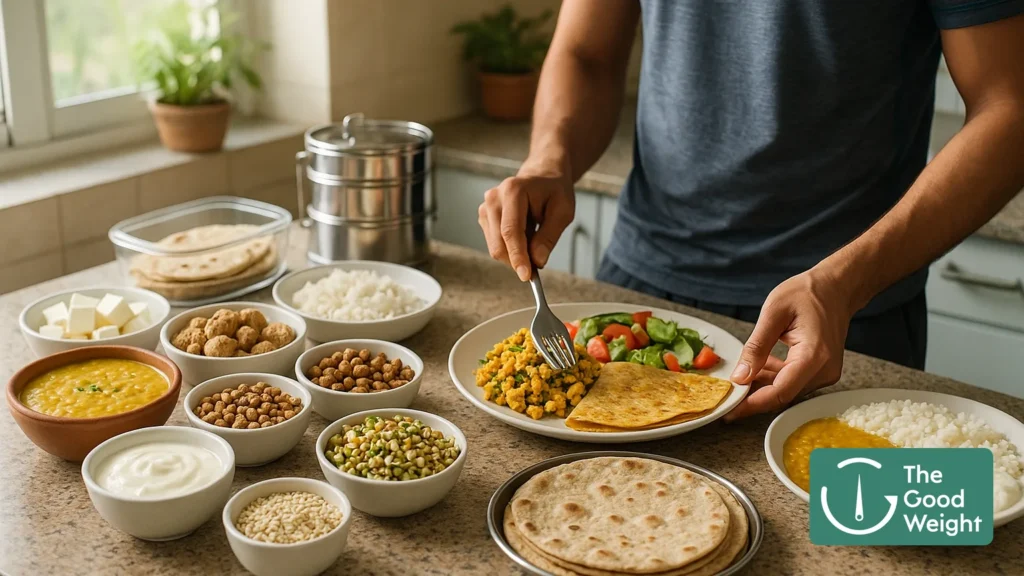
Yes. A smart veg diet for muscle building can come from dal, curd, soy, paneer, chana, sprouts, and better meal structure – not a shelf full of tubs.
A lot of vegetarian Indians hit the same wall. They start lifting, feel stronger for a few weeks, then progress slows. Not because training failed, but because the food pattern never changed. Breakfast stays toast or poha, lunch is rice-heavy, dinner is two rotis with a little dal, and protein gets treated like an occasional guest instead of a daily job.
Then the internet makes it worse. One camp acts like muscle gain is impossible without imported whey, almond butter, and “clean bulking” snacks that cost more than your monthly vegetable bill. The other camp says, “Just eat more,” which often turns into extra rice, extra roti, and extra calories without enough protein quality. You gain weight, sure. Muscle? Not much.
I’ve seen this problem often around diet-based weight loss conversations too. People assume muscle building and healthy weight management sit on opposite sides of the room. They don’t. Better muscle retention and better food quality often make weight control easier, especially for women and for anyone who wants strength without drifting into random overeating.
So let’s settle the practical question. Can a budget vegetarian diet in India build muscle without living on shakes? Yes, it can. But only if meals are built around protein distribution, decent calorie control, and repeatable staples you’ll actually eat on a Tuesday, not just on a motivated Sunday.
What a veg diet for muscle building actually needs
Muscle building nutrition sounds fancy online. In real life, it comes down to a few boring things done consistently.
Start with protein targets, not “high-protein vibes”
Most active adults trying to gain or retain muscle do well with a protein intake around 1.4 to 2.0 grams per kilogram of body weight per day. If you weigh 60 kg, that usually lands you somewhere around 84 to 120 grams a day. You do not need to hit the top end to make progress, but you do need to stop pretending 35 grams per day is “good enough because I eat dal.”
And that’s the hidden issue in many vegetarian diets. The meals look filling, but protein density stays low. A plate can be full and still not do much for muscle repair.
Your body notices distribution
One giant protein dinner won’t magically fix a low-protein day. Research in sports nutrition keeps coming back to the same idea: spreading protein through the day works better for muscle protein synthesis than cramming most of it into one meal when total intake is planned across meals. The way I see it, breakfast is where many vegetarians lose the day before lunch even starts.
Try aiming for three main meals with a meaningful protein anchor in each, plus one snack that adds more than crunch. Not perfect. Just repeatable.
Calories matter, but quality matters too
To gain muscle, you need enough energy. That doesn’t mean reckless eating. A small calorie surplus works for people trying to add size, while people who want recomposition – stronger, firmer, less fat gain – often do better at maintenance or a slight surplus with high protein and progressive training.
That second path suits many Indian readers. Why? Because “bulking” often becomes an excuse to eat sweets, fried snacks, and giant carb loads. Then frustration shows up fast. Strength goes up a bit, waistline goes up faster, and confidence drops.
Definition block: A muscle-building vegetarian diet is a food pattern that gives you enough daily protein, enough total calories, and enough consistency across weeks to support training recovery and muscle growth.
Cheap foods that quietly do most of the work
You don’t need exotic ingredients. You need a short list of staples that keep showing up.
Dal plus grain is useful, but dal alone is often not enough
Dal is good food. It’s just not magic. A single small bowl may add fiber and some protein, but not enough to carry a meal if the rest of the plate is mostly rice. Pairing dals with roti or rice improves amino acid balance, and vegetarian dietary guidance supports varied plant protein combinations across the day within well-planned vegetarian eating patterns.
But look, “better than nothing” isn’t the same as “good enough for muscle gain.” Use dal as one layer, not the whole structure.
A more useful lunch looks like:
- thicker dal, not watery dal
- 1 cup curd on the side
- chana or soy added to salad or sabzi
- controlled rice or roti portions instead of endless refills
That’s a very different meal.
Curd, paneer, and milk pull a lot of weight
Dairy helps because it gives many vegetarians a practical, familiar protein source with decent leucine content, which matters for muscle protein synthesis. Even athlete-facing guidance for vegetarian muscle building points to dairy, soy, beans, lentils, nuts, and eggs where relevant as practical options, with a strong emphasis on planning for total daily intake and meal timing.
Curd is cheap, easy, and underused. Paneer costs more than dal, yes, but still often beats many packaged “high-protein” foods on value per serving. Milk can work well around training or at breakfast if tolerated.
What matters is portion honesty. Two tiny cubes of paneer in pulao don’t count as a protein serving. A real serving does.
Soy is probably the most budget-friendly heavy hitter
If someone tells you vegetarian muscle building is impossible without shakes, ask them about soy chunks. Then watch the conversation get awkward.
Soy foods can support muscle-focused diets well, and newer work on plant proteins keeps reinforcing that soy stands out among vegetarian options for protein quality and usefulness in sports nutrition when total intake is adequate. Soy chunks, tofu, and soy milk aren’t trendy in every household, but they’re effective and usually far cheaper than daily supplements.
If budget matters, soy chunks should become normal, not emergency food.
Chana, sprouts, peanuts, and breakfast anchors
These foods won’t always carry a whole meal alone, but they fix weak spots:
- Roasted chana works as a better snack than biscuits.
- Sprouts add volume, micronutrients, and extra protein to breakfast or chaat-style meals.
- Peanuts are cheap and useful, though they’re more fat-heavy than protein-dense, so don’t count them like paneer or soy.
- Besan chilla, moong chilla, curd bowls, milk with oats, paneer bhurji, and idli with sambar can turn breakfast from carb-only into muscle-friendly.
Breakfast matters more than people think. Miss it, and you spend the rest of the day trying to catch up.
The one-day structure most people can actually follow
Let’s make this concrete. Say you work 9 to 6, train in the evening, want better body composition, and don’t want a plan that feels like prep for a physique show.
A sample day
Breakfast: 2 moong dal chillas stuffed with paneer, plus curd.
That gives you protein early, and it’s still normal Indian food. If mornings are rushed, overnight oats with milk, curd, peanuts, and roasted chana on the side can work too.
Mid-morning: fruit plus buttermilk or a cup of curd.
Nothing dramatic here. The point is to stop long gaps that lead to random bakery eating later.
Lunch: rice or 2 rotis, thick dal, one cup curd, mixed sabzi, and a side of chana salad.
Notice the structure. Carbs stay in. Protein gets upgraded.
Pre-workout snack: banana with milk, or curd with fruit, or a small peanut chikki plus buttermilk.
You want energy without a brick in your stomach.
Post-workout / evening: soy chunk chaat, paneer sandwich, or sprout bhel with curd.
Skipping this meal is one of the easiest ways to waste a decent workout.
Dinner: 2 rotis, tofu or paneer bhurji, dal, salad.
Simple food. Repeated often. That’s what works.
I personally prefer plans like this over “cheat and compensate” eating. It’s calmer. And it works a lot better across months.
A one-week rhythm beats one perfect day
The more I looked at food diaries, the more obvious one pattern became: most people don’t fail because Tuesday lunch was bad. They fail because the whole week has no rhythm.
Here’s a practical weekly rotation for a veg diet for muscle building:
Seven-day meal rhythm
- Monday: moong chilla breakfast, rajma-curd lunch, paneer dinner
- Tuesday: oats with milk and peanuts, chole lunch, soy bhurji dinner
- Wednesday: besan chilla and curd, dal-rice plus curd lunch, tofu stir-fry dinner
- Thursday: idli-sambar plus milk, kala chana lunch, paneer bhurji dinner
- Friday: vegetable upma with curd and roasted chana, mixed dal lunch, soy chunk curry dinner
- Saturday: poha upgraded with peanuts and curd, sambar-rice plus sprouts lunch, paneer tikka wrap dinner
- Sunday: paratha with curd and paneer filling, chickpea salad bowl lunch, home-style dal-makhani with controlled portions at dinner
Now, a warning. “Weekly variety” doesn’t mean seven complicated recipes. It means four or five staples repeated in different forms so your grocery bill stays sane.
A lot of women trying to get leaner while gaining strength do better with this middle path, and it pairs well with more structured diet and weight loss planning when body composition is the bigger goal. You don’t need bodybuilding food. You need food that survives real life.
The mistakes that quietly block muscle gain
Some mistakes are loud. Others look healthy and still slow you down.
Under-eating protein while overrating effort
People say, “But I eat home food.” Fine. Home food can still be low in protein. If breakfast has 6 grams, lunch has 10, snack has 3, and dinner has 12, you’re not close.
Plant-forward diets can support strength and health very well, but they need attention to protein quantity, amino acid quality, and meal construction especially in active people. The food pattern matters more than the label “veg.”
Living on shakes and forgetting meals
Protein powder is not evil. But using it to cover up a weak food routine is lazy nutrition. One scoop does not cancel a day built on tea, biscuits, and oversized rice plates.
Food has other jobs too. It brings fiber, better fullness, micronutrients, and a more stable eating pattern. Powders don’t do that well.
Skipping post-workout eating
No, your “anabolic window” isn’t a 14-minute emergency. Still, training and then waiting four or five hours to eat is a bad habit. Sports nutrition reviews keep supporting the value of total protein intake plus smart timing around training for muscle repair and adaptation.
A simple food meal after training works. Curd rice with extra curd and chana. Paneer roll. Soy pulao. Done.
Eating for size with zero quality control
This one is common in college students and skinny-fat office workers. They hear “eat more” and turn that into samosas, bakery snacks, sugary coffee, and second helpings of everything. Weight goes up. So does body fat.
Not ideal.
Muscle gain works better when calorie increases come from decent staples: extra curd, bigger dal portions, more paneer, soy additions, better snacks, and enough carbs to train hard.
Do you need protein supplements at all?
Short answer: no. Longer answer: maybe sometimes.
When powders make sense
A supplement can help if:
- you have a long commute and miss meals often
- your protein target is high for your body weight or training load
- appetite is low after workouts
- you’re traveling
- you need convenience, not a new identity
That’s it. Powder is a tool. Not the base of the house.
When food should come first
If your current day still lacks curd, dal, soy, paneer, chana, sprouts, or milk, you probably don’t have a supplement problem. You have a meal design problem. Fix that first.
Honestly, I think many people buy powder because it feels precise. A scoop looks serious. A bowl of curd and chana looks ordinary. But ordinary food done every day beats occasional “sports nutrition” drama.
For women, especially, muscle-supportive meal structure also ties into healthier long-term body composition. That’s one reason a more personalized plan can help, including support around female weight loss diet planning when strength, appetite, hormones, and fat loss goals all need to fit together.
FAQ
Can vegetarians in India build muscle without whey protein?
Yes. A veg diet for muscle building can work well with soy, dairy, lentils, beans, chana, sprouts, and smart meal planning. Whey is optional, not mandatory.
What is the cheapest vegetarian protein source for muscle gain?
Soy chunks are one of the strongest budget options. Dal, chana, curd, milk, roasted chana, and peanuts also help, though some are stronger protein sources than others.
How much protein should a vegetarian eat to build muscle?
A useful range for many active adults is around 1.4 to 2.0 g per kg of body weight per day, based on training level and goals. You don’t need perfection. You do need consistency.
Is paneer better than dal for muscle building?
Paneer usually gives more protein per serving and often helps raise meal quality faster. Dal still matters, but many people need both, not one or the other.
Can I build muscle and still manage my weight?
Yes, especially if you train regularly, spread protein through the day, and keep calories under control. More muscle retention often helps body composition, hunger control, and long-term adherence.
A budget vegetarian diet doesn’t need to look flashy to work. It needs to be planned well enough that protein shows up at breakfast, lunch, dinner, and one useful snack. That’s the part people skip. Then they blame vegetarian food.
If you want a plan that fits your schedule, budget, training, and body-composition goals without overspending on supplements, The Good Weight can help you build one that’s realistic and evidence-based. Learn more at The Good Weight.