
If you have tried structured diets, exercise plans, or repeated “fresh starts” without lasting results, it is understandable to wonder whether GLP-1 drugs could help. Online discussions often focus on dramatic before-and-after images or a single medication name. In real clinical care, however, the more important question is whether a medicine is appropriate for your health profile, goals, risks, and ability to follow a long-term treatment plan.
GLP-1 treatment can be a valuable option for some adults living with obesity or weight-related health concerns. It is not a replacement for medical assessment, adequate nutrition, movement, or ongoing follow-up. This guide explains how doctors assess GLP-1 eligibility in India, what a thorough pre-treatment review should include, and how to prepare for sustainable weight management rather than a short-term result.
What GLP-1 drugs do in weight management
GLP-1 stands for glucagon-like peptide-1, a hormone naturally released after eating. GLP-1 medicines act on pathways involved in appetite, fullness, digestion, and blood-sugar regulation. Depending on the medicine and its approved use, treatment may help a person feel full sooner, stay full longer, reduce persistent hunger, and make it easier to follow an energy-appropriate eating plan.
These medicines can be meaningful tools, particularly when excess weight is affecting metabolic health. In a major trial of semaglutide alongside lifestyle intervention, participants achieved an average 14.9% reduction in body weight at 68 weeks, compared with 2.4% in the placebo group. Another trial found that tirzepatide produced average weight reductions of up to 20.9% at 72 weeks at the highest studied dose, also alongside a reduced-calorie diet and increased physical activity.
Those results are encouraging, but they should not be read as a promise for every individual. Trial averages include people with different starting weights, health conditions, doses, adherence patterns, and responses to treatment. Weight loss can vary substantially, and some people cannot continue a medicine because of side effects, cost, contraindications, pregnancy plans, or other medical factors.
What GLP-1 treatment can support
For an appropriate candidate, doctor-led GLP-1 treatment may help reduce the biological pressure to overeat. This can be especially relevant for people who experience strong hunger, frequent cravings, large portions despite intending otherwise, or weight regain after many restrictive diets. It may also support improvements in weight-related measures such as blood sugar, blood pressure, mobility, and sleep when combined with comprehensive care.
GLP-1 medicines are not “fat burners,” and they do not decide what, when, or how much someone should eat. They work best when the reduced appetite is used to build consistent meal routines, protect protein intake, maintain muscle through resistance exercise, and address habits that previously led to regain. The goal is not simply to eat as little as possible; it is to create a pattern that can support health during treatment and after initial weight loss.
What they cannot do on their own
Medication cannot diagnose the reason weight has been difficult to manage. For example, untreated sleep disruption, depression, medication-related weight gain, alcohol intake, binge-eating patterns, menopause-related changes, polycystic ovary syndrome, or diabetes may each need tailored attention. A prescription without this broader context may leave important barriers unaddressed.
It is also important to set aside the idea that treatment should be used purely for rapid, appearance-focused weight loss. A clinician considers body weight alongside waist circumference, metabolic risk, medical history, function, and quality of life. Sustainable weight loss is a health goal that deserves individualized care, not judgment or one-size-fits-all rules.
Who may be considered for GLP-1 treatment?
Eligibility is not determined by a single number on a weighing scale or by an online quiz. Doctors generally consider anti-obesity medication for adults with obesity, or for those with excess weight plus weight-related complications. The American Gastroenterological Association recommends adding pharmacotherapy to lifestyle intervention for adults with a BMI of 30 kg/m² or higher, or 27 kg/m² or higher with weight-related complications who have had an inadequate response to lifestyle measures alone.
In India, a doctor should interpret BMI in context rather than applying an overseas threshold mechanically. South Asian adults may develop insulin resistance, type 2 diabetes, fatty liver disease, high blood pressure, or abnormal cholesterol at lower levels of body fat than some other populations. A clinician will also consider the medicine’s current local availability, approved indication, and whether it is suitable for the individual patient.
A practical doctor-style screening checklist
A useful assessment begins with a conversation, not a prescription. A doctor may explore the following areas to understand whether GLP-1 drugs are likely to offer more benefit than risk:
- Weight history and previous efforts: When did weight gain begin? Has weight changed after pregnancy, illness, injury, shift work, a new medication, or a major life event? The clinician will ask about previous nutrition plans, exercise routines, supervised programmes, and the familiar cycle of initial loss followed by regain. This is not about blaming the patient; it helps identify what support was missing and what a realistic plan should address.
- Metabolic and physical health risks: Blood sugar concerns, prediabetes, type 2 diabetes, high blood pressure, abnormal lipids, fatty liver disease, joint pain, fertility concerns, and obstructive sleep apnoea can all affect treatment priorities. For eligible adults with obesity and moderate to severe obstructive sleep apnoea, tirzepatide has been shown to reduce sleep-disordered breathing severity, illustrating why weight care should focus on health outcomes beyond kilograms lost.
- Appetite and eating patterns: A doctor may ask about late-night eating, frequent snacking, stress eating, eating rapidly, binge episodes, meal skipping, and how hunger changes through the day. These details help distinguish between an appetite-regulation challenge, an unstructured meal pattern, a possible eating disorder, or a combination of factors. Medication may be useful, but some patterns also need dietetic and mental-health support.
- Blood-sugar treatment and current medicines: For people using insulin or medicines that can lower glucose, treatment adjustments and closer glucose monitoring may be needed. Other prescriptions can affect appetite, stomach emptying, nutrient absorption, or weight. Every medicine, supplement, injection, and herbal product should be reviewed rather than assumed to be harmless.
- Relevant medical and family history: A past history of pancreatitis, gallbladder disease, severe digestive symptoms, kidney concerns related to dehydration, or certain endocrine conditions can change the decision. Semaglutide’s prescribing information carries a contraindication for people with a personal or family history of medullary thyroid carcinoma or multiple endocrine neoplasia syndrome type 2, and advises monitoring for important risks including pancreatitis, gallbladder disease, and severe gastrointestinal reactions.
Pregnancy, breastfeeding, or plans to conceive require a separate discussion before starting treatment. The same applies to anyone with a current or past eating disorder, significant anxiety around food, or a history of using medications in unsafe ways. Asking more questions is not a sign that treatment has failed; it is how safe, personalized weight care begins.
What a proper evaluation should cover before starting
A good consultation should leave you with a clear explanation of why a medicine is, or is not, being considered. It should also establish a baseline so changes in weight, symptoms, metabolic markers, and wellbeing can be reviewed over time. If a consultation consists only of a payment link and a dose recommendation, important safety steps may have been missed.
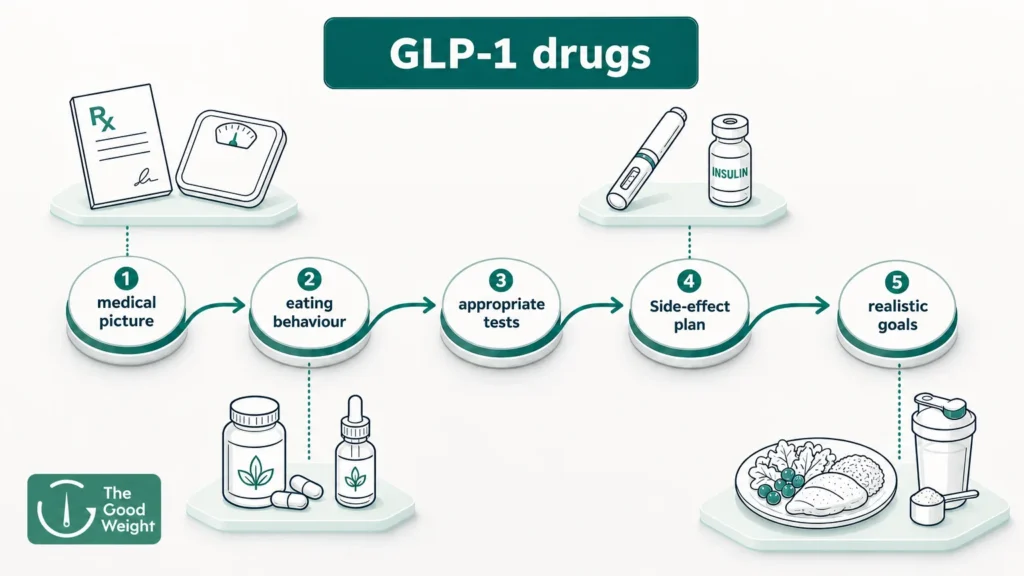
Step 1: Build a complete medical picture
The first step is a detailed history, including previous diagnoses, surgeries, allergies, family history, sleep, menstrual or reproductive history where relevant, mental wellbeing, and alcohol or tobacco use. Your clinician should document all current prescription medicines, over-the-counter products, vitamins, and supplements. This matters because treatment choices are rarely made in isolation.
A physical assessment may include weight, height, BMI, waist measurement, blood pressure, and an examination guided by symptoms and medical history. The aim is not to reduce your health to numbers. It is to identify risks that need attention and create meaningful measures of progress beyond the scale.
Step 2: Review eating behaviour and nutrition readiness
Because GLP-1 treatment can reduce appetite significantly, nutrition planning needs to begin before the first dose. A clinician or dietitian may ask what you eat on a typical workday and weekend, how often you rely on restaurant food, whether you skip breakfast, and whether nausea or reflux already limits food intake. This information helps create an eating pattern that is practical for your household, work hours, culture, and budget.
The goal is to avoid replacing frequent overeating with severe under-eating. Inadequate protein, fluids, fibre, vitamins, and minerals can leave a person fatigued and may contribute to loss of lean mass during weight loss. A personalized plan should make small, sustainable changes rather than impose an extreme diet that is difficult to maintain.
Step 3: Order appropriate tests and establish baselines
Laboratory testing is individualized, not a standard checklist that must be identical for everyone. Depending on your history, a doctor may assess blood glucose or HbA1c, lipid levels, liver function, kidney function, thyroid-related concerns when clinically indicated, and other tests needed to clarify symptoms or safely monitor treatment. Results may reveal conditions that need treatment alongside, or before, a GLP-1 medicine.
Baseline testing also makes follow-up more useful. If you have prediabetes, fatty liver risk, elevated triglycerides, or high blood pressure, the care team can track whether the plan is helping those concerns. Weight management becomes more valuable when it is connected to measurable improvements in metabolic health and day-to-day functioning.
Step 4: Make a side-effect and escalation plan
Nausea, vomiting, diarrhoea, constipation, abdominal discomfort, and reduced appetite are among the common effects associated with GLP-1-based treatment. Doses are generally increased gradually so the body has time to adjust, but tolerance differs from person to person. You should know whom to contact if symptoms are persistent, if you cannot keep fluids down, or if you develop concerning abdominal pain.
A safe plan includes advice on portions, hydration, eating slowly, avoiding very heavy meals when symptoms are active, and reviewing other medicines that may worsen stomach symptoms. It also includes clear limits: do not increase a dose because social media says it is “too low,” and do not continue through severe symptoms without medical advice. A slower dose progression or a different approach may be more appropriate than pushing through.
Step 5: Agree on realistic goals and review points
A good target is not necessarily a particular clothing size or a deadline-driven number. Discuss health goals such as improved blood sugar, less knee pain, better mobility, lower blood pressure, improved energy, or reduced sleep-apnoea symptoms. Then set a review schedule to assess weight trend, eating adequacy, side effects, mood, activity, and laboratory results where needed.
A treatment plan should also define what happens if results are limited. The answer may be to adjust nutrition support, address sleep, review adherence and dosing, reassess another medical condition, consider a different evidence-based option, or decide that medication is not the right fit. Thoughtful reassessment protects patients from staying on an ineffective plan without support.
Plan for the work beyond the prescription
Early weight loss can feel motivating, but the habits built during this phase are what make maintenance more achievable. Medication can reduce hunger, yet it cannot build a grocery routine, prepare balanced meals, preserve muscle, or arrange follow-up appointments for you. Those elements should be part of the plan from day one.
Create a simple meal structure
Many patients do well with regular, modest meals rather than long periods without food followed by a large dinner. Include a protein source at meals, such as eggs, dairy, pulses, tofu, fish, chicken, or other options appropriate to your preferences and medical needs. Add vegetables, fruit, whole grains or other carbohydrate sources in suitable portions, and enough fluids through the day.
The exact diet should be personalized, especially for people with diabetes, kidney disease, gastrointestinal conditions, or a vegetarian diet. The important principle is consistency and adequacy. A nutrition plan should be manageable during busy Chennai workdays, family meals, travel, festivals, and the occasional restaurant meal – not only during an ideal week at home.
Protect muscle with movement and protein
Weight loss includes some loss of lean tissue unless nutrition and activity are considered deliberately. Resistance training, strength-focused movement, or beginner body-weight exercises can help preserve muscle and improve function, while walking, cycling, swimming, or other aerobic activity supports cardiovascular health. Start at a level that respects current fitness, joint pain, and mobility rather than following an unrealistic workout plan.
Protein needs vary by body size, age, kidney function, activity, and overall diet, so a clinician or dietitian should personalize the target. What matters is that reduced appetite does not lead to a pattern of tea, coffee, and very small snacks with little nutritional value. Feeling less hungry is useful only if the food you do eat supports your health.
Treat follow-up as part of treatment
Regular reviews are where medication becomes comprehensive care. Follow-up visits allow the team to manage symptoms, assess nutrition, adjust treatment when appropriate, review glucose readings for people with diabetes, and respond to plateaus without panic. They also create space to discuss stress, sleep, travel, family pressures, and other real-life factors that affect eating.
This is particularly important because stopping GLP-1 treatment without a maintenance plan can lead to regain. In an extension of a semaglutide study, participants regained about two-thirds of their prior weight loss within one year of stopping treatment. That does not mean every person must stay on medication indefinitely, but it does mean that duration, tapering or stopping decisions, and post-treatment support should be discussed well before the prescription ends.
Common misunderstandings about GLP-1 treatment
| Common comparison | What the difference means in practice | ||
|---|---|---|---|
| GLP-1 treatment vs. crash dieting | Crash diets usually depend on rigid restriction and often fail to address hunger, nutritional adequacy, or regain. GLP-1 treatment aims to support appetite regulation, but it still requires sufficient food quality, protein, hydration, and clinical monitoring. | ||
| Medication vs. lifestyle-only efforts | Lifestyle support remains essential, but needing medication is not evidence of poor willpower. For some people, a medicine may reduce biological barriers enough to make nutrition, movement, and sleep changes more sustainable. | ||
| Obesity is often a chronic, relapsing condition, so the care plan should anticipate how weight and metabolic health will be supported after early progress. |
The comparison is not meant to suggest that everyone needs medication. Many people benefit from lifestyle-focused care alone, while others may need treatment for sleep, mental health, diabetes, nutrition, or a different medical issue before considering GLP-1 drugs. The right pathway depends on a careful assessment rather than the popularity of a medication online.
Be particularly cautious about products sold through informal channels, “research” websites, or unverified social-media sellers. Regulators have warned that unapproved GLP-1 products may be counterfeit, contain incorrect ingredients, or have quality problems. Self-prescribing can also mean missing contraindications, drug interactions, diabetes medication adjustments, and appropriate management of side effects.
Frequently asked questions
What side effects should I expect with GLP-1 drugs?
Digestive side effects such as nausea, constipation, diarrhoea, vomiting, or stomach discomfort are common, especially when starting or increasing a dose. They are often manageable with gradual dose escalation, meal adjustments, and hydration, but persistent or severe symptoms need medical advice. Seek prompt care for severe abdominal pain, repeated vomiting, signs of dehydration, or any symptom your clinician has specifically asked you to report.
Who should ask more questions before starting?
Anyone who is pregnant, breastfeeding, planning pregnancy, taking insulin or glucose-lowering medicine, or living with significant digestive disease should have a detailed discussion first. The same is true for people with a personal or family history relevant to the medication’s thyroid warning, a history of pancreatitis or gallbladder disease, or concerns about binge eating or restrictive eating. More screening does not automatically rule treatment out; it helps ensure that the decision is safe and informed.
Does medication replace behaviour change?
No. GLP-1 treatment can make behaviour change more achievable by reducing appetite and improving fullness, but it does not replace meal planning, protein intake, movement, sleep, or follow-up. The most durable approach combines evidence-based medication, when appropriate, with nutrition support and realistic routines that fit everyday life.
Why is self-prescribing based on social media risky?
Social-media advice cannot account for your blood tests, current prescriptions, pregnancy plans, family history, or symptoms. It may also encourage inappropriate dose changes, extreme restriction, or products that have not been obtained through a legitimate medical pathway. A doctor-led assessment provides the safeguards that a viral post cannot.
Choose readiness over hype
GLP-1 drugs can be an effective component of weight care, but they are not a shortcut and they are not right for every adult. The safest first step is to understand your weight history, metabolic risks, medication profile, nutrition needs, and realistic maintenance options before treatment begins.
At The Good Weight, a doctor-led assessment can help you review GLP-1 candidacy, potential risks, relevant testing, and the nutrition and follow-up support needed for sustainable weight loss. The aim is not to chase a rapid result, but to build a personalized plan that supports your long-term metabolic health.