
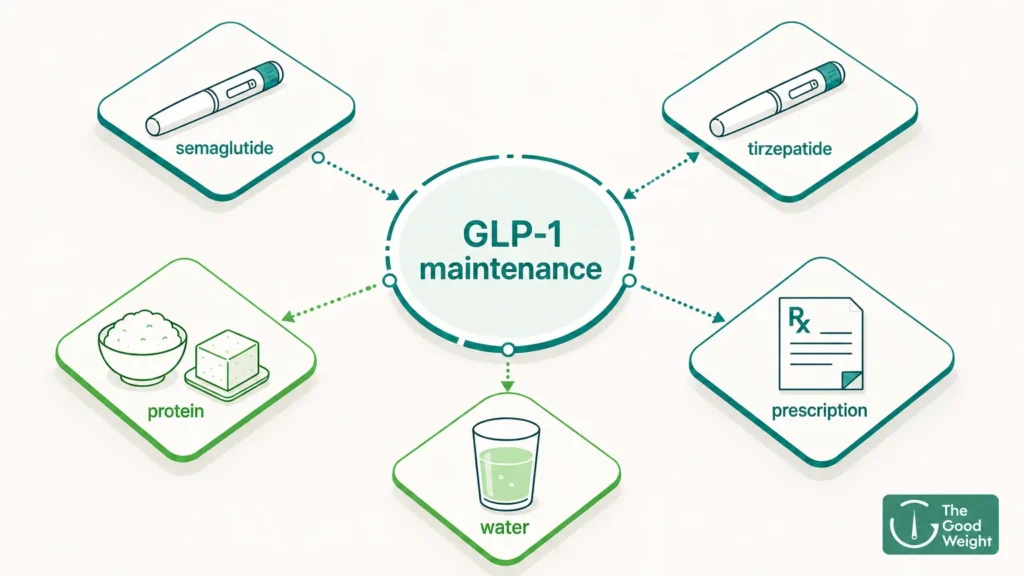
GLP-1 medicines can be a valuable part of doctor-led treatment for obesity and metabolic health, but medication is only one part of the plan. Before the first prescription, it is worth discussing what support will look like if your dose needs adjustment, treatment is paused, or the medicine is eventually stopped. That is the practical meaning of GLP-1 maintenance: protecting health, function, nutrition, and realistic routines – not simply trying to hold a number on the scale.
This conversation matters because obesity is a chronic, relapsing health condition for many people. Clinical evidence shows that weight regain can occur after GLP-1 treatment is withdrawn; in an extension of the STEP 1 trial, participants regained a substantial proportion of their previous weight loss during the year after semaglutide was stopped. Similarly, participants who discontinued tirzepatide in the SURMOUNT-4 trial regained weight on average, while those who continued treatment maintained and extended their progress. These findings do not mean that everyone must stay on medication indefinitely. They do show why a plan for ongoing care should begin before treatment changes, rather than after appetite, weight, or symptoms have already shifted.
A good maintenance plan is personalised. It considers your medical history, goals, food habits, strength and mobility, medication access, family responsibilities, and ability to attend follow-up appointments. At The Good Weight, sustainable weight care focuses on building these supports alongside evidence-based treatment – not treating maintenance as an afterthought.
Why maintenance planning starts before the first prescription
GLP-1 medicines affect appetite, fullness, and eating patterns, which can make it easier for some people to create a calorie deficit. However, the practical changes that support health during weight loss – adequate protein, regular meals, hydration, resistance exercise, sleep, and medical review – need attention from the beginning. Waiting until a dose reduction or treatment pause to establish these habits can make that transition more difficult.
It is also important to separate “maintenance” from “perfect weight stability.” Body weight naturally moves up and down with hydration, menstrual cycles, travel, illness, stress, food intake, and physical activity. A maintenance plan should therefore focus on patterns over time, as well as improvements in blood sugar, blood pressure, energy, sleep, mobility, and confidence in everyday routines.
For some people, continued medication may be appropriate as part of long-term obesity care. Professional guidance recognises that anti-obesity medications may need to be used over time when they remain effective, safe, and aligned with a person’s goals. For others, a clinician may recommend a different dose, a temporary pause, a switch in treatment, or a greater focus on nutrition and activity support. The right pathway depends on the individual – not on a one-size-fits-all timeline.
What a clinician should review before changing your plan
A change in GLP-1 treatment should be a clinical decision, not a response to a single week of scale movement or a social-media recommendation. Your clinician needs enough context to distinguish expected adjustment from a problem that requires a different approach. This review is especially important if you also have diabetes, high blood pressure, kidney disease, gallbladder concerns, reflux, or a history of eating difficulties.
Personalised treatment review checklist
Before increasing, reducing, pausing, stopping, or switching medication, a clinician may review:
-
Your health history and current diagnoses. This includes diabetes or prediabetes, cardiovascular risk, kidney and liver health, previous bariatric or endoscopic procedures, pregnancy plans, and any history relevant to medication safety. Appropriate diagnostic testing for metabolic health can help establish whether the treatment plan is improving more than weight alone.
-
Your treatment goals. Weight change may be one goal, but it should not be the only one. You may also be working toward better glucose control, less joint discomfort, improved stamina, improved sleep, or the ability to move more comfortably through daily life.
-
Side effects and eating tolerance. Nausea, constipation, vomiting, diarrhoea, reflux, reduced appetite, and food aversions can affect whether you are getting enough fluid, protein, and micronutrient-rich foods. Ongoing or severe symptoms should not simply be “pushed through” in the hope that they will settle.
-
Other medicines and supplements. Medication changes may be needed when weight, blood glucose, food intake, or kidney function changes. This is particularly important for people using glucose-lowering medicines that can cause hypoglycaemia, as well as medicines affected by dehydration or delayed stomach emptying.
-
Your usual eating pattern. A plan should account for vegetarian preferences, religious fasting, work shifts, travel, family meals, cooking access, and budget. The aim is not to prescribe an unrealistic menu; it is to identify reliable meals and snacks you can continue when appetite changes.
-
Access to follow-up and medication. Ask what happens if appointments are delayed, travel interrupts your routine, or medicine availability or cost changes. A sustainable plan includes a practical route back to your treating team before an unplanned stop becomes necessary.
This kind of review is central to medical weight-loss care, where medication decisions are paired with nutrition support, monitoring, and a realistic plan for longer-term health.
Support nutrition while appetite and treatment are changing
When appetite is lower, it can be tempting to eat very little or skip meals until hunger returns. Yet consistently under-eating may make it harder to meet protein, fluid, fibre, vitamin, and mineral needs. It can also leave you tired, constipated, light-headed, or more vulnerable to later overeating when appetite increases.
There is no universal “GLP-1 diet.” Your ideal food plan depends on your body size, medical conditions, dietary pattern, cultural preferences, activity level, and treatment stage. Still, a few practical principles are useful for many people: include a protein source at meals, drink fluids regularly, avoid relying on only one very small meal each day, and choose foods that are gentle and manageable if nausea is present.
A flexible example day of eating
This is an example of structure, not a prescription. A person who tolerates smaller portions might begin the day with idli and sambar plus curd, or vegetable oats with Greek yoghurt or paneer. The protein can come from eggs, dairy, soy, dals, chicken, fish, tofu, or other suitable foods, while the carbohydrate and vegetables provide energy and fibre.
At lunch, a balanced plate could include dal or grilled fish/chicken/paneer, vegetables, curd, and a modest serving of rice, millet, roti, or another preferred staple. If a full meal feels difficult, the same components can be divided: perhaps curd and fruit earlier, followed by a smaller rice-and-dal meal later. The goal is to make nutrition achievable without forcing large portions when you feel full quickly.
A planned afternoon option – such as buttermilk, unsweetened yoghurt, fruit with nuts, roasted chana, or a clinician-approved protein drink – can help prevent long gaps without nourishment. Dinner may be lighter but should still contain protein, such as vegetable soup with tofu or chicken, dal with vegetables, or a small portion of fish with sautéed vegetables. Sip water through the day, but discuss individual fluid goals with your clinician if you have heart, kidney, or other conditions that affect fluid intake.
If nausea is troublesome, smaller portions, slower eating, less oily food, and avoiding lying down immediately after meals may help some people. Persistent vomiting, inability to keep fluids down, or signs of dehydration are different: they need prompt clinical advice. Nutrition support should be adjusted to how you actually feel and eat, rather than judged against an idealised diet plan.
Protect muscle, mobility, and everyday function
Weight loss is not automatically the same as improved body composition or physical health. During weight loss, people can lose lean mass as well as fat mass, especially if protein intake is low, activity is limited, or weight loss is rapid. In a semaglutide trial, reductions in total body weight included reductions in fat mass and lean body mass, reinforcing why clinicians should look beyond the scale alone.
Scale-only goals versus health-and-function goals
| Scale-only approach | Health-and-function approach |
|---|---|
| Focuses mainly on kilograms lost each week | Considers weight alongside blood sugar, blood pressure, sleep, energy, and mobility |
| May encourage eating too little to keep the scale moving | Supports sufficient food quality, protein, hydration, and recovery |
| Treats exercise mainly as a way to burn calories | Uses movement to preserve strength, balance, confidence, and independence |
| Can make normal weight fluctuations feel like failure | Uses longer-term trends and practical measures of progress |
| May overlook weakness, fatigue, or reduced ability to do daily tasks | Notices whether climbing stairs, carrying groceries, sitting and standing, or walking feel easier |
Strength work does not have to mean a gym-based programme. It may begin with bodyweight sit-to-stands from a sturdy chair, wall push-ups, resistance bands, step-ups, or supervised machines. The best starting point depends on your joint health, fitness level, injuries, and confidence. A clinician or qualified exercise professional can help you choose safe progressions, particularly if you have significant knee pain, back pain, neuropathy, or heart disease.
Everyday function provides useful feedback during GLP-1 maintenance. Can you walk for longer without stopping? Is it easier to get up from the floor, carry bags, play with children, or complete a workday with less fatigue? These gains can remain meaningful even when the scale slows down, and they make a maintenance plan more resilient during periods of stress or medication change.
What ongoing medical follow-up should include
Planned follow-up creates space to address concerns early, before they become reasons to abandon treatment or self-adjust a dose. The frequency will vary, but appointments are commonly closer together during dose initiation or escalation and can become less frequent once a person is stable. If treatment is being reduced, paused, or stopped, a clinician may recommend a more deliberate review period to monitor appetite, food intake, weight trends, symptoms, and relevant metabolic markers.
A practical follow-up roadmap
At the start of treatment, discuss how you will report side effects, when you should expect to review dose tolerance, and which measurements matter for your health. In the next phase, review whether the medication is helping your intended outcomes and whether nutrition, hydration, bowel habits, mood, sleep, and activity are manageable. Do not assume that a higher dose is always the correct next step; effectiveness and tolerability both matter.
When considering maintenance or a treatment change, discuss what you will monitor at home and what counts as a reason to contact the clinic. This could include a sustained increase in hunger, rapid changes in weight, persistent gastrointestinal symptoms, low energy, difficulty meeting food or fluid needs, or challenges obtaining medication. The plan should also include how other medicines will be reviewed if your glucose readings, blood pressure, or food intake change.
Safety checklist: seek clinical advice promptly
GLP-1 medicines have medicine-specific safety information, and your own prescription instructions should take priority. Current prescribing information for some GLP-1-based weight-management medicines includes warnings about severe gastrointestinal effects, gallbladder disease, pancreatitis, dehydration-related kidney problems, and the risk of low blood sugar when used with certain diabetes medicines.
Contact your clinician promptly if you have persistent vomiting or diarrhoea, cannot keep fluids down, severe or ongoing abdominal pain, symptoms that could suggest low blood sugar, or a marked worsening of how you feel. Seek urgent medical care for severe abdominal pain that does not settle, especially if it may radiate to the back, or for symptoms of a serious allergic reaction. Do not restart, stop, double, or change a dose without advice from the clinician who knows your health history.
Questions to ask about costs and continuing care
Medication cost is only one part of a sustainable programme. Before starting, ask how long prescriptions last, whether follow-up visits are included, how laboratory tests are charged, and what nutrition or exercise support is available. Clear answers can reduce the risk of an abrupt treatment interruption caused by an avoidable practical issue.
Continuing-care questions checklist
Ask your clinic:
- What are the expected costs for consultation, medication, monitoring, and follow-up?
- How often will I need appointments during initiation, dose changes, and maintenance?
- Is nutrition counselling included, and can it be adapted to my household food, work schedule, and medical needs?
- Will I need blood tests or other assessments, and how often might they be repeated?
- What support is available if I experience side effects between appointments?
- What happens if medication is unavailable, unaffordable, or needs to be paused?
- If I choose to stop, what follow-up plan will help me manage appetite, nutrition, movement, and weight changes?
A comprehensive answer may include medical review, diagnostics, nutrition guidance, and practical meal support rather than a prescription alone. The purpose is not to make care complicated; it is to make sure your plan remains workable in real life.
Frequently asked questions about GLP-1 maintenance
Can I stop a GLP-1 medicine once I reach my goal weight?
Possibly, but this should be planned with your clinician rather than decided on your own. Research following GLP-1 withdrawal has found that weight regain is common, which is understandable because appetite regulation and the underlying drivers of obesity do not disappear simply because weight has changed. Your clinician can help you decide whether continuing, tapering, pausing, or shifting to another approach best fits your health, goals, side effects, and access to care.
Should I taper my dose before stopping?
There is not one tapering approach that suits every medicine or every person. The appropriate plan depends on the specific drug, your current dose, diabetes status, side effects, and the reason for stopping. Speak with your prescriber before making any dose changes so that they can advise on monitoring, other medications, and support for changes in appetite or food intake.
What if I need to pause treatment because of illness, travel, cost, or supply issues?
Contact your treating clinic as early as possible. A pause may require guidance on when and whether it is appropriate to restart, particularly after a longer interruption, and you may need a nutrition and follow-up plan in the meantime. Avoid using leftover medication, buying medicines from unverified sources, or resuming at a previous dose without clinical advice.
Can I switch from one GLP-1 medicine to another?
Sometimes a switch may be considered because of side effects, availability, cost, treatment response, or changes in health needs. However, medicines have different dosing schedules, approved uses, and safety considerations, so they are not interchangeable without medical supervision. A clinician should review your previous response, current medicines, and any gap between treatments before recommending a switch.
When should I contact my clinician instead of changing treatment myself?
Contact your clinician whenever side effects are persistent, you are struggling to eat or drink adequately, you are considering a dose change, or you are worried about weight regain. You should also reach out if you become pregnant or are planning pregnancy, start a new medicine, or develop a significant new health problem. Early contact is not a failure – it is part of safe, personalised weight care.
Build maintenance into your treatment plan from day one
GLP-1 maintenance is not about relying on willpower after medication changes. It is about creating a medically supervised plan that supports nutrition, strength, mobility, follow-up, and realistic responses to changes in appetite or weight. The best time to discuss that plan is before treatment begins, when you can make informed decisions without the pressure of an unexpected interruption.
If you are considering GLP-1 treatment, reassessing your current dose, or planning a pause, book a clinician-led consultation with The Good Weight. Our team can help you explore whether treatment is appropriate and build a follow-up plan around your health history, lifestyle, nutrition needs, and access to ongoing care.