
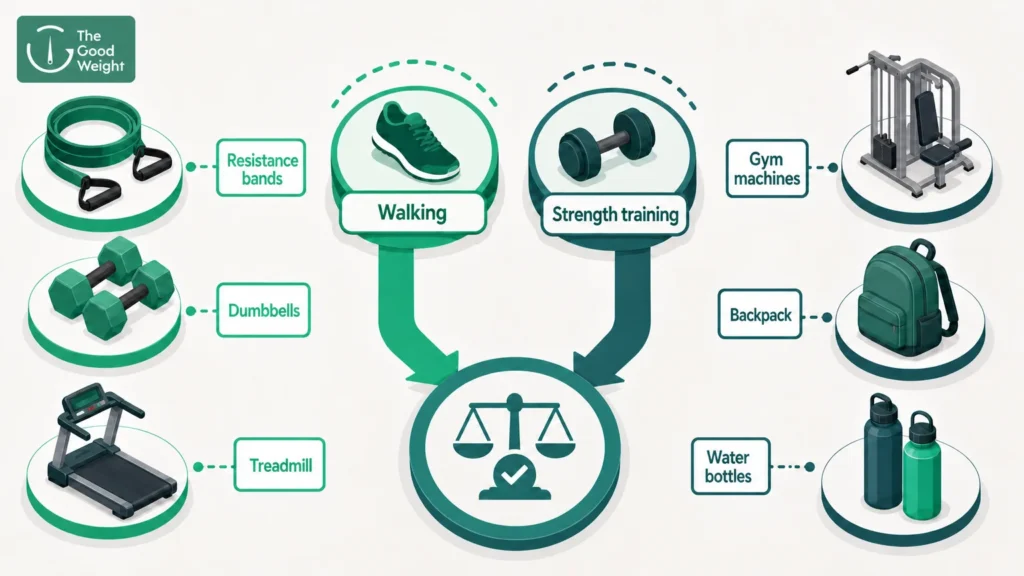
When people search for a fat-burning weight workout, they are often looking for one clear answer: should they walk more, start lifting weights, or do intense cardio every day? The honest answer is reassuringly simple: for most people, both walking and strength training work better together than either one alone.
Walking can make it easier to move consistently, manage stress, and increase daily activity without exhausting yourself. Strength training helps you retain or build muscle while losing weight, which matters for strength, function, body composition, and long-term metabolic health. The “best” workout is not the hardest one; it is the routine you can repeat alongside supportive nutrition, sleep, and appropriate medical care.
This guide explains how to choose a practical routine for fat loss in India, whether you exercise at home, in a park, or at a gym.
The metabolism myth: no single workout switches fat burning on
“Boosting metabolism” is often used as shorthand for losing fat faster. But metabolism is not a button that one workout can permanently switch on. Your total energy use across the day is influenced by many factors, including body size, muscle mass, movement, sleep, food intake, stress, health conditions, and medications.
Walking, cycling, dancing, and other cardio activities can increase calorie use while you are moving. A brisk walk may not feel dramatic, but repeated walks can add meaningful activity across a week, especially for someone who currently spends much of the day seated. This is one reason walking is often a strong starting point for sustainable weight loss.
Strength training has a different and equally valuable role. Resistance exercise challenges your muscles, helping preserve lean tissue during weight loss. Losing weight without protecting muscle can make daily tasks feel harder and may affect how your body composition changes, even if the weighing scale moves down.
Rather than chasing a “metabolism-boosting” workout, aim to build a routine that covers three needs:
- regular movement that you can maintain;
- resistance training that challenges major muscle groups; and
- recovery, nutrition support, and enough sleep to make the plan sustainable.
For general health, adults are advised to work toward 150 to 300 minutes of moderate-intensity activity each week, plus muscle-strengthening work on at least two days. That does not mean you need to begin at this level. If you are starting from zero, even short, regular sessions are a meaningful first step.
Walking for weight loss: where it helps most
Walking is not “too easy” to count. It is one of the most accessible forms of physical activity for people who are new to exercise, returning after a long break, managing joint discomfort, or balancing family and work commitments.
A brisk walk raises your breathing rate, but you should still be able to speak in short sentences. It can be done in a nearby park, on a terrace, around an office campus, in a mall during hot weather, or on a treadmill. Because it does not usually require special equipment or a recovery day, walking is also easier to repeat than many high-intensity plans.
Why walking supports sustainable fat loss
The main advantage of walking is consistency. A 30-minute walk done five days a week is often more useful than a difficult workout attempted once and then abandoned due to soreness, fatigue, or lack of time. Walking can also break up long periods of sitting, which is particularly relevant for desk workers and people who commute.
It is also a useful recovery tool. On days after strength training, an easy walk can help you stay active without adding too much physical stress. Over time, increasing your step count and walking pace can make your routine more challenging without requiring complicated exercise programming.
Walking alone may lead to weight loss when it helps create an overall energy deficit, especially alongside dietary changes. However, it does not provide the same muscle-strengthening stimulus as resistance training. That is why it works best as one part of a balanced fat-loss exercise plan.
Sample routine for a desk worker
For a desk worker in Chennai, Bengaluru, or another busy city, the goal may be to make movement fit around meetings rather than wait for a perfect one-hour workout.
| Day | Activity |
|---|---|
| Monday | 25-minute brisk walk before work or after dinner |
| Tuesday | Three 10-minute walks: after breakfast, lunch, and work |
| Wednesday | 30-minute brisk walk, including a few gentle uphill sections or stairs if comfortable |
| Thursday | 20-minute easy walk and light mobility |
| Friday | 25-minute brisk walk |
| Saturday | Longer 45- to 60-minute walk with family or friends |
| Sunday | Rest, gentle stretching, or an easy 15-minute walk |
This adds movement without requiring a gym membership. If 25 minutes feels too difficult initially, begin with 10 minutes and add five minutes every week or two. The pace should feel manageable enough that you can return tomorrow.
Sample routine for a beginner with low stamina
Low stamina is not a reason to avoid exercise; it is a reason to begin more gradually. A beginner may start with five to 10 minutes at a comfortable pace, ideally after a meal or at a time that feels realistic.
| Day | Activity |
|---|---|
| Monday | 10-minute easy walk |
| Tuesday | 10-minute walk plus five minutes of gentle mobility |
| Wednesday | Rest or a relaxed five- to 10-minute walk |
| Thursday | 12- to 15-minute easy walk |
| Friday | Rest |
| Saturday | 15-minute walk at a slightly brisker pace if comfortable |
| Sunday | Rest or light stretching |
After two to three weeks, the person can gradually increase one or two walks. The priority is not to “burn off” food through exercise. It is to build confidence, improve fitness, and establish a habit that can continue for months.
Strength training for weight loss: why it matters when the scale is slow
Strength training includes any exercise in which your muscles work against resistance. That resistance can come from dumbbells, resistance bands, gym machines, a backpack, water bottles, or your own body weight. It is not only for athletes or people trying to look muscular.
During weight loss, resistance training helps protect muscle and supports a healthier change in body composition. It can also improve practical strength for climbing stairs, carrying groceries, lifting children, and getting up from the floor or a chair. The scale may not change quickly every week, but your waist measurement, energy, strength, and clothing fit can still improve.
The American College of Sports Medicine notes that resistance training supports health and function across adulthood. For fat loss, this makes strength work especially helpful because the aim should be to lose excess fat while preserving the body’s ability to move well.
A simple full-body beginner structure
A practical strength session does not need 12 different exercises. Start with movement patterns that train the major muscle groups. Two sessions each week, with at least a day between them, is enough for many beginners.
A simple session can include:
- Squat: chair sit-to-stands, bodyweight squats, or goblet squats.
- Hinge: hip hinges, glute bridges, or a light Romanian deadlift.
- Push: wall push-ups, incline push-ups, chest presses, or overhead presses.
- Pull: resistance-band rows, dumbbell rows, or cable rows.
- Carry: holding two light weights or shopping bags and walking slowly with good posture.
Begin with one or two sets of eight to 12 controlled repetitions for each movement, using a resistance that feels challenging near the end while allowing good form. Carries can be done for 20 to 40 seconds. Rest between sets, move slowly, and stop if you feel sharp pain, dizziness, chest discomfort, or unusual breathlessness.
As you become more comfortable, progress gradually. You might add a few repetitions, increase the weight slightly, add another set, or choose a more difficult variation. A well-designed program does not need to leave you unable to walk the next day. The goal is steady progress, not punishment.
The best fat-burning weight workout: combine walking and strength training
For most adults trying to lose weight, the most effective routine is a repeatable combination: walk often, strength train two or three times each week, and include recovery. Walking increases total activity and supports fitness; strength training helps preserve muscle and improves your ability to keep moving as you lose weight.
This approach is usually more realistic than doing intense cardio every day. High-intensity workouts can be useful for some people, but they are not compulsory for fat loss. If they leave you overly hungry, exhausted, injured, or unable to stay consistent, they are not the right foundation for your current routine.
A seven-day routine for Indian lifestyles
Use this as a flexible template, not a rigid calendar. Shift sessions around prayer, work shifts, school schedules, travel, menstrual symptoms, or family responsibilities.
| Day | Plan |
|---|---|
| Monday | 25- to 40-minute brisk walk |
| Tuesday | Full-body strength session, 30 to 45 minutes |
| Wednesday | 20- to 30-minute easy walk plus mobility |
| Thursday | Full-body strength session, 30 to 45 minutes |
| Friday | 25- to 40-minute brisk walk |
| Saturday | Longer walk, recreational activity, or optional third strength session |
| Sunday | Rest, gentle stretching, or a relaxed walk |
A beginner can cut each walking session to 10 to 20 minutes and perform only one set of each strength exercise. A busy professional can use two 20-minute strength sessions and short walks after meals. A woman returning to exercise after pregnancy should receive clearance from her clinician when needed and may benefit from a gradual plan that considers pelvic-floor recovery, sleep disruption, and feeding responsibilities; The Good Weight’s guidance on post-pregnancy weight loss can help place exercise within a safer, broader care plan.
Make the plan work with your food routine
Exercise is important, but it cannot fully compensate for an eating pattern that leaves you constantly hungry, low in energy, or unable to recover. Fat loss generally requires an overall calorie deficit, but the deficit should be sustainable and should not come from severe restriction.
Include protein-rich foods across meals, such as dal, curd, paneer, eggs, fish, chicken, soy, tofu, beans, or lean meats according to your preferences and health needs. Protein supports fullness and muscle recovery, particularly when you are strength training. Fibre-rich vegetables, fruit, whole grains, and adequate fluids also make an active routine easier to maintain.
For a more individual approach, especially if you have diabetes, PCOS, thyroid concerns, high blood pressure, or repeated weight regain, explore diet and weight-loss support rather than relying on a generic online calorie target.
Common mistakes that make fat-loss workouts feel ineffective
Eating far too little
Aggressively cutting food while increasing exercise can lead to fatigue, cravings, poor training performance, and an all-or-nothing cycle. It may also make it harder to eat enough protein and key nutrients. A moderate, repeatable plan is generally more useful than alternating between strict dieting and overeating.
Doing only ab exercises for belly fat
Crunches, planks, and leg raises can strengthen your core, but they do not selectively melt fat from the stomach. In one study, six weeks of abdominal exercise alone did not reduce abdominal fat. Core work can be part of your routine, but overall fat loss depends on your total activity, nutrition, sleep, and health context.
Skipping protein and strength work
If your plan is only cardio plus very low-calorie eating, you may lose weight without adequately supporting muscle. Strength training and regular protein intake give your body a better foundation for maintaining strength while reducing fat. You do not need perfection at every meal; consistency across the week matters more.
Treating sleep as optional
Poor sleep can make appetite regulation, recovery, and motivation more difficult. A workout plan that requires a 5 a.m. gym session may not be sustainable for someone sleeping five hours because of shift work, caregiving, or stress. Choose an exercise time that fits your life and protect sleep wherever possible.
Changing the plan every week
Your body needs time to adapt. Switching workouts constantly can make it difficult to track progress or build strength. Follow a simple plan for four to six weeks, then assess walking consistency, strength improvements, waist measurements, energy levels, and how your clothes fit – not just day-to-day scale changes.
Quick answers before you start
Is walking enough for weight loss?
Walking can be enough to support weight loss if it helps you become more active and is combined with an appropriate eating pattern. It is an excellent place to begin, particularly if you are sedentary or have low stamina. Adding strength training later can improve the overall plan by supporting muscle retention and function.
Do I need a gym?
No. You can walk outdoors and perform strength exercises at home using a chair, resistance band, backpack, or dumbbells. A gym can offer useful equipment and structure, but it is not a requirement for progress. The best option is the one you can access consistently and perform safely.
How long before I notice changes?
Some people notice better energy, improved walking pace, or increased strength within a few weeks. Changes in body weight and measurements can take longer and will vary with nutrition, sleep, health conditions, and starting point. Focus on trends over several weeks rather than judging a plan by a few days on the scale.
What if I only have 20 minutes?
Twenty minutes is enough to build a useful habit. You could take a brisk 20-minute walk, complete one circuit of squats, rows, presses, hinges, and carries, or divide the time into two 10-minute walks. Short sessions count, particularly when repeated consistently.
Build a plan you can keep
Walking is excellent for daily movement, fitness, and consistency. Strength training is valuable for preserving muscle, improving function, and changing body composition during weight loss. For most people, the strongest fat-burning weight workout is not walking or lifting – it is a realistic blend of both, supported by enough food quality, protein, sleep, and recovery.
If weight loss has felt unusually difficult, or if you are managing obesity, diabetes risk, PCOS, medication-related weight changes, or recurring weight regain, you do not have to work it out alone. Book a doctor-led weight consultation with The Good Weight for a personalized plan that brings together nutrition support, activity guidance, metabolic health assessment, and evidence-based medical treatment when appropriate.