
A search for stomach fat removal cost can quickly produce advertisements with very different prices, promises, and treatment names. That can be confusing – especially when one clinic appears to offer a single-session solution while another recommends medical assessment, multiple visits, nutrition support, or surgery. A price alone cannot tell you whether a treatment is appropriate for your body, health status, or goals.
The more useful question is not simply, “What is the cheapest way to reduce stomach fat?” It is, “Which type of treatment am I considering, what care does it require, and what does the quoted amount actually include?” This guide explains how to compare abdominal-fat treatment costs in India responsibly, with safety, realistic outcomes, and long-term metabolic health in mind.
Why stomach-fat treatment quotes can vary so widely
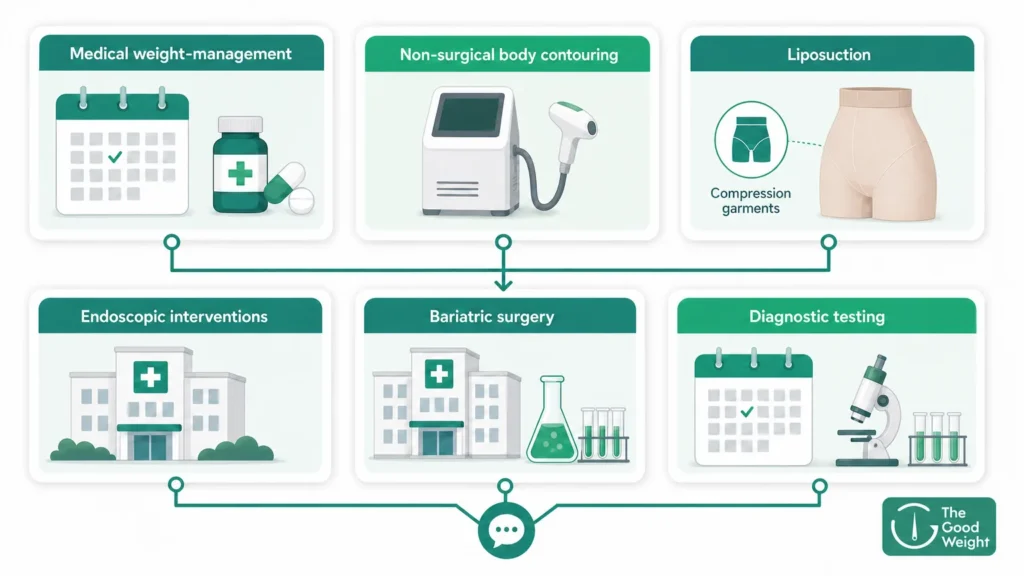
A broad range in stomach fat removal cost is normal because “fat removal” is not one standard medical service. It may refer to doctor-led weight management, a non-surgical contouring treatment, liposuction, an endoscopic weight-loss procedure, or bariatric surgery. These options have different purposes, eligibility criteria, clinical settings, recovery needs, and follow-up requirements.
For example, a non-invasive body-contouring session is not directly comparable with liposuction performed in an accredited surgical facility. The American Society of Plastic Surgeons notes that the average fee for liposuction does not include anaesthesia, operating-room facilities, or related expenses. In other words, an advertised procedure fee may be only one part of the total treatment cost.
A lower quote may reflect a smaller treatment area, fewer planned sessions, limited follow-up, a different device, or the absence of certain clinical services. A higher quote may include specialist assessment, laboratory testing, facility charges, anaesthesia, compression garments, medications, recovery monitoring, or scheduled reviews. Neither a low nor high figure automatically represents good or poor care; what matters is whether the estimate matches a suitable treatment plan.
This is particularly important in India, where costs can vary by city, clinician expertise, hospital or clinic infrastructure, device technology, and whether the procedure is performed as an outpatient service or requires a surgical setting. Rather than treating a promotional price as your final cost, use it as a prompt to ask what is included and whether the treatment category fits your health needs.
The treatment categories people compare when searching for stomach-fat removal
People often use the same search term for treatments that solve very different problems. Some approaches focus on overall weight and metabolic health, while others aim to improve the contour of a localised area. Surgical procedures may remove or reduce fat more directly, but they also involve a different level of preparation, recovery, and risk.
| Treatment category | What it may involve | Main consideration when comparing costs | Important limitation |
|---|---|---|---|
| Lifestyle and medical weight-management support | Nutrition planning, activity guidance, diagnostic evaluation, behaviour support, and doctor-led medicines where appropriate | Costs may be ongoing because care is personalised and may include consultations, tests, medication, and follow-up | It is not a one-time local fat-removal procedure |
| Non-surgical body contouring | Device-based treatments that may use cooling, heat, radiofrequency, ultrasound, or laser-based technologies | Quotes may be per session, per area, or for a treatment package | It is generally designed for contouring, not a substitute for comprehensive obesity care |
| Surgical or procedural options | Liposuction, abdominal contouring procedures, endoscopic interventions, or bariatric surgery where clinically appropriate | Estimates can include clinician, facility, anaesthesia, garments, medications, and recovery care | Recovery, eligibility, and complication planning are more substantial considerations |
Lifestyle and medical weight-management support
When abdominal fat is part of broader weight gain, insulin resistance, diabetes risk, high blood pressure, sleep concerns, or other metabolic-health issues, a doctor-led weight-management plan may be more relevant than a local contouring procedure. This can include medical evaluation, nutrition support, structured lifestyle changes, and medication when clinically indicated. The cost is often based on the duration and intensity of support rather than on a single procedure date.
At The Good Weight, medical weight-loss support is considered within a personalised care plan rather than as a generic solution for every patient. A clinician may recommend diagnostic testing, nutrition guidance, medication review, or referral for another intervention based on your history and goals. This approach can help distinguish a desire for a smaller waistline from a health concern that needs comprehensive management.
Non-surgical body contouring
Non-surgical body-contouring technologies may be marketed under terms such as fat freezing, radiofrequency reduction, ultrasound contouring, or laser lipolysis. The FDA explains that non-invasive body-contouring technologies are intended to alter the appearance of specific areas, and they should not be presented as a treatment for obesity or as a replacement for weight loss.
This distinction matters when comparing a laser stomach fat removal cost with the price of medical weight care or surgery. Laser-based and other non-surgical options may be considered for selected people with localised concerns, but the number of areas and sessions can affect the final estimate. The American Society of Plastic Surgeons also notes that non-surgical fat-reduction pricing varies with the treatment area and the number of sessions needed.
For someone whose main concern is a resistant pocket of fat after stable weight loss, body contouring may be worth discussing. For someone experiencing continued weight gain or health complications associated with obesity, a local procedure alone may not address the underlying issue. A qualified assessment should clarify that difference before a package is purchased.
Surgical and endoscopic options
Liposuction and other surgical options are different from non-invasive contouring because they require procedural planning, clinical monitoring, and recovery support. In some cases, a person may also be evaluating endoscopic or bariatric procedures because they are seeking meaningful weight reduction rather than a local cosmetic change. These are not interchangeable choices, even when the initial concern is abdominal fat.
For people who may benefit from a more comprehensive intervention, it can be helpful to understand the distinction between endoscopic weight-loss procedures and bariatric surgery. Suitability depends on medical history, body weight, metabolic risk, previous treatments, and personal readiness for long-term follow-up. A clinician should never recommend a procedure based only on a photograph, waist measurement, or an advertised discount.
What should be assessed before discussing a price
A responsible conversation about stomach fat removal cost starts with an assessment. This protects patients from paying for an intervention that is poorly matched to their anatomy, health status, or expectations. It also gives the clinical team enough information to explain whether more than one treatment stage or type of support may be needed.
A thorough consultation should usually consider the following points:
-
Medical history and current health: The clinician should ask about medical conditions, previous operations, allergies, current medicines, pregnancy status where relevant, smoking, and factors that may affect healing or anaesthesia safety. These details can influence whether a procedure is suitable and where it should be performed.
-
Weight pattern and metabolic health: Your recent weight changes, dietary history, activity level, sleep, and metabolic concerns can help determine whether a local treatment is likely to meet your goal. Where appropriate, clinicians may recommend diagnostic tests that inform personalised weight care before finalising a plan.
-
Body composition and treatment area: A consultation should clarify whether the concern is primarily subcutaneous fat, overall weight, loose skin, muscle separation, or a combination of these. A procedure that reduces a local fat pocket will not necessarily improve skin laxity or alter the causes of weight gain.
-
Skin quality and laxity: The elasticity of the skin may affect how the abdomen looks after fat reduction. This is one reason two people seeking treatment for the same area may receive different recommendations and estimates.
-
Previous procedures and scarring: Prior liposuction, abdominal surgery, hernia repair, or body-contouring treatment can influence planning. It may change the complexity of a procedure or indicate that another specialist opinion is needed.
-
Goals, expectations, and contraindications: A clinician should ask what result you hope to see, what recovery time you can manage, and whether you understand the limits of the intervention. They should also explain when a procedure is not advisable or when a non-procedural approach should come first.
A good assessment is not an unnecessary add-on. It is part of safer, evidence-based care and can prevent you from comparing prices for treatments that should not be compared in the first place.
What a transparent estimate should include
A written estimate should be clear enough for you to understand both the planned treatment and the services surrounding it. Ask for an itemised explanation rather than assuming that “all-inclusive” means every likely cost has been covered. If the treatment plan changes after assessment, the clinician should explain why and obtain your agreement before proceeding.
Use this checklist when reviewing a quote:
-
Consultation and treatment planning: Confirm whether the initial clinical evaluation, measurements, photography where relevant, and follow-up planning are included. Some practices separate the consultation cost from the procedure fee, while others credit it toward treatment.
-
Tests and medical clearance: Ask whether blood tests, imaging, physician clearance, or pre-anaesthesia review may be required. These are more relevant for some procedures than others, but they should not be treated as unexpected extras.
-
Clinician, device, and facility fees: Clarify who will perform the procedure, whether a qualified clinician supervises the treatment, and whether facility charges are separate. For surgery, this may include operating-room or hospital charges that are not part of the surgeon’s professional fee.
-
Sessions and treatment areas: For non-surgical contouring, ask exactly how many sessions and which areas are covered. A low package price may apply to one small area, whereas your treatment plan may involve the upper abdomen, lower abdomen, flanks, or repeat visits.
-
Anaesthesia, garments, and medicines: Surgical estimates may include local or general anaesthesia, compression garments, pain medication, antibiotics when prescribed, and dressing supplies. Ask whether these are included and whether there are circumstances in which additional costs could arise.
-
Aftercare and follow-up: Confirm the number of scheduled reviews, who will monitor recovery, and whether the clinic provides access to support if you have concerns after treatment. Follow-up is especially important when swelling, discomfort, wound care, or recovery restrictions are part of the process.
How to compare cost, value, and safety
The lowest quote may appear attractive, but it can be difficult to judge without comparing the scope of care. An informed decision considers the clinician’s qualifications, the appropriateness of the recommendation, and the support available if recovery does not follow the expected course. This is not about paying the highest price; it is about understanding what you are receiving and what is excluded.
| Comparison point | Questions to ask | Why it matters |
|---|---|---|
| Provider qualifications | Who performs the treatment, and what training and experience do they have with this procedure? | Appropriate expertise supports safer planning, informed consent, and realistic expectations |
| Treatment suitability | Why is this option recommended for me instead of medical weight care, another procedure, or no procedure? | A treatment should match your anatomy, health, and goals – not simply what is being promoted |
| Informed consent | What benefits are realistic, what are the limitations, and what risks should I understand? | You need time and information to make a voluntary, informed choice |
| Facility and emergency support | Where will treatment be performed, and who do I contact if I have urgent concerns? | Recovery planning and escalation pathways are part of responsible care |
| Total cost | Which fees are included, which are excluded, and what might cause the total to change? | A transparent estimate prevents misleading comparisons |
| Maintenance plan | What should I do before and after treatment to support a stable result? | Procedures do not remove the need for nutrition, activity, and ongoing health management |
Informed consent should include discussion of risks, alternatives, expected recovery, and the possibility that results may be less dramatic than online images suggest. The FDA advises consumers to understand the risks and limitations of non-invasive body-contouring devices before treatment. For surgical procedures, ask how your clinician manages complications, who provides after-hours support, and whether hospital admission could be needed in unusual circumstances.
Be cautious if a provider guarantees a particular centimetre loss, pressures you to pay immediately, or dismisses questions about recovery and risks. A reputable clinic should be comfortable giving you time to consider alternatives. It should also explain why a recommended procedure may not be the right first step for you.
What stomach-fat procedures cannot solve on their own
Can a local fat-reduction procedure treat obesity?
No. Local procedures and non-invasive contouring can have a role for selected patients, but they do not replace treatment for obesity or the health conditions that may accompany it. The FDA specifically states that body-contouring devices are not intended for weight loss or obesity treatment.
If your priority is sustainable weight loss, improved metabolic markers, or managing conditions such as diabetes risk, discuss a comprehensive doctor-led plan. This may involve nutrition support, physical-activity planning, medication where appropriate, and long-term follow-up. The most appropriate option depends on your individual clinical assessment.
Will a procedure prevent future weight gain?
No procedure can guarantee that body weight or fat distribution will remain unchanged indefinitely. Weight can change because of eating patterns, activity levels, sleep, stress, medication, hormonal factors, and health conditions. Maintaining results usually requires realistic lifestyle support and regular attention to metabolic health.
This does not mean that a procedure has no value. It means that its value should be assessed in the context of a maintenance plan, not as a stand-alone answer to every body-weight concern. Your clinician should explain what habits, reviews, or nutrition support may be useful after treatment.
Can fat reduction correct loose abdominal skin?
Not necessarily. Reducing fat and improving skin tightness are different treatment goals. Depending on skin elasticity, age, weight history, pregnancy history, and the amount of tissue involved, a person may be left with some looseness even after fat reduction.
A clinician should discuss this before treatment, particularly if your expectations are based on edited online images or results from someone with a different body type. Knowing the limitation in advance is more helpful than receiving a lower quote for a treatment unlikely to deliver the outcome you expect.
Questions to take to your consultation
Save or print this checklist before you commit to a procedure or package:
-
What is causing my abdominal concern: localised fat, overall weight gain, loose skin, or a combination?
-
Am I a suitable candidate for this treatment now, and why?
-
What non-procedural, non-surgical, or surgical alternatives should I consider?
-
What result is realistic for my body, and when should I expect to see it?
-
How many sessions, treatment areas, or procedure stages might I need?
-
Does the estimate include consultation, tests, clinician fees, facility charges, anaesthesia, garments, medicines, and follow-up?
-
Which costs are excluded, and what could increase the final cost?
-
What recovery time, activity restrictions, and aftercare will I need?
-
What are the common and serious risks, and how are complications managed?
-
Who will perform the treatment, who will provide follow-up, and whom do I contact if I have concerns after hours?
-
How will this treatment fit into a longer-term nutrition, activity, and weight-maintenance plan?
-
Can I take the written plan and estimate home before deciding?
Make the cost conversation part of good care
The right stomach fat removal cost is not the lowest number in an advertisement. It is a transparent estimate for an intervention that is clinically appropriate, delivered with suitable safety standards, and supported by proper follow-up. Before comparing packages, make sure you are comparing the same treatment category, the same scope of care, and the same level of clinical accountability.
At The Good Weight, our focus is doctor-led, personalised weight care that considers your goals alongside your metabolic health and long-term wellbeing. Arrange an assessment with The Good Weight to discuss suitable treatment alternatives, expected recovery, ongoing nutrition support, and a transparent care plan before committing to a procedure.