
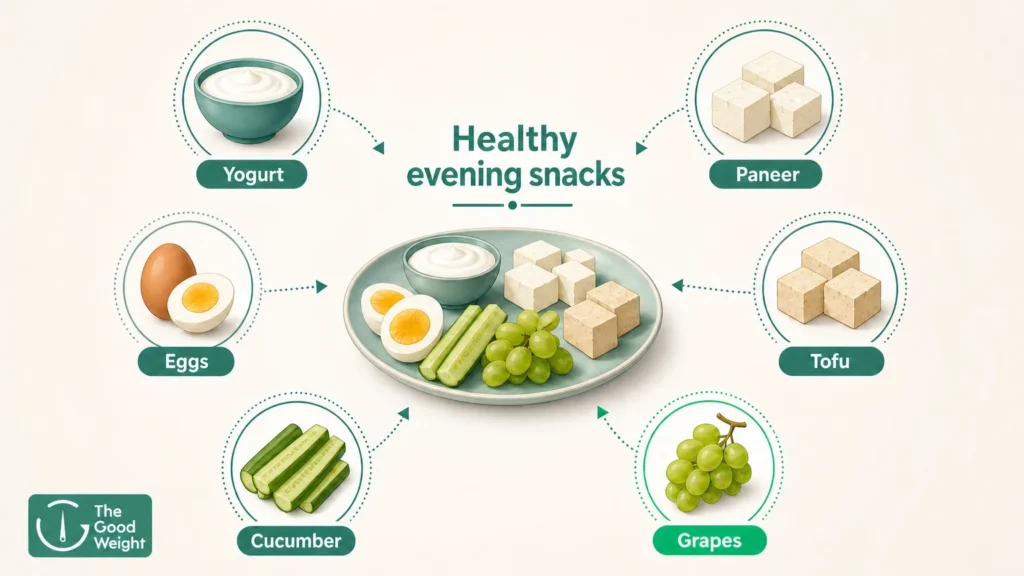
By 5 or 6 p.m., many busy adults are not simply “peckish.” They are genuinely hungry, tired from a long day, and faced with a dinner that may still be an hour or more away. In that situation, trying to avoid food altogether can make it harder – not easier – to make satisfying choices at dinner.
Planned healthy evening snacks can support weight management when they prevent the intense hunger that leads to rushed eating, oversized portions, or repeated grazing while preparing a meal. The goal is not to eat as little as possible. It is to choose a snack with enough protein, fibre, and satisfaction to comfortably bridge the gap to dinner while fitting your overall meal pattern.
For people pursuing sustainable weight loss, a snack is not a “failure” or a lack of willpower. It can be a practical part of a routine that respects appetite, work demands, movement, sleep, and metabolic health.
An evening snack can be part of balanced weight management
Snacking becomes unhelpful when it is automatic, distracted, or used to push away hunger for hours without considering what the body needs. But a deliberate snack is different. If lunch was light, work has run late, or dinner will be delayed, a balanced snack can help you arrive at the table with manageable hunger rather than feeling compelled to eat quickly.
The CDC encourages people to plan meals and snacks and to make nutritious options easier to reach when hunger strikes. This approach can make it simpler to include foods such as fruits, vegetables, whole grains, and protein-rich options in meals and snacks. A planned snack is also often more satisfying than trying to “save calories” all afternoon, only to feel ravenous in the evening.
Healthy evening snacks for weight loss do not need to be very low in calories or perfectly measured every time. What matters more is whether the choice is filling, enjoyable, and appropriate for the time until your next meal. Someone eating dinner in 45 minutes may need less than someone facing a two-hour commute and a late meal at home.
Why late-day hunger can feel so intense
Evening hunger is often the predictable result of how the day has unfolded. It is useful to look for patterns rather than blaming yourself for feeling hungry. The following checklist can help identify the most likely cause.
You skipped breakfast or had a very small lunch
When eating is delayed for much of the day, hunger can build until it feels urgent by late afternoon. A coffee-only breakfast, a rushed lunch, or an overly restrictive eating plan may leave little energy available for a demanding workday. By evening, the body is asking for fuel – not necessarily for a particular “bad” food.
Instead of responding by cutting back further the next day, consider whether earlier meals need more structure. A regular lunch with a protein source, vegetables or fruit, and a satisfying carbohydrate may reduce the need for emergency snacking later. Balanced nutrition support for weight loss can help make these adjustments without relying on restrictive rules.
Your lunch did not contain enough protein or fibre
A lunch based mainly on refined carbohydrates, such as a small bakery item, white bread sandwich, or sweetened drink, may be convenient but may not keep you full for long. Protein-containing foods and fibre-rich plant foods tend to add staying power because they contribute to fullness and make a meal feel more substantial.
This does not mean carbohydrates are the problem. Whole grains, beans, fruit, and starchy vegetables can all be useful components of a satisfying meal or snack. The more helpful question is whether lunch had enough variety and volume to support your afternoon, rather than whether it was “light” enough.
Long workdays and decision fatigue are catching up with you
After meetings, commuting, caregiving, or a workout, it is harder to make a thoughtful food decision. You may be physically hungry, mentally tired, or both. When the only nearby choice is chips, biscuits, or takeaway food, convenience understandably wins.
Planning removes some of this pressure. Keeping two reliable snacks at work, in a bag, or at home means you do not have to make a nutrition decision at your hungriest point of the day. The MyPlate guidance on healthy snacking similarly recommends combining food groups and preparing convenient options ahead of time.
Poor sleep may be amplifying appetite
A short or disrupted night can make the next day’s hunger feel harder to regulate, particularly later in the day when energy and concentration are low. Research has linked insufficient sleep with changes in appetite regulation and obesity risk. Sleep is not the only explanation for hunger, but it is an important part of the bigger picture.
If late-day cravings regularly follow poor sleep, focus on the basics first: a consistent wake time, a more regular eating rhythm, and a planned snack before hunger becomes extreme. This is more realistic than expecting yourself to make perfect food choices when exhausted.
You may be thirsty, but do not use water to ignore hunger
Dehydration can cause fatigue, dry mouth, and a general sense that something is missing. Drinking water, unsweetened tea, or buttermilk may be useful alongside a snack, especially after a hot commute or exercise. However, water is not a substitute for food when you have gone many hours without eating.
Try having a drink and then choosing a balanced snack if you are still hungry. The aim is to respond calmly to your body’s needs, not to suppress them until dinner.
Use a simple formula for filling snacks
The most dependable healthy evening snacks include more than one food group. A useful formula is: protein + fibre-rich produce + satisfying carbohydrate or fat. You do not need every element in a large quantity; the combination matters because it is more likely to feel complete than a single handful of dry snacks.
Start with a protein anchor
Choose one option that you enjoy and can prepare easily: plain curd or Greek yogurt, paneer, tofu, roasted chana, eggs, fish, chicken, milk, or unsweetened soy milk. Protein can make a snack more substantial, particularly when it is paired with other foods rather than eaten in isolation.
The appropriate amount depends on your appetite, medical needs, and how long it will be until dinner. If you are using an appetite-affecting medication, recovering after a procedure, or managing a health condition, your tolerance and portion needs may differ. A personalized plan is often more useful than copying a snack routine from social media.
Add colour and fibre
Fruit, cut vegetables, sprouts, roasted vegetables, or a small bowl of chaat-style salad can add crunch, flavour, and volume. Fibre-rich foods are also part of dietary patterns associated with better overall health; the Dietary Guidelines scientific review emphasizes dietary patterns rich in vegetables, fruits, legumes, and whole grains.
Keep preparation realistic. Washed grapes, an apple, a guava, cucumber sticks, cherry tomatoes, or leftover cooked vegetables are all valid choices. The best option is one you will actually have available when the afternoon becomes busy.
Include a satisfying finishing element
A small portion of whole-grain crackers, oats, poha, a slice of whole-grain toast, nuts, seeds, or avocado can make the snack feel more complete. These foods are not “extras” to fear; they can improve satisfaction and reduce the sense that you need to keep searching for something else to eat.
Use hunger and timing as your guide. If dinner is in 30 to 60 minutes, fruit and yogurt may be enough. If dinner is closer to two hours away, adding toast, roasted chana, or a small portion of leftovers may help the snack last longer.
Everyday snack ideas that are quick and satisfying
The following options are adaptable rather than prescriptive. Adjust portions for your hunger, planned dinner, activity level, and health needs.
-
Curd with fruit, nuts, and cinnamon: Combine plain curd with chopped apple, berries, banana, or guava, then add a spoonful of nuts or seeds. Keep individual containers of curd at work or use a small insulated lunch bag if refrigeration is limited. This works well when you want something cool and mildly sweet without relying on a dessert-like packaged snack.
-
Roasted chana with fruit: Pair roasted chana with an orange, apple, or pear. It is portable, shelf-stable, and easy to keep in a desk drawer or handbag. This is especially useful for commuters because it offers more substance than a packet of biscuits without requiring cooking.
-
Paneer or tofu vegetable wrap: Fill a whole-wheat roti with leftover paneer bhurji or tofu, cucumber, tomato, and mint chutney. Make one the night before, or prepare the filling in a larger batch for two or three days. If dinner will be late, this can function as a mini-meal rather than a small snack.
-
Eggs with vegetables and toast: Two boiled eggs with cucumber, tomato, and a slice of whole-grain toast are simple, portable, and filling. Boil eggs in advance and store them in the refrigerator for a few days. For a non-vegetarian alternative, use leftover grilled chicken or fish with salad vegetables in the same format.
-
Hummus, vegetables, and crackers: Use hummus with carrot, cucumber, capsicum, or whole-grain crackers. Store-bought hummus can be a helpful shortcut, but check whether it suits your sodium needs if you have been advised to limit salt. Adding vegetables makes the snack more satisfying than crackers alone.
-
Sprouts or kala chana chaat: Toss cooked sprouts or kala chana with onion, tomato, coriander, lemon, and a small amount of chaat masala. Prepare the legumes in advance or use ready-cooked versions when time is short. This option offers texture and flavour, which can matter just as much as calorie content when you want to avoid feeling deprived.
Plan for an unpredictable evening
A flexible snack plan is more useful than one that works only on quiet days. Think of your evening snack as an “if-then” decision: if dinner is delayed, then you already know what you will eat and when.
Commuting home
If you often leave work hungry and face a long commute, eat a planned snack before you leave rather than waiting until you reach home. For example, keep roasted chana and fruit in your bag, or eat curd with fruit at the office around 5 p.m. This can prevent arriving home so hungry that cooking feels impossible and takeaway becomes the only realistic option.
Office days
Keep two non-perishable options in your workspace, such as nuts in pre-portioned containers and roasted chana or whole-grain crackers. Add fresh fruit from home or a nearby shop. A reliable backup matters on days when meetings run through lunch or colleagues bring in foods that do not match your hunger or health needs.
After a workout
Following exercise, a snack with protein and carbohydrates can be practical if dinner is not soon. Milk or soy milk with a banana, curd with fruit, or eggs with toast are straightforward options. If you are training intensely, managing diabetes, or using medication that affects appetite or glucose, speak with your healthcare team about timing and portions.
Social plans or a late dinner reservation
Avoid “saving up” all day for a restaurant meal. Have a modest, balanced snack such as fruit with yogurt or a small paneer wrap before leaving. You can still enjoy dinner with others, but you are more likely to choose based on preference and fullness rather than urgency.
Very late dinners at home
When dinner will be late, make the evening snack a small meal instead of trying to hold out. A bowl of dal with vegetables, a tofu wrap, or eggs with toast can be appropriate. You may then need a lighter dinner later, guided by hunger rather than the expectation of a full second meal.
Frequently asked questions about evening snacking
Are packaged snacks always a poor choice?
No. Packaged options can be useful when they are the practical choice, especially during travel or long office days. Look for options that include protein or fibre, such as unsweetened yogurt, roasted chickpeas, nuts, milk, or whole-grain crackers, and pair them with fruit when possible. The key is not perfection; it is having a dependable option before hunger becomes overwhelming.
What if I crave something sweet in the evening?
A sweet craving does not mean you have done anything wrong. Try choosing something that includes sweetness and substance, such as fruit with curd, a banana with peanut butter, or a small portion of dark chocolate after a protein-rich snack. If sweet cravings are frequent and intense, review whether you are under-eating earlier in the day or going too long between meals.
How do I know the right portion?
Start with the time until dinner and your current hunger. Serve the snack in a bowl, plate, or container rather than eating from a large packet, then pause for 10 to 15 minutes before deciding whether you need more. Regularly feeling extremely hungry despite snacks may signal that earlier meals, sleep, activity, or treatment needs require attention.
When should I get individual nutrition guidance?
Individual guidance is particularly helpful if you have diabetes, prediabetes, kidney disease, food allergies, digestive symptoms, or a history of disordered eating. It is also important if you take insulin, sulfonylureas, GLP-1 medicines, or other treatments that can affect appetite or blood glucose. Doctor-led, personalized weight care can help align your food routine with your medical history, diagnostic results, and sustainable health goals; learn more about a weight-loss doctor consultation if you need tailored support.
Make your next evening easier
A planned evening snack is not an obstacle to progress. It can be a simple tool for arriving at dinner calmer, more comfortable, and better able to respond to hunger without guilt or extreme restriction.
Before the next workweek, choose two snack options you genuinely enjoy – one shelf-stable option for your bag or desk and one fresh option for home. If late-day hunger is persistent or complicated by metabolic concerns, The Good Weight can help you design a meal rhythm that fits your appetite, routine, and health needs.