
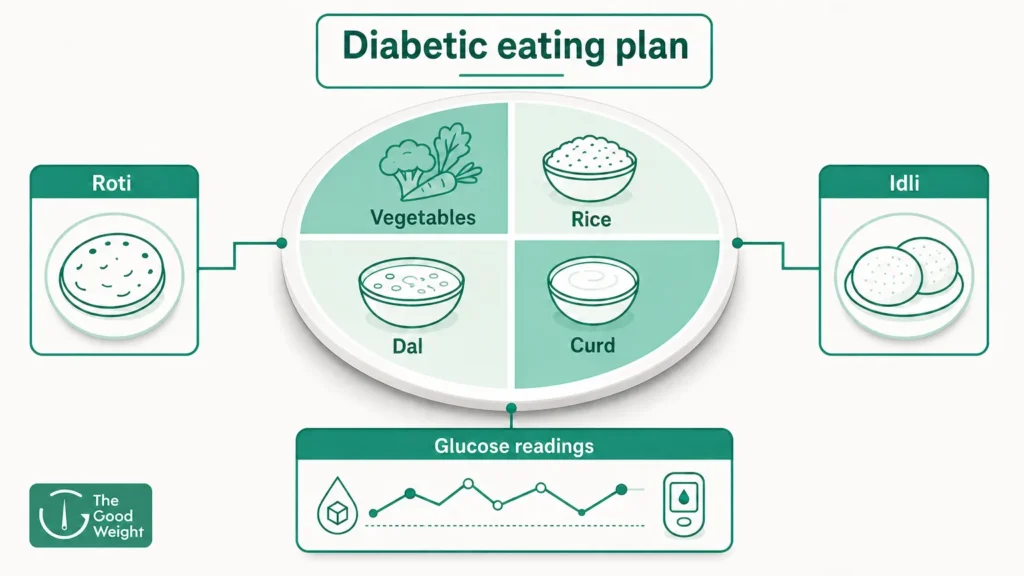
A diabetic eating plan for weight loss can feel confusing when common advice ranges from “avoid all carbs” to “eat everything in moderation.” If you live with diabetes, a sudden shift in how much or when you eat can affect more than your weight: it can change glucose readings, energy levels, and, in some cases, the safety of your current medicines. The most useful plan is not a crash diet or a list of forbidden foods. It is a realistic pattern of eating that improves food quality, supports a calorie deficit where appropriate, and is matched to your health needs.
A lower-carbohydrate approach can help some people reduce highly refined foods and manage appetite or post-meal glucose rises. However, “lower carb” is not a universal prescription, and it should not mean cutting out every carbohydrate-rich food. Diabetes nutrition care works best when it is individualised around glucose goals, culture, preferences, activity, access to food, and treatment plan; current diabetes care guidance emphasises person-centred nutrition and behaviour support rather than one single eating pattern.
For Indian adults, a sustainable diabetic eating plan can still include familiar foods such as rice, roti, idli, dal, curd, fruit, fish, eggs, paneer, and vegetables. The important questions are what type of carbohydrate you choose, how much you eat at one time, what you pair it with, and whether medicines need review before you make substantial changes.
Set expectations for steady, diabetes-safe weight loss
Safe weight loss with diabetes is generally gradual enough to fit into ordinary life. It does not require skipping meals, replacing most foods with shakes, or trying to compensate for a weekend of overeating by severely restricting food the next day. A plan that leaves you hungry, anxious around food, or unable to take medicines safely is unlikely to support lasting metabolic health.
A modest energy deficit, repeated consistently, is usually more valuable than a short period of extreme restriction. Weight can fluctuate from day to day because of fluid balance, salt intake, digestion, and hormonal changes, so weekly trends are more informative than a single weigh-in. In practice, steady progress may also show up as smaller waist measurements, more predictable glucose readings, improved fullness after meals, or greater confidence in planning food.
Clinicians also look beyond the weighing scale. Your starting weight, HbA1c, kidney function, blood pressure, lipid levels, sleep, mobility, and medication regimen all influence what is safe and useful. This is why a personalised plan may be different for a person taking metformin alone than for someone using insulin, a sulfonylurea, or multiple glucose-lowering medicines.
Understand what “lower carb” can mean
Carbohydrates are not all the same in how quickly they digest or how filling they are. Sugary drinks, sweets, bakery products, and large portions of polished grains can be easy to overeat and may raise glucose rapidly. In contrast, minimally processed carbohydrate foods that come with fibre, protein, or both can have a place in a balanced meal.
The goal is often to reduce the least helpful carbohydrate sources first rather than to eliminate every grain, pulse, fruit, or dairy food. The diabetes plate method offers a practical starting point: fill half the plate with non-starchy vegetables, reserve one quarter for protein, and use the remaining quarter for carbohydrate foods. Portion needs vary, but this structure makes room for satisfying meals without putting refined starch at the centre of every plate.
| Pattern or food choice | Likely challenge | More supportive alternative |
|---|---|---|
| Sweetened tea, coffee, packaged juice, soft drinks | Liquid sugar is easy to consume quickly and may add calories without fullness | Water, soda water without sugar, plain buttermilk, or unsweetened tea/coffee |
| Biscuits, cakes, namkeen, chips, white-bread sandwiches | Refined flour, added fats, and low fibre can encourage repeated snacking | Roasted chana, nuts in a measured portion, sprouts chaat, egg, curd, or vegetable sticks |
| Large serving of white rice or several rotis with little else | The carbohydrate portion can dominate the meal | A smaller rice or roti portion alongside dal, vegetables, salad, and protein |
| Idli, dosa, poha, or upma eaten alone | A low-protein breakfast may not keep you full | Pair a sensible portion with sambar, vegetables, eggs, paneer, curd, or peanut chutney |
| Fruit juice or a fruit-only snack | Juice lacks the chewing and fibre structure of whole fruit | Whole fruit with nuts, seeds, or unsweetened curd where suitable |
A lower-carbohydrate pattern can range from simply replacing sugar-sweetened beverages and refined snacks to reducing portions of grains at selected meals. The right level depends on your medical history and response. Research on diabetes nutrition continues to support individualised dietary approaches, including lower-carbohydrate patterns for some adults with type 2 diabetes, while recognising that long-term adherence, food quality, and clinical context matter.
Build a balanced plate from familiar Indian foods
A satisfying meal needs more than a smaller serving of rice or roti. Vegetables add volume and fibre, protein supports fullness and muscle maintenance during weight loss, and unsaturated fats can improve flavour and satisfaction in sensible amounts. Dal and legumes are valuable foods, but their carbohydrate content still contributes to the meal, so the overall plate matters.
Breakfast ideas
Choose a breakfast that is not built entirely around refined starch. For example, two small idlis with vegetable-rich sambar and an egg or a bowl of unsweetened curd can be more balanced than idlis with only a sugary beverage. Another option is vegetable omelette or paneer bhurji with one small whole-grain roti, or vegetable poha prepared with peas and peanuts plus a side of curd.
If you prefer dosa, consider a smaller portion with sambar and vegetable filling rather than multiple plain dosas. For vegetarian households, moong chilla with paneer or curd can offer more protein. The aim is not to label traditional breakfast as “bad,” but to avoid a meal that is mostly starch and leaves you hungry again within a short time.
Lunch and dinner ideas
For lunch, try dividing the plate before serving. Half can be non-starchy vegetables such as beans, cabbage, cauliflower, brinjal, bhindi, spinach, gourds, or mixed salad. One quarter can be protein – fish, chicken, eggs, paneer, tofu, curd, or a measured serving of dal, chana, rajma, or other pulses – and the remaining quarter can be rice, millet, or roti based on your agreed portion.
A practical South Indian dinner might be grilled fish or paneer, poriyal, sambar, salad, and a modest serving of rice. Another option is chicken or chana curry with mixed vegetables and one or two rotis, depending on your individual meal plan. Cooking method matters too: steaming, grilling, sautéing, and curries made with measured oil can be easier to fit into a weight-management plan than frequent deep-frying.
Snacks that support fullness
A snack is not mandatory if you are comfortably full between meals, but it can be useful when there is a long gap between meals or when medicines make regular eating important. Better options include a small handful of nuts, roasted chana, boiled eggs, unsweetened curd, sprouts salad, vegetable soup, or one portion of whole fruit. These choices are generally more filling than biscuits, sweetened drinks, or fried snacks eaten while commuting or working.
Portion awareness remains important even for nutritious foods. Nuts, peanut chikki, dried fruit, and homemade savouries can be calorie-dense, while fruit portions may need to be timed and tailored to your glucose response. A dietitian or treating clinician can help turn these examples into quantities that fit your body size, appetite, activity, and medicines.
Notice food habits that can make glucose management harder
Glucose management is often affected by patterns, not by one isolated food. A person may eat relatively balanced meals on weekdays but drink sweetened beverages daily, have very large restaurant meals on weekends, or skip lunch and then overeat late at night. Identifying these repeat patterns is more useful than blaming yourself for an occasional celebration meal.
Use this checklist to identify one or two changes with the greatest potential impact:
- Sugary drinks most days: Sweetened tea or coffee, fruit juice, soft drinks, energy drinks, and flavoured milk can raise daily sugar intake without making you full. Begin by reducing frequency or replacing one drink a day with an unsweetened alternative.
- Highly refined snack foods within easy reach: Biscuits, chips, bakery items, and packaged namkeen can become automatic rather than hunger-led choices. Keeping protein- and fibre-containing options available makes a different choice easier at the moment it matters.
- Oversized grain portions: A meal can contain healthy curry, dal, and vegetables yet still be difficult for glucose and weight goals if rice or rotis take up most of the plate. Serve the grain portion once, then add vegetables and protein before deciding whether you need more.
- Long gaps followed by overeating: Skipping meals may lead to intense hunger, hurried choices, and very large evening meals. If you use medicines that can lower glucose, regular meal timing may also be a safety issue.
- Meals with little fibre or protein: Toast, plain upma, white rice with thin gravy, or fruit juice alone may not provide lasting fullness. Add vegetables, pulses, eggs, fish, paneer, tofu, curd, or another appropriate protein source.
These are observations, not reasons for guilt. A food record can reveal whether hunger is related to meal composition, stress, poor sleep, an overly restrictive plan, or simply an unpredictable schedule. The best adjustment is usually the smallest change you can repeat consistently.
Review medicines and glucose readings before changing meals
Food changes can alter blood glucose quickly, particularly when you cut back sharply on carbohydrates, lose weight, begin exercising more, or stop skipping meals. That may be beneficial, but it can also increase the risk of hypoglycaemia if the dose of insulin or certain tablets is no longer well matched to your intake. Do not reduce, stop, or “save” diabetes medicine on your own because you have started eating less.
Safety callout: plan for low blood glucose
Hypoglycaemia can cause sweating, shaking, hunger, palpitations, dizziness, headache, confusion, irritability, or unusual weakness. If you use insulin or medicines known to cause lows, ask your diabetes clinician what readings and symptoms require action, how often to monitor, and what fast-acting carbohydrate to carry. Severe confusion, loss of consciousness, seizures, or inability to swallow needs urgent medical help.
Glucose monitoring turns a generic diet plan into personalised information. Your clinician may ask you to check fasting glucose, pre-meal readings, or post-meal readings at specific times, depending on your treatment. Record the reading alongside meal timing, food, portion, activity, illness, and any symptoms, rather than reacting to one number in isolation.
A medical review is especially important if you have kidney disease, liver disease, pregnancy, a history of eating disorders, recurrent low readings, or recent hospitalisation. It is also important for anyone using insulin, sulfonylureas, SGLT2 inhibitors, GLP-1 medicines, or other weight-management treatment. At The Good Weight, diagnostic testing and clinical assessment can help place food changes within a broader view of metabolic health rather than treating diet as a standalone solution.
Use a realistic first-week action plan
The first week is for learning, not perfection. Attempting to remove rice, sweets, snacks, and all favourite foods at once can make the plan feel punitive and difficult to sustain. Instead, use the week to understand your baseline and make a few deliberate, observable changes.
-
Record your usual meals for three to seven days. Note what you eat and drink, approximate portions, timing, hunger before eating, and how full you feel afterwards. Include weekend meals, office snacks, alcohol if relevant, and sweetened beverages; these details often show where the easiest change lies.
-
Choose one refined-carbohydrate swap. This might mean replacing daily biscuits with roasted chana, reducing sugar in tea step by step, or changing one large rice serving to a smaller serving with additional vegetables. Make only one core swap at first so you can judge whether it is practical.
-
Add protein and vegetables before reducing further. Build breakfast around a protein source, add a vegetable dish to lunch and dinner, and make sure the plate does not consist mostly of grain. This approach tends to improve fullness without requiring an unrealistic rulebook.
-
Follow the glucose-monitoring plan agreed with your clinician. Do not start frequent testing without knowing what you are looking for, and do not adjust medicines based only on a few readings. Bring a short log to your appointment so it can guide a meaningful conversation.
-
Review, then refine. Discuss your food record, weight trend, symptoms, and readings with your treating team. If needed, doctor-led medical weight-loss care can coordinate nutrition support with treatment decisions, rather than asking you to manage every variable alone.
Frequently asked questions
Can I eat fruit if I have diabetes?
Yes, whole fruit can fit into many diabetic eating plans. Fruit contains carbohydrate, so serving size and your individual glucose response matter, but it also provides fibre and nutrients that juice does not offer in the same way. Choose whole fruit, spread portions through the day if helpful, and pair it with a meal or a small protein-containing snack when that better suits your plan.
Do I need to stop eating rice?
No. Some people choose a smaller rice portion or use it less often because this makes glucose management easier, but total avoidance is not automatically necessary. Try serving rice alongside vegetables and protein, avoid turning it into most of the plate, and use your readings and clinical advice to decide what amount works for you.
How can I eat out without abandoning the plan?
Start with the meal structure rather than trying to find a perfect menu. Choose grilled, tandoori, steamed, or curry-based protein options; request extra vegetables or salad when available; and share or limit highly refined sides, desserts, and sugary drinks. Restaurant portions are often large, so deciding on your rice, roti, or starter portion before you begin can be more effective than relying on willpower once you are very hungry.
Is a low-fat diet always better for weight loss and diabetes?
Not necessarily. Reducing deep-fried foods and limiting excess saturated fat can be sensible, but an ultra-low-fat plan may leave little room for satisfying foods and can lead some people to eat more refined starch instead. Focus on overall food quality, sensible portions, protein, fibre, and appropriate fats from foods such as nuts, seeds, fish, and measured cooking oils.
When should I seek prompt medical advice?
Contact your clinician promptly for repeated low or very high readings outside the targets you were given, vomiting, dehydration, inability to keep food or fluids down, or new symptoms that concern you. Seek urgent care for severe low-glucose symptoms, confusion, fainting, seizures, chest pain, severe breathlessness, or signs of serious illness. Do not wait for a routine nutrition appointment if your safety or glucose control is deteriorating.
Make the plan fit your health, not the other way around
The best diabetic eating plan is one you can follow with enough nourishment, enjoyment, and flexibility to continue over time. Lowering refined carbohydrate intake may be a useful part of that plan, but it works best alongside vegetables, protein, fibre-rich foods, appropriate portions, glucose monitoring, and medication review. You do not need to eliminate entire food groups to make meaningful progress.
Before making major dietary changes, consider booking a clinician-led assessment with The Good Weight. Your care team can review your medical history, current medicines, glucose goals, food preferences, and weight-management options to help build a safer, more sustainable routine.