
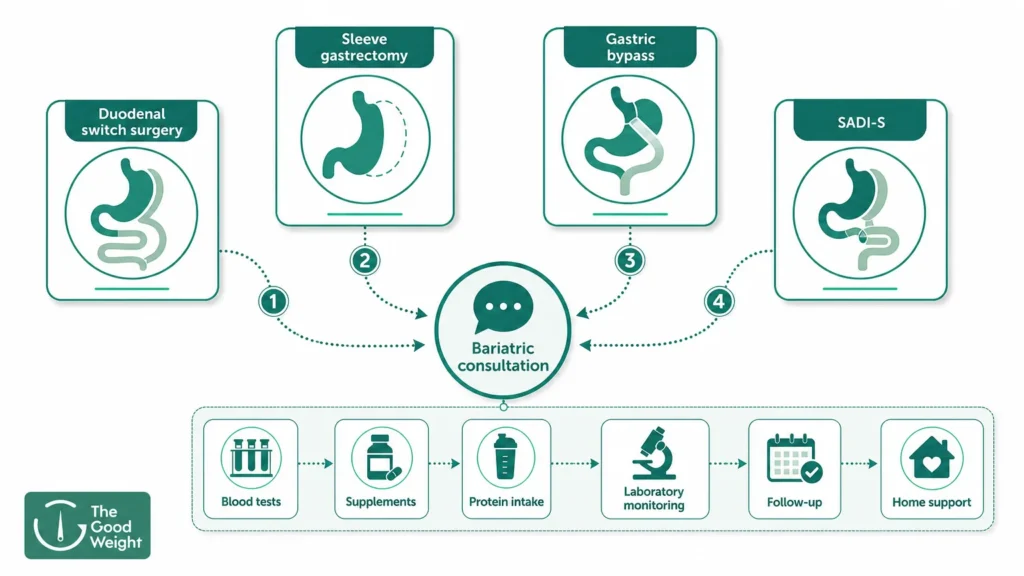
When you are comparing bariatric procedures, it is understandable to look first at expected weight loss or improvement in conditions such as type 2 diabetes. But for a complex procedure such as duodenal switch surgery, the more important question is often: Can I realistically commit to the nutrition, blood tests, appointments and support this operation requires for life?
Duodenal switch surgery can offer meaningful metabolic benefits for carefully selected patients, but it also creates a high level of nutritional responsibility. This guide explains what the procedure involves, what a bariatric team may consider before recommending it, and how to prepare for an informed consultation. It is educational information, not a personal recommendation; only a qualified bariatric surgical team can determine whether any procedure is appropriate for you.
What duodenal switch surgery involves
Duodenal switch surgery usually refers to biliopancreatic diversion with duodenal switch (BPD/DS), a bariatric operation that combines stomach reduction with intestinal bypass. The stomach is reshaped into a sleeve, similar in principle to sleeve gastrectomy, and the small intestine is rerouted so that food meets digestive juices farther along the intestinal tract. This changes both how much food a person can comfortably eat and how many calories and nutrients are absorbed.
Because the procedure has both restrictive and malabsorptive effects, it is generally considered one of the more complex bariatric pathways. The American Society for Metabolic and Bariatric Surgery describes BPD/DS as a procedure associated with substantial weight loss and metabolic improvement, while also carrying a higher risk of vitamin, mineral and protein deficiencies. That balance is central to any decision: the potential benefit and the follow-up burden must be considered together.
Some surgical teams may also discuss related approaches, including single-anastomosis duodeno-ileal bypass with sleeve gastrectomy (SADI-S). These procedures differ in technical design and may have different monitoring protocols, but they still require thoughtful discussion of malabsorption, supplementation and long-term surveillance. A procedure name alone does not explain the full plan; it is important to understand exactly what anatomy your surgeon is proposing and why.
Duodenal switch surgery is not “better” simply because it may produce greater weight loss in some populations. It may be considered for people with more severe obesity, certain metabolic concerns, previous bariatric procedures, or other individual clinical factors. However, a person’s ability to maintain protein intake, take prescribed supplements, attend regular reviews and seek help early for symptoms can be just as important as the operation itself.
What a bariatric team needs to assess first
Bariatric surgery should be approached as part of long-term metabolic care, not as a standalone event. Current ASMBS and IFSO guidelines support metabolic and bariatric surgery for adults with a BMI of 35 kg/m² or higher, regardless of coexisting conditions, and recommend consideration at lower BMI thresholds in selected circumstances. Yet eligibility guidelines are only a starting point, not a substitute for individual assessment.
A good consultation should allow enough time for your clinical history, practical circumstances and treatment goals to be understood. The following assessment pathway can help you see what a specialist may need to know before discussing whether duodenal switch surgery – or another option – fits your needs.
Step 1: Review weight and treatment history
Your team may ask when weight gain began, what previous weight-management approaches you have tried, and whether medications, structured nutrition plans or other treatments have been part of your care. This is not about judging effort. It helps clinicians understand patterns such as weight cycling, eating tolerance, mobility limitations and previous responses to doctor-led treatment.
Previous bariatric or abdominal surgery also matters. Revision surgery can involve different risks, anatomy and nutritional considerations than a first operation. If you have undergone a sleeve gastrectomy, gastric band, gastric bypass or another procedure, bring records where possible so the team can plan appropriately.
Step 2: Evaluate metabolic health and medical conditions
Your clinician may review type 2 diabetes, blood pressure, obstructive sleep apnoea, fatty liver disease, reflux, joint pain, heart health and other obesity-related conditions. They may also consider kidney disease, liver disease, gastrointestinal disorders, anaemia, bone health and medications that could affect surgical planning or nutrient absorption.
This wider review matters because bariatric procedures affect more than weight. The National Institute of Diabetes and Digestive and Kidney Diseases notes that bariatric surgery may improve obesity-related health problems, while each procedure has its own risks and long-term considerations. A procedure that is helpful for one medical profile may be less suitable for another.
Step 3: Check nutrition before surgery
Nutrient deficiencies can exist before surgery, even when someone is eating enough calories. A bariatric team may assess protein intake and order blood tests for iron status, vitamin B12, folate, vitamin D, calcium-related markers and other nutrients based on your history. Deficiencies should be identified and treated before surgery whenever possible, because malabsorptive procedures can make them harder to correct later.
Be open about food preferences, dietary restrictions, vegetarian or vegan eating patterns, appetite changes, food insecurity, alcohol use and previous difficulty tolerating supplements. These details help the dietitian build a realistic nutrition plan rather than offering generic advice. Personalized nutrition support is especially important when an operation will permanently change absorption.
Step 4: Discuss follow-up readiness and home support
Long-term outcomes depend partly on practical systems: transport for appointments, affordability and availability of supplements, ability to arrange blood tests, time for meal planning and access to urgent clinical advice. Your team may also ask who can help during early recovery, whether you have caregiving duties, and how work schedules could affect follow-up.
Emotional wellbeing deserves the same respect as physical health. Changes in eating, body image, relationships and routines can be significant after surgery. A team may recommend counselling, behavioural-health support or family involvement so that the care plan accounts for your whole life – not only the procedure.
How duodenal switch compares with other bariatric pathways
The right comparison is not “which procedure works fastest?” It is “which approach matches my medical needs and my ability to manage its lifelong requirements?” The table below is a high-level discussion tool for a bariatric consultation, not a substitute for individualized surgical advice.
| Broad pathway | Main anatomical change | Long-term care emphasis | Factors a team may weigh |
|---|---|---|---|
| Sleeve gastrectomy | Stomach is reduced to a narrow sleeve; no intestinal bypass | Food tolerance, protein intake, routine vitamin and mineral supplementation, reflux monitoring | Reflux history, eating patterns, metabolic conditions, surgical risk |
| Roux-en-Y gastric bypass | Small stomach pouch plus rerouting of part of the small intestine | Lifelong supplements, laboratory monitoring, medication review and awareness of dumping symptoms | Reflux, diabetes, prior surgery, medication needs and nutritional risk |
| Duodenal switch / BPD-DS | Sleeve-shaped stomach plus a more extensive intestinal bypass | Particularly intensive protein planning, prescribed supplementation and regular laboratory surveillance | Severity of obesity, metabolic profile, nutritional status and capacity for consistent follow-up |
| SADI-S or related duodenal-switch variant | Sleeve gastrectomy plus a single intestinal connection and bypass component | Structured nutritional monitoring and individualized supplementation | Surgeon expertise, anatomy, medical history and follow-up access |
| Endoscopic or non-surgical care | No major surgical rerouting of the intestine | Ongoing nutrition, activity, medication and metabolic-health support | Treatment goals, medical suitability, preferences and response to prior care |
All bariatric procedures require lasting behaviour and healthcare changes. However, intestinal bypass procedures tend to demand closer surveillance for nutritional consequences because less of the intestine is available for nutrient absorption. Research comparing procedures has found that biliopancreatic diversion with duodenal switch can be associated with greater weight loss than Roux-en-Y gastric bypass in some groups, alongside more adverse events and nutritional concerns. This is why expected benefits should never be separated from the care requirements that support them.
It is also useful to ask whether your surgeon performs the exact operation being discussed regularly and whether their centre has a structured multidisciplinary follow-up system. The operation is only one part of safe care; experienced surgical, medical and dietetic follow-up is essential. You can review The Good Weight’s bariatric surgery services to understand how procedure discussions can sit within a broader doctor-led weight-care plan.
The lifelong nutrition and monitoring commitment
After duodenal switch surgery, eating “healthy” in a general sense is not enough. You need a specific plan based on your anatomy, blood results, food tolerance and prescribed supplements. The goal is to protect muscle mass, bone health, nerve function, energy levels and overall metabolic health while your body adapts to a new pattern of intake and absorption.
Protein needs require active planning
Protein is a priority after bariatric surgery because intake may be limited in the early stages and absorption may be reduced after intestinal bypass. Your dietitian or surgical team should give you an individualized daily protein target, identify suitable foods or protein supplements and help you plan for days when appetite is low. Avoid adopting protein targets from social media or another patient’s plan, as requirements can differ substantially.
Practical planning may include protein-rich foods at each meal, appropriate liquid protein options during early food stages, and strategies for travel, workdays and vegetarian diets. Report persistent vomiting, inability to meet fluid or protein goals, frequent diarrhoea, weakness or difficulty eating to your treating team promptly. These symptoms are not something to quietly “push through” after a malabsorptive procedure.
Supplements are prescribed treatment, not optional extras
After BPD/DS, supplementation is lifelong and commonly more intensive than after purely restrictive procedures. Your team may prescribe combinations of multivitamins, calcium, vitamin D, iron, vitamin B12 and other nutrients based on procedure type and laboratory findings. The ASMBS nutritional guidelines outline the need for routine screening and procedure-specific vitamin and mineral supplementation after weight-loss surgery.
Do not replace prescribed products with over-the-counter alternatives without checking doses and forms with your bariatric team. “Natural,” gummy or standard multivitamins may not provide the amount or type of nutrient required after surgery. Likewise, taking more than prescribed is not automatically safer; some nutrients can accumulate or interact with other medications.
Blood tests and symptom reporting protect long-term health
Laboratory follow-up allows your clinician to detect deficiencies before they become severe. The exact test schedule varies by procedure, stage of recovery, symptoms and prior results, but regular monitoring may include blood count, iron studies, vitamin levels, calcium-related markers, protein status and additional tests when indicated. Follow-up should continue even if weight loss has slowed, you feel well or years have passed since surgery.
Use a written system – a calendar, app or family reminder – for appointments, tests and prescriptions. Contact your clinical team promptly for concerning symptoms such as persistent vomiting, severe abdominal pain, fever, black stools, fainting, dehydration, marked weakness or new neurological symptoms. Emergency symptoms require urgent medical assessment rather than waiting for a routine appointment.
A care-planning checklist before consenting
Before you decide on duodenal switch surgery, make sure you can answer the following questions clearly:
- What are my daily protein, fluid and meal-structure goals at each recovery stage?
- Which supplements will I need, in what doses, and how will they change based on blood tests?
- How often will I have laboratory tests in the first year and in later years?
- Who reviews my results, and how quickly will I be contacted if something is abnormal?
- What symptoms should lead me to call the clinic, seek urgent care or go to an emergency department?
- What is the plan if I struggle with food tolerance, diarrhoea, fatigue or affordability of supplements?
- How will medications for diabetes, blood pressure, thyroid disease or other conditions be reviewed?
Preparing for recovery and support before you decide
Recovery does not follow one fixed timetable. Your surgical team will give procedure-specific instructions based on your operation, health conditions and progress. Planning in advance can reduce stress and make it easier to focus on hydration, nutrition, mobility and follow-up when you return home.
Before surgery: set up the practical basics
Arrange time away from work or major responsibilities according to your surgeon’s guidance, and identify a trusted person who can assist with transport, household tasks or childcare if needed. Fill prescribed medications and recommended nutrition products before admission, but only purchase products approved by your treating team. Prepare your home with easy access to fluids, approved nutrition items, comfortable clothing and a place to keep your discharge instructions visible.
Bring a current medication list to every appointment, including diabetes medicines, blood-pressure tablets, anticoagulants, pain medicines and supplements. Some medicines may need adjustment before or after surgery, particularly as food intake changes and metabolic health improves. Never stop or restart medication based solely on online advice.
Early recovery: follow stages, not assumptions
Most teams use staged food and fluid guidance, progressing from liquids to other textures only when it is safe for the individual patient. The details vary across practices, so a friend’s post-surgery diet or an online meal plan should not override your own clinician’s instructions. Your priorities may include sipping fluids regularly, meeting prescribed nutrition targets, taking medications correctly and moving as advised to support recovery.
Follow-up appointments are part of treatment, not an administrative formality. They give your team a chance to assess wounds, hydration, food tolerance, bowel changes, weight trajectory, medication needs and emotional adjustment. Patients in Chennai may benefit from choosing a programme with accessible local reviews; bariatric surgery hospital support in Chennai should include a clear pathway for planned and urgent follow-up.
Longer-term care: build a sustainable routine
As you return to work, family meals and social events, the challenge often becomes consistency rather than motivation. Keep supplements where you will see them, schedule laboratory reminders before leaving the clinic and plan protein-forward meals around your daily routine. If emotional eating, anxiety, low mood or relationship stress becomes difficult, seeking support early is a sign of proactive care.
Family members can be valuable partners when they understand that this is not a temporary “diet phase.” They can help by respecting food-stage instructions, joining medical appointments when invited, avoiding unhelpful comments about weight and supporting time for follow-up. Sustainable weight loss and metabolic health are more likely to be protected when the household understands the long-term plan.
Questions to take to a bariatric consultation
A consultation should leave you better informed, not pressured. Write down questions beforehand, bring a family member if helpful and ask for explanations in language you can understand. Consider asking:
- What procedure are you recommending, and why is it a better fit for my health history than other options?
- Do you perform BPD/DS, SADI-S or related procedures regularly, and what training and credentials support that expertise?
- What specific anatomical changes will be made, and how could they affect nutrient absorption?
- What are the short-term surgical risks and the long-term risks most relevant to me?
- What protein target, supplements and laboratory tests will I need after this procedure?
- Who will provide nutrition support, and how often will I meet the dietitian?
- How will you monitor deficiencies, bone health, bowel symptoms and medication changes over time?
- What happens if I miss follow-up, cannot tolerate supplements or develop symptoms while travelling?
- Is there an after-hours contact pathway, and where should I go in an emergency?
- What does the quoted price include: surgery, hospital stay, anaesthesia, follow-up visits, dietitian care, blood tests or treatment for complications?
- What long-term maintenance care is available after the first year?
- If surgery is not the best option now, what evidence-based medical, nutritional or endoscopic alternatives should I consider?
Make the decision around long-term care
Duodenal switch surgery may be an appropriate option for some people, but it is not a procedure to choose on weight-loss expectations alone. Its potential metabolic benefits must be considered alongside lifelong protein planning, prescribed supplementation, regular laboratory testing and reliable access to clinical follow-up. The best procedure is the one that fits both your health needs and the care commitments you can sustain.
If you are in Chennai, schedule a consultation with The Good Weight for an individualized bariatric assessment. A doctor-led discussion can review your health history, procedure options, nutrition planning and practical support needs so that your decision is grounded in comprehensive, long-term care. Only a qualified bariatric surgical team can determine candidacy and recommend a procedure for your individual situation.