
A stalled scale can feel discouraging, especially when you have been following a plan consistently. It may be tempting to cut meals, add exhausting workouts, or start over with a stricter diet. But when you are working out how to lose weight after progress slows, the safest and most useful response is usually a structured review – not harsher restriction.
Weight management is not linear. As body weight changes, energy needs, appetite, activity patterns, sleep, stress, medication, and underlying metabolic health can all influence what happens next. A plateau may signal that your routine needs one thoughtful adjustment, or that it is time to review medical factors with a clinician. It does not mean you have failed.
What a weight-loss plateau actually looks like
A true plateau is different from seeing one higher number on the scale. In practical terms, a plateau means your average body weight and/or waist measurement has remained broadly unchanged for several weeks despite reasonably consistent adherence to your plan. The exact timeframe varies, but a few days without movement is not enough information to conclude that fat loss has stopped.
Research on weight-loss plateaus shows that they can occur as the body’s energy requirements change with weight loss and as the original calorie deficit becomes smaller over time. This is one reason weight-loss plateaus are a recognised part of long-term weight management, rather than proof that a person needs an extreme diet.
Day-to-day fluctuations are normal
The scale measures more than body fat. It also reflects water retention, food and fluid still moving through the digestive system, salt intake, carbohydrate intake, bowel habits, inflammation after unfamiliar exercise, and the time of day you weigh yourself. A restaurant meal on Friday, for example, may lead to a higher Saturday or Sunday weigh-in because of sodium and digestion – not because you gained a meaningful amount of body fat overnight.
Menstrual-cycle changes can also affect the scale for people who menstruate. Some people notice temporary bloating, appetite changes, or fluid retention in the days before their period. Comparing one premenstrual weigh-in with one post-period weigh-in is therefore not a reliable way to judge whether a plan is working.
Instead, use a repeatable method:
- Weigh under similar conditions, such as in the morning after using the bathroom and before breakfast.
- Record several weigh-ins per week, if weighing feels emotionally manageable.
- Look at a weekly average or a trend over three to four weeks rather than reacting to a single number.
- Measure waist circumference periodically, using the same position and tape placement each time.
- Notice non-scale changes, including improved stamina, strength, sleep, energy, glucose readings, or how clothing fits.
For example, a person whose weight moves between 78.2 kg and 79.0 kg across one week may simply be seeing normal variation. If their four-week average remains close to 78.5 kg and their waist measurement is unchanged, that is more consistent with a plateau. If the average is still gradually moving down – even by a small amount – the original plan may still be working.
Review the last seven days before changing everything
Before making major changes, review a typical week honestly and without judgment. The goal is not to identify “bad” foods or blame yourself. It is to find patterns that may have shifted quietly, such as larger portions, reduced walking, less sleep, or less structure on weekends.
A seven-day review is often more revealing than relying on memory. Record meals, drinks, sleep, movement, hunger, stress, and any unusual events as they happen. This provides a clearer starting point for personalised nutrition support than trying to compensate after the fact.
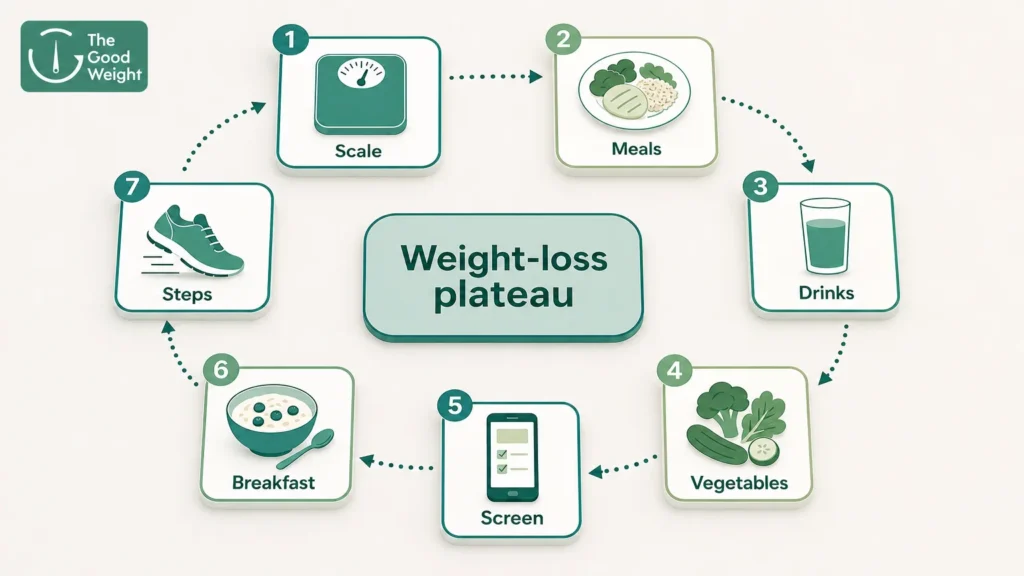
Your seven-day plateau checklist
Day 1: Check meal consistency. Write down when you ate and whether meals were skipped, delayed, or replaced with grazing. Skipping meals is not automatically harmful, but for some people it leads to intense evening hunger, larger portions, or frequent snacking later. Look for a meal rhythm that helps you feel adequately fuelled and able to make planned choices.
Day 2: Review portions and extras. Include oils, sauces, sugary drinks, alcohol, tasting while cooking, second helpings, and packaged snacks. These items do not need to be banned, but they can become more frequent or larger over time without being obvious. A short period of portion awareness can reveal whether your current intake still matches your goals.
Day 3: Assess protein and fibre. A balanced meal generally includes a protein source, vegetables or fruit, and a high-fibre carbohydrate or pulse where appropriate. Protein and fibre can support fullness and meal quality, while healthy eating patterns emphasise vegetables, fruits, whole grains, lean proteins, and lower amounts of added sugars. If breakfast is low in protein or most meals lack vegetables, improving meal composition may be more sustainable than simply eating less.
Day 4: Review sleep. Note both the number of hours you slept and how rested you felt. Short or disrupted sleep can make meal planning, appetite regulation, and physical activity harder the following day. Rather than expecting perfection, choose one realistic improvement, such as a consistent wake-up time, less screen use before bed, or preparing tomorrow’s breakfast before sleeping.
Day 5: Notice stress and eating triggers. Work pressure, caregiving, travel, financial concerns, and poor sleep can all alter routines. Ask whether hunger was physical, emotional, or driven by convenience, and whether you had alternatives available. Planning an afternoon snack, taking a brief walk, or asking for support may be more effective than relying on willpower when stress is high.
Day 6: Include alcohol and weekend patterns. A plan that feels structured from Monday to Thursday can be offset by restaurant meals, alcohol, irregular sleep, or less movement over the weekend. This is not a reason to avoid social life; it is a reason to plan for it. Decide in advance which meals matter most, include protein and vegetables where possible, and return to your routine at the next meal rather than treating one event as a setback.
Day 7: Compare daily movement. Formal exercise is only one part of activity. Check whether your steps, commute, household activity, standing time, or walking breaks have dropped since you started losing weight. As routines become busier or body weight decreases, people often move less without realising it, which can narrow the energy gap that was supporting earlier progress.
If this review reveals a pattern, choose one priority rather than trying to correct all seven areas at once. Sustainable weight loss is more likely when changes are specific, manageable, and built into ordinary life. The Good Weight’s approach to diet and weight loss can help turn this kind of review into a practical eating plan that fits your health needs and daily routine.
Build movement without using exercise as punishment
Exercise does not need to “earn” food or compensate for a difficult day. Movement can support cardiovascular fitness, strength, mood, mobility, and metabolic health, whether or not the scale changes immediately. A realistic activity plan is one you can repeat, recover from, and gradually build over time.
National physical activity guidance recommends adults work towards 150 to 300 minutes of moderate-intensity activity weekly, plus muscle-strengthening activity on two days. This is a useful long-term target, not a requirement to start there. If you are currently inactive, a smaller amount is still a meaningful starting point.
A step-by-step movement plan
Start with your baseline. For one week, estimate your usual walking, activity, and sedentary time without trying to change it. If you average 3,000 steps daily, jumping straight to 10,000 may create pain, fatigue, or frustration. A more sensible first step may be adding a 10-minute walk after lunch on four days each week.
Add one movement opportunity at a time. Once that routine feels manageable, add another short walk, use stairs if safe, or schedule a walking meeting. Small increases are easier to maintain than occasional intense sessions. The best plan also accounts for Chennai’s heat and humidity: indoor walking, mall walking, early-morning movement, or short home sessions may be more practical on some days.
Include resistance work. Strength training helps preserve and build muscle while improving function. Beginners can start with chair squats, wall push-ups, resistance bands, light dumbbells, or supervised gym sessions two times a week. Focus on learning comfortable form and allowing recovery, rather than pushing to exhaustion.
Plan recovery. Soreness after a new routine can temporarily affect activity and fluid balance. Alternate more demanding sessions with gentler movement, sleep adequately, and increase volume gradually. Rest is part of a consistent plan, not evidence that you are losing motivation.
Adapt for pain or health conditions. If you have knee pain, back pain, arthritis, breathlessness, balance concerns, or a history of injury, choose lower-impact options such as cycling, water exercise, seated strength work, or short, level walks. Persistent pain, chest discomfort, faintness, or unusual shortness of breath deserves medical assessment before you increase intensity.
Look beyond food and workouts
A plateau is sometimes related to factors that cannot be solved by a new recipe or more steps. This is particularly important if weight changes are accompanied by new symptoms, a recent medication change, a major life event, or worsening metabolic markers. Self-diagnosis can create unnecessary anxiety or lead to unsafe changes, so use a clinician review to interpret the full picture.
A clinician-review checklist
Bring your weight trend, waist measurements if available, meal and activity notes, and a list of medications and supplements to your appointment. A clinician may consider whether the current plan is appropriate for your medical history, whether diagnostic information needs reviewing, and whether treatment goals should include blood pressure, blood glucose, lipids, sleep, mobility, or other markers – not only kilograms.
Discuss these areas:
- Medication changes: Some medicines can influence appetite, fluid balance, glucose control, or body weight. Do not stop or reduce a prescribed medicine because you suspect it is affecting weight; ask the clinician who prescribed it to review options safely.
- Metabolic health: Prediabetes, type 2 diabetes, fatty liver disease, blood pressure concerns, and sleep problems can shape a weight-management plan. Lifestyle programmes have been shown to help reduce type 2 diabetes risk; the Diabetes Prevention Program aimed for 5% to 7% weight loss and at least 150 minutes of activity weekly.
- Hormonal or reproductive concerns: Symptoms such as irregular periods, new excess facial hair, marked fatigue, heat or cold intolerance, or major unexplained weight changes should be discussed with a qualified clinician. These symptoms do not confirm a diagnosis on their own, but they can guide whether evaluation is appropriate.
- Current treatment response: Nutrition, behavioural support, medication, endoscopic procedures, and bariatric care have different roles for different people. Evidence-based obesity treatment can include lifestyle intervention, medication, and metabolic or bariatric surgery, depending on individual health circumstances.
At The Good Weight, a doctor-led review can bring these strands together rather than treating weight as a willpower problem. For people who may benefit from structured medical support, medical weight-loss care can consider nutrition, diagnostics, lifestyle guidance, and appropriate treatment options as part of one plan.
Choose the next adjustment safely
The most effective next step is usually the smallest one that addresses the most likely barrier. A plateau does not call for cutting multiple food groups, skipping meals, doubling exercise, or using an unverified supplement. Intensive, multicomponent behavioural interventions are recommended for adults with obesity because they combine nutrition, activity, problem-solving, and ongoing support rather than relying on a single drastic measure; the USPSTF supports referral to comprehensive behavioural interventions.
Continue the current plan when the trend is still moving
Continue if your multi-week average is slowly decreasing, your waist measurement is changing, or your habits are becoming more consistent even if daily scale readings vary. This is especially relevant after travel, menstrual-cycle changes, a salty meal, illness, or a new exercise routine. Give a well-designed plan enough time to show a trend before changing it.
Make one adjustment when your review identifies a clear pattern
Make one change when your average weight and measurements have been stable for several weeks and your seven-day review reveals something actionable. Examples include adding a planned protein-rich breakfast, reducing restaurant meals from three times weekly to once, increasing walks by 10 minutes on most days, or returning to a regular sleep schedule. Keep that adjustment for two to three weeks before evaluating it, unless a clinician advises otherwise.
Book a review when health or wellbeing is affected
Arrange a medical review sooner if you experience persistent fatigue, dizziness, fainting, distress around food, repeated bingeing, new digestive symptoms, worsening mood, or a strong urge to restrict food severely. These are not signs that you need more discipline. They are signals that your plan may be too restrictive, poorly matched to your needs, or incomplete.
Frequently asked questions about weight-loss plateaus
Should I lower my calories immediately if the scale stops moving?
Not necessarily. First confirm that the plateau is real by looking at several weeks of trend data and reviewing eating, sleep, stress, movement, and weekend patterns. If an adjustment is needed, make it measured and specific rather than dramatically reducing intake. Very restrictive eating can be difficult to sustain and may increase fatigue, hunger, and preoccupation with food.
Can I lose fat even if my weight stays the same?
It is possible for body composition, fluid levels, and digestive contents to change in ways that make the scale less informative over short periods. This is why waist measurements, strength, energy, clothing fit, and health markers can add useful context. However, if both weight trends and measurements remain stable for several weeks, review the plan rather than assuming changes are occurring.
Is more exercise always the answer?
No. Activity is valuable, but adding too much too quickly can lead to pain, poor recovery, or an unsustainable routine. Begin with your current capacity, progress gradually, and include resistance work and rest. Nutrition, sleep, stress, medications, and metabolic health may also need attention.
When should I speak with a weight-loss doctor?
A doctor-led consultation is useful when progress has stalled despite a consistent plan, when you have diabetes risk or other metabolic concerns, when medication may be relevant, or when restrictive dieting is affecting your wellbeing. It can also help if you are considering GLP-1 medication, an endoscopic procedure, or bariatric treatment and want to understand which option fits your health needs.
A plateau is information, not a verdict. If you want to know how to lose weight sustainably after progress stalls, start by confirming the trend, reviewing one typical week, and making one realistic adjustment at a time. If you need a fuller picture, arrange a personalised weight-loss doctor consultation with The Good Weight so your nutrition, activity, diagnostic information, metabolic health, and treatment options can be considered together.