
A social-media post may show striking “before and after” photos or claim that keto rapidly transformed someone’s weight, blood sugar, or energy levels. It is understandable to wonder whether a ketogenic diet could be the right weight loss diet for you – especially if you have tried more conventional approaches without lasting results.
But a dramatic short-term result does not answer the more important questions: Is this approach safe with your health history? Can you meet your nutrition needs? Will it fit your routine long enough to support sustainable weight loss? Keto may be a workable option for some adults, but it is not automatically the best or safest choice for every person seeking better metabolic health.
This article can help you look beyond the headline and assess whether keto deserves a place in your personalized weight-care plan.
Why keto headlines can sound more certain than the evidence
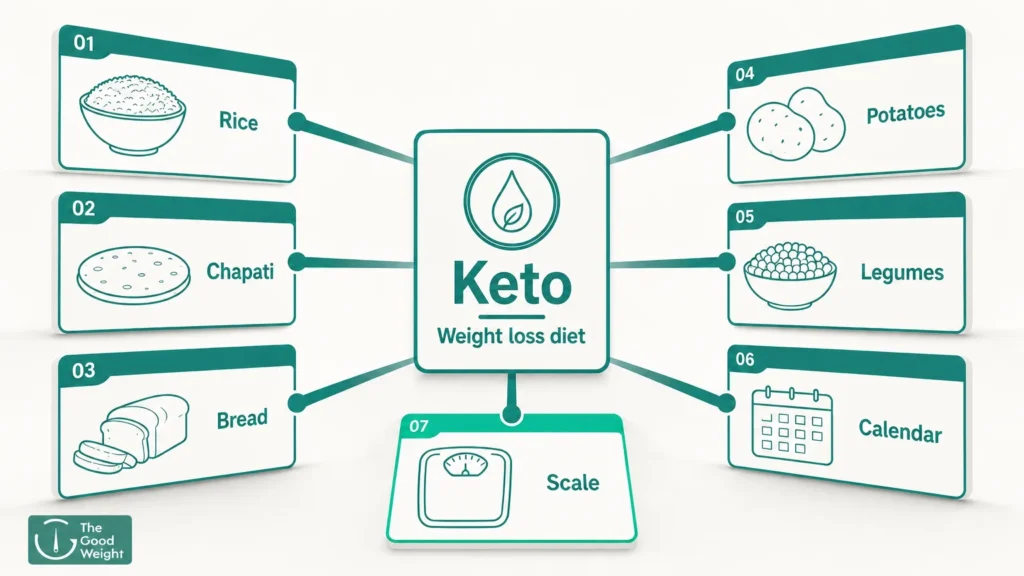
“Keto” usually refers to a very-low-carbohydrate, high-fat eating pattern designed to shift the body into ketosis, a state in which it uses fat-derived ketones for a greater share of energy. A ketogenic diet is more restrictive than simply reducing added sugar or choosing fewer refined carbohydrates. It generally means limiting foods such as rice, chapati, bread, sweets, many fruits, potatoes, and legumes quite substantially.
That restriction can create early changes that look impressive on a scale. When carbohydrate intake drops sharply, the body uses stored glycogen, which is stored along with water. Some initial weight change may therefore reflect fluid loss rather than body-fat loss alone. This does not mean keto “does not work,” but it does mean that a quick result should not be interpreted as proof of a superior long-term outcome.
Studies of low-carbohydrate and ketogenic diets have reported potential short-term improvements in weight and some metabolic markers for certain participants. However, the evidence base also notes uncertainties about long-term adherence, nutrient quality, and sustained health effects. A study result may involve closely monitored participants, structured meal support, frequent follow-up, or a relatively short period of observation – conditions that do not always translate to daily life.
When you see a bold claim, ask what was actually measured. Was the result a change in body weight, waist circumference, HbA1c, triglycerides, medication use, or a combination of these? How long were participants followed? Did most people remain on the diet, and what happened when the intensive support ended? A marker improving over weeks or months is encouraging, but it cannot establish that the same diet is safe, effective, or maintainable for every individual over years.
A more useful standard is whether an eating pattern helps you create a calorie deficit while preserving nutrition, strength, daily functioning, and a healthy relationship with food. Public-health guidance similarly emphasizes that gradual, steady weight loss is more likely to be maintained than rapid loss. The best weight loss diet is not necessarily the most restrictive one; it is the one you can follow safely and consistently with appropriate support.
What keto changes in everyday eating
Keto is often described as “cutting carbs,” but the practical changes are broader. The composition of meals, cooking methods, grocery shopping, hydration, fibre intake, and family eating routines can all change. For people in Chennai and across India, where rice, dosa, idli, chapati, lentils, fruit, and milk products may be regular parts of meals, the shift can be particularly significant.
| Area | What usually changes on keto | What to consider |
|---|---|---|
| Carbohydrates | Intake is reduced sharply, often by limiting grains, starchy vegetables, sugar, many fruits, and pulses. | Portions of rice, chapati, millet dishes, idli, dosa, poha, potatoes, and sweets may need major changes. |
| Protein | Protein needs still matter, particularly during weight loss. | Include adequate protein from foods that suit your dietary pattern, health needs, and appetite. |
| Fat quality | Fat becomes a larger source of energy. | Prioritize unsaturated fats where possible rather than relying heavily on butter, ghee, processed meats, or fried foods. |
| Fibre | Many familiar fibre sources are reduced. | Plan low-carbohydrate vegetables, seeds, nuts, and other suitable fibre sources to protect digestive comfort. |
| Fluids and electrolytes | Early fluid loss can occur when carbohydrate intake falls. | Hydration, sodium intake, and symptoms such as dizziness or weakness deserve attention, especially if you take medicines. |
| Daily routine | Meals need more planning and label-reading. | Consider travel, office meals, family cooking, vegetarian preferences, celebrations, and affordability. |
Protein adequacy is especially important because weight loss can include loss of lean mass as well as fat mass. A keto plan built mostly around cheese, butter, packaged “keto” snacks, and processed meats may technically be low in carbohydrate, but it is not necessarily a strong nutrition plan. Research on ketogenic diets highlights why the quality of fats, protein sources, micronutrients, and fibre should be assessed rather than focusing on carbohydrate grams alone.
Fibre is one practical concern. Restricting whole grains, legumes, and many fruits can make constipation or digestive discomfort more likely if meals are not thoughtfully planned. A lower-carbohydrate pattern can still include non-starchy vegetables, nuts, seeds, and other fibre-containing foods, but these need to be intentional choices rather than an afterthought.
For some people, a modified lower-carbohydrate approach is more realistic than strict keto. A personalized diet and weight-loss plan can compare options without treating one pattern as a universal answer. The goal is to find an approach that supports energy, nutrition, health markers, and long-term consistency – not simply to achieve ketosis.
A clinician’s checklist before choosing keto
Before starting keto instead of another structured weight loss diet plan, work through the questions below honestly. The answers can help distinguish a plan that is challenging but realistic from one that is likely to become stressful, nutritionally incomplete, or difficult to sustain.
-
Do the foods fit your preferences? If rice-based meals, fruit, pulses, or a vegetarian diet are central to your culture and enjoyment of food, strict carbohydrate restriction may feel overly limiting. You do not need to give up familiar foods entirely to make progress with weight or metabolic health.
-
Can your household routine support it? Consider who shops, cooks, and eats with you. A plan that requires separate meals every day, extensive tracking, or difficult restaurant decisions may be harder to maintain than a more flexible approach.
-
Are your cardiovascular risk factors being reviewed? If you have high LDL cholesterol, high blood pressure, a family history of early heart disease, or existing cardiovascular disease, the type and amount of dietary fat matters. A clinician can help determine whether strict keto – and particularly a version high in saturated fat – fits your overall risk profile.
-
How does your digestion respond to restriction? Bloating, constipation, reflux, or bowel-pattern changes can affect whether any eating pattern is workable. If digestive symptoms worsen, “pushing through” is not always the right response; the plan may need adjustment.
-
What has happened with diets in the past? Repeated cycles of rigid dieting, intense restriction, and rebound eating are important information. A sustainable plan should build skills and confidence, not reinforce all-or-nothing eating.
A reputable program should be individualized, realistic, and designed for ongoing support rather than a short burst of restriction. The National Institute of Diabetes and Digestive and Kidney Diseases advises looking for weight-loss programs that consider your health, preferences, costs, and ability to maintain changes. Those are more meaningful criteria than whether a plan is currently popular online.
When keto needs medical guidance
Major carbohydrate restriction can change blood glucose, fluid balance, appetite, and blood pressure. That is why a restrictive diet should not be started in isolation when you have a medical condition, are taking prescription medicines, or have recently undergone a procedure. Do not stop, start, or adjust prescribed medicines independently because you change your diet.
Safety checklist: arrange a review first if you have any of the following
Speak with your doctor or dietitian before attempting keto if you have diabetes; use insulin or other glucose-lowering medicines; take blood-pressure medicines or diuretics; have kidney disease; are planning pregnancy; are breastfeeding or seeking a weight loss diet postpartum; have had bariatric surgery; or have a current or past eating disorder or disordered-eating pattern.
People with diabetes may experience substantial changes in glucose readings when carbohydrates are reduced, and medication doses may need clinical review. Reviews of ketogenic approaches in type 2 diabetes describe possible metabolic benefits for some people, while also emphasizing the importance of professional monitoring of safety, adherence, and medication management. The diet itself is not a substitute for a diabetes care plan.
Pregnancy planning and the postpartum period also deserve individual attention. Nutrient needs, recovery, breastfeeding, sleep deprivation, and mental well-being can all shape the appropriate approach. A supportive post-pregnancy weight-loss plan should focus on adequate nourishment and recovery rather than aggressive restriction; ACOG similarly recommends optimizing health and managing chronic conditions between pregnancies.
FAQ: can I start keto while taking diabetes medicine?
Not without discussing it with the clinician who prescribes your treatment. Lower carbohydrate intake can alter glucose levels, and some medicines carry a greater risk of low blood sugar when food intake changes. Your care team may recommend closer monitoring and may decide whether any medication adjustment is appropriate.
FAQ: does keto work after bariatric or endoscopic weight-loss treatment?
Post-procedure nutrition needs are individual and may include targets for protein, fluids, vitamins, minerals, and meal texture or timing. Starting an unsupervised restrictive diet can make it harder to meet those needs. If you have had a procedure, seek guidance through a post-procedure weight-loss support plan before making major dietary changes.
FAQ: is keto safe if I have had disordered eating?
Strict food rules, frequent weighing, and fear of “breaking” a diet can be difficult for people with a history of disordered eating. This does not mean weight care is unavailable to you. It means the approach should prioritize medical, nutritional, and psychological safety, with support that does not rely on shame or rigid restriction.
Use a broader measure of success than the scale
The scale can be useful, but it is only one data point. Daily weight can fluctuate because of fluid changes, digestion, menstrual cycles, sodium intake, and other normal factors. If keto produces a rapid first-week drop, look at the wider picture before deciding it is helping.
Use this worksheet for two to four weeks, ideally with guidance from a clinician or dietitian:
| Check-in area | Questions to ask yourself |
|---|---|
| Energy | Do I have stable energy for work, caregiving, and daily tasks? |
| Hunger and fullness | Am I comfortably satisfied between meals, or constantly preoccupied with food? |
| Food flexibility | Can I manage family meals, travel, work events, and celebrations without feeling that the plan has “failed”? |
| Digestion | Have constipation, bloating, reflux, or bowel changes improved, stayed stable, or worsened? |
| Strength and movement | Can I maintain walking, exercise, and strength-building activities? |
| Clinical measures | If relevant, are glucose readings, blood pressure, lipids, and medication needs being monitored appropriately? |
| Sustainability | Could I continue this way of eating for the next three months – not just the next three days? |
A helpful eating plan should make your health easier to manage, not create new problems. For some people, keto may meet that test for a period of time. For others, a less restrictive calorie-controlled, Mediterranean-style, higher-protein, or culturally adapted lower-carbohydrate plan may offer similar benefits with greater flexibility.
Choose the plan you can live with safely
Keto is not automatically a bad choice, nor is it a guaranteed solution. A short-term change in weight or a metabolic marker cannot tell you whether it will be safe, effective, or maintainable for your body and your life. The most useful decision considers your medical history, medicines, food preferences, nutrition needs, and ability to continue the approach.
If you are considering a restrictive weight loss diet, speak with The Good Weight clinician or dietitian. Our doctor-led team can review your health history and help tailor evidence-based nutrition support for sustainable weight loss – without assuming keto is the best option for everyone.