
Searching for blood sugar control advice can quickly become confusing. One post may tell you to remove all carbohydrates, another may promise that a supplement “reverses” insulin resistance, and a third may suggest that tiredness after lunch proves you have a metabolic problem. These messages can feel urgent, especially if you have noticed weight changes, fluctuating energy, a family history of diabetes, or an existing health concern.
The more useful starting point is not a universal diet rule or a self-diagnosis. Insulin resistance and blood sugar control need to be understood in the context of your medical history, current health measures, medicines, food habits, activity, sleep, and daily routine. An individual assessment can help separate a possible concern worth investigating from information that is simply not specific enough to guide care.
What does insulin resistance mean in everyday terms?
Insulin is a hormone that helps move glucose, a form of sugar from food, from the bloodstream into muscle, fat, and other cells that can use it for energy. Think of insulin as a key and the cell as a door: after you eat, insulin helps “unlock” the door so glucose can move from the blood into the cell. This is a normal, essential process that happens many times a day.
With insulin resistance, the body’s cells do not respond to insulin as effectively as they once did. The body may then need to make more insulin to help manage the same amount of glucose. For a period, the pancreas may be able to compensate by producing more insulin, so a person can have insulin resistance without immediately having high blood glucose on a routine test.
A symptom alone cannot confirm insulin resistance. Tiredness, cravings, weight gain, difficulty losing weight, skin changes, or a post-meal energy dip can have many possible explanations, including sleep disruption, stress, anaemia, thyroid conditions, medication effects, irregular meals, or other medical concerns. Social-media checklists can be useful prompts for questions, but they are not diagnostic tools.
For blood sugar control, the practical question is not, “Do I match an online list?” It is, “What does my overall health context suggest, and what information would help my doctor decide whether any action is needed?” That distinction can prevent unnecessary restriction while ensuring genuine concerns are addressed appropriately.
Which patterns are worth discussing with a clinician?
A conversation with a clinician can be worthwhile when several risk factors or changes come together. This checklist is not a diagnosis, and having one or more items does not mean you have insulin resistance or diabetes. It simply helps identify information that may be relevant to a metabolic-health discussion.
Consider raising the following patterns during an appointment:
-
Personal and family history: A parent, sibling, or close relative with type 2 diabetes; a previous history of high blood glucose; gestational diabetes during pregnancy; or certain hormone-related conditions can be relevant to risk assessment. Your clinician can place family history alongside your age, health history, and present circumstances rather than treating it as a prediction.
-
Weight or waist changes: Weight gain over time, changes in where weight is carried, or difficulty maintaining a weight that previously felt manageable may be useful discussion points. Weight is not a measure of personal effort or worth, and it does not independently diagnose metabolic disease. It is one health measure among many that can help shape personalised weight care.
-
Daily routines: Low activity, long periods of sitting, irregular eating patterns, shift work, persistent stress, or insufficient sleep can all influence energy balance and metabolic health. These factors are especially important because they are often changeable, but the right changes must fit a person’s work, caregiving, mobility, and cultural food routine.
-
Existing health conditions and medicines: High blood pressure, abnormal cholesterol levels, fatty liver disease, polycystic ovary syndrome, sleep apnoea, diabetes, or prediabetes may affect the assessment. So can medicines that influence appetite, weight, glucose, or insulin action. Bring an up-to-date list of prescriptions, over-the-counter medicines, and supplements rather than stopping or changing anything on your own.
-
Symptoms or recent changes: Increased thirst, frequent urination, blurred vision, unusual fatigue, recurrent infections, or unintentional weight loss deserve medical attention. These symptoms are not specific to one condition, but they should not be explained away by an internet trend.
What might a doctor review during a metabolic-health assessment?
A doctor-led assessment is a process of connecting the relevant details, not simply ordering the same panel of tests for every person.
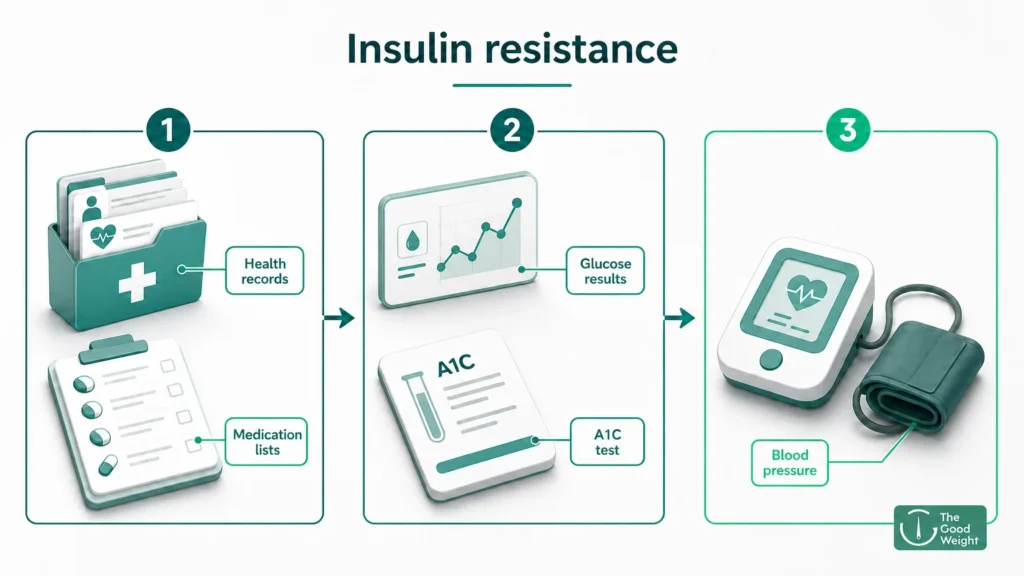
Step 1: Understanding your health story
The appointment may begin with questions about your current concerns, prior health records, family history, meal timing, work pattern, sleep, stress, movement, and previous attempts to change weight or eating habits. Your clinician may also ask about pregnancy history where relevant, alcohol use, smoking, and symptoms that could suggest another health issue.
This history matters because two people with similar weights may have very different health risks and priorities. One person may be managing prediabetes after gestational diabetes, while another may be experiencing medication-related weight changes or untreated sleep apnoea. A useful plan should respond to the underlying context rather than assume that everyone needs the same intervention.
Step 2: Reviewing appropriate measurements and records
Depending on your circumstances, a clinician may review measures such as blood pressure, weight trends, waist-related measures, and prior laboratory reports. If blood glucose assessment is appropriate, clinicians may use established measures such as the A1C test, which reflects an estimate of average blood glucose over roughly the previous three months. The A1C test is used to help identify prediabetes and diabetes, but it is not interpreted in isolation.
Existing reports can be valuable. Bringing past glucose results, cholesterol and liver-related reports, medication lists, and discharge summaries can help avoid repeating assumptions and allow the clinician to see patterns over time. Your doctor will decide what information is useful for you; this article is not a substitute for individual testing recommendations.
Step 3: Deciding whether monitoring or follow-up is useful
Some people may benefit from repeat measurements, structured follow-up, diabetes education, nutrition counselling, or monitoring that helps clarify glucose patterns. Others may need attention directed first to sleep, medication review, blood pressure, a separate endocrine concern, or a more comprehensive weight-management plan. The decision should reflect clinical need rather than a desire to chase every available number.
For people with diabetes, glucose goals are also individualised. They can vary with age, overall health, pregnancy, risk of low blood sugar, treatment type, and personal priorities; glycaemic goals should be set through shared decision-making. This is why a friend’s target, wearable graph, or online template may not be safe or useful for you.
Why do the same diet rules not suit everyone?
Online nutrition advice often presents certainty as a virtue: eliminate rice, avoid fruit, eat only within a narrow time window, or follow a fixed carbohydrate limit. Such rules can sound simple, but simplicity is not the same as suitability. For blood sugar control, food planning works best when it can be followed consistently, meets nutrition needs, and fits medical treatment.
| One-size-fits-all online advice | Individualised planning |
|---|---|
| “All carbohydrates are bad.” | Considers carbohydrate quality, portions, meal timing, and how foods fit into your overall pattern. |
| “Eat exactly this many grams each day.” | Considers glucose patterns, medicines, activity level, hunger, and health goals. |
| “Skip meals to lower sugar.” | Considers whether regular meals are important for appetite, work demands, or medication safety. |
| “Replace traditional meals with diet foods.” | Works with cultural meal routines, preferences, budget, cooking access, and family life. |
| “If it worked for me, it will work for you.” | Uses follow-up to adjust a plan based on your response and changing needs. |
Carbohydrates are not one single food. Highly refined, low-fibre foods may affect glucose differently from minimally processed options that contain fibre, protein, and other nutrients. A meal of rice, dal, vegetables, curd, and a protein source has a different nutritional context from a large sugary drink or a refined snack eaten on its own. The goal is not to label a familiar staple food as “good” or “bad,” but to consider portions, preparation, combinations, and frequency.
Nutrition evidence supports individualisation rather than a single eating pattern for every adult with diabetes or prediabetes. The American Diabetes Association’s nutrition guidance emphasises personalised eating plans that account for preferences, culture, access to food, and health goals. If you use insulin or medicines that can lower glucose, abrupt fasting, drastic carbohydrate restriction, or meal skipping may carry particular risks and should be discussed with the prescribing clinician first.
A qualified nutrition professional can help translate general principles into meals you actually enjoy and can prepare. The Good Weight’s nutrition and weight-loss support is designed to make food planning practical within a broader doctor-led care plan, rather than prescribing an extreme diet detached from your health needs.
What changes can support metabolic health alongside medical care?
Lifestyle changes can meaningfully support metabolic health, but they should not be presented as guarantees of “reversal” or a replacement for medical care. Sustainable progress usually comes from repeatable habits, realistic adjustments, and appropriate follow-up – not from trying to overhaul every part of life at once.
Use this practical checklist as a starting point for discussion with your care team:
-
Build more regular eating rhythms. For many people, planning meals and snacks around work and family routines can reduce long gaps followed by overeating or highly refined convenience foods. The right schedule varies, particularly for people using glucose-lowering medicines, so medication safety should come before fasting trends.
-
Create balanced meals more often. Include a source of protein, fibre-rich vegetables or pulses, and an appropriate carbohydrate portion where suitable. This approach can improve fullness and make meals more nutritionally complete without demanding that you eliminate staple foods.
-
Choose movement you can repeat. Walking, cycling, swimming, resistance training, yoga, or structured exercise can all have a place, depending on mobility and preferences. Physical activity can improve insulin sensitivity, and both aerobic activity and resistance exercise are recognised components of diabetes care, but a safe starting level should reflect your current health and fitness.
-
Protect sleep and recovery. Consistently short or poor-quality sleep can make appetite regulation, activity, and daily food planning more difficult. If loud snoring, witnessed breathing pauses, or severe daytime sleepiness are present, ask a clinician whether further evaluation is needed.
-
Keep follow-up appointments. Metabolic health changes over time, as do medicines, routines, and goals. Reviewing what is working – and what is not – allows adjustments before frustration leads to abandoning the plan altogether.
When should you seek prompt medical advice?
What symptoms should not be managed with online advice?
Seek prompt medical advice for new or worsening excessive thirst, frequent urination, vomiting, abdominal pain, confusion, fainting, marked weakness, rapid unexplained weight loss, or blurred vision – especially if you have diabetes, prediabetes, or a history of high glucose. If symptoms are severe, sudden, or accompanied by difficulty breathing, confusion, or inability to keep fluids down, seek urgent or emergency care. These situations need timely clinical evaluation, not dietary experimentation.
Should I change diabetes medication if I reduce carbohydrates or start fasting?
No. Do not reduce, stop, double, or otherwise adjust prescribed diabetes medicines based on an app, social-media post, or another person’s experience. Medicines such as insulin and some glucose-lowering tablets can contribute to low blood sugar when food intake or activity changes, and hypoglycaemia prevention requires an individual treatment plan. Contact the clinician who prescribes your medication before making major changes to meals, fasting, supplements, or exercise.
What if my home readings are much higher or lower than usual?
Follow the action plan you have been given by your care team. If readings are repeatedly outside your usual range, you feel unwell, or you are unsure how to respond, contact a qualified clinician promptly. Avoid trying to “correct” concerning readings with unproven supplements, excessive exercise, skipped meals, or unsupervised medication changes.
A more useful path to blood sugar control
Insulin resistance is not a label to assign yourself after one symptom or one viral post. Meaningful blood sugar control begins with understanding your individual risks, health measures, medicines, and routines, then choosing changes that are both medically appropriate and sustainable.
If you are concerned about weight, glucose patterns, energy changes, or a family history of metabolic conditions, arrange a doctor-led metabolic-health consultation at The Good Weight. Our Chennai team can help you build a personalised plan that brings together assessment, nutrition support, activity guidance, and follow-up for lasting, evidence-based care.