
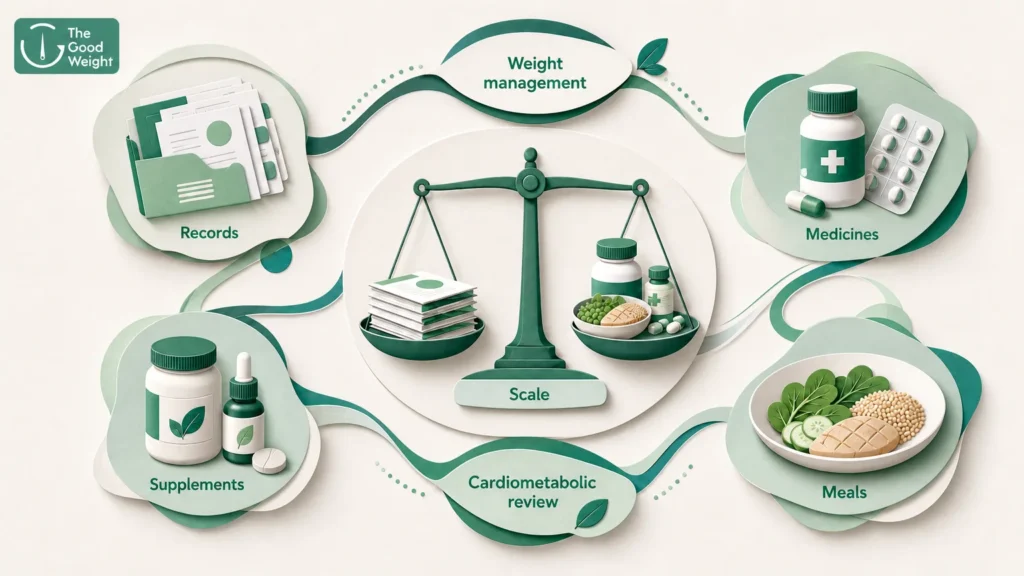
If you are considering weight loss because your energy has changed, diabetes runs in your family, or a recent health check has raised questions, the number on the scale is only one part of the picture. A meaningful weight-management consultation should also consider the health factors that can affect your heart, blood sugar, sleep, mobility, and long-term wellbeing.
Weight is associated with cardiometabolic health, but it does not define a person’s health on its own. Two people at a similar weight may have very different blood-pressure readings, glucose levels, sleep quality, medication needs, activity limitations, and personal goals. A doctor-led review helps turn a broad wish to “lose weight” into a personalised plan that considers what is most relevant for you.
Why weight care is increasingly discussed alongside heart health
Body weight can be one contributing factor in conditions that affect the heart and metabolism, including high blood pressure, type 2 diabetes, abnormal cholesterol levels, fatty liver disease, and obstructive sleep apnoea. These concerns often overlap, which is why a weight-management plan may need to look beyond food choices and exercise alone.
This does not mean that everyone in a higher-weight body has the same risk profile, or that a lower-weight person cannot have metabolic concerns. Health risk is influenced by many factors, including family history, age, sleep, stress, smoking, medications, movement patterns, blood pressure, blood glucose, and blood lipid levels. The value of a clinical review is that it replaces assumptions with information that is specific to the individual.
Evidence-based obesity care also recognises that sustained support matters. The USPSTF recommends offering or referring adults with obesity to intensive, multicomponent behavioural interventions, which can include nutrition changes, physical-activity planning, problem-solving, and ongoing follow-up. For some people, further assessment or medical treatment may also be appropriate, depending on their health profile.
Weight goals may therefore support wider cardiometabolic care, but they should not be treated as a stand-alone scorecard. Progress might involve better blood-pressure control, improved eating consistency, greater strength, more restorative sleep, or a reduction in diabetes risk factors – whether or not the scale changes quickly.
What a doctor-led cardiometabolic review can include
A consultation is not a test that you can pass or fail. It is a structured conversation and assessment designed to understand the factors that may be influencing weight, symptoms, and metabolic health. The exact tests and recommendations depend on your history and clinical needs.
Health and family history
A clinician may ask about a family history of diabetes, heart disease, high blood pressure, high cholesterol, thyroid conditions, sleep apnoea, or early cardiovascular events. They may also ask when weight changes began, whether there have been major life changes, and whether you have experienced repeated cycles of weight loss and regain.
This discussion can help identify whether additional metabolic screening, a more gradual approach, or specialist follow-up may be useful. It also makes space for personal goals, such as having more stamina for work and family life, improving fertility planning, reducing joint discomfort, or feeling more confident about a health concern raised during a routine check-up.
Blood pressure and glucose-related measures
Blood-pressure measurement is a routine but important part of a cardiometabolic review. Elevated blood pressure often has no obvious symptoms, so knowing your readings can help a clinician decide whether lifestyle support alone is appropriate or whether you should discuss further evaluation with the relevant healthcare professional.
Depending on your situation, a clinician may also review fasting glucose, HbA1c, or other blood tests already available in your records. Lifestyle changes have an established role in diabetes prevention: the Diabetes Prevention Program used nutrition, activity, and behaviour-change support to reduce diabetes risk in high-risk adults. Your doctor will determine whether similar elements are relevant to your own care.
Sleep, medicines, activity, and nutrition context
Sleep deserves attention because disrupted sleep can affect hunger, energy, concentration, and the ability to maintain daily routines. Snoring, witnessed pauses in breathing, daytime sleepiness, or waking unrefreshed may warrant a broader discussion rather than being dismissed as a consequence of a busy schedule.
Your clinician may also review current prescriptions, over-the-counter products, supplements, hormonal factors, movement limitations, and a realistic picture of your meals. This is not about judging what you eat. It is about understanding practical barriers – such as long commutes, shift work, caregiving, frequent restaurant meals, or pain during exercise – so that recommendations can fit everyday life in Chennai.
Signs that a broader review may be worthwhile
Many people seek support simply because they want a more structured approach to weight management. That is a valid reason to book an appointment. A broader medical review can be especially useful if any of the following apply, although these signs do not diagnose a condition on their own.
-
A close family history of diabetes, hypertension, heart disease, or high cholesterol. Family history does not determine your future, but it can help guide the timing and scope of preventive checks. Bringing this information to a consultation can help your clinician decide which markers are most relevant to discuss.
-
Blood-sugar concerns or changes in routine test results. This may include a previous comment about high fasting glucose, prediabetes, gestational diabetes, or HbA1c results. A clinician can explain what a result means in context and whether repeat testing, nutrition support, or follow-up is appropriate.
-
Breathlessness, reduced exercise tolerance, or concerning blood-pressure readings. Breathlessness can have many possible causes, ranging from deconditioning to heart, lung, or other medical concerns. Do not assume weight is the explanation; seek timely medical assessment, especially if symptoms are new, worsening, severe, or accompanied by chest pain, fainting, or palpitations.
-
Loud snoring, interrupted breathing during sleep, morning headaches, or persistent daytime fatigue. These symptoms can affect quality of life and make lifestyle changes harder to sustain. A doctor can decide whether further sleep assessment should be considered.
-
Repeated weight cycling or increasingly restrictive dieting. Losing and regaining weight can be emotionally exhausting, and severe restriction may be difficult to maintain. A more comprehensive plan can focus on regular meals, adequate nutrition, realistic activity, and support that does not rely on extremes.
Why treatment plans can differ between individuals
A personalised weight-management program should not assign identical advice to people with the same body weight. One person may mainly need support with meal structure, protein and fibre intake, and a gradual return to activity after a sedentary period. Another may need diagnostic follow-up for blood pressure, sleep symptoms, glucose concerns, or medication-related weight changes before a plan can be safely tailored.
For many people, nutrition and activity support form the foundation. A safe, successful weight-loss program includes a realistic eating plan, regular physical activity, behaviour-change support, and a plan for maintaining progress. Working with a weight management nutritionist can help translate these principles into meals that suit cultural preferences, work schedules, budgets, and family routines rather than relying on generic restrictions.
Medication review may also be part of doctor-led treatment. Some medicines can influence appetite, weight, glucose, or blood pressure, while certain prescription weight-management medicines may be considered for selected patients after an assessment of benefits, risks, contraindications, and follow-up requirements. Learn more about medical weight-loss care that is supervised by a clinician rather than viewing medication as an automatic or universal solution.
In other situations, a clinician may discuss endoscopic or bariatric procedures as possible options, particularly when weight-related health concerns are significant and less intensive approaches have not been sufficient. These are not quick fixes, and they require careful screening, informed decision-making, and long-term nutrition support. The appropriate pathway depends on your health history, goals, readiness, and the clinical assessment – not a promise based on a single measurement.
Be cautious about weight management supplements that promise dramatic results. The NIH notes that evidence for many weight-loss supplements is limited and some ingredients can cause side effects or interact with medicines. Products marketed as “natural” are not automatically safe, and some weight-loss products have been found to contain hidden drug ingredients, prompting FDA warnings about tainted weight-loss products.
What sustainable progress can look like beyond kilograms
Weight can be one useful measure, but weighing alone rarely captures the full impact of a care plan. If daily or weekly weighing feels helpful, use it as one data point rather than a verdict on your effort. Fluid shifts, travel, menstrual cycles, medication changes, and variations in routine can all affect short-term numbers.
A more complete tracking framework may include:
- energy and alertness through the day;
- sleep duration, quality, and snoring symptoms;
- strength, walking comfort, and physical capacity;
- meal regularity and confidence with portion planning;
- waist measurement trends, if your clinician recommends tracking them; and
- clinician-selected measures such as blood pressure, HbA1c, glucose, or lipid levels.
These markers help create a more realistic definition of success. For example, consistently eating breakfast, taking regular walks without breathlessness, or sleeping better may represent meaningful progress even before substantial weight change is visible. Sustainable weight loss is generally built through repeatable habits and appropriate medical support – not punishment, extreme dieting, or a short-term challenge.
How to prepare for an initial consultation
You do not need to have perfect records before seeing a clinician. However, a little preparation can make your first appointment more useful and reduce the chance that important details are overlooked.
Bring any recent health reports you have, particularly blood glucose or HbA1c results, cholesterol reports, thyroid tests, blood-pressure records, or discharge summaries. Make a list of all prescription medicines, injections, vitamins, herbal products, and supplements, including doses if possible. If you have tried structured diets, exercise plans, medicines, or procedures before, note what helped, what did not, and what made the plan difficult to continue.
It can also help to describe a typical week rather than an ideal one. Consider your usual meals, work timings, commute, sleep, alcohol intake, activity, stress levels, and family responsibilities. Finally, write down your priorities: perhaps preventing diabetes, improving energy, preparing for pregnancy, becoming more active with your children, or managing weight after a procedure. Clear goals help the clinician recommend care that feels practical rather than prescriptive.
Frequently asked questions
Do I need a cardiometabolic review if I feel well?
Not everyone needs extensive testing, and feeling well is a positive sign. However, conditions such as high blood pressure and early glucose abnormalities can be silent, particularly when there is a relevant family history or previous abnormal result. A clinician can advise which routine measurements or tests are appropriate for your age, symptoms, and health background.
Will I be put on medication at the first appointment?
Not necessarily. Many people begin with personalised nutrition, activity, sleep, and behavioural support, alongside any appropriate diagnostic follow-up. Medication is only one possible tool and should be considered by a qualified clinician after discussing your medical history, potential benefits, risks, and the monitoring required.
Can I follow a plan without giving up familiar foods?
In most cases, yes. Sustainable nutrition support should work with your usual food culture and household routine rather than treating familiar meals as the problem. The goal is often to improve meal balance, timing, portions, protein and fibre intake, and consistency in a way you can continue.
A health-focused next step
The most useful weight-management plan is not defined only by kilograms lost. It considers your health markers, symptoms, daily routines, personal goals, and the treatment options that are medically appropriate for you.
If you are looking for a Chennai-based, doctor-led review, arrange a consultation with The Good Weight to discuss the metabolic, cardiovascular, nutrition, and lifestyle factors that may be relevant to your care.