
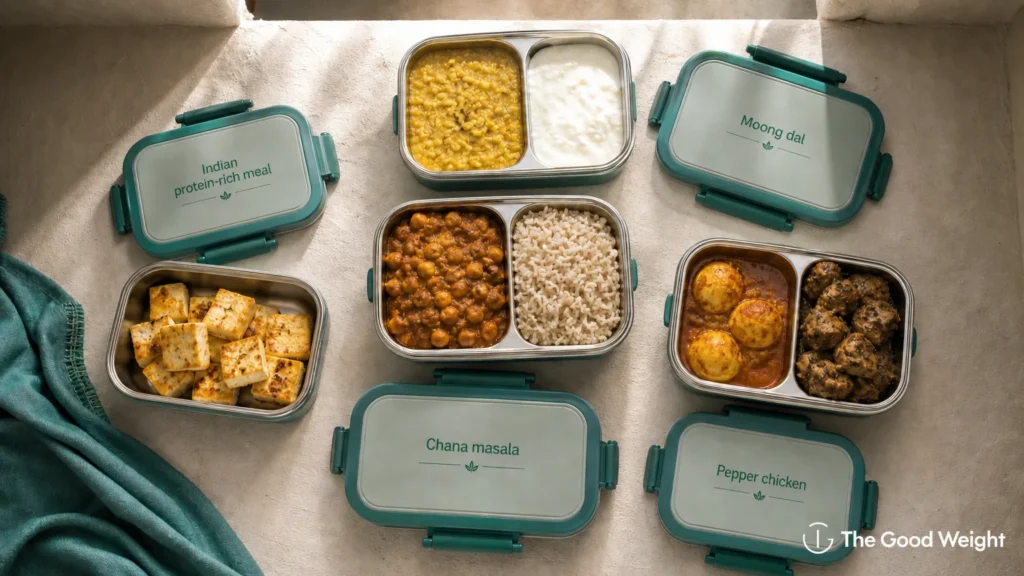
A higher-protein lunch is not automatically a better lunch for weight goals. If it is expensive, leaves you craving snacks by mid-afternoon, or is too time-consuming to cook again, it may not fit into a sustainable routine. A more useful Indian protein-rich meal combines protein with vegetables, pulses or whole grains, familiar flavours and a portion that suits your appetite.
Mayo Clinic notes that protein-rich foods may support fullness, preservation of lean mass and weight management when included within an overall healthy diet. But protein is only one part of the picture. Fibre-rich plants, adequate carbohydrates and enjoyable food can make a lunch more satisfying and easier to repeat through a busy Chennai workweek.
Build a balanced Indian lunch box
Use this simple formula rather than trying to make every meal extremely low in calories or centred on one “superfood”:
- Choose a protein anchor: dal, chana, rajma, curd, paneer, tofu, eggs, fish or chicken. Pulses are especially practical because they provide both protein and fibre; pulses contribute protein, dietary fibre and several micronutrients.
- Add plenty of vegetables: include a cooked poriyal, kootu, sambar vegetables, salad or stir-fry. Variety matters because different vegetables contribute different nutrients, textures and flavours.
- Include a satisfying staple: use a measured serving of rice, millet, chapati, dosa or another familiar carbohydrate. A lunch does not need to eliminate rice to support sustainable weight loss; it needs a portion that works alongside protein and vegetables.
- Finish with flavour: lemon, herbs, curry leaves, mustard seeds, ginger, garlic, pepper, curd or a modest amount of chutney can make repeat meals more appealing without relying heavily on packaged sauces.
India’s dietary guidance encourages varied meals built around cereals, millets, pulses, vegetables, fruit and other food groups rather than an overly restricted pattern. The National Institute of Nutrition dietary guidelines emphasise diversity and balance across food groups. The five lunch boxes below use that principle in practical portions.
Five repeatable Indian protein-rich meal ideas
Nutrition estimates are approximate for one adult serving and will vary with brand, oil quantity, recipe method and portion size. A registered dietitian should verify them before using them as a personalised plan.
1. Moong dal vegetable khichdi with curd and salad
Make khichdi with split moong dal, rice or millet, carrots, beans, spinach and cumin. Pack it with plain curd and a side of cucumber, tomato and lemon. The dal provides protein, while vegetables and moong contribute fibre; curd adds another protein source and makes the meal feel more complete.
Approximate per serving: 18-22 g protein; 430-500 kcal.
For a lighter version, reduce the grain slightly and increase vegetables. For a more filling version after an active morning, keep the grain portion steady and add roasted chana or a small bowl of extra curd rather than adding more ghee.
2. Chana masala, brown rice and cabbage poriyal
This is an affordable vegetarian lunch box that holds up well after reheating. Use cooked kala chana or kabuli chana in tomato-onion masala, pair it with a modest serving of brown rice or hand-pounded rice, and add cabbage poriyal with peas. Batch-cooked chickpeas can also be frozen in portions, which reduces weekday preparation.
Approximate per serving: 19-24 g protein; 460-540 kcal.
Chana is a useful option when paneer or meat does not fit the week’s budget. If brown rice is not available or enjoyable, ordinary rice can still fit; focus on the combined plate rather than treating one ingredient as the entire meal.
3. Paneer or tofu bhurji with two chapatis and mixed vegetables
Sauté paneer or firm tofu with onion, tomato, capsicum, turmeric, chilli and coriander. Pack it with two medium whole-wheat chapatis and a generous portion of beans, carrot or bottle-gourd sabzi. Tofu is a convenient dairy-free alternative, while paneer may be more satisfying for people who prefer a richer texture.
Approximate per serving: 24-30 g protein; 440-560 kcal.
Choose lower-fat paneer if that suits your calorie needs, but avoid making the meal so small that it leads to afternoon hunger. This is a good example of an Indian fibre-rich meal that still includes familiar staples rather than replacing lunch with a shake or snack bar. For more vegetarian meal ideas, explore this guide to protein-rich Indian vegetarian meals for weight loss.
4. Egg curry with millet and beetroot-cucumber kosambari
Two eggs in a light tomato-onion curry offer a straightforward protein base. Add cooked millet such as kambu, thinai or varagu, plus beetroot-cucumber kosambari with lemon and a spoonful of soaked moong dal. The different textures help a packed lunch feel less repetitive than another bowl of dal and rice.
Approximate per serving: 20-25 g protein; 420-510 kcal.
Cook the egg curry the night before and refrigerate it promptly in a covered container. If you do not eat eggs, replace them with tofu cubes or an extra serving of chana; the flavour base and lunch-box structure still work well.
5. Pepper chicken, rasam and rice with beans poriyal
For a non-vegetarian option, use boneless chicken cooked with pepper, ginger, garlic and curry leaves. Serve it with rasam, a measured portion of rice and beans poriyal or another non-starchy vegetable. This combination offers familiar South Indian flavours while including both protein and fibre-rich foods.
Approximate per serving: 30-36 g protein; 450-550 kcal.
Keep the chicken preparation relatively dry so it travels well, and use rasam in a leak-proof container. Fish can replace chicken when it is available and suits your preference, although it is best prepared close to the day it will be eaten.
Batch-prep these lunches in two short sessions
During one weekly shop, buy two protein options, two pulses, vegetables for poriyal and curries, curd or tofu, and one or two staple grains. Cook a larger batch of chana or moong dal, wash and chop vegetables, and make a basic onion-tomato masala. Store these in small containers so weekday cooking becomes assembly rather than starting from scratch.
In the first 45-minute session, cook the pulse base, rice or millet, and two vegetable sides. In the second session, make paneer bhurji, egg curry or pepper chicken for the next two days. Refrigerate cooked food in shallow, covered containers and use an insulated lunch bag with an ice pack when refrigeration is not available at work.
Make the plan fit your budget, appetite and schedule
If paneer, chicken or fish are costly, rely more often on moong, chana, rajma, curd and roasted chana. If dairy does not suit you, choose tofu, soy chunks or pulses; if eggs are not part of your diet, build extra protein through dal, curd, tofu or legumes. Small changes can preserve the basic formula without making lunch feel like a separate “diet” meal.
If you are hungry soon after lunch, first add vegetables, dal, curd or a little more protein before simply cutting carbohydrates further. If portions feel too large, divide one recipe into two smaller meals, but ensure the meal still contains enough protein and fibre-rich foods. People managing blood glucose may find it helpful to use a more structured approach such as this doctor-led diabetic meal chart with Indian foods.
When should you get personalised advice?
Do calorie and protein targets suit everyone?
No. Protein and calorie needs depend on body size, activity, medical history, appetite, medications and weight goals. Indian nutrient recommendations are designed as population-level guidance, not as a substitute for individual clinical assessment.
Who should not copy these portions directly?
Seek personalised input if you have diabetes, kidney disease or reduced kidney function, are pregnant or breastfeeding, have recently changed medication, experience persistent nausea or poor appetite, or are losing weight rapidly. These situations may require changes to carbohydrate timing, protein amount, fluids, supplements or food texture.
The most repeatable lunch is not the one with the highest protein number. It is the one you can prepare, enjoy and adjust consistently while supporting your metabolic health. For portions tailored to your health history, appetite and weight goal, arrange a dietitian-supported nutrition consultation with The Good Weight.