
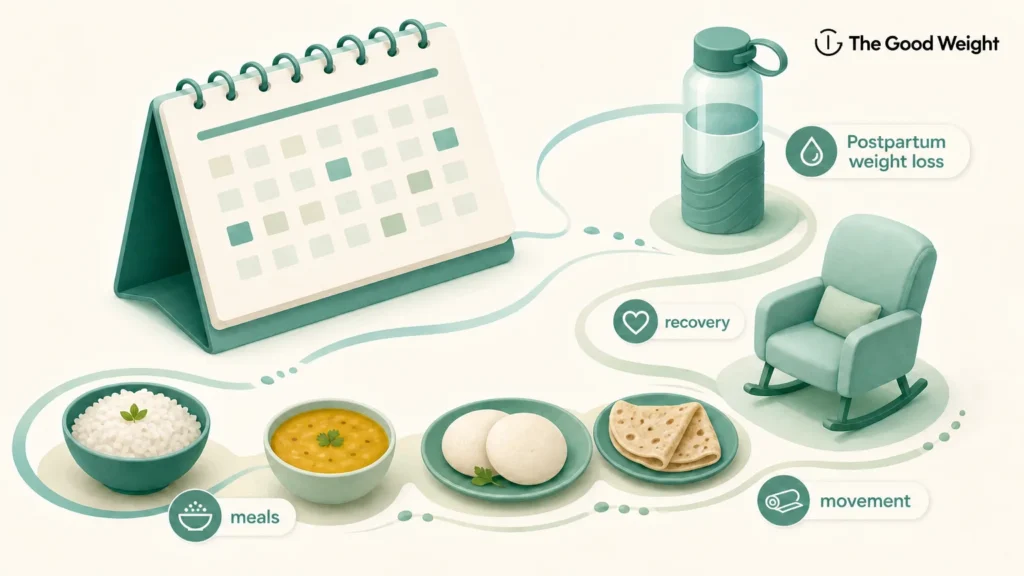
When meals happen between feeds, and sleep arrives in fragments, advice to “eat less and move more” can feel disconnected from life after childbirth. Post-delivery weight loss also raises questions about healing, milk supply and whether exercise is safe after a caesarean or complicated pregnancy. The first six weeks are better approached as a recovery period than a weight-loss deadline.
This guide uses an illustrative planning example, not a patient case or reported result. It shows how meals, support and movement might fit together without calorie targets or promised weight changes. Here, “reset” means rebuilding supportive routines – not resetting your body.
What should take priority before trying to lose weight?
Recovery is part of responsible weight care because your body is healing while daily demands have increased. Bleeding, wound discomfort, feeding difficulties and disrupted sleep can affect what feels manageable. Keep your postnatal appointments, follow discharge instructions and seek earlier review when something feels wrong. After a complicated pregnancy or birth, your maternity team’s advice takes priority over any general timetable.
Nourishment matters whether you breastfeed, formula-feed or combine both. For breastfeeding parents, estimated needs are generally 330-400 additional kilocalories daily compared with pre-pregnancy intake, although individual needs vary. That is context, not a prescription or an amount to subtract from meals. Sleep and mood also belong in the conversation: practical help and protected rest may be more useful early goals than monitoring the scale.
What might a realistic first six weeks look like?
Imagine a parent returning home with interrupted sleep, unpredictable feeding times and limited meal-preparation time. The following example offers possible priorities, not milestones everyone should reach. A caesarean, significant tear, infection or other complication may change the sequence entirely.
Weeks one and two: make essentials easier
A supporter could prepare breakfast, refill a water bottle and portion lunch before leaving. The parent’s priorities might be eating regularly, taking prescribed medicines and attending follow-up appointments. Any movement should follow discharge advice; walking around the home, if permitted and comfortable, need not become a workout.
Weeks three and four: repeat what helps
If recovery allows, the next step could be keeping convenient snacks beside a feeding chair and accepting help with shopping or laundry. Comfortable, clinician-approved movement might remain brief, with rest afterwards. On a difficult day, returning to meals, hydration and symptom monitoring is a sensible adjustment – not a setback.
Weeks five and six: review rather than escalate
A useful review would ask whether pain is improving, meals are accessible and activity causes symptoms. Bring these observations to your clinician instead of assuming six weeks automatically means clearance for dieting or exercise. Postpartum recovery and weight change take time; the purpose of this example is a workable routine, not a numerical result.
How can meals support recovery and fullness when time is limited?
Rather than adopting a restrictive post-delivery weight loss diet plan, build meals around protein, fibre-rich foods, staple carbohydrates and some fat. Protein options include dal, beans, tofu, paneer, eggs, fish or chicken; vegetables, fruit and pulses add fibre. Rice, idli, chapati, oats or potatoes can remain part of the meal. Adjust portions to appetite, feeding demands and clinical advice rather than removing an entire food group.
A vegetarian lunch might be rice, dal, vegetables and curd; a non-vegetarian version could include fish or chicken alongside vegetables and rice. Breakfast could be idli with sambar, or toast with eggs and fruit. Frozen vegetables, cooked lentils, boiled eggs and ready-to-eat curd reduce preparation demands. These are flexible combinations, not a compulsory menu.
Keep easy snacks available and a drink within reach, especially during feeds. Breastfeeding parents following vegan or limited diets should discuss vitamin B12 and other nutrient needs with a clinician. The Good Weight’s postpartum meal-planning guide offers further planning ideas. Use it alongside individualized advice, not as a deadline for reducing intake.
When and how should movement return?
A safe post-delivery weight loss exercise routine begins with recovery status, not a generic schedule. After an uncomplicated vaginal birth, gentle activity may be possible within days when you feel ready. After a caesarean or complications, ask your clinician when activity can resume. Permission for gentle walking does not automatically mean readiness for running, lifting or abdominal workouts.
Use this progression checklist at each stage rather than chasing fixed targets:
-
Check permission and comfort. Follow your maternity team’s restrictions. Choose an activity you can stop easily. Begin gently rather than testing your limits.
-
Check symptoms during and afterwards. Stop if movement causes pain, dizziness, increased bleeding or wound discomfort. Pelvic heaviness or leakage also deserves assessment. Do not push through symptoms to complete a session.
-
Change one thing at a time. If comfortable and cleared, extend activity gradually before adding intensity. Keep rest available afterwards. A pelvic-health physiotherapist can help when symptoms complicate progression.
Which signs mean I should seek additional support?
Is pain or bleeding something to push through?
No – worsening pain, increasing bleeding or a painful, red or draining wound needs prompt medical advice. Heavy bleeding, chest pain, breathing difficulty, fainting, a severe headache with visual changes, or one-sided calf pain or swelling requires urgent assessment. Do not wait for a routine weight-management appointment. Tell the treating team that you recently gave birth.
What if fatigue or weight changes seem unusual?
Some tiredness is expected, but persistent or disabling fatigue deserves review, particularly with dizziness, palpitations or unexplained weight change. A clinician may consider blood loss, anaemia, thyroid problems, medicines or other causes. Mention previous gestational diabetes or pregnancy-related high blood pressure and confirm your follow-up plan. Symptoms should guide assessment rather than automatically trigger dieting.
When should mood or eating difficulties prompt help?
Seek support if low mood, anxiety or food-related distress persists, worsens or affects daily functioning. Difficulty eating enough, bingeing or pressure to compensate for meals also warrants a compassionate conversation. Thoughts of harming yourself or your baby, confusion or hallucinations require emergency help. You do not need to manage these symptoms alone.
What if breastfeeding is painful or supply seems low?
Ask your maternity team or a lactation professional about painful feeding, concerns about intake or your baby’s growth. Do not assume restricting food will help, or that breastfeeding guarantees weight loss. Avoid drastic calorie restriction while breastfeeding, and discuss feeding concerns before changing intake substantially. Review weight-loss medicines and supplements with your prescriber rather than starting them independently.
Make the next step personal
The most useful early post-delivery weight loss tips protect recovery rather than accelerate change. Bring your recovery status, feeding routine, health history, medicines and realistic goals to a doctor-led consultation. At The Good Weight, ask how personalized nutrition and metabolic-health support could fit alongside your postnatal care. A structured plan should begin when it is appropriate for you – not when a six-week calendar ends.