
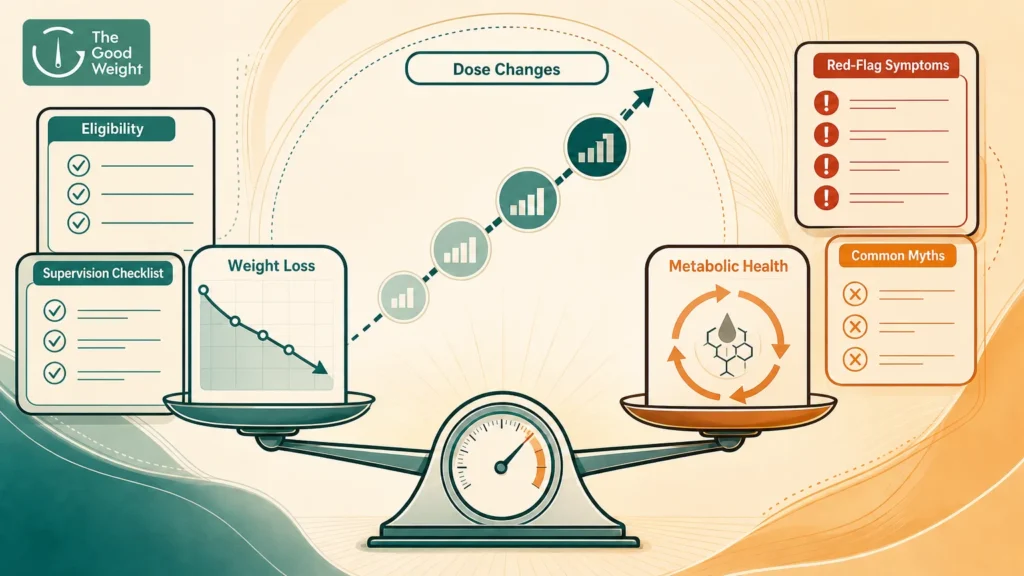
If you have been researching mounjaro for weight loss, you have probably already seen the same pattern online: dramatic before-and-after stories, short clips about “appetite disappearing,” and a lot of confident advice from people who are not evaluating your medical history. That creates a very specific kind of confusion. Many people move from curiosity to urgency before they have answered the more important questions: am I actually a candidate, what does safe treatment look like, and what should supervision include?
That decision gap matters. Mounjaro is not simply a product to try; it is a treatment pathway that should be judged on eligibility, dosing logic, side-effect monitoring, nutrition planning, and long-term maintenance. For adults in India, especially those dealing with obesity, insulin resistance, PCOS, prediabetes, or type 2 diabetes risk, the goal is not to chase social-media outcomes. The goal is to make a high-quality decision with proper medical oversight and realistic expectations.
Why so many people search for Mounjaro before they are ready to start
Interest in Mounjaro usually begins with a result, not a diagnosis. Someone hears that a friend lost a large amount of weight, or sees a post suggesting that one weekly injection can solve years of struggle with hunger and cravings. That story is compelling because it speaks to a real frustration: many adults have already tried calorie restriction, gym plans, intermittent fasting, or “healthy eating” cycles without getting durable results. When a medication appears to offer a different mechanism, naturally people want to know whether it could finally work for them.
But there is a difference between being interested in Mounjaro and being appropriate for it. Treatment decisions should not be made only on the basis of wanting faster weight loss. A doctor-supervised pathway looks at the full picture: your BMI, waist circumference, metabolic health, prior attempts, eating pattern, medication history, side-effect risk, and what kind of follow-up support you will need. Without that context, even a promising medication can be used poorly.
This is why the right starting question is not “How quickly can I get the injection?” It is “What problem is this treatment solving for me, and is it the best-fit option?” In some cases, the answer may be yes. In other cases, a person may need a different medical plan, more diagnostic workup, or stronger nutrition and lifestyle support before considering medication. If you are exploring medically guided care, tools like diagnostic tests and products can be part of a more informed starting point.
Who may be considered for Mounjaro and who may need a different plan
Eligibility is not just about desire; it is about medical fit. In practice, clinicians often consider anti-obesity medications for adults with overweight or obesity, especially when there are added metabolic risks such as prediabetes, type 2 diabetes, PCOS, fatty liver, high triglycerides, sleep apnea, or hypertension. In Indian patients, metabolic risk can appear at lower BMI thresholds than in some Western populations, which is one reason local clinical judgment matters rather than copying generic advice from abroad.
A doctor will usually want to know what has already been tried and for how long. That is not a test of willpower. It helps distinguish between a person who needs a structured medical obesity plan and someone whose main issue may be an inconsistent routine, unmanaged sleep, untreated thyroid concerns, emotional eating, or a medication side effect. Mounjaro may be useful in the first scenario, but it may not be the first answer in every case.
There are also situations where extra caution, postponement, or an alternative plan may be more appropriate. People with certain gastrointestinal symptoms, a history that raises concern about pancreatitis, significant dehydration risk, major nutritional instability, pregnancy planning, or other important medical contraindications need a proper review before starting anything. A program that skips this step and jumps directly to prescribing is not protecting decision quality.
That is especially important for women, who may be weighing Mounjaro alongside PCOS symptoms, fertility planning, postpartum changes, or insulin resistance. A thoughtful review looks beyond the scale. It asks whether treatment supports overall metabolic health, preserves nutritional adequacy, and fits the patient’s current life stage. Good care should feel personalized, not templated.
How Mounjaro dose progression works in real life
One of the most misunderstood parts of mounjaro treatment is dosing. People often assume that higher doses automatically mean better or faster weight loss. In supervised care, dose progression is usually more gradual and more strategic than that. The starting dose is typically used to assess tolerance, not to chase an immediate dramatic result.
Why dose changes are usually slow
Clinicians usually increase dose step by step so the body has time to adjust. This matters because medications in this class can affect appetite, gastric emptying, nausea, bowel habits, meal size tolerance, and hydration patterns. If someone is already experiencing significant side effects at a lower dose, pushing upward too quickly may worsen adherence rather than improve results.
A slower progression also gives time to see whether the current dose is already doing enough. Some patients notice clear appetite regulation, reduced snacking, and better portion control before they ever reach a higher step. In that case, the best next move may be to stay where they are for longer rather than escalating automatically.
What a clinician should monitor before increasing the dose
Before a dose increase, the question is not only “Has weight changed?” A good review also asks: Is hunger meaningfully improved? Is protein intake adequate? Is the patient skipping meals because of nausea? Are bowel symptoms manageable? Is hydration slipping? Is energy stable enough to continue walking, resistance exercise, and daily function? These are practical markers of whether the medication is helping in a sustainable way.
This is one reason medication-only follow-up is incomplete. If appetite falls sharply but food quality collapses, a patient may lose weight while under-eating protein and struggling to protect muscle. That is not a small detail. Long-term success depends on preserving strength, function, and metabolic health, not merely reducing body weight. A supervised program should be able to connect medication with food structure and monitoring, not treat them as separate issues.
What patients should expect during the first phase
In the early weeks, many people are looking for reassurance that they are “responding.” But response is not judged only by dramatic weekly changes on the scale. It can also include less food noise, improved fullness, fewer binges, and better control around trigger foods. Those are clinically meaningful shifts, especially for people who have struggled with appetite regulation for years.
At the same time, the first phase is where unrealistic expectations cause trouble. If someone expects appetite to disappear completely or weight to drop every week without variation, they may become frustrated and self-adjust dose, skip food, or stop too early. Proper supervision helps interpret normal fluctuations and keeps the plan focused on safety and sustainability.
Side effects of Mounjaro injection: what is expected and what deserves a callback
Side effects should be explained before treatment starts, not after the patient is already worried. Many people do experience adjustment symptoms, especially early on or after a dose increase. These may include nausea, early fullness, bloating, constipation, loose stools, reduced appetite, or mild fatigue. While these can be uncomfortable, they are often monitored as part of routine treatment adjustment.
Expected adjustment symptoms
The key word is manageable. If symptoms are mild, short-lived, and improving with hydration, slower eating, meal-size adjustment, and clinician guidance, they may fall into the expected adjustment category. The practical goal is not to “push through everything,” but to identify patterns and make the plan more tolerable.
This is also where nutrition support matters. Someone who feels full quickly may need help reorganizing meals so protein intake does not drop too low. Someone with nausea may need temporary meal modifications rather than random advice from social media. Symptoms and food planning often need to be managed together.
Red-flag symptoms that need faster review
Some symptoms deserve prompt medical attention rather than routine follow-up. Severe or persistent vomiting, inability to keep fluids down, marked dehydration, severe abdominal pain, or symptoms that feel intense, unusual, or rapidly worsening should not be treated as normal adjustment. A patient should know exactly whom to contact and how quickly.
A legitimate program should make this pathway explicit before the first injection. If there is no clear callback system, no dose review process, and no guidance about when symptoms are no longer routine, that is a supervision gap. Safe obesity treatment depends as much on monitoring and response planning as it does on prescribing.
The supervision checklist: what a credible Mounjaro program in India should answer
If you are comparing programs, look beyond whether they can provide the injection. Ask whether they can manage the treatment pathway. A credible service should be able to explain total costs, follow-up frequency, what happens if side effects appear, and how nutrition support is built into care. Transparency is not a premium feature; it is a basic quality marker.
It should also be clear what baseline review is done before starting. That may include medical history, weight history, metabolic risk assessment, medication review, and in some patients a need for additional evaluation. If a program talks only about ordering pens and not about assessment, that is a sign to pause. Resources such as diagnostic tests and products can support more grounded decision-making when used as part of supervised care rather than as a substitute for it.
Another essential question is how the program protects muscle and overall nutritional status during weight loss. If appetite drops, many patients unintentionally eat too little protein and become less active. A well-designed plan should address protein targets, meal structure, hydration, resistance training, and follow-up adjustments. Weight loss without muscle protection can undermine long-term outcomes.
Finally, ask about maintenance. What happens after the early weight-loss phase? How does the team think about dose continuation, taper decisions if relevant, relapse prevention, and behavioral support? Injections alone do not solve maintenance. A program should be able to describe what the next stage looks like, not just how to begin.
Common myths about Mounjaro that social media often gets wrong
Myth: Higher dose means faster success
Reality is more nuanced. A higher dose is not inherently “better” if the current dose is already effective or if side effects are limiting function, food quality, or adherence. Success depends on the right dose for the right patient at the right time, not the fastest escalation possible.
Myth: If appetite is low, nutrition no longer matters
This is one of the most damaging misunderstandings. When appetite falls, nutrition matters more, not less. Patients may need more deliberate planning to meet protein needs, maintain hydration, preserve muscle, and avoid turning reduced appetite into poor nourishment. Medication can support appetite regulation, but it does not replace the need for structured eating.
Myth: Injections alone fix regain forever
Weight regulation is complex, and regain risk does not vanish simply because a medication helped in the short term. Long-term results are more likely when treatment includes behavior support, food planning, activity, monitoring, and a realistic maintenance strategy. The best programs talk about what happens after weight loss, because that phase is where many unsupervised attempts fall apart.
The real decision is not whether Mounjaro is popular, but whether it is appropriate for you
For many adults in India, mounjaro may be a critical part of a medically supervised weight-loss plan. But the quality of the outcome depends heavily on how the treatment is evaluated and managed. Good care starts with candidacy, continues through dose progression and side-effect monitoring, and stays focused on nutrition, muscle protection, and maintenance.
If you are considering this pathway, the most practical next step is not to self-prescribe from internet advice. It is to book a supervised eligibility review and ask better questions. At The Good weight, that conversation can cover whether you are a candidate, what monitoring you may need, how food planning fits in, and whether a GLP-1 pathway is the right evidence-based option for your goals.