
If you have PCOS and feel as though you are doing “everything right” without seeing the scale move, you are not imagining the challenge – and you are not failing. PCOS fat loss can feel slower because the condition may affect insulin sensitivity, appetite, energy, sleep, and the way your body stores fat. That does not make progress impossible. It means the most helpful plan is usually more structured and sustainable than simply eating less and exercising harder.
The internet is full of extreme advice: cut all carbohydrates, skip breakfast, do intense cardio every day, or buy a supplement that promises to “fix” your hormones. Most of these approaches are difficult to maintain and may leave you more hungry, tired, and discouraged. A better approach combines balanced eating, realistic calorie awareness, strength-focused movement, and medical support when needed.
This guide explains what genuinely supports fat loss with PCOS, what commonly backfires, and how to build a routine you can continue long enough to see results.
Why PCOS can make fat loss harder
Polycystic ovary syndrome is a common hormonal condition that can affect menstrual cycles, ovulation, androgen levels, skin and hair changes, and metabolic health. The World Health Organization notes that PCOS can affect women throughout their reproductive years and is linked with a higher risk of insulin resistance, type 2 diabetes, and other metabolic concerns. PCOS does not look the same for everyone, but weight changes and difficulty losing weight are common concerns.
Insulin resistance is one reason fat loss can feel more complicated. When your cells do not respond as efficiently to insulin, your body may need to produce more of it to manage blood glucose. Higher insulin levels can contribute to increased hunger, cravings, easier fat storage, and hormonal changes that may worsen PCOS symptoms. This is why the relationship between polycystic ovaries and weight loss is not simply about willpower or motivation.
Irregular cycles can also make progress harder to interpret. Hormonal fluctuations, water retention, constipation, changes in sleep, and stress can move the scale up or down even when you are following a consistent routine. It is possible to lose body fat while scale weight appears unchanged for a short period, especially around your period or after beginning strength training.
The important message is that PCOS may change the pace and strategy of fat loss, but it does not make sustainable weight loss unattainable. International PCOS guidance recommends lifestyle support – including nutrition, physical activity, and behavioral strategies – for women with PCOS, while recognizing that care should be individualized rather than based on one “perfect” diet or workout plan. The 2023 international evidence-based PCOS guideline emphasizes lifestyle management as a core part of care.
What helps most with PCOS fat loss
Create regular meal structure
A predictable eating pattern can make hunger easier to manage. This does not mean everyone must eat at the same exact times or follow a rigid meal schedule. It means avoiding the common cycle of barely eating all day, becoming overly hungry at night, and then feeling out of control around food.
For many people, three balanced meals and one planned snack work well. Someone with a busy morning might have eggs with vegetables and whole-grain toast, a yogurt bowl with fruit and nuts, or a protein smoothie paired with a piece of fruit. The goal is not a “perfect” breakfast; it is starting the day with enough protein and fiber to reduce the chance of a late-morning energy crash.
Prioritize protein and fiber
Protein supports fullness and helps preserve lean muscle while you are losing fat. Muscle is metabolically active tissue, and keeping it through weight loss supports strength, function, and body composition. Aim to include a meaningful protein source at each meal, such as eggs, Greek yogurt, tofu, paneer, lentils, fish, chicken, beans, or lean meat.
Fiber-rich foods can also make meals more satisfying while supporting steadier blood sugar. Vegetables, beans, lentils, fruit, oats, brown rice, whole-grain breads, and seeds are practical options. A meal such as grilled chicken or tofu, roasted vegetables, and a serving of rice is often more satisfying than a plate of vegetables alone – and far more realistic than avoiding carbohydrates altogether.
Use calorie awareness without turning food into a math problem
Body fat loss still requires an overall energy deficit, meaning that over time you use more energy than you consume. However, this does not require harsh restriction, daily punishment workouts, or tracking every bite forever. Severe calorie cuts often increase hunger, fatigue, food preoccupation, and the likelihood of overeating later.
Instead, look for lower-effort ways to reduce calorie intake while protecting fullness. You might build meals around vegetables and protein first, use smaller portions of calorie-dense foods such as oils and sauces, choose water or unsweetened drinks more often, and keep satisfying snacks available. If tracking helps you understand your current patterns, it can be useful for a limited period – but it should be a learning tool, not a source of anxiety.
A personalized eating plan may be especially useful if you have diabetes, prediabetes, emotional eating patterns, digestive symptoms, or a history of repeated dieting. The Good weight’s approach to diet-based weight loss support can help connect nutrition structure with your health history, lifestyle, and treatment needs rather than relying on a generic meal chart.
Build balanced meals instead of banning carbohydrates
There is no single PCOS diet that works best for every person. Research and clinical guidance support sustainable dietary patterns rather than one universally superior low-carbohydrate, low-fat, vegan, or fasting approach. Current evidence supports individualized lifestyle strategies for PCOS rather than a one-size-fits-all diet.
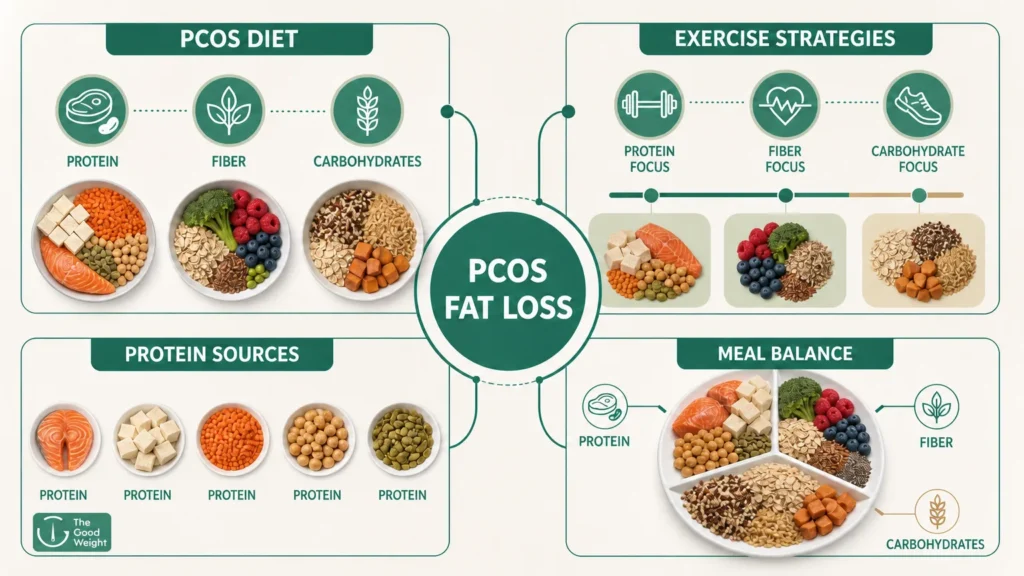
A useful starting point is to build meals with three components: protein, high-fiber carbohydrates, and colorful vegetables or fruit. For example, instead of having plain cereal for breakfast, you could pair oats with Greek yogurt, berries, and chia seeds. Instead of removing rice at dinner, you could serve a moderate portion alongside dal or chicken, vegetables, and curd.
Lower-glycemic foods may be useful because they often contain more fiber and may cause a slower rise in blood glucose. But lower glycemic does not mean “only eat low-carb foods.” It can mean choosing whole fruit instead of juice, beans instead of refined snacks, or brown rice and lentils more often than a large serving of white rice alone.
Take sleep and stress seriously
Sleep and stress are not small lifestyle details when you are trying to change eating habits. Poor sleep can increase appetite, reduce energy for movement, and make highly palatable foods more tempting. High stress may also lead to emotional eating, disrupted routines, and less consistent exercise.
You do not need a flawless wellness routine to benefit. Start with practical steps: set a realistic bedtime, keep your phone out of bed when possible, prepare breakfast the night before, and plan a short walk after stressful workdays. If anxiety, depression, binge eating, or chronic insomnia are affecting your health, discussing them with a qualified clinician is part of comprehensive PCOS care – not a separate issue to solve later.
PCOS exercise for weight loss: what actually works
Exercise supports PCOS fat loss, but it does not need to be punishing to be effective. Regular activity can improve fitness, support insulin sensitivity, protect muscle, and improve mood. It can also help you maintain weight loss over time, particularly when paired with nutrition changes you can sustain.
Walk more, especially if you are starting from a low baseline
Walking is often underestimated because it feels simple. Yet consistent walking can add meaningful daily movement without the exhaustion or recovery demands of intense training. A 10- to 20-minute walk after meals may be an approachable starting point, while a longer walk, commute walk, or weekend outing can gradually increase your weekly activity.
If you currently do very little exercise, do not begin with an unrealistic goal such as daily hour-long workouts. Start with a target you can repeat, such as 20 minutes of walking four days per week. Once that feels normal, add time, pace, hills, or another day of movement.
Strength training deserves a central role
Strength training helps preserve or build muscle, which is valuable during fat loss. It also improves physical function and can make everyday life feel easier, from carrying groceries to climbing stairs. For PCOS, resistance exercise is a useful complement to aerobic activity, not something reserved for people who want to become bodybuilders.
Two or three full-body sessions each week can be enough to create progress. A beginner session might include squats or sit-to-stands, rows, presses, hip hinges, lunges, and core stability exercises, using body weight, resistance bands, machines, or dumbbells. Evidence reviews have found that exercise interventions can improve important health outcomes in women with PCOS, although the most effective program is still the one you can perform consistently.
Use cardio as support, not punishment
Cardio can be helpful for heart health, energy expenditure, and stress relief. Cycling, swimming, dancing, jogging, group classes, and incline walking can all fit into a PCOS exercise routine. The best choice is usually the activity you enjoy enough to do repeatedly.
The “more is always better” mindset can backfire when it leads to burnout, injury, extreme hunger, or poor recovery. If you enjoy high-intensity intervals, there is no need to avoid them completely, but they should fit your sleep, stress levels, fitness level, and recovery capacity. A routine built around walking, strength training, and occasional higher-intensity activity is often easier to maintain than daily cardio marathons.
What tends to backfire
Crash diets and skipped meals
Very-low-calorie plans may create quick scale changes, but much of the early change can be water and stored carbohydrate rather than body fat. They can also leave you tired, hungry, and more likely to rebound into overeating. For women with PCOS who already experience appetite swings or inconsistent energy, a more moderate and structured deficit is usually the more sustainable option.
Skipping meals is not automatically harmful for every person, but it is not a requirement for PCOS fat loss. If fasting makes you feel focused and allows you to meet your nutrition needs, it may be workable. If it leads to headaches, bingeing, poor workouts, or nighttime overeating, it is not helping simply because it is popular online.
Supplements marketed as hormonal solutions
Some supplements may have a role in clinician-guided PCOS care, but no powder, tea, detox, or capsule replaces food structure, activity, sleep, and appropriate medical treatment. Supplement quality and dosing vary, and “natural” does not automatically mean safe or effective. Discuss supplements with your doctor, particularly if you are pregnant, trying to conceive, have diabetes, or take prescription medication.
Judging progress only by the scale
Scale weight is one data point, not the entire story. Hormonal shifts, sodium intake, constipation, menstrual-cycle changes, and strength training can all mask short-term fat loss. Weighing once or twice weekly under similar conditions may be more useful than reacting to daily fluctuations.
PCOS belly: what to know about abdominal fat
Many women are especially concerned about a “PCOS belly,” or weight carried around the midsection. Abdominal fat can feel stubborn, and central weight gain is often tied to insulin resistance and metabolic risk. The American College of Obstetricians and Gynecologists notes that PCOS is associated with insulin resistance and increased risks of diabetes and cardiovascular disease, which is one reason overall health matters more than appearance alone.
Unfortunately, you cannot spot-reduce abdominal fat with crunches, waist trainers, or targeted “belly fat” workouts. Core training can strengthen your abdominal muscles and improve function, but it does not direct fat loss from one body part. The most reliable approach is overall fat loss supported by balanced meals, adequate protein, strength training, walking, sleep, and patience.
Measure progress in more than one way. Waist circumference, how your clothes fit, improved strength, better energy, and lab improvements can all show that your habits are working. If you notice rapid unexplained weight gain, severe fatigue, or other new symptoms, speak with a clinician to rule out other causes.
What a realistic PCOS diet plan to lose weight can look like
A practical PCOS eating plan should fit your work schedule, culture, budget, food preferences, and family life. It should not require you to make separate meals for yourself or avoid social events. A flexible plate method is often easier than rigid meal rules: fill roughly half your plate with non-starchy vegetables, include a palm-sized serving of protein, add a high-fiber carbohydrate, and include fats in sensible portions.
Here is one example of a balanced day:
- Breakfast: Vegetable omelet with whole-grain toast and fruit, or Greek yogurt with oats, berries, and seeds. Both options provide protein, fiber, and carbohydrates for energy rather than relying on coffee and a pastry.
- Lunch: Dal or grilled chicken with vegetables, salad, and rice or roti. Adding protein and vegetables first can make the carbohydrate portion more satisfying without making it the entire meal.
- Snack, if needed: Fruit with nuts, roasted chickpeas, yogurt, or hummus with vegetables. Planned snacks can prevent the “too hungry to choose well” feeling later in the day.
- Dinner: Tofu, fish, paneer, eggs, or lean meat with sautéed vegetables and quinoa, potatoes, rice, or whole-grain flatbread. The aim is a normal, balanced dinner – not a tiny meal you have to compensate for afterward.
Repeating a few reliable breakfasts and lunches is not boring; it is a useful form of structure. The less decision-making your routine requires, the easier it can be to follow during busy weeks. For more individualized support, a female weight-loss diet plan should account for PCOS symptoms, medical history, food preferences, and realistic calorie needs.
How to know your plan is working
Fat loss with PCOS is often slower than people expect, especially if you are trying to avoid extreme restriction. A reasonable plan should gradually become easier to follow, not harder. You may first notice fewer cravings, better fullness after meals, steadier afternoon energy, improved gym performance, or clothes fitting more comfortably.
Cycle changes can be meaningful, too, although they are not always immediate and should not replace medical follow-up. If you have irregular periods, acne, unwanted hair growth, or fertility concerns, continue working with your gynecologist or endocrinologist. PCOS care may include nutrition and exercise, but some people also benefit from medications or other doctor-led treatment options.
When weight loss has stalled despite sustained lifestyle efforts, it is reasonable to ask for more support. A clinician can assess factors such as blood glucose, thyroid function, sleep, medications, mental health, and treatment options. The Good weight offers medically supervised weight-loss support for people who need a more comprehensive and personalized approach.
A sustainable approach is the one that matters
PCOS fat loss is rarely about finding the strictest diet or hardest workout. It is usually about building repeatable habits that improve fullness, insulin sensitivity, strength, and confidence over time. Regular balanced meals, enough protein and fiber, walking, resistance training, sleep support, and realistic calorie awareness are far more valuable than an all-or-nothing plan.
Start with one or two changes this week. You might add protein to breakfast, take a 15-minute walk after dinner, or schedule two strength-training sessions. Small actions done consistently can become a sustainable routine – and sustainable routines are what create lasting results.