
A wedding is four weeks away. A reunion is on the calendar. Or a health report has landed with a number that feels impossible to ignore. In those moments, “10 kg weight loss in 1 month” can sound less like an ambitious goal and more like a deadline.
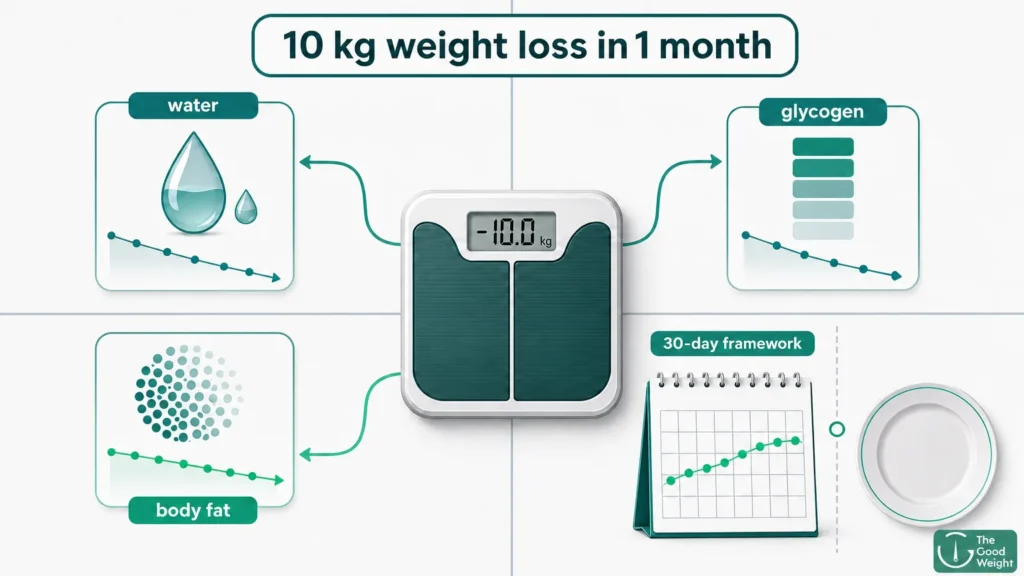
I’ve heard versions of this question many times: Can I do it if I’m strict enough? People have seen dramatic before-and-after posts, 30-day challenges, juice fasts, and meal plans that promise a new body by next month. The scale results may look persuasive. But a large early drop can come from water and stored carbohydrate, not 10 kg of body fat.
The honest answer is that losing 10 kg in one month is possible for a small number of people under particular medical circumstances, especially at a higher starting weight. Yet for most adults, trying to force that number is risky and hard to sustain. It can leave you exhausted, hungry, weaker in the gym, and more likely to regain weight when ordinary life resumes.
The goal for the next 30 days shouldn’t be punishment. It should be a clear start: lower body fat where possible, protect muscle, learn what triggers overeating, and build routines you can still follow on day 31.
Is 10 kg weight loss in 1 month actually fat loss?
A scale cannot tell you what it is measuring. It records total body weight, which shifts with body water, food in your digestive system, glycogen stores, muscle tissue, and fat tissue. That distinction matters a lot during the first week of a strict diet.
Definition: Glycogen is stored carbohydrate, held mainly in the liver and muscles. When food intake drops sharply, glycogen falls, and the water stored alongside it falls too.
Someone who moves from restaurant meals, alcohol, sugary drinks, and high-salt snacks to simple home-cooked meals may see a fast initial drop. That can feel thrilling. But when they eat more carbohydrate or sodium later, part of that weight can return within days. The scale did not “fail.” It was recording fluid movement.
Losing 10 kg of pure fat in 30 days would require an extremely large and sustained calorie deficit for most people. That degree of restriction often comes with low energy, poor training recovery, and intense food thoughts. A CDC guide to gradual weight loss describes a pace of about 1 to 2 pounds per week as more likely to stay off than faster loss.
Look, early progress still counts. A 2 kg drop may include water, but it can also mark a useful break from habits that were pushing weight upward. The mistake is treating the first week’s pace as a contract for the next three weeks.
What realistic progress can look like in 30 days
For many adults, a sensible month may mean roughly 2 to 4 kg on the scale, though there is no single “right” number. A person at a higher body weight may see a larger first-month change. Someone already close to their comfortable weight may see slower scale movement even while their waist measurement changes.
Body size is one reason. So are sleep, menstrual-cycle fluid changes, insulin resistance, thyroid conditions, medications, chronic pain, and the practical details of someone’s workday. A person walking 8,000 steps most days and cooking dinner at home faces a different situation from someone doing shift work and eating late after a two-hour commute.
Weight-loss medication can alter appetite and make calorie reduction easier for eligible patients, but medication does not turn a month into a shortcut. Doctors still need to review medical history, current medicines, side effects, protein intake, and follow-up plans. If you’re curious about that route, doctor-led medical weight-loss care is safer than buying injections without a prescription or follow-up.
The way I see it, a good 30-day target has two parts. One is a modest scale range. The other is a set of behaviours you can repeat: eating planned meals most days, walking after work, sleeping enough to manage hunger, and returning to routine after an off-plan dinner. Boring? A little. But boring works.
The part crash diets leave out
Crash diets sell a clean, simple story: eat very little, cut out whole food groups, exercise hard, repeat. The body’s response is messier. Hunger rises, social plans become stressful, and strength work often disappears because there is little fuel left.
Rapid weight loss may also raise the chance of gallstones. The National Institute of Diabetes and Digestive and Kidney Diseases warns that rapid weight loss and very-low-calorie diets can raise gallstone risk. People with diabetes, a history of gallstones, or certain medical conditions should not experiment with severe restriction without clinical advice.
A more measured plan still creates a calorie deficit, but it avoids turning every meal into a test of willpower. It gives protein a fixed place in meals, keeps fibre-rich foods on the plate, and includes movement that you can recover from. A review comparing gradual and rapid weight loss examined changes in body composition and resting metabolic rate, which is a reminder that the number on the scale is only one outcome worth watching.
Sleep deserves more attention than it gets. When you are short on sleep, hunger can feel louder and evening decisions get shakier. You don’t need a perfect bedtime routine. You do need enough rest that a walk and a planned dinner still feel possible.
Three people, three very different month-one plans
A higher starting weight and a health scare
Arun has a high starting weight and recently learned that his blood sugar is rising. He may lose more than 4 kg in his first month, partly because changing portions and cutting sugary drinks shifts a lot of fluid. His doctor may also assess blood pressure, glucose markers, sleep apnoea, and whether medication is appropriate.
For Arun, the win is not chasing a number copied from social media. It is building a plan that improves metabolic health while he learns how to eat enough protein and move without joint pain. A larger initial drop is possible. It should still be monitored.
An event date and a smaller dress size
Meera wants to feel lighter for an event next month. She has been skipping breakfast, then getting intensely hungry around 5 p.m. and ordering food she did not plan to eat. More restriction in the morning will probably make that loop worse.
Her month may focus on regular meals, strength sessions twice a week, and fewer alcohol-heavy weekends. She may lose 1 to 3 kg, look less bloated, and feel more comfortable in her clothes. For women, cycle-related water retention can hide fat loss for a week or two, so waist measurements and how clothes fit are useful alongside the scale. Female-focused nutrition support should account for food preferences, activity, and hormonal context rather than prescribe a tiny universal calorie target.
The person stuck in the reset cycle
Karthik loses 5 kg during every strict reset, then regains it after travel, festivals, or a stressful month at work. His issue is not a lack of discipline. His plan has no landing gear.
A better first month may include one restaurant meal per week that he plans for, not “cheats” on. He practises returning to his next normal meal instead of writing off an entire weekend. That sounds small, but it changes the pattern that led to regain.
A safer 30-day framework
Here is a practical structure to discuss with a qualified clinician or dietitian. It is not a substitute for personal medical advice, particularly if you are pregnant, breastfeeding, taking diabetes medication, or have an eating-disorder history.
-
Create a moderate calorie gap. Start with smaller portions of energy-dense foods and reduce liquid calories, frequent fried snacks, or unplanned second servings. Avoid slashing intake to a level that leaves you dizzy at work or unable to exercise. The aim is a plan you can eat on an ordinary Tuesday.
-
Anchor meals around protein. At each meal, include a protein food that suits your diet, such as eggs, curd, paneer, dal, fish, chicken, tofu, or Greek yogurt. Protein helps meals feel more filling and supports muscle while body weight falls. Pair it with vegetables, fruit, or other high-fibre foods.
-
Walk more than you do now. Begin with a realistic baseline. If you average 2,000 steps, jumping to 12,000 may end in sore feet and abandonment. Add a 10-minute walk after one meal, then build from there. The NICE guidance on physical activity and diet supports combining dietary change with activity rather than relying on either alone.
-
Do basic strength work twice weekly. Squats to a chair, wall push-ups, resistance-band rows, and light dumbbell work count. Keep the session manageable enough that you return next week. Muscle is metabolically active tissue, but more immediately, strength makes daily movement feel easier.
-
Track more than kilograms. Weigh under similar conditions once or twice a week. Record waist circumference monthly, note sleep hours, and tick off planned meals or walks. If the scale stalls during a menstrual cycle or after a salty meal, those extra measures keep one number from ruining your week.
Hunger management matters here. Keep convenient food around: fruit, roasted chana, yogurt, boiled eggs, or chopped vegetables with a protein-based dip. Extreme hunger turns sensible intentions into a late-night snack hunt. No one wins that fight every night.
When fast weight loss is sending the wrong signal
Stop and seek medical advice if rapid loss comes with physical or emotional warning signs. A hard plan is not automatically a good plan.
-
Dizziness, fainting, persistent weakness, or heart palpitations can signal that intake, hydration, or medication needs review. Don’t push through these symptoms for a weigh-in.
-
Constant food thoughts, secrecy around eating, or panic after a meal suggest the plan may be feeding an unhealthy relationship with food. Restricting and then bingeing is not a personal failure. It is a pattern worth addressing early.
-
Menstrual disruption or worsening fatigue deserves attention, especially when diet changes are paired with heavy exercise. Your cycle is health information, not an inconvenience to ignore.
-
Unsupervised use of weight-loss injections, laxatives, diuretics, or “fat burners” carries real risks. A social-media seller cannot check your blood tests or respond if you develop side effects.
Questions people ask before starting
Do detoxes help with a 10 kg goal?
Detox teas, juices, and cleanses may cause a short-lived drop from lower food volume or dehydration. They do not remove body fat in a special way, and they rarely teach the eating habits that help weight stay down. Spend those 30 days on meals you could still eat next month.
Does skipping carbs speed up weight loss?
Cutting carbohydrate can cause a quick drop in glycogen and water. That may change the scale fast, but it is not proof of unusually fast fat loss. You do not need to fear rice, fruit, oats, or dal. Portion and meal structure matter more than declaring an entire nutrient off-limits.
Do women lose weight slower?
Women may see different scale patterns because menstrual-cycle changes affect fluid retention. Starting weight, muscle mass, food intake, sleep, and medication matter more than a simple gender rule. Compare your progress with your own previous month, not someone else’s highlight reel.
When should a doctor be involved?
Speak with a doctor before attempting rapid loss if you have diabetes, high blood pressure, kidney disease, gallstones, thyroid concerns, are pregnant or breastfeeding, or take regular medicines. It is also wise to get help after repeated regain, because the answer may involve more than another meal plan.
A month can be a useful starting line. It should not become a month of punishing your body to satisfy a number on a screen. Book a consultation with The Good Weight to set a realistic target, decide what to measure, and build a plan with enough support to survive real life. Learn more at The Good Weight.