
Oats are often presented as either a “healthy superfood” or a breakfast to avoid because they supposedly spike blood sugar. Neither message is fully accurate. For people trying to manage weight, prediabetes, diabetes risk, or afternoon cravings, the more useful question is not whether oats are good or bad – it is what the whole breakfast contains.
The glycaemic index (GI) measures how a carbohydrate-containing food tends to raise blood glucose compared with a reference food under controlled conditions. However, GI does not tell the full story of a real meal, because portions, cooking method, added sugar, protein, fat, fibre, sleep, activity, medicines, and individual metabolism can all affect the response. A practical breakfast built around foods low in glycemic index can be helpful, but it should also be filling, enjoyable, and realistic enough to repeat.
Including foods low in glycemic index can significantly help in managing blood sugar levels.
The myth: oats always spike blood sugar
Reality: Oats can raise blood sugar, because they contain carbohydrate – but that does not make them unsuitable for everyone. Their effect depends greatly on the type of oats, the amount eaten, and what is added to them. A bowl of instant oats cooked with sugar and milk may affect hunger and glucose very differently from rolled oats paired with curd, nuts, seeds, and fruit.
The GI is useful as one nutrition tool, not a verdict on a food. The glycaemic index ranks carbohydrate foods by their effect on blood glucose, but it does not account for the rest of the plate. A lower-GI choice may support steadier energy for some people, yet a lower-GI breakfast that is too small or low in protein can still leave a person hungry an hour later.
Oats also contain beta-glucan, a soluble fibre that can slow digestion and has been studied for its role in improving cholesterol and post-meal glucose responses. Research reviews have found that oat beta-glucan can improve glycaemic control in people with type 2 diabetes, particularly when it is part of an overall balanced eating pattern. This is why it is more accurate to think of oats as a flexible ingredient rather than a guaranteed blood-sugar problem or a guaranteed fat-loss solution.
What changes the blood-sugar effect of breakfast?
A breakfast does not need to be perfect to be more supportive of metabolic health. Use this checklist to look beyond the cereal packet, app score, or viral nutrition claim.
Check the portion, not only the food label
Even foods considered lower on the glycaemic index can raise blood glucose when the portion is large. A generous bowl of oats, poha, upma, bread, or fruit may provide more carbohydrate than your body needs at breakfast, especially if it is not balanced with protein. Start with a moderate serving, eat slowly, and notice whether you feel comfortably full rather than heavy or sleepy afterward.
For many adults, a dry oats portion of roughly one-third to one-half cup is a practical starting point, although needs vary with body size, activity, medication, and health goals. People using insulin or glucose-lowering medicines should not make major carbohydrate changes without guidance from their clinician. The goal is not to make breakfast tiny; it is to make it proportionate and satisfying.
Watch for added sugar and sweet drinks
Plain oats are very different from flavoured sachets, chocolate granola mixes, honey-heavy bowls, or oats blended into a sweet smoothie. Sugar, jaggery, syrups, sweetened condensed milk, and large amounts of dried fruit can turn a simple breakfast into a high-carbohydrate meal that is easy to eat quickly. Tea or coffee with several teaspoons of sugar, sweet malt drinks, packaged juices, and breakfast shakes can add to the total without creating much fullness.
This does not mean all sweetness must disappear. A small portion of fruit, cinnamon, cardamom, or unsweetened cocoa can make breakfast enjoyable without relying on added sugar. If you prefer jaggery or honey for taste, treat it as added sugar rather than a “free” health ingredient.
Add a reliable protein source
Protein is one of the most useful ways to make a carbohydrate-based breakfast more filling. Eggs, paneer, unsweetened curd, Greek yogurt, milk, tofu, soy chunks, dal, chana, or sprouts can help slow the meal down and reduce the urge to snack soon after. A systematic review found that higher-protein breakfasts may improve appetite control and reduce later food intake, although the best amount and source will vary between individuals.
For oats, this could mean cooking them in milk and adding curd on the side, stirring in unsweetened protein-rich yogurt after cooking, or having eggs or besan chilla alongside. If you are vegetarian, rotate between dairy, soy, dals, and legumes rather than relying only on nuts. Nuts are nutritious, but a small sprinkle alone may not provide enough protein to anchor the meal.
Choose fibre and texture over speed
More processed oats cook faster and are often easier to overeat. Steel-cut or rolled oats generally retain more texture than finely milled instant oats, while vegetable oats, overnight oats with curd, or oats combined with seeds can add fibre and slow eating. The GI of a food can vary by processing and preparation, which is one reason a product’s front-of-pack health claim cannot predict your response.
Add vegetables such as carrot, beans, peas, spinach, capsicum, onion, or tomato to savoury oats. For sweet oats, use chia seeds, flaxseed, nuts, and a modest fruit portion rather than a large amount of sweet toppings. Fibre supports fullness, but it works best when meals also include adequate protein and enough overall volume.
Do not drink your breakfast by default
A smoothie can be convenient, but liquid calories are often less satisfying than chewing a meal. Blending oats, banana, dates, milk, nut butter, and honey can create a very energy-dense breakfast that feels “healthy” but may not suit a fat-loss goal. If smoothies are useful for your schedule, include protein such as curd, milk, or unsweetened soy milk, keep sweeteners minimal, and pair the drink with a chewable item when possible.
How common Indian breakfasts compare
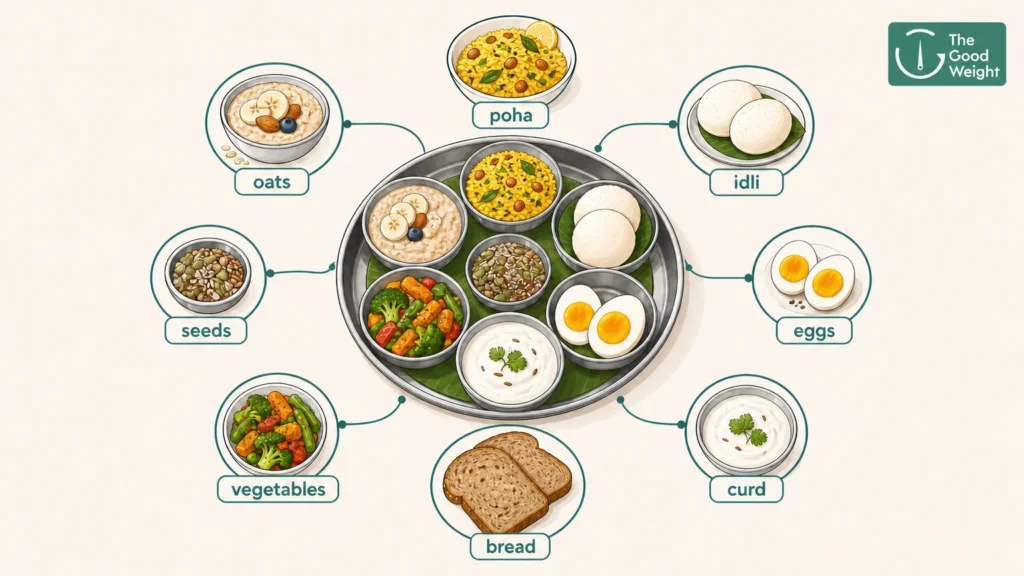
There is no single perfect breakfast for weight loss. A balanced poha, idli meal, egg breakfast, or curd bowl can be just as sensible as oats when the portion and meal composition are right. The comparison below focuses on satiety and steadier energy, not on labelling one traditional food as superior.
| Breakfast scenario | What may make it less supportive | A more balanced approach |
|---|---|---|
| Plain instant oats with sugar | Fine texture, added sugar, little protein | Rolled oats with vegetables, curd or milk, chia/flaxseed, and nuts |
| Oats with protein and seeds | Can become calorie-dense if portions are very large | Use a moderate oats portion, one protein source, and 1-2 teaspoons of seeds |
| Poha alone | Mostly carbohydrate and may be low in protein | Add peanuts, peas, sprouts, egg, paneer, or curd |
| Idli with only chutney | Easy to eat several idlis quickly; protein may be limited | Keep the idli portion sensible and add sambar, egg, or curd |
| Eggs and toast | White bread and sweet spreads can dominate the meal | Choose a higher-fibre bread when available, add vegetables, and limit sugary spreads |
| Curd with fruit | May be too light if it contains only fruit and sweetened yogurt | Use unsweetened curd with fruit, seeds, nuts, and roasted chana or a savoury side |
The important pattern is simple: carbohydrate is more likely to sustain you when it is paired with protein, vegetables or fruit, and a source of healthy fat. This approach fits a broad range of foods low in glycemic index without requiring imported ingredients or expensive “diet” products. It also respects cultural food preferences, which matter for sustainable weight loss.
For example, poha with peas, peanuts, curd, and a boiled egg can be more filling than a small bowl of oats with honey. Likewise, two idlis with a generous bowl of sambar may work better for one person than a sweet overnight oats jar. If you have diabetes or prediabetes, observing your own hunger, energy, and – when advised – glucose readings can be more informative than reacting to a single food trend.
Why breakfast can affect cravings later in the day
A breakfast that is mostly refined carbohydrate or added sugar may digest quickly for some people. If it does not provide enough protein, fibre, or volume, hunger can return by mid-morning and make biscuits, bakery snacks, sweet coffee, or large lunch portions feel harder to resist. This is not a failure of willpower; it is often a predictable response to being under-fuelled or unsatisfied.
The opposite can also happen with an overly restrictive breakfast. Skipping breakfast may suit some people, but others become ravenous later and struggle to stop at a comfortable amount. The best pattern is the one that supports appetite control, daily energy, and adherence to a nutritious eating plan – not the one that is most restrictive on paper.
A meal with carbohydrate, protein, fibre, and some fat tends to digest more gradually and can make it easier to plan the rest of the day. The American Diabetes Association emphasises individualized nutrition plans, because carbohydrate tolerance, preferences, medications, culture, and medical needs differ. For fat loss, consistency across the week matters far more than finding one supposedly flawless breakfast.
A simple Indian breakfast-building formula
Use this formula when deciding what to make at home:
1 carbohydrate base + 1 protein + 1-2 fibre-rich additions + flavour without excess sugar
Your carbohydrate base might be oats, poha, dosa, idli, whole-grain toast, roti, millet, or leftover rice in a vegetable-based preparation. Add a protein such as eggs, paneer, tofu, curd, dal, chana, sprouts, or unsweetened soy products. Then include vegetables, a modest fruit serving, seeds, peanuts, or nuts according to your appetite and goals.
A few practical combinations include vegetable oats with curd; poha with peas, peanuts, and a boiled egg; idli with sambar and extra vegetables; besan chilla with paneer filling; or unsweetened curd with guava, apple, nuts, and roasted chana. These meals use familiar ingredients, require no special supplements, and can be adjusted for vegetarian preferences. If mornings are rushed, prepare chopped vegetables, boiled eggs, roasted chana, or overnight oats the night before.
Frequently asked questions
Should people with diabetes avoid oats completely?
No, oats do not need to be automatically avoided. The type and serving size of oats, what they are eaten with, medication use, and individual glucose response all matter. People with diabetes can discuss suitable portions with a doctor or dietitian and, if they monitor glucose, use those patterns to guide personalised choices rather than relying on internet warnings.
Is fruit with breakfast okay?
For most people, yes. Whole fruit provides fibre and is generally more filling than fruit juice, but portion still matters, particularly when breakfast already includes oats, bread, poha, or other carbohydrate foods. Pair fruit with protein-rich curd, eggs, paneer, or nuts instead of treating fruit as the only component of breakfast.
Are savoury breakfasts better than sweet breakfasts?
Savoury breakfasts often make it easier to include vegetables and protein while limiting added sugar. However, a sweet breakfast can also work when it uses plain oats or curd, fruit, seeds, and adequate protein instead of syrups and highly processed toppings. The better choice is the one that keeps you satisfied, supports your health needs, and fits your routine.
How can I tell whether breakfast keeps me full?
Notice your hunger, concentration, cravings, and energy for the next three to four hours. If you are regularly hungry within an hour or two, look first at protein, fibre, and portion adequacy rather than blaming carbohydrates alone. Persistent fatigue, intense cravings, or difficult-to-manage glucose readings deserve individual medical advice.
Make breakfast work for your real life
Oatmeal is not automatically blood-sugar friendly or unfriendly. Its effect comes down to portion size, processing, added sugar, and whether the meal includes enough protein, fibre, and satisfying whole foods. A balanced breakfast can be built with oats, poha, idli, eggs, curd, or other accessible Indian staples.
If weight concerns, diabetes risk, or repeated cravings are affecting your wellbeing, personalised support can make nutrition decisions less confusing. Explore doctor-led nutrition guidance for sustainable weight loss and metabolic health or learn how diagnostic testing can inform an individualised care plan with The Good Weight.