
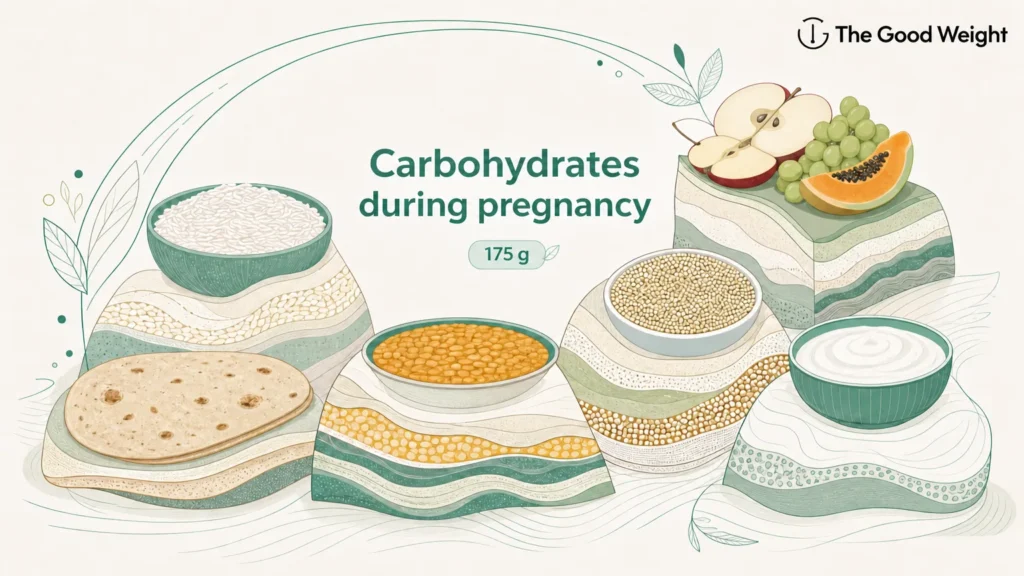
Understanding carbohydrates during pregnancy, the 175 g reference, and when individual medical advice matters.
A plate of rice can become unexpectedly complicated during pregnancy. A relative recommends cutting it to prevent weight gain; a social-media post suggests replacing it with protein; nausea makes plain rice one of the few foods you can tolerate. Meanwhile, a blood-glucose result may have raised another concern.
Advice about carbohydrates during pregnancy needs more context than “eat less.” Pregnancy changes the purpose of nutrition: food must support your health and your baby’s development, while treatment may also need to address diabetes or persistent vomiting. A routine weight-loss strategy cannot simply carry over unchanged.
For families in India, blanket restriction can also remove familiar, affordable foods before anyone asks what will replace them. Rice and roti contribute carbohydrate, but so do dal, fruit and milk. Removing several categories at once can make an already difficult eating situation harder.
The reassuring part is that you don’t need to divide your kitchen into “safe” and “forbidden” foods. You need a plan that connects food intake with your medical circumstances. That includes how much you can eat, what your glucose readings show, and whether food is reliably available.
Pregnancy nutrition should not become a self-directed weight-loss project. Concerns about weight gain deserve an obstetric discussion, not an automatic carbohydrate cut. The same applies when a lower-carbohydrate pattern has already been prescribed: pregnancy calls for a fresh review, not an assumption that the previous plan still fits.
What does the 175 g reference for carbohydrates during pregnancy mean?
Reference value: The National Academies’ recommended dietary allowance, or RDA, for carbohydrate during pregnancy is 175 grams per day. The American Diabetes Association’s pregnancy guidance cites this pregnancy RDA alongside recommendations for individualised nutrition care.
An RDA is a reference intended to meet the needs of nearly all healthy people in a particular life stage. It is not a personalised prescription based on your pregnancy history or glucose readings. Nor is 175 g a weight-loss target, a maximum, or proof that a day’s eating meets every nutritional need.
Grams of carbohydrate also differ from grams of food. A serving weighing 175 g does not necessarily contain 175 g of carbohydrate, because foods contain water and other nutrients. Confusing those measurements can lead to much larger restrictions than intended.
But is 175 g an exact boundary between safety and harm? The reference should not be read that way, and eating below it on one difficult day does not establish that harm has occurred. Equally, uncertainty does not justify choosing a lower target yourself.
There is no simple subtraction rule for gestational diabetes, twins or severe nausea. A clinician must assess the whole situation before deciding how intake should change. If a supervised plan falls below the reference, ask why, what uncertainties remain, and how the team will monitor nutritional adequacy and pregnancy progress.
Rice, roti and millets: separate amount from food quality
An idli breakfast and a rice lunch can fit into the same pregnancy eating pattern. Their suitability depends on portions, accompanying foods and individual tolerance, not on a rule that one carbohydrate-containing meal cancels out another. With diabetes, glucose readings add another layer of information.
Three separate questions help: How much carbohydrate is eaten? What foods contain it? How is it spread through the day? Whole fruit and a sweetened drink are not nutritionally interchangeable, even when both contain carbohydrate. Millets still contribute carbohydrate; a “healthy” label does not make portion size irrelevant.
The examples below show meal combinations to discuss with a dietitian. They are not a daily prescription and do not establish that you have reached 175 g.
| Meal occasion | Familiar example | What deserves attention |
|---|---|---|
| Breakfast | Idli with sambar, or roti with egg or paneer | Idli and roti contribute carbohydrate. Sambar adds pulses, which contribute both carbohydrate and protein. |
| Lunch | Rice or millet with dal and vegetables | The grain portion matters, but dal also counts toward carbohydrate intake. Keeping it may support a more varied meal. |
| Between meals, if appropriate | Whole fruit with plain curd | Fruit and milk-based curd contain carbohydrate. Timing and portions may need adjustment for glucose management. |
| Dinner | Roti or rice with vegetables and a protein food | Distribution across meals may be more workable than concentrating most carbohydrate into one large meal. |
You don’t need to ban rice to ask better questions about a rice-based meal. Preparation and portion size matter, and so does what you can afford or tolerate. A useful plan starts with your actual kitchen.
Which situations need a personalised plan?
Vomiting through breakfast and managing high glucose after breakfast are different problems. Both deserve attention, but “cut carbohydrates” does not resolve either one on its own. Sometimes the first task is restoring intake; sometimes the team needs to adjust meal distribution or treatment.
Gestational diabetes does not mean someone has failed at eating. The condition develops when the body cannot make enough insulin during pregnancy, and care can include food planning, physical activity and medication when needed. Needing medication is not a reason to keep shrinking meals until you are hungry.
| Circumstance | Why broad advice falls short | What to ask the care team |
|---|---|---|
| Gestational diabetes | Glucose patterns and treatment affect meal planning. A single high reading should not trigger an improvised restrictive diet. | “Which readings should prompt contact, and do my portions or treatment need review?” |
| Severe nausea or vomiting | The immediate concern may include inadequate intake or dehydration. Foods you tolerate may be limited. | “Do I need assessment, nausea treatment or help with hydration?” |
| Food insecurity | A plan cannot work if it depends on unavailable foods. Removing affordable staples may leave too little to eat. | “Can we build around available foods and discuss local nutrition support?” |
| Multiple pregnancy | Nutritional planning needs an obstetric assessment rather than multiplying or reducing a standard carbohydrate target. | “Can I see a dietitian experienced in multiple pregnancy?” |
| Pre-existing diabetes or another metabolic condition | Medication and other medical needs may change what is appropriate. Previous bariatric surgery also deserves specific review. | “Who will coordinate my food plan and medication during pregnancy?” |
| A medically supervised lower-carbohydrate pattern | “Lower carbohydrate” can describe very different intakes. Pregnancy requires reassessment of the earlier plan. | “What daily amount do you mean, why, and how will we review it?” |
If you cannot keep fluids down, are passing very little urine, or feel faint, seek prompt medical assessment rather than waiting for a nutrition appointment. Persistent vomiting needs care, not pressure to construct a perfect plate.
For background, The Good Weight’s discussion of medical supervision for lower-carbohydrate eating concerns diabetes and weight management. It should not be treated as a pregnancy diet or permission to reduce intake.
A carbohydrate number cannot describe the whole diet
Plain toast may be all that stays down on a difficult morning. That is a symptom to discuss, not a moral failure. Over time, though, meeting a carbohydrate number with a very narrow range of foods still leaves questions about other nutrients.
The USDA MyPlate pregnancy framework places grains alongside protein foods and dairy or fortified soy alternatives because pregnancy changes energy and nutrient needs. These groups have different jobs: grains contribute energy, protein foods supply building materials, and dairy or suitable fortified alternatives can contribute calcium. One group cannot automatically replace all the others.
Clinical diabetes guidance takes a similar whole-food approach, emphasising nutrient-dense carbohydrate sources within an eating pattern that includes protein and healthy fats. Cutting dal, fruit or dairy solely because they contain carbohydrate can make nutritional planning more difficult. The replacement matters as much as the removal.
In an Indian household, the practical conversation might involve keeping rice while reviewing its portion, retaining dal, and finding an affordable protein food. If you avoid dairy, ask about an appropriate fortified alternative rather than assuming every plant drink has the same nutritional content. Supplements and pregnancy-specific nutrient needs also belong in that conversation.
Common questions before changing your meals
Should I stop rice if I have gestational diabetes?
Not automatically. Your team can assess portions and meal combinations against your glucose readings. If readings remain above your agreed targets, contact them rather than repeatedly removing food or skipping meals.
What if nausea keeps me below 175 g?
Tell your maternity team about your actual intake and symptoms. A difficult day does not establish harm, but persistent poor intake needs assessment. The response may involve nausea treatment or hydration support rather than simply trying harder to eat.
Are millets always better than rice?
No single grain settles the question. Millets contain carbohydrate too, and the portion and preparation still matter. Your tolerance, food access and any glucose-monitoring results should guide the choice with your care team.
Can a clinician recommend less than the reference?
An individual plan may differ, but there is no universal lower target to copy. Ask for the clinical reasoning and a monitoring plan, including how the team will review nutritional intake. “Medically supervised” should mean ongoing review, not a one-time permission slip.
Prepare for the appointment, not another food rule
A useful appointment starts with what is happening, not what you think you should report. There is no need to present a perfect food diary. An honest account of missed meals or foods you cannot afford helps the team make a realistic plan.
-
Describe your eating pattern. Bring notes or meal photographs from a few ordinary days, including drinks and approximate portions. Explain which foods stay down and which are unavailable or unacceptable to you.
-
Record symptoms and glucose information. Note vomiting frequency and whether you can keep fluids down. If monitoring has been prescribed, bring readings with their timing and mention any low-glucose episodes.
-
List medicines and restrictions. Include prescriptions and supplements, plus any recent changes. If you use or recently used weight-management medication, The Good Weight’s GLP-1 and pregnancy-planning conversation guide can help you prepare questions; contact your prescriber promptly rather than managing treatment yourself.
-
Ask for a clear follow-up plan. Clarify the agreed food approach and glucose targets, if relevant. Ask whom to contact when symptoms worsen and when the plan will be reviewed.
Carbohydrates during pregnancy belong within a wider discussion about nourishment and medical care. Before making major dietary changes, take pregnancy, gestational-diabetes or severe-nausea concerns to your obstetric and diabetes-care team for individual advice. For broader information about doctor-led care, learn more about The Good Weight.