
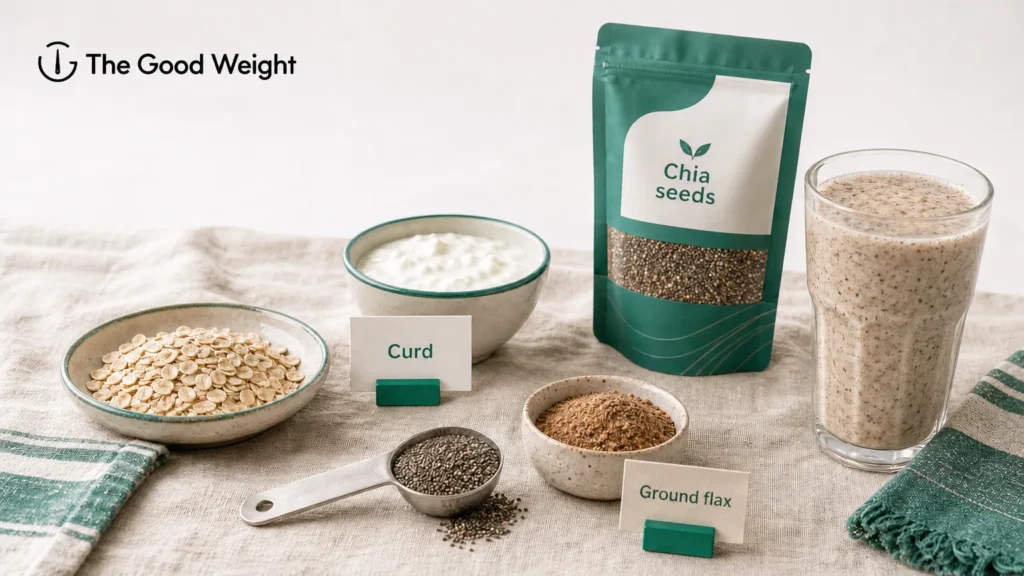
A spoonful of chia goes into breakfast curd. Another disappears into a smoothie, followed by a generous shake of flax over dinner. Each addition feels small, especially when the packet looks reassuringly healthy and social media treats seeds as a shortcut to weight loss.
The appeal makes sense. Adding something to meals feels easier than rebuilding how you eat, and seeds bring texture without much preparation. But “nutritious” and “weight-reducing” aren’t interchangeable descriptions.
If you’re trying chia seeds for weight loss, the useful question isn’t whether they deserve a place in your kitchen. It’s how much fibre your chosen portion contributes, what else comes with it, and whether you enjoy eating it. A food can improve a meal’s nutritional quality without causing your weight to fall.
My view is that seed advice needs less enthusiasm about the ingredient and more attention to the spoon. Measuring isn’t about policing food. It helps you choose an amount deliberately instead of discovering that your modest sprinkle has become several servings.
For adults who want a simple food addition, that distinction matters. You don’t need an elaborate seed routine or a different variety for every meal. You need a portion that fits your appetite and digestion, alongside food that keeps you adequately nourished.
And if seeds don’t suit you? They’re optional. No single topping deserves responsibility for your weight goals.
Why are chia and flax so often marketed as weight-loss foods?
Myth: adding seeds makes the rest of your eating pattern irrelevant. Chia’s ability to absorb liquid makes especially persuasive video content: a thin drink becomes a thick gel, suggesting that something powerful must happen after you swallow it. But swelling in liquid isn’t evidence of fat loss.
Fact: nutritional value doesn’t establish a weight-loss effect. Seeds contain fibre and fats, and they can make familiar meals more enjoyable. Any effect on weight still depends on the overall eating pattern, including whether the addition changes what someone eats later.
A measured seed addition is a deliberately chosen quantity mixed into an existing meal. It counts as food within that meal, not as a treatment taken separately from it.
Can adding seeds alone cause meaningful weight loss? You shouldn’t count on it. A randomised trial in adults with overweight or obesity found that chia supplementation did not promote weight loss, which is a useful counterweight to effortless-transformation claims.
How much fibre does chia actually contribute?
An ounce of chia contains roughly 10 grams of fibre, the amount listed by Mayo Clinic in its high-fibre food guidance. Harvard’s Nutrition Source gives a comparable kitchen reference: two tablespoons, weighing about 28 grams, contain approximately 140 calories and 11 grams of fibre. Different references can vary slightly, so treat these as practical estimates.
Using Harvard’s figures proportionally, here’s what smaller amounts contribute:
| Chia quantity | Approximate calories | Approximate fibre |
|---|---|---|
| 7 grams | 35 | 2.8 grams |
| 14 grams | 70 | 5.5 grams |
| 28 grams | 140 | 11 grams |
Those smaller portions still count. Seven grams can contribute a few grams of fibre without requiring a large serving, while doubling the amount doubles both fibre and calories. Check your packet’s nutrition information when you want a closer estimate.
The rest of the day matters too. Adding chia to oats and fruit differs from expecting chia water to compensate for meals with little fibre. The Good Weight’s Indian eating guide for healthy weight loss places individual foods within that wider meal pattern.
What does research show about chia seeds for weight loss?
A smoothie becoming thicker is an observable result. A person losing body fat because of that smoothie is a separate claim, requiring clinical evidence. The distinction gets blurred when explanations about fibre slide into promises about the weighing scale.
A systematic review and meta-analysis described chia as fibre-rich but found limited clinical evidence for its health effects. That doesn’t make chia useless. It means a plausible nutritional benefit shouldn’t become a confident promise of weight reduction.
Reasonable expectations are modest: more fibre in a measured serving, a different texture, and possibly a meal you find more satisfying. Your own appetite response matters, but feeling full after one breakfast doesn’t establish a lasting weight-loss effect. Neither does a smaller waist measurement prove that one ingredient caused the change.
Honestly, I think the most helpful test is ordinary: do you enjoy the addition, tolerate it, and find that it fits your meals? Keep it if the answer is yes. There’s no need to increase the amount because a social post recommends a daily “dose.”
Where can seeds fit without turning a meal into a calorie trap?
Start with a bowl of plain curd. Adding 7 grams of chia contributes about 35 calories and 2.8 grams of fibre using the reference above; adding 28 grams contributes about 140 calories and 11 grams. Neither portion is automatically wrong, but they’re different choices.
What happens if you repeat that topping at several meals? The calories accumulate along with the fibre. Measuring once or twice can reveal what your usual spoon actually holds, without making lifelong weighing a requirement.
-
Curd and oats: Try a measured small amount stirred through curd or cooked oats, giving chia time to absorb moisture. For flax, ground seed mixes more evenly into soft foods. These are alternatives to test, not instructions to add both at every breakfast.
-
Salads: Measure the seed topping before scattering it over vegetables. If the salad already contains nuts and a generous dressing, decide whether seeds replace part of another topping or are an intentional extra. “Healthy” ingredients still belong to the same meal.
-
Smoothies: Choose the seed quantity before blending, when it’s easy to see. A smoothie containing fruit, nut butter, oats and seeds can become much larger than intended. Check the whole recipe instead of judging it by its most fashionable ingredient.
-
Chutney-style additions: Mix a measured quantity of ground flax into a chutney you already enjoy. For a shared batch, divide the seed amount by the number of portions you actually serve. The entire batch’s fibre doesn’t belong to each spoonful.
Pumpkin, sunflower and sesame seeds can also add flavour or crunch. Don’t assume equal spoonfuls contain equal fibre; compare labels for the quantity you plan to use. Worth checking, especially with mixed-seed blends.
What should I change if seeds worsen bloating or bowel discomfort?
A larger seed serving isn’t a better serving if it leaves you uncomfortable. Sudden changes in fibre intake can bring digestive symptoms, and chia absorbs considerable liquid, as Harvard’s preparation guidance notes. There’s no prize for pushing through a habit that doesn’t suit you.
-
Reduce the amount or pause. If symptoms appeared after you increased seeds, return to the amount you previously tolerated or stop temporarily. Once symptoms settle, try a smaller measured portion if you still want to. You don’t have to reach a particular target.
-
Keep fluids in mind. Drink regularly through the day and mix chia into moist food or liquid before eating it. Don’t swallow spoonfuls of dry chia. If a clinician has prescribed a fluid restriction, ask how to adjust fibre safely.
-
Look at the meal context. A sudden jump in beans and bran alongside seeds makes the cause harder to identify. Change one thing at a time and notice the pattern. Smaller additions spread across meals may feel more manageable than one large serving.
-
Seek help for persistent symptoms. Ongoing bloating or altered bowel habits deserves medical advice instead of repeated experimentation. Severe abdominal pain, vomiting, blood in the stool, or difficulty swallowing needs prompt assessment. Mention your food changes and any medicines when you speak with a clinician.
What should I check before relying on a seed-based product or recipe?
A chia pudding jar can look like a single serving even when its label describes two. A flax snack bar may lead with fibre while keeping the portion information in small print. Annoying, but the useful information is often still there.
-
Check added sugar and the whole recipe. Read beyond the seeds on the ingredient list. Syrup or sweetened yoghurt contributes to the finished food too. Decide whether the product fits your intended breakfast or snack.
-
Calculate the portion you’ll eat. Compare the label’s serving size with the packet or recipe yield. If you eat twice the stated serving, double its listed calories and fibre. Do the same for toppings added at home.
-
Question medicinal-sounding claims. “Fat-burning” and “detox” language doesn’t turn a seed blend into treatment. Ask what human research supports the exact claim. An ingredient’s reputation isn’t evidence for the finished product.
-
Be cautious about meal-replacement positioning. Fibre content alone doesn’t establish that a drink can replace a balanced meal. Look at the full nutritional information and your needs. Discuss regular meal replacement with a qualified clinician or dietitian.
Frequently asked questions
Is flax better than chia for weight loss?
There’s no reason to choose either as a guaranteed weight-loss food. Compare the fibre and calories in the portion you’ll use, then factor in taste and tolerance. Ground flax may suit one recipe while chia’s gel-like texture suits another.
Do I need chia water on an empty stomach?
No, you don’t need a special timing ritual. Chia can fit into ordinary meals if you enjoy it. A manageable portion matters more than making breakfast follow an internet rule.
How much should I start with?
There isn’t one amount that suits everyone. A small measured addition, such as a teaspoon mixed into moist food, can help you assess tolerance without committing to a large serving. Use your packet’s figures to understand what that amount contributes.
A better next step than another seed rule
At your next meal, measure the amount you would otherwise pour freely. Check its fibre contribution, then notice whether you enjoy the meal and feel comfortable afterwards. Keep the seed habit only if it earns its place.
If individual swaps aren’t addressing your needs, seek personalised nutrition support that considers appetite and digestive tolerance, alongside medicines and metabolic goals. The Good Weight combines nutrition support with doctor-led weight care for adults who need more than another food rule. Take that next step through The Good Weight.