
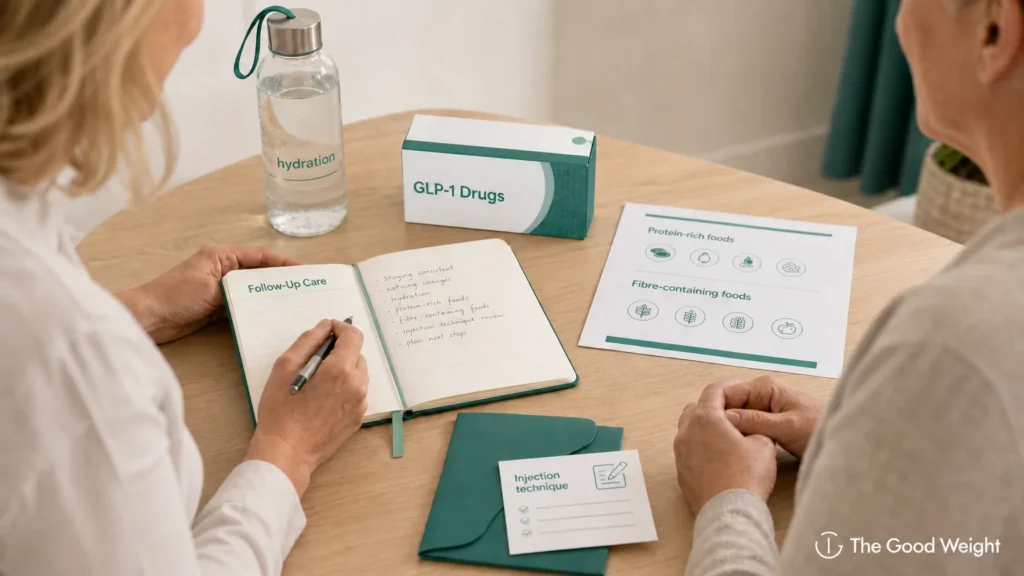
Starting GLP-1 drugs can be an important part of medically supervised weight care, but it is not the end of the treatment process. It is the beginning of a plan that should continue to adapt to your health, daily routine, nutrition needs and treatment response. While clinical studies have shown meaningful average weight changes with some GLP-1-based medicines alongside lifestyle support, individual experiences with appetite, side effects, metabolic health and progress can differ substantially – for example, one semaglutide trial reported an average 14.9% weight reduction at 68 weeks in the study population, not a guaranteed outcome for every person.
Ongoing follow-up care gives you and your clinician space to review what is working, what is difficult and what may need to change. Effective care is built around shared decisions about medication, nutrition, symptoms, routines and longer-term health goals – not a prescription that stands alone.
What to prepare for a follow-up appointment
A follow-up appointment is most useful when it reflects your real experience, rather than what you think you “should” be doing. GLP-1 drugs can affect appetite, food tolerance and digestion, so changes that may feel minor at first can be clinically relevant over time. Honest reporting helps your clinician understand whether the current plan remains appropriate and whether extra nutrition support, symptom management or a treatment review would be helpful.
Before your appointment, consider making a short note of the following:
- Appetite and weight changes: Has your hunger changed? Are you eating less because you feel comfortably satisfied, or because nausea, fullness or food aversion is making it difficult to eat?
- Food tolerance and digestion: Note symptoms such as nausea, vomiting, constipation, diarrhoea, reflux, bloating or abdominal discomfort, including when they occur and whether particular foods seem to worsen them.
- Fluids and hydration: Consider whether you are drinking regularly and whether symptoms, busy days or reduced appetite are making hydration harder.
- Energy and daily functioning: Mention fatigue, dizziness, reduced concentration, sleep changes or difficulties keeping up with work, family responsibilities or activity.
- Routine changes: Travel, festivals, shift work, illness, stress and changes in household meals can all affect how manageable a treatment plan feels.
- Medication use: Tell your clinician about missed or delayed doses, uncertainty about injection technique, access concerns or questions about staying consistent.
Do not adjust your dose, stop medication or try to manage persistent symptoms on your own without speaking with the prescribing clinician. GLP-1 medicines used for weight management are intended to be used as part of a broader programme that includes a reduced-calorie eating approach and increased physical activity where appropriate, as reflected in the FDA approval information for chronic weight management. Follow-up creates a safer setting to decide what should happen next.
How nutrition and daily routines fit into treatment
Nutrition support matters because a reduced appetite does not automatically mean your body is getting the nourishment it needs. As portion sizes become smaller, the quality and regularity of meals can become more important. Your care team may discuss practical ways to include protein-rich foods, fibre-containing foods, fluids and a range of vitamins and minerals in a way that suits your culture, budget, preferences and digestive tolerance.
Protein can help support muscle maintenance during weight loss, while fibre and fluids may support regular bowel habits. However, increasing fibre very quickly can be uncomfortable for some people, particularly if nausea, bloating or constipation is already present. A clinician or qualified nutrition professional can help you make gradual, realistic adjustments instead of following a restrictive diet that is difficult to maintain.
For example, someone who previously ate three large meals may find that a large breakfast now feels unpleasantly heavy. Rather than skipping meals altogether, they might work with their care team to try smaller, simpler meals spaced through the day: perhaps curd or eggs with fruit in the morning, a modest portion of dal with vegetables and rice at lunch, and a lighter evening meal. This is only an example – not a universal meal plan – and the right approach depends on medical history, dietary needs and tolerability.
Movement can also be adapted rather than treated as an all-or-nothing goal. A manageable walk, regular mobility work or a gradual return to resistance training may be more sustainable than an ambitious routine that causes exhaustion or is impossible to maintain. The aim of nutrition and activity support is not perfection; it is to build routines that protect health and can continue beyond the first few weeks of treatment. For more context on how medication can fit within doctor-led GLP-1 weight care, it is useful to view treatment as one component of comprehensive support.
When the plan may need review
Some symptoms can occur as your body adjusts to GLP-1 drugs, particularly during treatment changes. Mild digestive symptoms may be manageable with clinician-guided adjustments to meal size, timing, hydration or medication plans. But you do not need to wait for a scheduled review if symptoms are troublesome, persistent or making it hard to meet basic nutrition and fluid needs.
Contact your care team if you are experiencing ongoing nausea, vomiting, diarrhoea, constipation, poor food tolerance, significant fatigue or difficulty drinking enough fluids. It is also appropriate to get in touch if your goals have changed, your current routine no longer feels realistic, you have questions about missed doses, or you are unsure how to interpret limited progress. A treatment review is not a sign of failure; it is a normal part of personalized medical care.
Your clinician may also review health markers that are relevant to your circumstances, such as blood pressure, blood glucose, lipid levels or other laboratory values. This is especially important for people managing diabetes, diabetes risk or other metabolic health concerns. Professional guidance recognises that obesity care should address health risks and be individualized, rather than focusing on body weight alone, as outlined in the American Diabetes Association’s obesity and weight-management guidance.
Some symptoms require more urgent medical assessment. Seek prompt medical care for severe or persistent abdominal pain, particularly if it may radiate to the back or occurs with vomiting, and seek emergency help for symptoms such as trouble breathing, swelling of the face or throat, fainting, or chest pain. These are not symptoms to self-manage or wait out. The prescribing information for GLP-1-based treatment includes important warnings about serious adverse reactions and when to seek medical attention; your own clinician can explain what is most relevant to your medical history.
What long-term follow-up can involve
Long-term care should remain responsive, not rigid. Over time, appointments may include a review of medication tolerability, appetite changes, eating patterns, activity, sleep, mental wellbeing and relevant metabolic-health markers. Your clinician may also revisit whether your current goals still reflect what matters to you, such as improved mobility, blood-sugar management, confidence with daily routines or maintaining progress in a sustainable way.
Medication decisions are individual. Some people may continue with a treatment plan for longer-term support, while others may need adjustments because of side effects, changing health needs, cost, life circumstances or a different clinical priority. Evidence from obesity medicine continues to reinforce that treatment can require ongoing management; in one trial, weight regain occurred after semaglutide withdrawal, underscoring why long-term planning should extend beyond medication alone.
Follow-up can also identify when additional assessment is useful. At The Good Weight, a clinician may recommend relevant diagnostic testing for metabolic-health review as part of a personalized plan. The goal is not to apply the same pathway to everyone, but to make informed decisions as your needs evolve.
Frequently asked questions
How often will I need follow-up after starting GLP-1 drugs?
The right schedule depends on the medication, your medical history, dose changes, symptoms and treatment goals. Follow-up is often more frequent when treatment is new or being adjusted, then may change once a plan is stable. Your prescribing clinician should tell you when they want to review your progress and how to contact the care team between appointments.
Does nutrition support still matter if my appetite is lower?
Yes. Lower appetite can make it easier to eat less, but it can also make it easier to unintentionally miss protein, fluids, fibre and regular meals. Nutrition support can help you find practical food patterns that work with your appetite and digestion without relying on extreme restriction.
What should I do if I have side effects?
Report side effects early, especially if they are persistent, worsening or affecting your ability to eat or drink. Your clinician can assess whether a symptom may be related to treatment and discuss safe next steps. Do not independently change your dose or use another person’s medication advice as a substitute for medical guidance.
Can my treatment plan be adjusted if progress is slower than expected?
Yes. Weight change is only one part of treatment review, and progress is not always linear. A clinician may explore factors such as medication tolerance, adherence, nutrition, sleep, activity, medical conditions and changes in health markers before discussing appropriate options with you.
A supported path forward
GLP-1 treatment works best as part of continuing, clinician-guided care that makes room for questions, changing needs and realistic routines. Regular follow-up helps ensure that medication, nutrition support, side-effect monitoring and metabolic-health goals remain connected.
If you are in Chennai and considering GLP-1 drugs – or want more structured support while using them – The Good Weight’s doctor-led team can help you discuss individual eligibility, follow-up care, nutrition needs and metabolic-health considerations.