
An age-aware approach to exercise and weight loss that puts mobility, confidence, and steady progress ahead of punishing routines.
A new exercise plan often starts with a burst of determination: longer walks, a gym membership, perhaps a promise to “make up for lost time.” For adults over 55, that impulse can collide with a stiff knee, breathlessness on stairs, worries about falling, or medicines that affect blood sugar and blood pressure. The plan then feels like another thing the body has refused to cooperate with.
That framing is unfair, and it’s usually unhelpful. Exercise and weight loss don’t need to begin with intense workouts or a target on a scale. A more useful starting point is function: getting up from a chair more easily, walking through the market without needing a long rest, feeling steadier on uneven ground, or having more energy for family life.
Movement can support weight management, but it is only one part of the picture. Food intake, sleep, medical conditions, medications, pain, muscle mass, and stress all influence body weight and metabolic health. The aim is to build a routine you can repeat next week, next month, and next year, rather than surviving a difficult fortnight.
Exercise and weight loss after 55: what regular movement can realistically change
A brisk walk may not produce a dramatic number on the weighing scale by itself. Yet it can still matter a great deal. Physical activity helps the body use glucose, supports heart health, improves stamina, and can help preserve muscle when paired with enough food and protein. The CDC notes that physical activity supports weight management and can reduce the risk of several chronic conditions.
For many people, the early wins are less visible. Carrying groceries feels less taxing. Sleep may become more settled. A person who once avoided a flight of stairs may notice they recover faster at the top. Those are not small achievements. They are signs that daily capacity is growing.
Exercise and weight loss, in practical terms: movement helps increase energy use and preserve physical function, while sustainable weight change also depends on nutrition, sleep, medical care, and the routine a person can maintain.
Strength work deserves a place here, even for people focused on body weight. Adults tend to lose muscle mass and strength with age, particularly after long periods of inactivity, illness, or restrictive dieting. Losing weight without protecting muscle can make everyday movement harder, which is the opposite of what most people want.
The way I see it, “burning calories” is too small a reason to move. A better question is: What do I want my body to help me do six months from now? The answer may be playing with grandchildren, travelling comfortably, managing diabetes risk, or simply feeling more at home in your own body.
Before a bigger activity change, review the real starting point
Someone who walks occasionally does not need to panic before adding ten minutes to a morning stroll. But an ambitious new programme deserves a pause, especially after 55. A doctor can help separate normal effort from symptoms that need assessment and make the plan less of a guessing game.
Start with an honest inventory. That means looking at past heart disease, high blood pressure, diabetes or prediabetes, previous stroke, lung conditions, osteoporosis, and recent injuries. Joint pain also matters. A knee that hurts only after a steep descent needs a different response from a knee that locks, swells, or gives way.
Medicines belong on the list too. Insulin and some diabetes tablets may raise the chance of low blood glucose during or after activity. Blood-pressure medicines can contribute to dizziness when standing quickly, while sedating medicines may affect balance or reaction time. Don’t stop or adjust any prescription on your own, but do ask how activity changes may interact with it.
A useful pre-exercise conversation can cover:
- Falls and balance: Have you fallen in the past year, held onto furniture while walking, or felt unsteady when turning? Those details can point toward supervised balance work and a safer home setup.
- Pain patterns: Note where pain occurs, what brings it on, whether it settles with rest, and whether swelling follows. “My knee hurts” is hard to act on. “Pain starts after 12 minutes downhill and lasts until evening” is more useful.
- Heart and metabolic history: Share chest symptoms, palpitations, blood-pressure readings, blood sugar patterns, and family history. A clinician may suggest a slower start or further checks before vigorous work.
- Your actual week: Time, caregiving, commute, confidence, and access to safe walking areas all shape adherence. A plan that ignores real life tends to become a drawer full of unused resistance bands.
For Chennai residents who want a medically informed starting point, a weight-loss doctor consultation can connect mobility concerns with metabolic screening and realistic goals. No medal exists for pushing through uncertainty.
Build the routine in layers, not all at once
Public-health guidance for older adults includes aerobic activity, muscle-strengthening work, and balance-focused movement. The Physical Activity Guidelines describe activity as something that can be accumulated in smaller bouts, which is welcome news for anyone who finds a long workout intimidating.
Start below your maximum. If fifteen minutes of walking feels hard, begin with five or seven minutes at an easy pace and repeat it on most days. You should be able to speak in short sentences while moving. If talking feels impossible, the pace is probably too high for a first session.
Here is a simple progression model. Stay at each stage until it feels familiar, then make one small change. More time, a slightly quicker pace, or one added strength exercise is enough. Trying to change all three in the same week is how sore joints and lost confidence enter the chat.
-
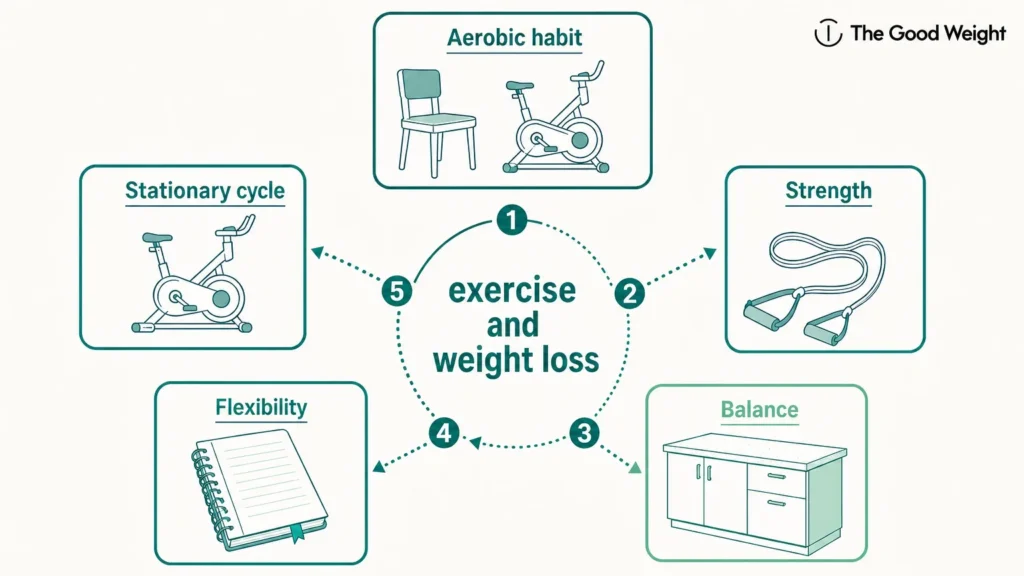
Create a repeatable aerobic habit. Walk outdoors, use a stationary cycle, swim, or follow a low-impact chair routine. Begin with an amount you can do on an ordinary Tuesday, not only on your most energetic day. Add a few minutes after one or two weeks if recovery feels comfortable.
-
Add strength twice a week. Chair sit-to-stands, wall push-ups, heel raises while holding a counter, and resistance-band rows can build useful strength. Use controlled movement. The final few repetitions should feel like work, but sharp pain is a stop sign.
-
Practise balance in small doses. Stand near a kitchen counter and shift weight from one foot to the other. Try heel-to-toe walking along the counter, with a hand ready for support. Balance improves through practice, and the safest practice has something sturdy within reach.
-
Keep flexibility modest and regular. Gentle calf, chest, hip, and shoulder stretches can ease the feeling of stiffness after movement. Stretching does not replace strength training, and forcing a painful range rarely ends well.
A notebook helps. Record the activity, how hard it felt out of ten, and how you felt later that day and the next morning. Patterns appear fast. You may notice that ten minutes of cycling feels easier on the knees than ten minutes of pavement walking, or that morning sessions suit your energy better.
When the standard workout does not suit you
Knee discomfort often pushes people toward total rest. Sometimes a brief reduction in aggravating activity makes sense, but complete inactivity can weaken the muscles that help support the joint. Flat routes, shorter walking intervals, a stationary cycle, or water-based movement may feel friendlier while you seek advice for persistent pain.
Low confidence needs a different fix. A person who has not exercised for years may feel watched at a gym or anxious about not keeping up in a group class. Start at home, in a quiet corridor, or with one trusted walking companion. The goal for week one might be putting on shoes and walking five minutes after breakfast. Small? Yes. Also real.
Limited time is not a character flaw. Two ten-minute walks, one after lunch and one after dinner, may fit more easily than a single half-hour block. Short activity bouts can also interrupt long sitting periods, which many people find leaves their hips and back feeling creaky.
Returning after illness, travel, or a long break calls for patience. Don’t restart at the level you reached months ago. Begin with about half of what previously felt manageable, then watch for delayed fatigue, unusual breathlessness, pain, or poor sleep. Boring advice, perhaps. But boring plans are often the ones people keep.
Food, sleep, and follow-up make activity easier to repeat
Hard exercise while under-fuelling is a poor bargain. Protein-containing meals can help support muscle repair and help you feel satisfied, especially when activity increases. Eggs, curd, dal, fish, chicken, tofu, paneer, and legumes can all fit, depending on your food preferences and medical needs.
Timing need not be fussy. Some people feel fine walking before breakfast, while others feel shaky or nauseated without a small snack. If you use glucose-lowering medication, ask your clinician about meal timing, blood-glucose checks, and what to carry during longer outings. A banana, glucose tablets, or another recommended option may be sensible for some people.
Hydration is equally practical. Chennai’s heat and humidity can make an ordinary walk feel much harder, particularly at midday. Carry water, wear breathable clothing, choose cooler hours when possible, and lower the pace when the weather is punishing. Heroic sweating is not a health strategy.
Sleep can make the next day’s plan feel possible or impossible. A short walk, regular meal rhythm, and a consistent bedtime can work together, though no routine guarantees a particular weight outcome. If loud snoring, choking during sleep, or relentless daytime drowsiness are part of the picture, bring them up at your next appointment.
Nutrition support should match the person, not a trend. The Good Weight’s approach to diet and weight loss centres food planning around medical history, cultural preferences, and sustainable eating patterns. That matters because an exercise routine built on hunger and exhaustion rarely lasts.
When to pause and speak with a clinician
Should I push through chest discomfort or severe breathlessness?
No. Stop exercising and seek urgent medical attention for chest pressure or pain, severe shortness of breath, fainting, new confusion, or symptoms that may suggest a heart problem. Don’t test yourself by trying to finish the session. The workout can wait.
What kind of joint pain needs medical advice?
Sharp pain, a hot or swollen joint, locking, giving way, new inability to bear weight, or pain that persists after activity deserves assessment. Mild muscle soreness after unfamiliar strength work is common, but it should improve within a few days rather than worsen each time you move.
What if I feel dizzy during activity?
Stop, sit or lie down safely, and drink water if appropriate. Dizziness can come from heat, dehydration, low blood glucose, blood-pressure changes, or other causes. Repeated episodes need a medication and health review before you continue progressing.
Can I exercise if I have diabetes or high blood pressure?
Often, yes, but the plan may need tailoring. Regular movement can form part of care for both conditions, while medication timing, blood glucose, blood pressure, foot health, and warning symptoms all matter. The long-term lifestyle study in adults with type 2 diabetes tracked the effects of weight-loss-focused lifestyle support over many years, a reminder that lasting health work happens over time, not through a single punishing routine.
Let consistency be the goal, not intensity
The best exercise plan after 55 may look almost unimpressive on paper. It may be ten minutes of walking, two sets of chair rises, and a few balance drills by the kitchen counter. Yet repeated often enough, that modest plan can rebuild trust in your body.
If you live in Chennai and have chronic conditions, troubling symptoms, past falls, or a weight goal tied to diabetes risk, arrange a doctor-led metabolic and mobility discussion before starting an ambitious programme. The team at The Good Weight can help you connect medical weight care, nutrition support, and a movement plan that fits the life you actually live.
What would change if your next routine aimed for steadiness rather than punishment?